Keeping Tabs is a Q&A series that follows alumni on their careers after graduation, the lasting impacts of their clinical and pro bono experiences at Harvard Law School, and their experiences in a variety of sectors of law.
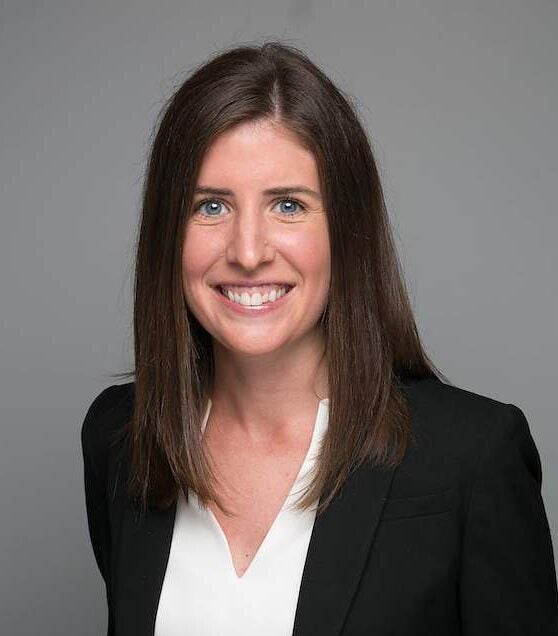
“Being a litigator means that, for both better and worse, I have no ‘typical’ day,” says Caroline Sacerdote ‘15, a Senior Staff Attorney in the U.S. Litigation Program at the Center for Reproductive Rights. Her work is driven by her docket: developing and litigating cases across the country that challenge restrictions on access to reproductive health care, including abortion care.
Sacerdote currently leads the Center’s challenge to multiple abortion restrictions under Arizona’s 2024 ballot initiative, which enshrined the fundamental right to abortion in the state constitution. The case was the first brought under the amendment to go to trial, and in November 2025 the state trial court blocked all of the challenged laws as applied to abortion care before viability. She is also part of the Center’s post-Dobbs strategy of bringing cases on behalf of pregnant people denied care in their home states, including a recent challenge to two Oklahoma abortion bans that prohibit care for patients whose pregnancies have been diagnosed with fatal fetal conditions.
At HLS, Sacerdote was a student in the International Human Rights Clinic and the Harvard Negotiation and Mediation Clinical Program, experiences she says helped shape the lawyer she is today. We caught up with Sacerdote to hear more about litigating for reproductive rights after Dobbs, keeping clients’ stories at the center of her work, and her advice for students considering public interest careers.
Office of Clinical and Pro Bono Programs (OCP): Please tell us about your role at the Center for Reproductive Rights. What does your day-to-day work look like as a Senior Staff Attorney in the U.S. Litigation Program?
Caroline Sacerdote: I spend most of my time developing and litigating cases that challenge restrictions on access to reproductive healthcare, including abortion care.
Being a litigator means that, for both better and worse, I have no “typical” day. My daily work is driven by the needs of my docket—what cases I am developing or actively litigating—and the stage of litigation each case is in at any given time. For instance, in the days leading up to an oral argument, I focus on one case, reviewing briefing and key cases and honing my arguments. On other days, I balance work across my docket, from conducting or reviewing legal research, to drafting briefs, or working through difficult strategic decisions with my teams. Juggling competing deadlines is a constant feature of my work.
While I spend most of my time litigating, I also work on compliance matters for clients, collaborate with my policy and advocacy colleagues on litigation-adjacent matters, and represent the Center at external events.
OCP: How has the U.S. Litigation Program adapted its litigation strategy since the Dobbs decision overturned Roe in June 2022?
Sacerdote: It is hard to overstate the devastating impact Dobbs has had on access to abortion care across the country. But the Center for Reproductive Rights has continued to fight to defend and expand access wherever we can.
One way we have done so is by filing cases on behalf of individual pregnant people who were denied abortion care in their home states—even after experiencing pregnancy complications that threatened their health or receiving a diagnosis that meant their pregnancy would end in miscarriage, stillbirth, or the death of an infant shortly after birth. For example, in September we filed a case challenging two abortion bans in Oklahoma—a total ban and 22-week ban—because they prohibit patients whose pregnancies were diagnosed with fatal fetal conditions from accessing essential abortion care. The plaintiffs are three individuals who were denied abortion care, two physicians, and a reproductive justice organization. We have brought claims under Oklahoma’s inherent rights, substantive due process, and equal protection guarantees. More information on that case is available here.
These cases underscore what we already know: abortion care is an essential part of maternal health care, and banning that care is cruel. All people should have access to abortion care, including people who have wanted pregnancies and, for whatever reason, need abortion care.
OCP: Can you walk us through a significant case or litigation strategy you’ve led since Dobbs? What were the stakes, and what have you learned from it?
Sacerdote: I am currently leading litigation challenging multiple abortion restrictions under Arizona’s 2024 ballot initiative explicitly protecting the fundamental right to abortion in the Arizona Constitution. The restrictions are medically baseless and force patients to jump through hoops, making it harder, sometimes impossible, to get the care they need. As the first case brought under the amendment to go to trial, it is opportunity to make this newly recognized fundamental right more than just a guarantee on paper. After trial in November of 2025, the state trial court blocked all of the laws that we are challenging as applied to abortion care prior to viability.
I feel incredibly grateful to have the privilege of representing the Center’s amazing clients, two abortion providers who have cared for patients in Arizona for decades: Drs. Isaacson and Richardson. It is also an honor to fight alongside and on behalf of Arizonans to increase access to essential healthcare in the state, and to see in real time how our success blocking the challenged laws has already improved patients’ access to care. More information on that case is available here.
OCP: Your clients in these cases often have deeply personal stories. How do you keep their humanity and agency at the center of your litigation work, especially in high-stakes appellate or constitutional cases?
Sacerdote: Helping clients and other impacted people tell their stories is central to this work. I have worked with healthcare providers, individuals who were denied care, and reproductive justice organizations fighting to expand access. Regardless of the client, it’s important to take the time to really listen to their story, give them the space to share at their own speed, and empower them to speak truth to power. Sometimes, sharing their story with you is enough to help them feel validated. Other times, that process helps them realize that they want to fight back to ensure that nobody else is harmed in the way they were. Either way, guiding them through that process is a privilege and an honor. And it is one of our greatest responsibilities as their advocates in court.
OCP: How did your clinical experiences at HLS in the International Human Rights Clinic and the Harvard Negotiation and Mediation Program shape your commitment to public interest work? How does that foundation show up in your practice now?
Sacerdote: My clinical experiences at HLS helped shape the lawyer that I am today. Through HLS clinics, I gained experience in different practice settings and substantive issues. That helped me learn what type of law I wanted to pursue after graduation.
My clinical experience also helped me hone technical skills. For example, working with a team to draft a white paper while in the International Human Rights Clinic gave me an opportunity to practice legal research and writing in collaboration with a team, while my time with the Harvard Negotiation and Mediation Program provided a framework for and experience developing negotiation skills I use every day when communicating with both co-counsel and opposing counsel.
OCP: Are there any moments that stick out when you reflect on your pro bono experiences at HLS that have stuck with you throughout your career?
Sacerdote: My time in the Harvard Negotiation and Mediation Program, both the workshop and the clinic, frequently come to mind when I am engaging in any type of negotiation, from meet and confers with opposing counsel to conversations with movement partners where we align on the ultimate goal but not necessarily on the way to get there. My HLS experiences provided the space to practice navigating difficult conversations, and I apply the lessons learned in my work every day.
OCP: This work is emotionally and intellectually demanding, especially post-Dobbs when the landscape feels so dire for so many people. What keeps you going? Where do you find hope?
Sacerdote: I feel honored to represent the Center’s clients and to advocate on behalf of people across the country. The relationships I develop with clients—who are directly impacted by the laws we challenge—are a huge part of what keeps me going. For example, we represent clinicians who have been fighting to provide essential healthcare in their communities for decades. Knowing that my work helps them keep their doors open and focus on caring for patients is incredibly rewarding.
I also find hope in the fact that there are many people fighting to defend and expand access to health care, reproductive rights, and principles of reproductive justice. While I have chosen to focus on litigation, that is just one tool in our collective toolbox, and I am grateful to be part of the fight.
OCP: What would you tell a current HLS student who’s interested in a public service career but may be on the fence about pursuing it?
Sacerdote: While it can feel daunting to pursue a public interest career, doing so is incredibly rewarding. Over the last decade, I have had the immense privilege of applying my legal skills to deeply meaningful work that I am passionate about and that forces me to constantly push myself to be a better lawyer. I get to spend my days thinking creatively about how to use the law to advance social justice principles and litigating cases across the country to make our constitutional rights a reality.
And there are many ways to pursue a public interest career. If you find yourself drawn to public interest work, I encourage you to explore different practice settings and issue areas—during law school and after. Careers are long, and your first job out of law school does not define you. Take the time and space you need to figure out what you want to dedicate your time to, and keep in mind that it is completely fine for that to evolve. There are plenty of ways to use a law degree to further social justice!
Filed in: Alumni Profiles
Tags: Keeping Tabs