From training the leaders of the burgeoning nation to housing soldiers during the American Revolution, Harvard played an important role in early America. Throughout the year, events, exhibits, scholarship, and collaborations at Harvard are exploring and commemorating the 250th anniversary of the signing of the Declaration of Independence. Several events, including a series of discussions hosted by Harvard Law School and Harvard Kennedy School, have featured members of the law school faculty and prominent alums. Harvard Law Today brings you a roundup of coverage of all things semiquincentennial.
‘A republic, if you can keep it’
America needs a renewed spirit of civic engagement — one that prioritizes in-person interaction and begins in local communities.
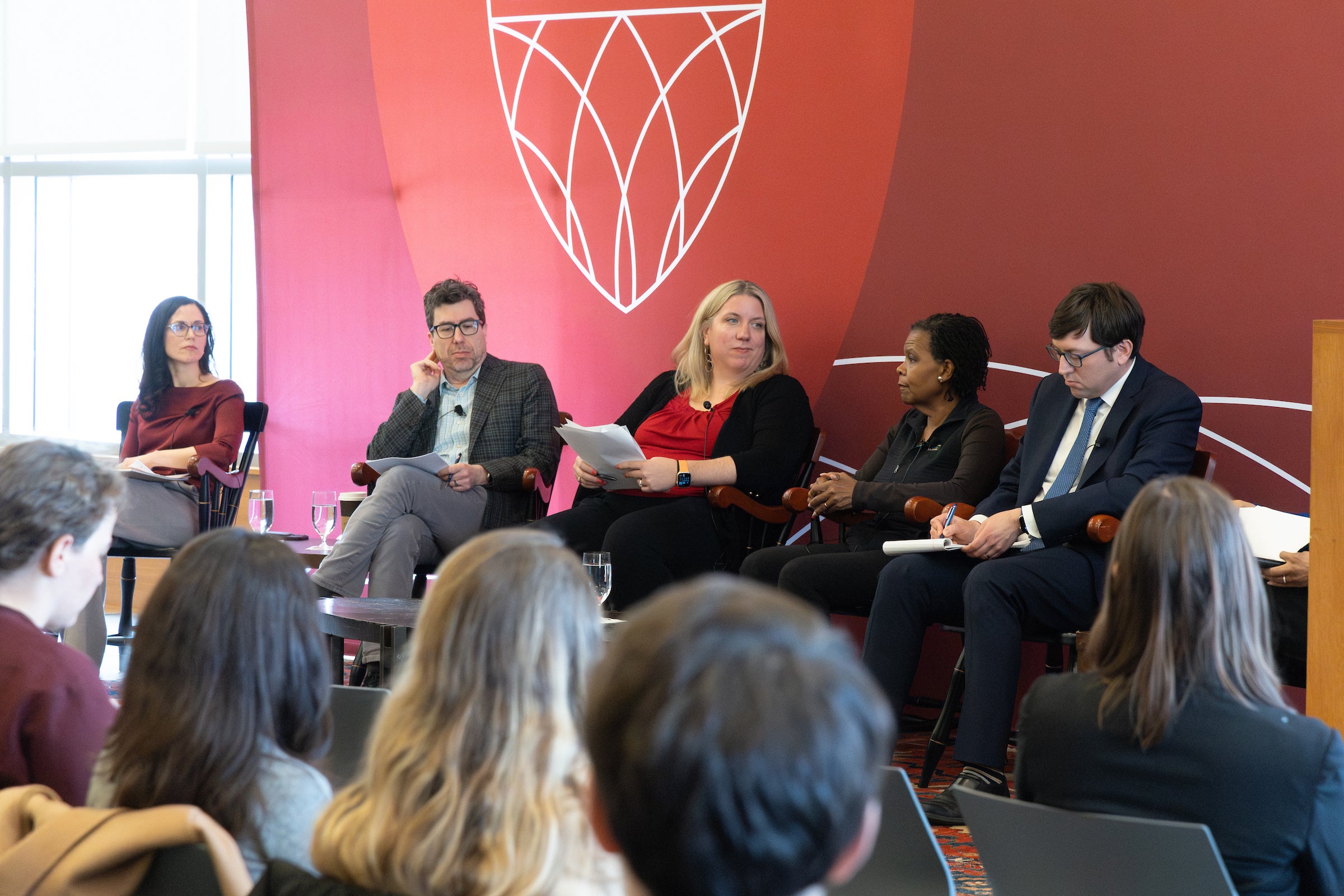
That was one of the central messages at an event hosted in March at Harvard Law School, titled “The American Experiment at 250,” which examined the challenges facing law and governance in the United States today.
Introducing the discussion — the first in a series planned to commemorate the 250th anniversary of the Declaration of Independence — John Goldberg, the Morgan and Helen Chu Dean and Professor of Law, noted the significance of the occasion and its connection to the law and legal system.
“As we commemorate this nation’s 250th birthday, I am proud that Harvard Law students, faculty, alumni, and staff are playing their part in our never-finished collective undertaking to build a nation committed to liberty, democracy, justice, and the rule of law,” Goldberg said.
During the panel, which was moderated by Tomiko Brown-Nagin, dean of the Radcliffe Institute for Advanced Study, participants shared ideas from essays reflecting on contemporary political and legal issues in the U.S. that will be published in a forthcoming book.
‘Citizens need to make this democracy work’
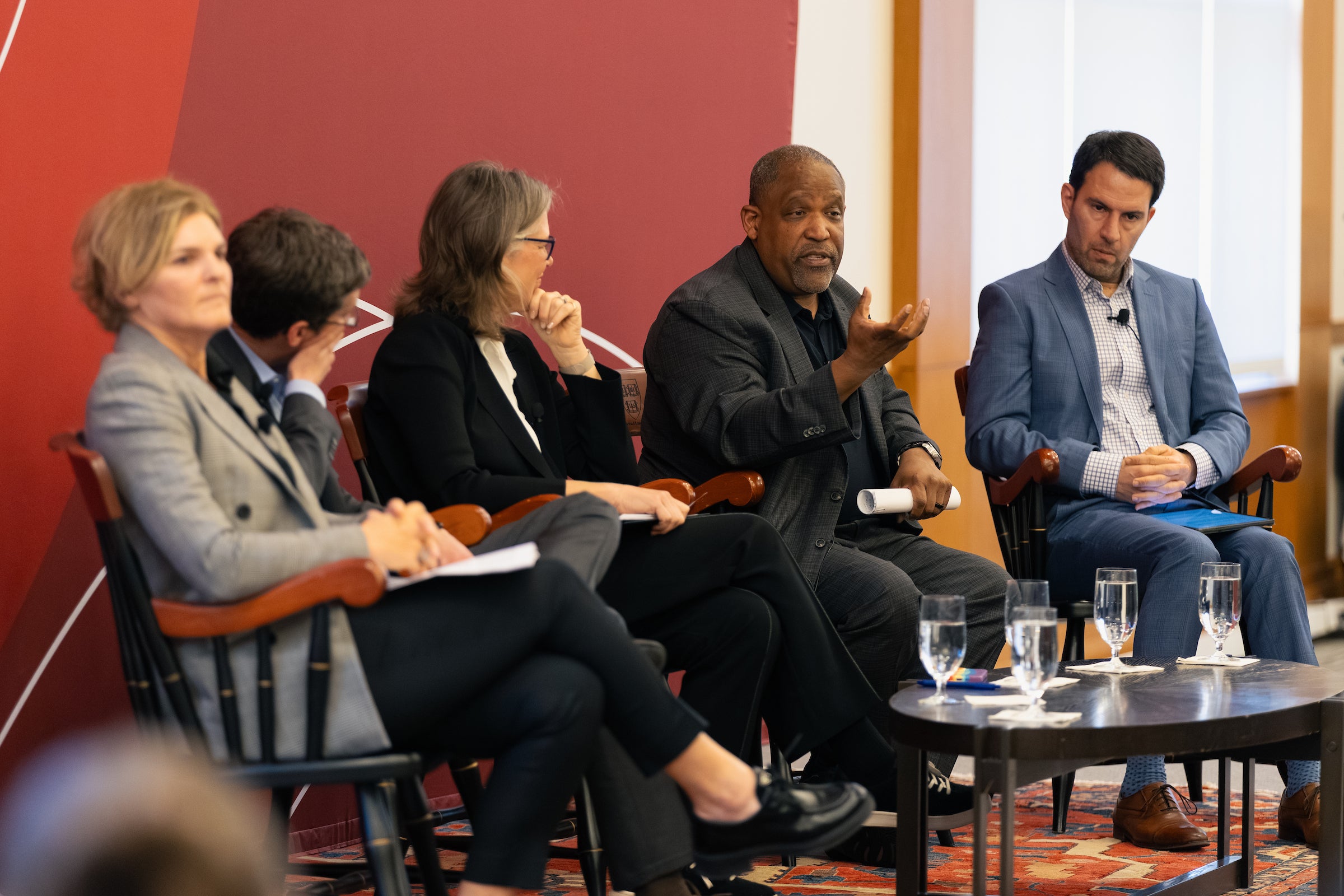
America is a country built on debate, not diktat — but the cultural and social frameworks that facilitate productive discourse are disappearing, warns Sheila Heen ’93, the Thaddeus R. Beal Professor of Practice at Harvard Law School.
“Our government is set up to put persuasive power, or negotiation, at the center as the engine of democracy,” said Heen, speaking at an event on April 7. “The problem we are in right now, is that there are three foundational conditions to successful negotiation, each of which are eroding or being undermined.”
Heen’s remarks came during the second in a series of discussions hosted by Harvard Law School in commemoration of the 250th anniversary of the Declaration of Independence. The first event, held on March 24, centered on issues of law and governance. The series is expected to resume in fall 2026.
Moderated by Nicholas Stephanopoulos, the Kirkland & Ellis Professor of Law, the April panel also included talks by professors Ronald Sullivan Jr. ’94, Jody Freeman LL.M. ’91 S.J.D. ’95, and Benjamin Eidelson, each of whom contributed essays that will be published in a forthcoming volume.
‘America Unfinished’: Contemplating the past, present, and future of the United States
When Abraham Lincoln delivered the Gettysburg Address in 1863, the president closed by calling on future Americans to continue the “unfinished work” of building a country rooted in principles of liberty and equality.
That phrase now lends its name to a new essay collection, “America Unfinished: 250 Years of Law and Governance,” envisioned and edited by Harvard Law School professors Alexandra Natapoff and Guy-Uriel E. Charles. Through 62 compact essays by individual members of the Harvard Law faculty, the book explores the challenges, risks, and opportunities faced by the United States as it marks its semiquincentennial in 2026.

Saving an American symbol
It’s hard to imagine a more iconic symbol of the United States of America than the bald eagle. Many Native American peoples have long considered the bird sacred, cherishing its feathers for ceremonial and spiritual purposes. The eagle has also signified strength and freedom since it was added to the Great Seal of the United States in 1782.
Yet Haliaeetus leucocephalus nearly disappeared from the lower 48 states — more than once, says Andrew Mergen, faculty director of the Emmett Environmental Law and Policy Clinic at Harvard Law School.
“The bald eagle almost went extinct twice, and it almost went extinct twice for different reasons,” says Mergen, who is also the Emmett Assistant Clinical Professor of Environmental Law at Harvard — and an avid birdwatcher.
That the bald eagle not only survives — but thrives — across the U.S. today is a testament to the work of brave lawyers, advocates, and Native activists over a century of the environmental movement, Mergen argues.
“The story of the eagle is a story of environmental law working,” he says.
Is a more perfect union still possible?
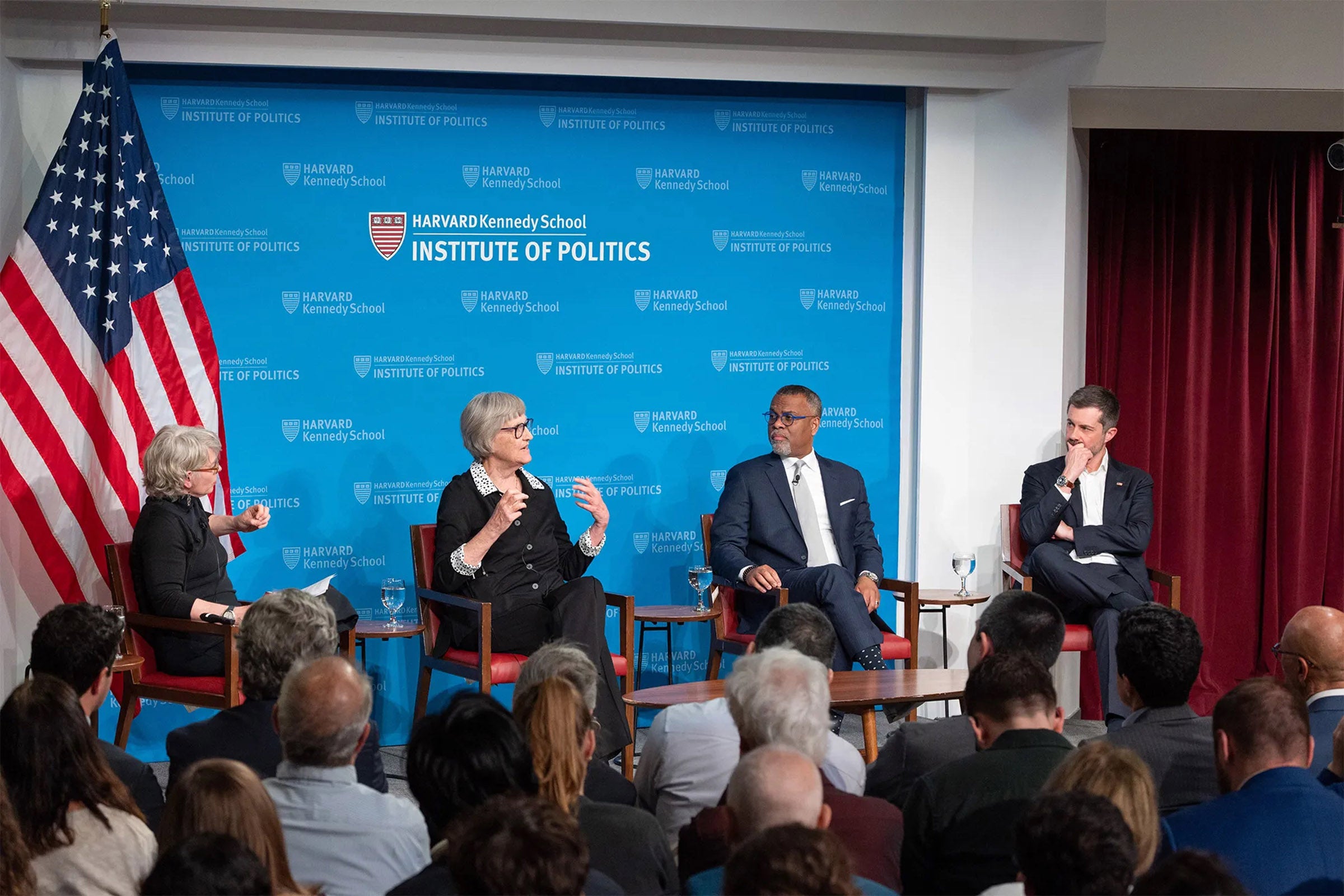
During an April 2 talk at Harvard Kennedy School, a panel of American history scholars and political analysts discussed the forces of the present and the past animating the country’s divisive political climate and whether there remains a path to a more perfect union. The panel included Drew Faust, a Civil War historian and president emerita of Harvard; Eddie S. Glaude Jr., a scholar of African American studies and religion at Princeton; and Pete Buttigieg, former U.S. secretary of transportation who is currently a visiting fellow at the Institute of Politics and a Hauser Leader at the Center for Public Leadership. The discussion was the first in a new Kennedy School series, “Consent of the Governed: America at 250 and Beyond,” recognizing the country’s 250th anniversary and the need for “straight talk” during “hard times,” said Jill Lepore, David Woods Kemper ’41 Professor of American History at Harvard and a New Yorker staff writer, who is moderating the series.
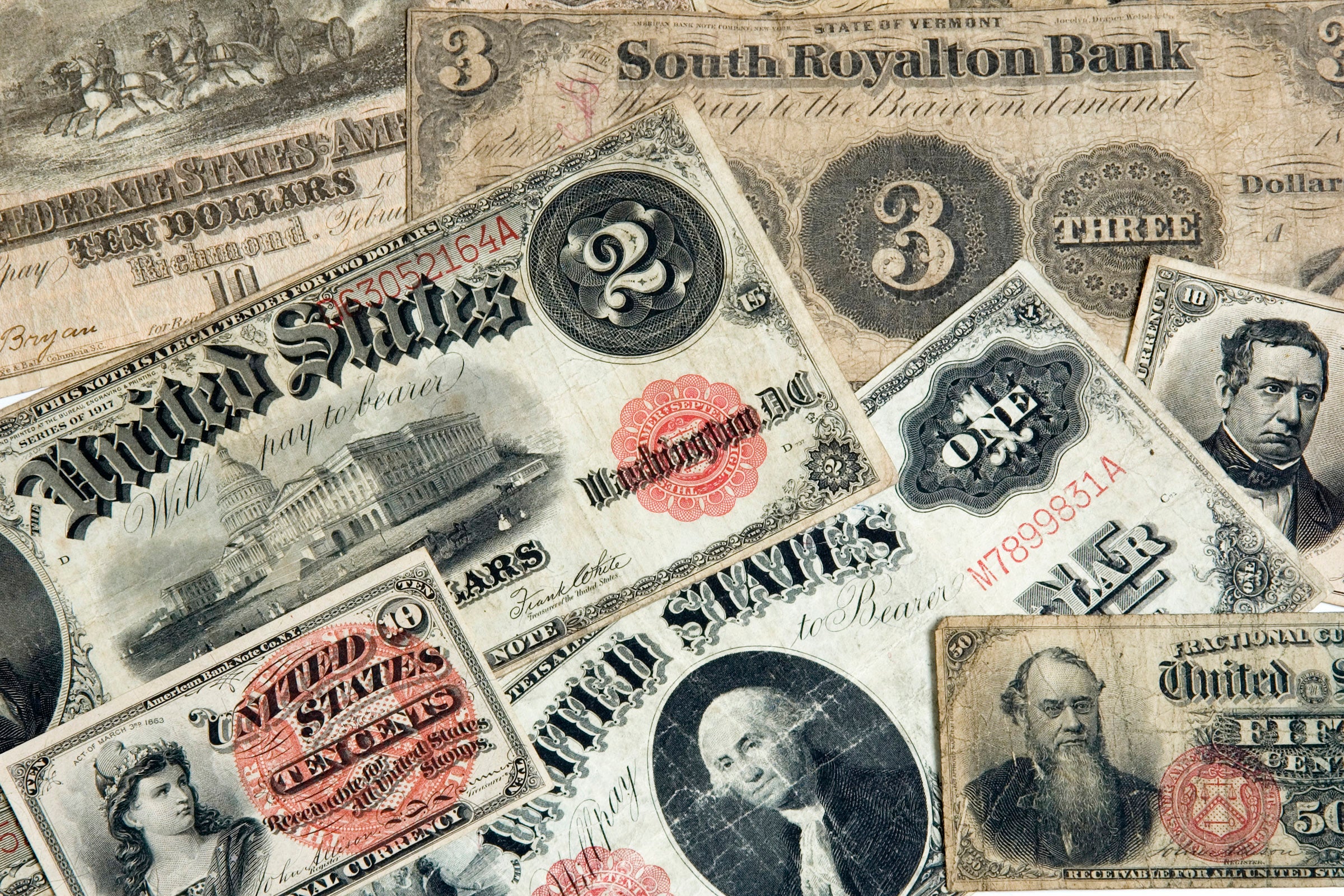
U.S. currency and the ‘origin story’ of the Federal Reserve
The power to make money and oversee its exchange is one of the most significant authorities wielded by government.
In the United States, this power lies with the Congress and a national banking institution it deputized to modulate the flow of government-backed currency known as the Federal Reserve. But from where did that power originate and, throughout the past 250 years, how has it changed?
According to Christine Desan, the Leo Gottlieb Professor of Law at Harvard Law School, the legislative power to make money pre-dates the signing of the Declaration of Independence. It also represents a hard-fought victory for the American colonies and a key factor in the decision to revolt against England.
“The hijacking of royal power started around 1690 in Massachusetts,” said Desan. “The Massachusetts legislature began spending its own IOUs into circulation and then taxing them back, giving them much more leeway to act outside the dictates of imperial officials. That’s how the whole center of power moved from royal governors to the colonial legislatures.”
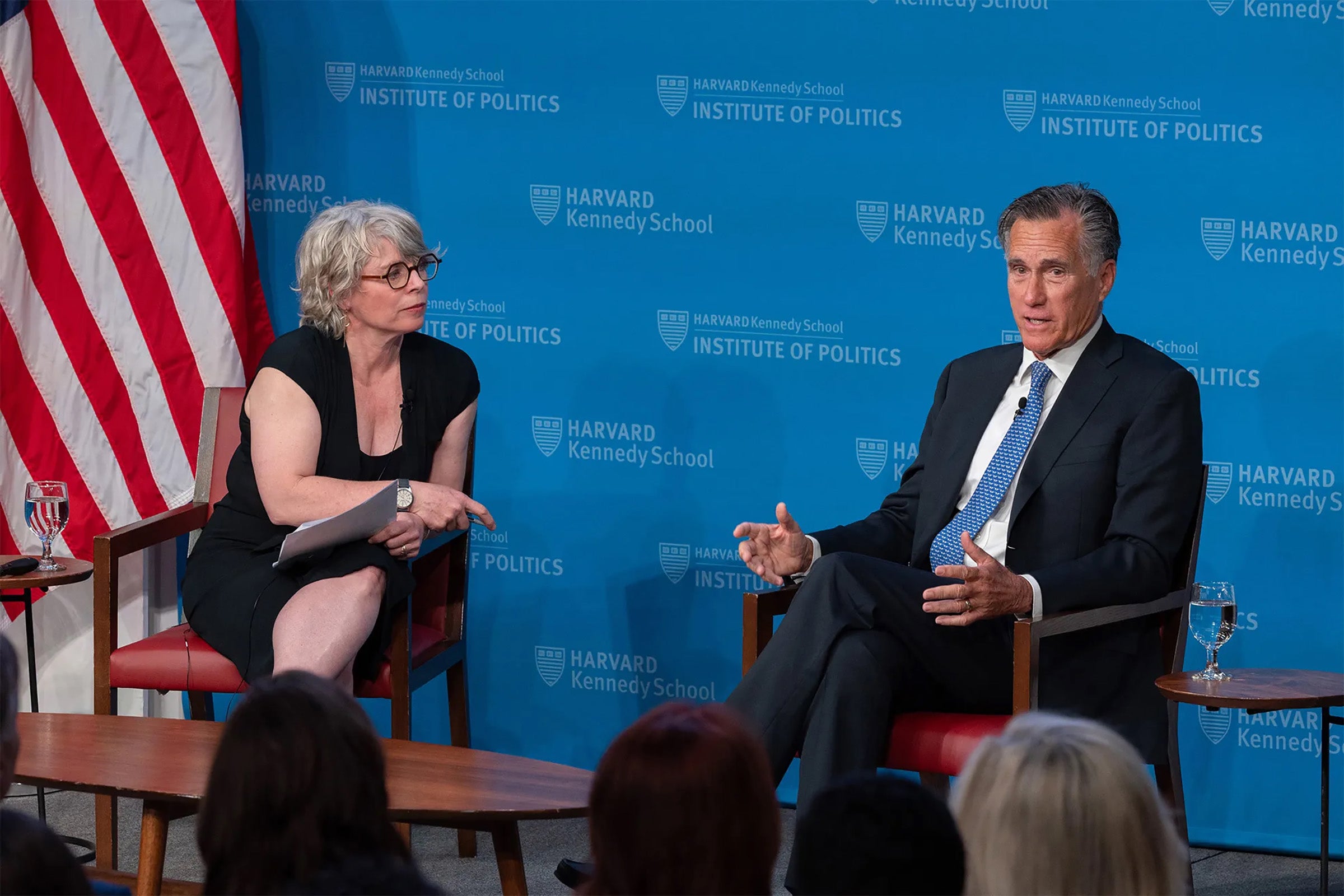
Mitt Romney on democracy and governance in America
What the country needs right now is the emergence of a great unifying leader, a government with all three branches doing their jobs, and friends who stand by us, said Mitt Romney J.D./M.B.A. ’75, a former U.S. senator and Republican presidential nominee.
During a wide-ranging April discussion — the second installment of the Kennedy School’s “Consent of the Governed: America at 250 and Beyond” series moderated by Jill Lepore, David Woods Kemper ’41 Professor of American History — Romney reflected on the divisiveness of American politics over the last decade, current foreign policy that appears to be turning its back on historical allies, and what it will take to turn things around.
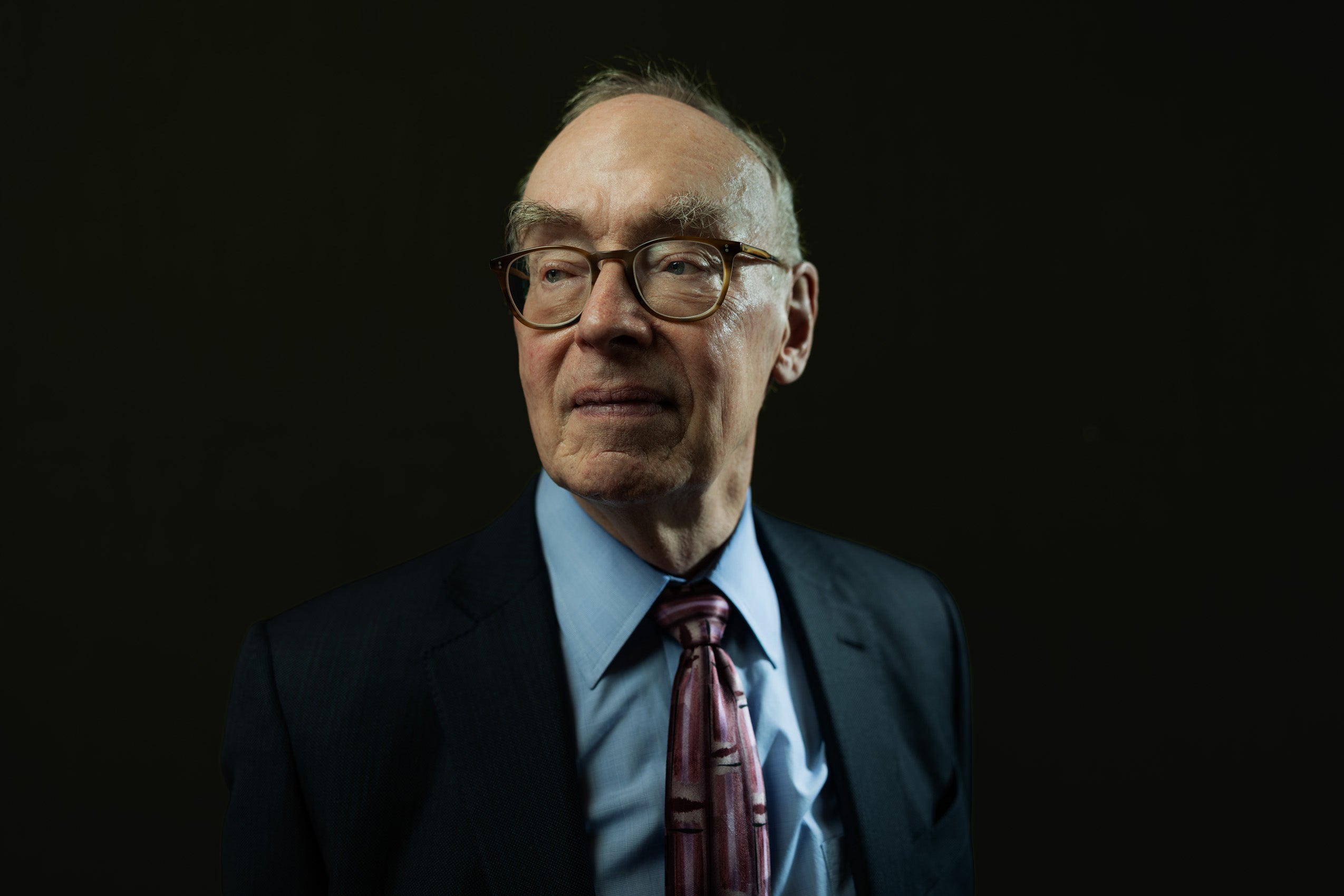
The American Revolution: A legal argument
In 1761, a lawyer named James Otis strode into a Massachusetts courtroom and laid out a fiery case in defense of his clients, a group of Boston merchants. His speech — witnessed by an admiring John Adams — took aim at writs of assistance, documents issued by colonial courts that enabled customs officials to search homes and ships without individual search warrants. Both Otis and Adams were Harvard graduates.
Calling the writs “instruments of slavery on the one hand, and villainy on the other,” Otis clearly believed these measures were an affront to principles of freedom. But his arguments were also articulated in the language of the law. The writs, he said, were “the worst instrument of arbitrary power, the most destructive of English liberty and the fundamental principles of law, that ever was found in an English law-book.”
Otis was not the only early American who wielded English law to argue first for a more favorable relationship between the colonies and Mother England, and then later to justify the establishment of a new republic.
In fact, in the decades preceding the Declaration of Independence — signed 250 years ago this year — many of the complaints made by American colonists were framed in terms of the law, not just politics, says Bruce H. Mann, the Carl F. Schipper, Jr. Professor of Law at Harvard. As the U.S. commemorates the semiquincentennial of its birth, the Harvard Law Bulletin spoke with Mann about how colonists regarded the law, where American law diverged from English common law, and an early rule-of-law lesson that still resonates today.
Revisiting America’s ‘vision statement’
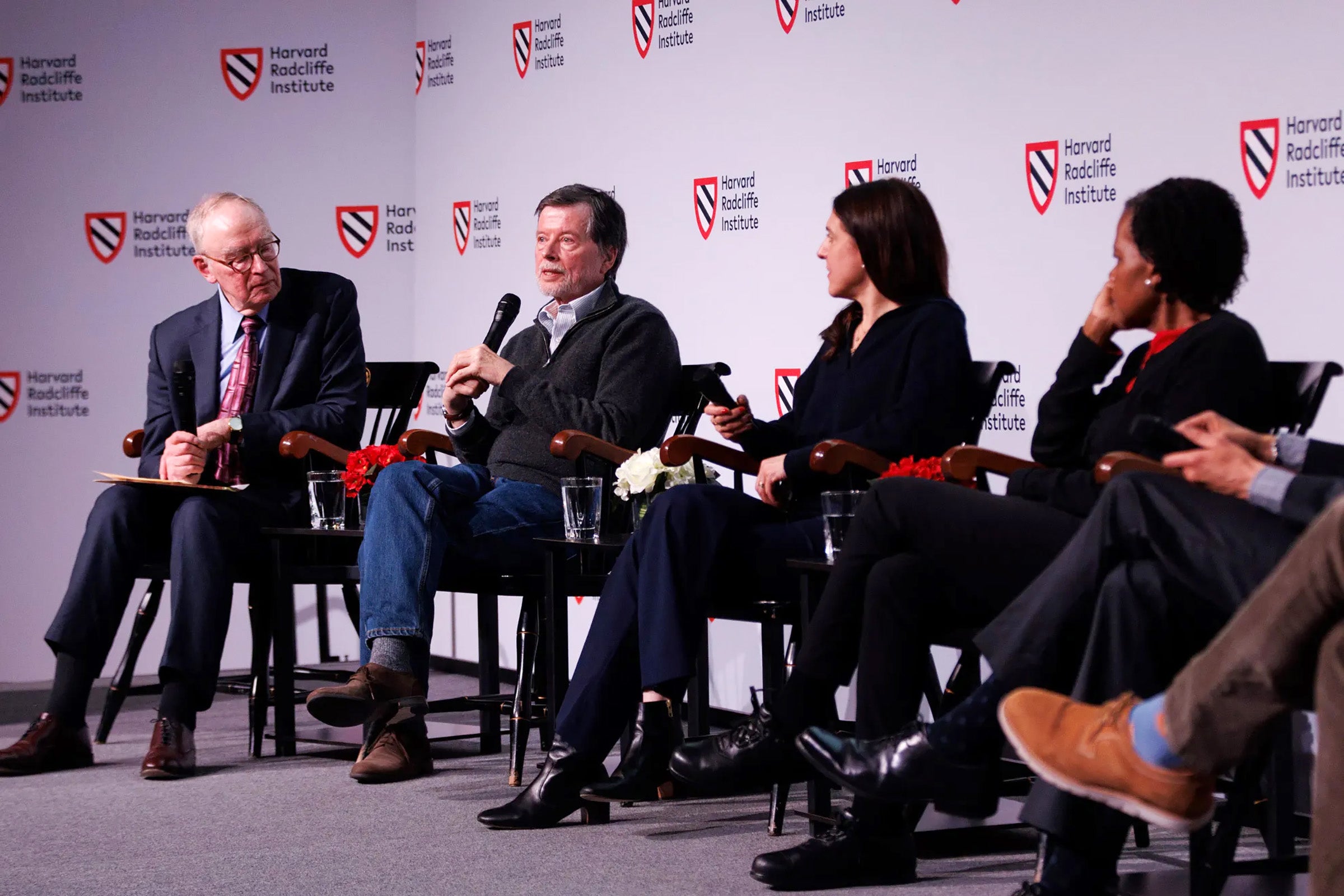
The Declaration of Independence, with its assertion of human equality, is akin to America’s “vision statement,” said Philip Deloria, Leverett Saltonstall Professor of History. He sees the Constitution, threaded with compromises on individual rights, as more like the country’s “operating manual.”
“The disjunction between the vision statement and the operating manual is part of the dilemma of the United States and its history,” he said.
Deloria was one of three faculty from Harvard’s History Department to join filmmakers Ken Burns and Sarah Botstein for a conversation that mined the nation’s founding for lasting lessons. The March 25 event, co-presented with the Radcliffe Institute for Advanced Study, and featuring Harvard Law professors Bruce Mann and Annette Gordon-Reed ’84, was offered as part of the History Department’s “Harvard in 1776” series. It showcased Harvard experts who appear in Burns and Botstein’s new PBS documentary, “The American Revolution.”
Degrees of distinction
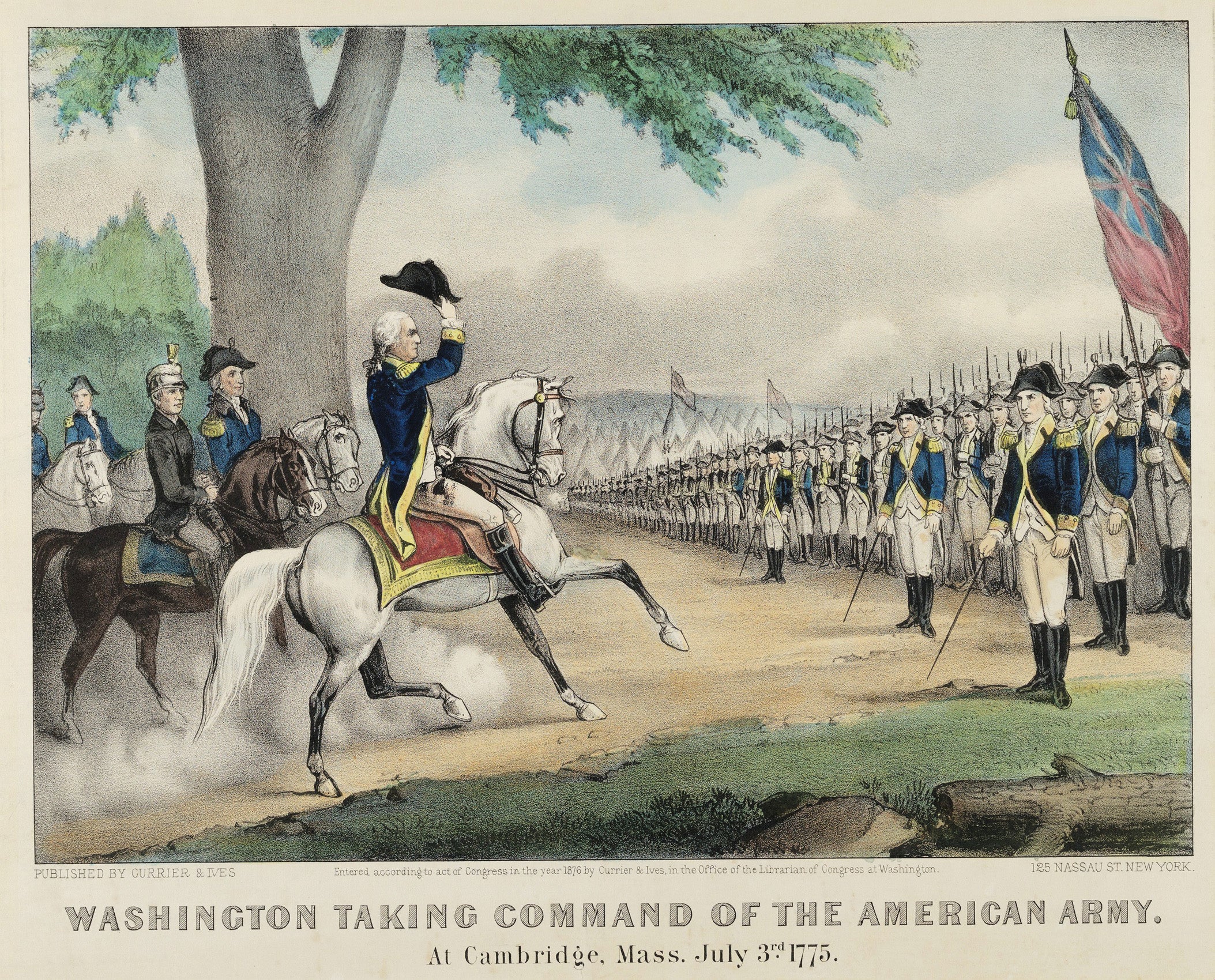
Everyone knows what happened 250 years ago: The Declaration of Independence was signed, and a nation was born. Less remembered is that another important document was issued on April 3 of that same year, when the President and Fellows of Harvard College voted to confer a Doctor of Laws degree on George Washington, then the commanding general of the Continental Army, making him the first non-Harvard alumnus to be so honored.