
When Abraham Lincoln delivered the Gettysburg Address in 1863, the president closed by calling on future Americans to continue the “unfinished work” of building a country rooted in principles of liberty and equality.
That phrase now lends its name to a new essay collection, “America Unfinished: 250 Years of Law and Governance,” envisioned and edited by Harvard Law School professors Alexandra Natapoff and Guy-Uriel E. Charles. Through 62 compact essays by individual members of the Harvard Law faculty, the book explores the challenges, risks, and opportunities faced by the United States as it marks its semiquincentennial in 2026.
“This moment is not just about this moment. It’s about the future of American legal governance. So it calls for more than our usual intellectual and academic and scholarly conversations,” says Natapoff, the Lee S. Kreindler Professor of Law.
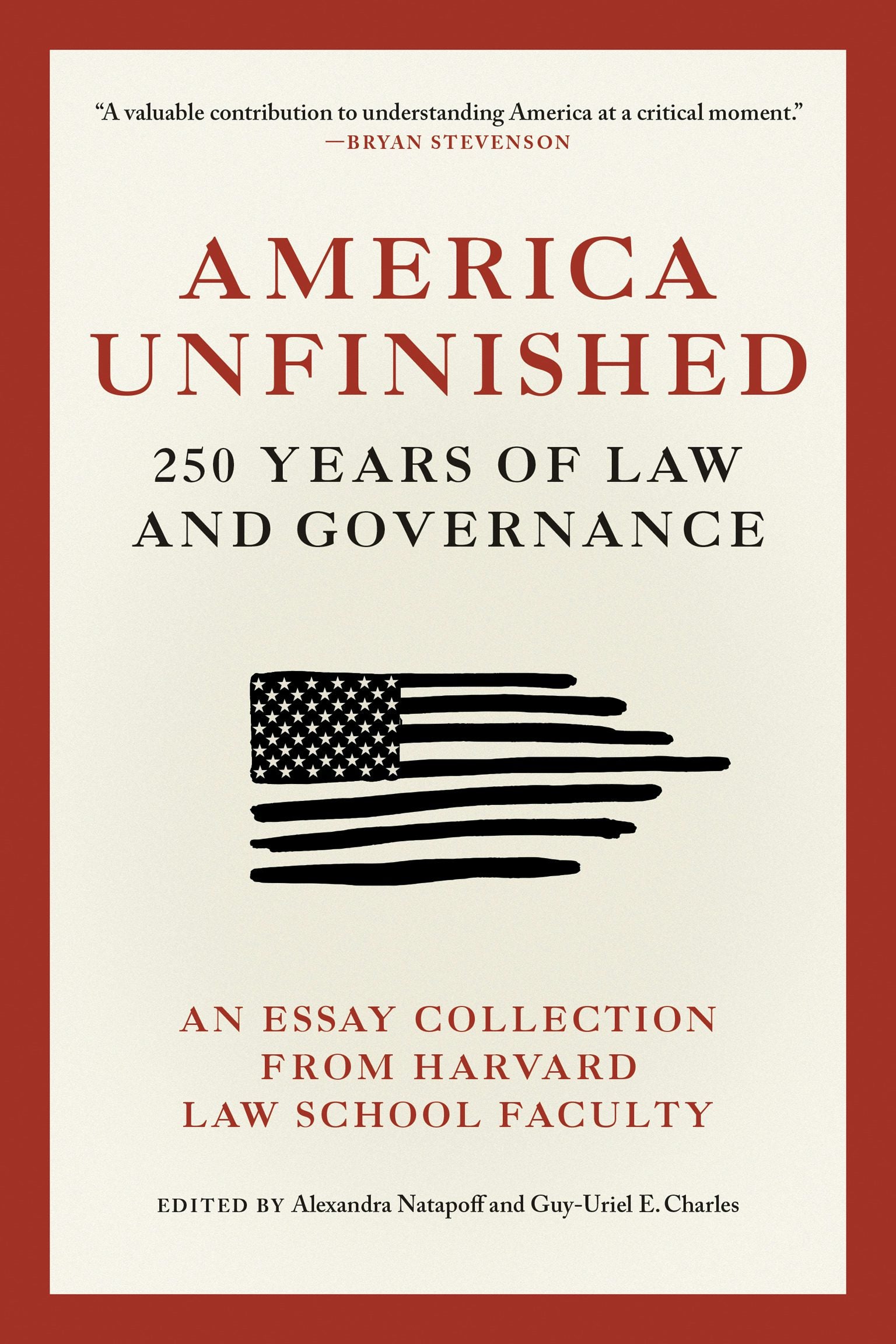
Published by MIT Press and available July 7, the collection considers a wide range of issues, including the Supreme Court, the presidency, voting rights, criminal law, environmental regulation, race and identity, corporate law, and technology. An essay by former Supreme Court Justice Stephen Breyer ’64 argues that Americans should learn about — and recommit themselves to — the country’s foundational documents. Pulitzer Prize winner Jill Lepore probes whether the president has the power to declare war. And a piece by Annette Gordon-Reed ’84, winner of a National Book Award, considers whether America is a nation bound by ancestry — or ideals.
Natapoff says that she and Charles created the book to be accessible not only to those with a legal background, but to anyone interested in better understanding the forces shaping the contemporary United States. The collection, she says, will eventually be available online at no cost, and all sales profits in the interim will benefit the Cambridge Public Library.
“We wrote this book for all of us,” she says.
Natapoff says the idea for the collection came to her last year as she mulled over the role Harvard Law School professors could and should play at a moment of enormous legal change and governance challenge. She pitched it to Charles. They figured that each faculty member would already be considering the significance of the moment to their own areas of expertise, but they hoped to find a way to bring their voices together for a more comprehensive analysis.
“We thought that this moment calls for more than each of us doing our own thing, and more than what we would normally do within our own areas of expertise, and more even than how we might individually step up,” says Natapoff.
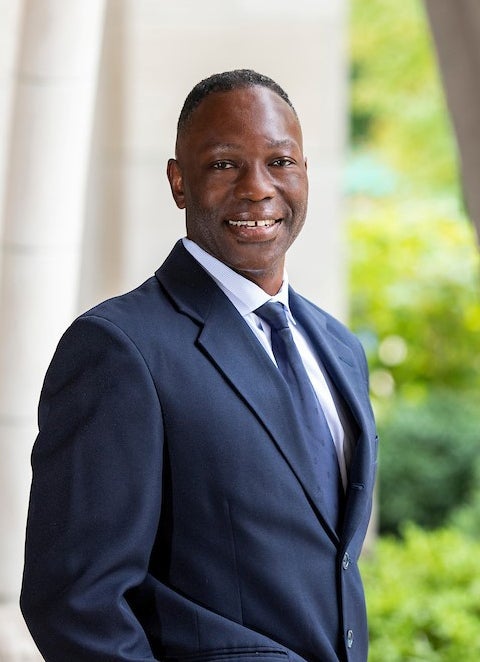
Her colleague, Charles, the Charles Ogletree Jr. Professor of Law, readily agreed.
“This moment really does require a broader conversation and collective engagement that we as a faculty should be doing together,” he says.

The project has already been shared with students. In the spring, 10 professors discussed their essays during two panel events at Harvard Law School attended by fellow faculty members, hundreds of students, and staff. The first discussion focused on the law and governance challenges facing the nation today and the second on democracy, debate, and disagreement. More events are being planned for the fall.
Charles notes that his faculty colleagues were eager to participate in the project.
“Our colleagues are not famous for working in groups of sixty or more,” he jokes. “But when we pitched this idea to them, we said, ‘We are in a moment. We have a privilege. We have a responsibility, we have an opportunity, and we would like to work together to make this happen.’ And we didn’t have to twist arms. The swell of enthusiasm to create this project was wonderful.”
Charles says the resulting essays, concise and footnote-free, “cover an extraordinary range of windows into law,” including questions about the nature of legal interpretation itself.
“What does it mean to think like a lawyer? What is the arc of history, from slavery and white supremacy all the way up through our modern-day multicultural polity? How should we think of that through the lens of law?” he says.
Natapoff says that the format’s limitations gave faculty members a chance to “be both expert and creative, which is sometimes tough to do in law.”
It also gave them a chance to voice a variety of viewpoints and differences of opinion, and Natapoff admits that some of the pieces will undoubtedly spark controversy.
“Our faculty disagree about a lot of things. And honestly, I was thrilled by our disagreement. I’m glad this is not a unified collection,” she says.
Charles argues that the book demonstrates that disagreement can be healthy — even productive. “In that way, I like to think we’re being good exemplars with this book — and exemplars of academic freedom, and freedom of speech. Maybe even of democracy itself.”
Natapoff says she and Charles hope that the book will reach audiences “not just today but going forward.”
“At the end of the day, law is an inherently collective enterprise. You can’t make law alone — it requires community and conversation. That’s why we wrote the book in an accessible way, that’s why it will become open-access and free for anyone to read. Not just the lawyers, not just the scholars,” Natapoff says. “If you are interested in American law and governance, this book is for you.”
“We see this book as the quintessential expression of our academic freedom at this moment,” she says. “We felt that this was the best way to express our collective appreciation for the fact that we can speak out — and frankly, that we’re supposed to.”
Want to stay up to date with Harvard Law Today? Sign up for our weekly newsletter.