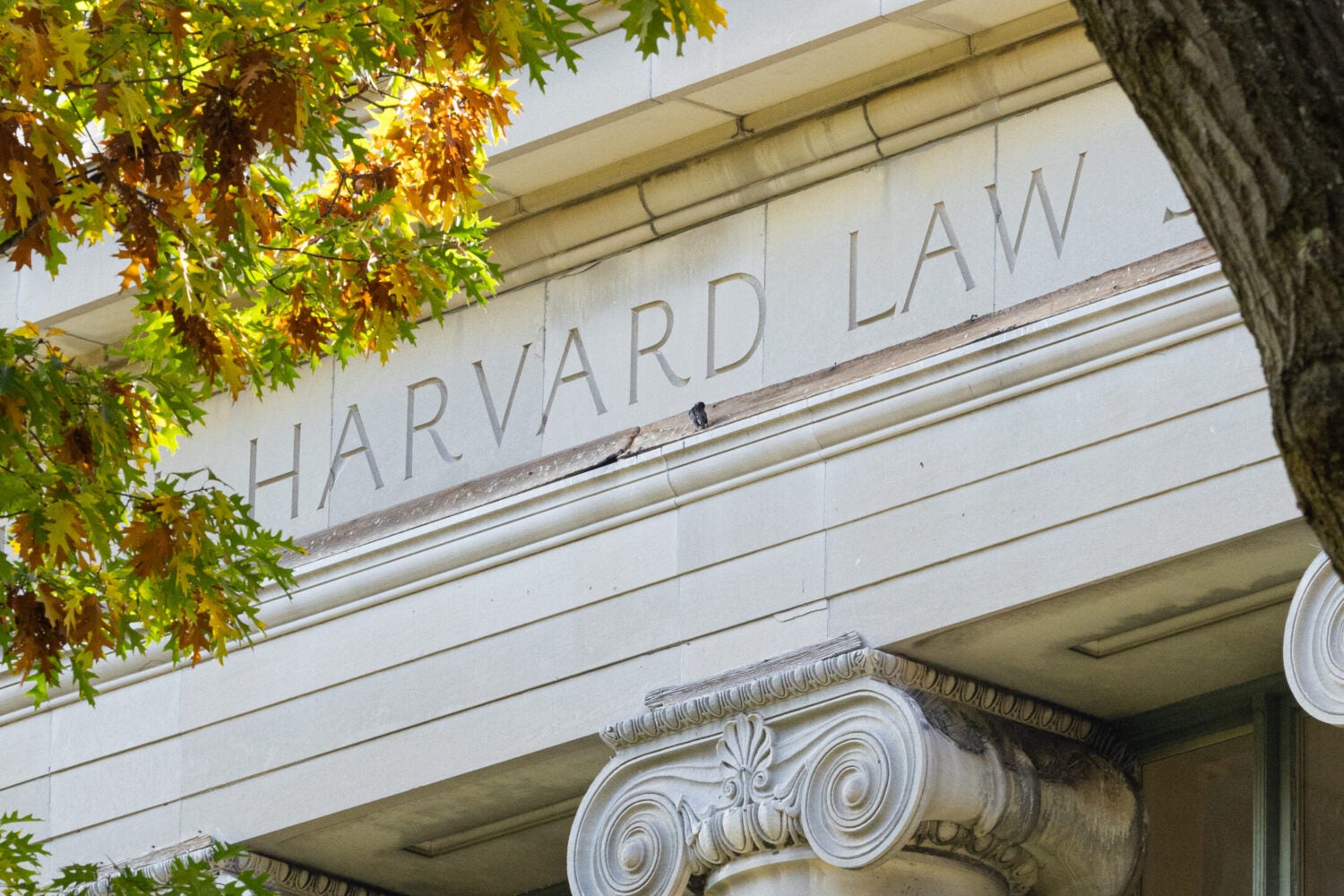
HLS Writes is home to the culture of writing at Harvard Law School—a hub connecting students to writing requirements, resources, and opportunities around campus.
Why HLS Writes
HLS Writes is a bridge from the diversity of our writing backgrounds to the centrality of writing in law.
Everyone comes to law school with different writing experiences: different educations, including undergraduate majors, sometimes graduate degrees; different professions, whether general office jobs or specifically legal work; and different personalities, some having been creative writers or journalists. Some have less experience writing in English. Some feel more at home in a STEM field. Some are less comfortable with formal writing.
Yet writing is arguably the most crucial skill for practicing lawyers and legal academics. Only some legal careers involve oral argument, but all lawyers write regularly: emails, memos, briefs, motions, contracts, legislation, scholarship. Lawyers give feedback on colleagues’ writing and respond to feedback on their own. Legal advice and advocacy are often written or, if oral, rely on written work.
Excellent writing is not a solo enterprise. It takes a community—that’s HLS Writes, a network of campus initiatives contributing to the culture of writing at Harvard Law School.
Requirements
HLS degree programs train excellent writers through coursework, clinics, and independent writing supervised by faculty members.
J.D. students receive their first intensive writing experience in the First-Year Legal Research and Writing Program. In LRW, students learn to conduct legal research, frame legal positions, and present work in written and oral argument, focusing on two fundamental kinds of legal writing: the predictive memo (answering a legal question for a supervisor using a commonly accepted form of legal analytic structure) and the appellate brief (advocating for a client’s interests before a panel of judges). 1L writers are mentored by Climenko Fellows and members of the Board of Student Advisers (BSA). The First-Year Ames Moot Court is the capstone of the 1L Legal Research and Writing Program.
As stated in the Handbook of Academic Policies, upper-level J.D. students (2Ls and 3Ls) complete a J.D. Written Work Requirement in two areas. First, the professional writing requirement is met by written work that would typically be created in the course of ordinary legal practice by an attorney: this writing is done through clinics. Second, the analytical paper requirement is an academic research paper, the kind of writing published in a law review; this writing happens in analytical paper courses, writing groups, and independent writing (including the winter writing program). In each requirement, students both give and receive peer review because the practice of law involves giving and receiving feedback on writing all the time. Upper-level J.D.s have access to one-on-one consulting sessions and other resources at the HLS Writing Center.
All LL.M. candidates must satisfy the LL.M. Written Work Requirement, as stated in the Handbook of Academic Policies. Students who hold J.D. degrees from a law school in the U.S. write a 50-page paper; students with law degrees from outside the U.S. may write a 25-pager. This paper may be written in conjunction with a Law School course, seminar, writing group, or independent paper supervised by a faculty member, including via the LL.M. Winter Term Writing Program. LL.M. candidates receive guidance and workshops from The LL.M. Writing Program, which administers the Graduate Program Writing Resources Canvas course (requires login).
Resources
HLS students benefit from a wide array of expert support as they develop as legal writers.
At the Harvard Law School Library, students explore an unparalleled collection of global legal materials, get guidance from expert staff, and enjoy special events. The library’s writing offerings fall into three groups. First is research support from on-call librarians: they can review empirical papers to check methodology and assist journal editors. Second is special events, including Notes and Comments and HLS Beyond. And third are research and writing guides, including Publishing in Law Reviews and Journals and Bluebook Legal Citation. The Library also subsidizes Scholastica journal submissions for current students with publishable academic work.
Launched in 2024, the Harvard Law School Writing Center helps students and faculty with their writing for courses and publications. Located at Wasserstein Hall 3054, the Writing Center offers one-on-one consultations for students working on research papers, journal articles, books, blog posts, notes, comments, opinion pieces, and conference presentations. The Writing Center also develops resources to enhance the culture of writing at HLS and hosts events such as Publishing While Practicing and How To: The Legal Op Ed.
The Jane Lakes Harman Writer-in-Residence was launched in 2026 with Amy Davidson Sorkin of The New Yorker as the inaugural Writer-in-Residence. Distinguished writers including Patrick Radden Keefe and David French work directly with students on public writing: not scholarly articles or legal work product, but newspaper and magazine writing about legal issues for a wide audience. Students learn to frame complex legal arguments as compelling narratives—and how to find the human story in legal cases.
Opportunities
Students join the world of legal writing through special activities at HLS, including moot courts, journals, publications, prizes, and research assistantships for faculty members.
Harvard Law School produces more than a dozen student-edited journals that publish the latest legal scholarship. Each semester, journals recruit and train subciters who check an article’s sources for accuracy and correct Bluebook citation. Leadership positions include both editorial leadership (for instance, technical editors who supervise subciters) and membership leadership (for instance, events directors). Most journals operate through the Dean of Students and Office of Community Engagement, Equity, and Belonging, though Harvard Law Review and the Harvard Journal of Law & Public Policy are run independently. Journals offer invaluable practical experience in legal writing, editing, and scholarship, enhancing a student’s qualifications when applying to summer jobs and judicial clerkships.
The HLS Writing Fellows are a community of upper-level J.D. writers who staff the Writing Center, research the craft of legal writing, develop expertise as legal writers, design special events, create practical guides for legal writing, and build leadership skills central to the practice of law. Fellows offer one-on-one consultations to HLS students writing analytical papers. A Writing Fellowship might be a good fit for you if you’re a good writer who wants to become an outstanding writer, you have a background or future in teaching or writing, or you want to work with experienced authors to prepare and submit your writing for publication. Writing Fellows get the standard rate of pay for Teaching Fellows and Research Assistants.
Each year HLS awards the Harvard Law School Writing Prizes for the best papers written by students in particular areas of the law. These awards showcase our students and the school at our very best. There are more than twenty prizes in various categories with award amounts ranging from $1,000 to $9,000. Prize-winning papers are recognized in the Commencement Bulletin during the year of their graduation and often go on to be published in law reviews and legal journals.