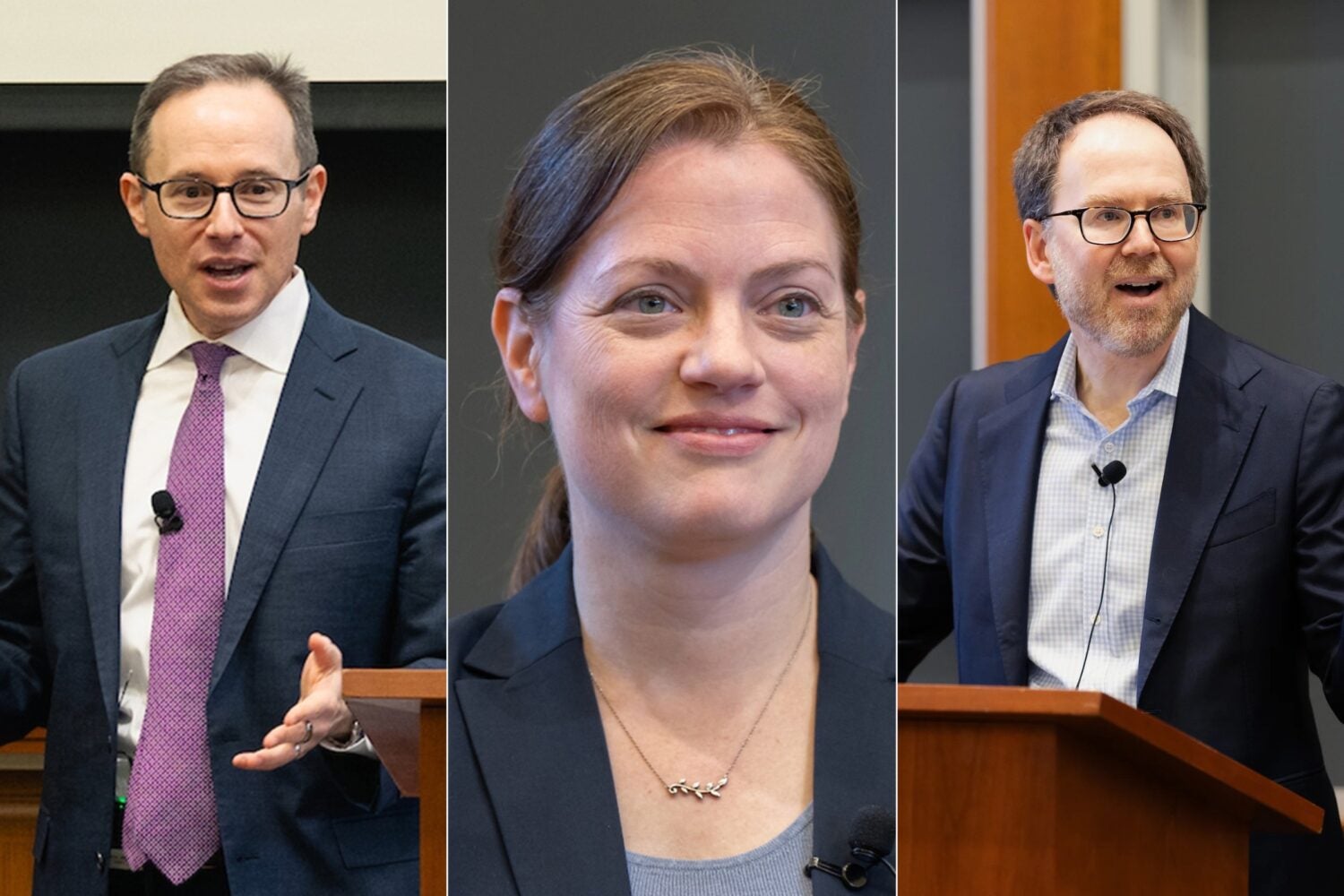
Each year, graduating J.D. and LL.M. students invite faculty to deliver one final lecture to the graduating class as part of the Last Lecture Series — a tradition in which Harvard Law faculty offer parting words of encouragement and advice to graduating students. This year, students selected Professors Kristen Eichensehr, Benjamin Sachs, and Robert Sitkoff to send them off with final words of wisdom as they prepare for their post-Harvard Law lives and careers.
Kristen Eichensehr: ‘Fight the good fights’
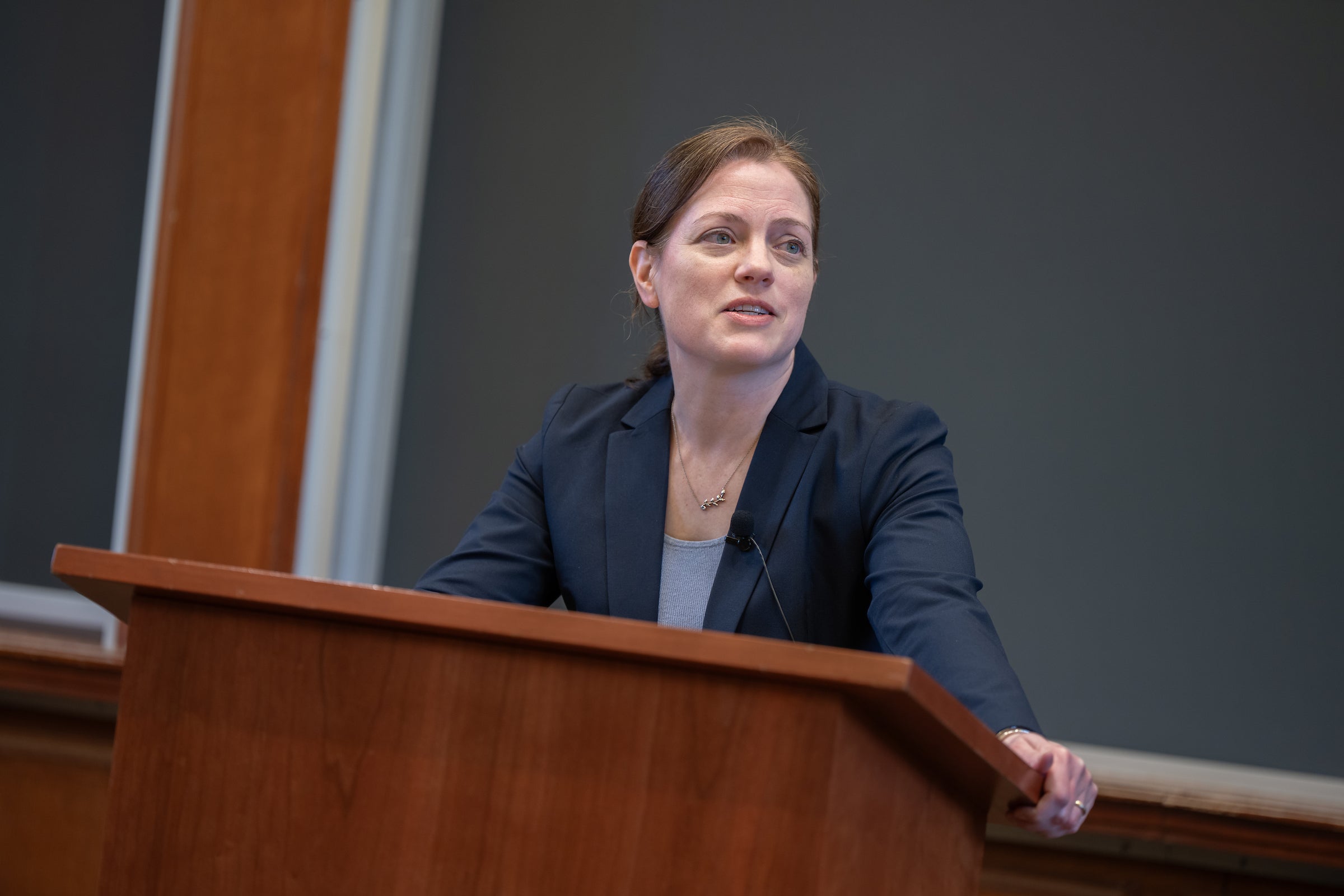
In an era of constant flux, lawyers are not just interpreters of the moment but stewards of the law’s power to shape it, argues Harvard Law School Professor Kristen Eichensehr.
“Expect the unexpected. This isn’t just a good idea for lawyers, it’s a responsibility,” said Eichensehr, an expert in foreign relations and national security law.
In her talk, Eichensehr emphasized three key ideas to the soon-to-be attorneys: anticipate surprises; pace yourself in your work and career; and consider why law and lawyers matter today.
On the first point, she suggested that audience members were entering a career — and society — far different from what existed even a decade ago. “You’re graduating into a world of dynamic and dramatic and avulsive change, both domestically and internationally,” she said.
Despite, or perhaps because of, this tumult in the nation and the world, a lawyer’s job is to be a source of expertise and accurate information about these monumental changes, she suggested. “A big part of your role as a lawyer is helping people … to plan for and exist in uncertain futures.”
Read full coverage of Kristen Eichensehr’s Last Lecture
Benjamin Sachs: Last lessons from ‘Lord of the Rings’
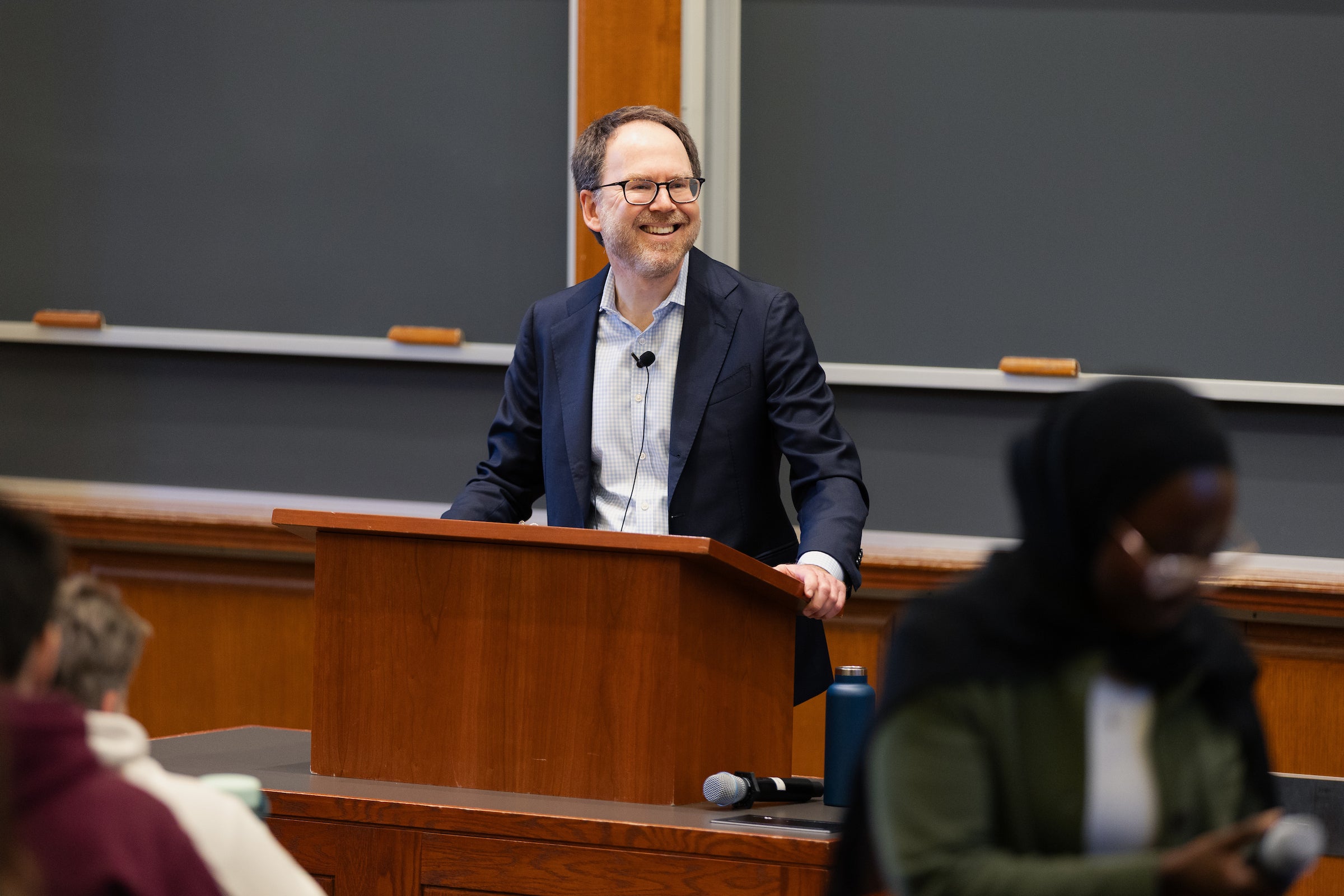
For his last lecture to the Class of 2026, Professor Benjamin I. Sachs said he would begin with words from his favorite book. But to the audience’s surprise, Sachs quoted neither John Rawls nor Charles Dickens, neither Karl Marx nor William Shakespeare.
Instead, he channeled J.R.R. Tolkien, author of “The Lord of the Rings,” a popular fantasy trilogy published in the 1950s.
“I think the books contain some important lessons about life, maybe especially these days,” said Sachs, the Kestnbaum Professor of Labor and Industry.
The novels follow the story of hobbit Frodo Baggins as he departs on what seems like a Sisyphean task to destroy a dangerous ring that imbues its wearer with incredible — yet corrupting — powers.
Frodo was a reluctant hero who nonetheless came forward when he was needed, Sachs said. Later, he recounted, Frodo tells the wizard Gandalf that he wished none of the events had ever happened. Sachs quoted Gandalf’s reply: “So do all who live to see such times. But that is not for them to decide. All we have to decide is what to do with the time that is given us.”
That same dilemma, Sachs suggested, now confronted the soon-to-be graduates.
“Class of 2026, we all wish that the world you are graduating into were different than it is, that it wasn’t beset by democratic decline, by the disconcerting advance of AI, by an economy that is unaffordable to more and more people, by climate change and by war,” he said.
The audience might not be responsible for this mess, he said. Nonetheless, “what you do get to decide is what to do about those things.”
Read full coverage of Benjamin Sachs’ Last Lecture
Robert Sitkoff: Resolving disputes through law, not ‘baseball bat’
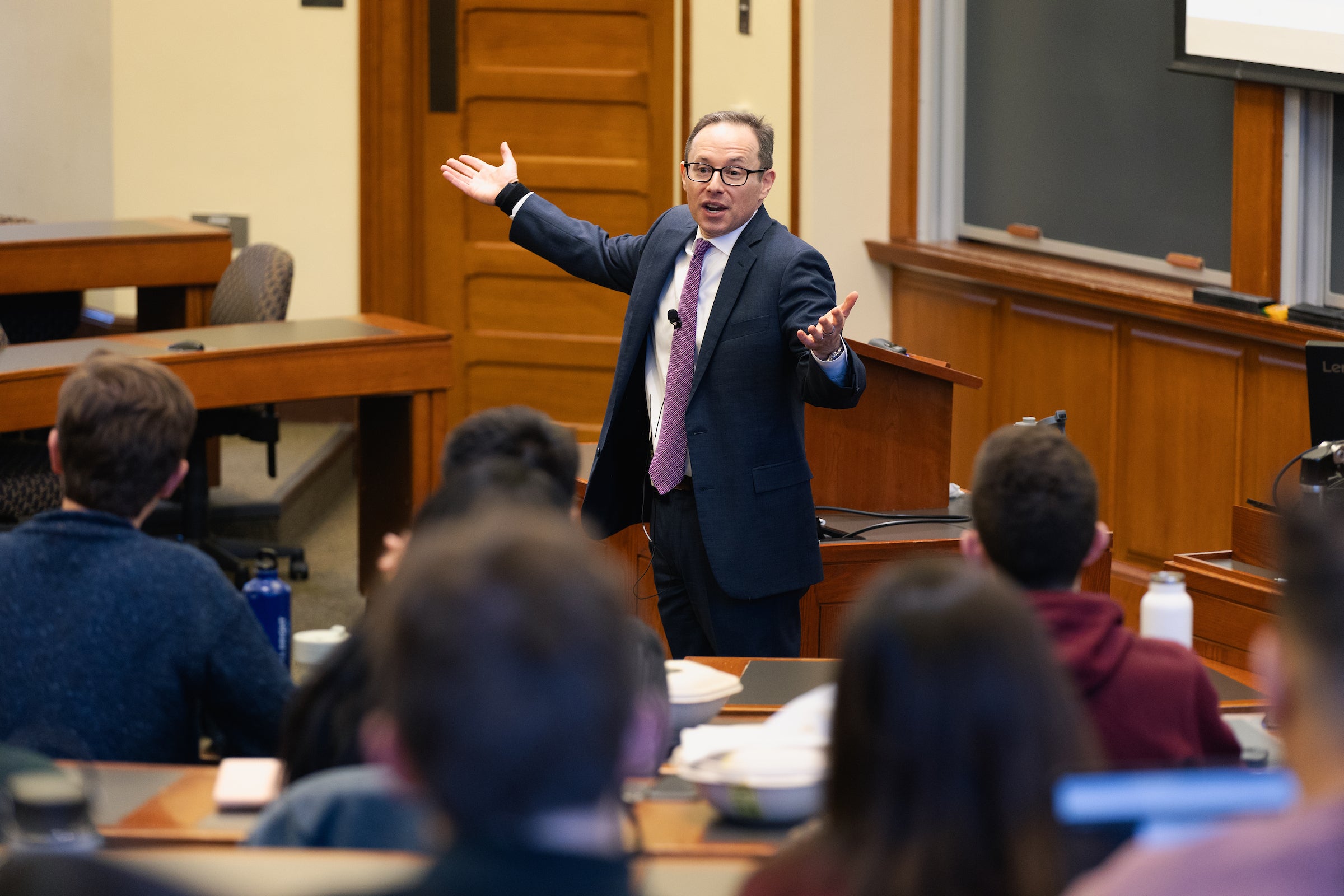
People are rightfully concerned about what happens in public law — how and when governments exercise power. But lawyers working in private law areas — such as property, contracts, torts, corporations, and family law — also play a critical role in securing rights and the integrity of our legal system, according to Robert H. Sitkoff, the Austin Wakeman Scott Professor of Law and John L. Gray Professor of Law at Harvard Law School.
“On a retail level, equally if not more corrosive to a democratic republic’s rule of law is a failure of private law to achieve the private ordering that people are seeking when someone thinks they’ve got a deal and they don’t,” said Sitkoff in his Last Lecture to the Class of 2026.
Central to Sitkoff’s message was that, like their counterparts in public law, private law practitioners bear a responsibility not only to their clients, but also “to the practice of law, and to society as a member of this learned profession.”
Sitkoff began by thanking his students for making “me a better teacher, a better scholar, a better lawyer.”
He then acknowledged that public law challenges — questions involving the Constitution, administrative bodies, or criminal justice, for example — often garner the most media coverage and popular concern. “This is front-page news,” he said. “This is the law that organizes the state and your relationship to it.”
But in Sitkoff’s view, private law — the type of law “most of you are going to be doing,” he told the soon-to-be graduates — is an underappreciated pillar of stability in American society.
“This is the law organizing your relationships — your relationships with other people, with entities, with organizations,” he said. “This the law of private ordering.”
Private law topics include marriage and family, business and contracts, civil harms, and trusts and estates — the latter being Sitkoff’s own areas of expertise.
“This is retail law. This is what many of your clients are coming to you for in their day-to-day lives,” he said. “We order your personal and professional affairs with other people — and we enforce it, we resolve it, we make it work — through law, rather than through baseball bat.”
Read full coverage of Robert Sitkoff’s Last Lecture

View full coverage from the festivities of the 2026 Class Day and Commencement Ceremonies at Harvard Law School