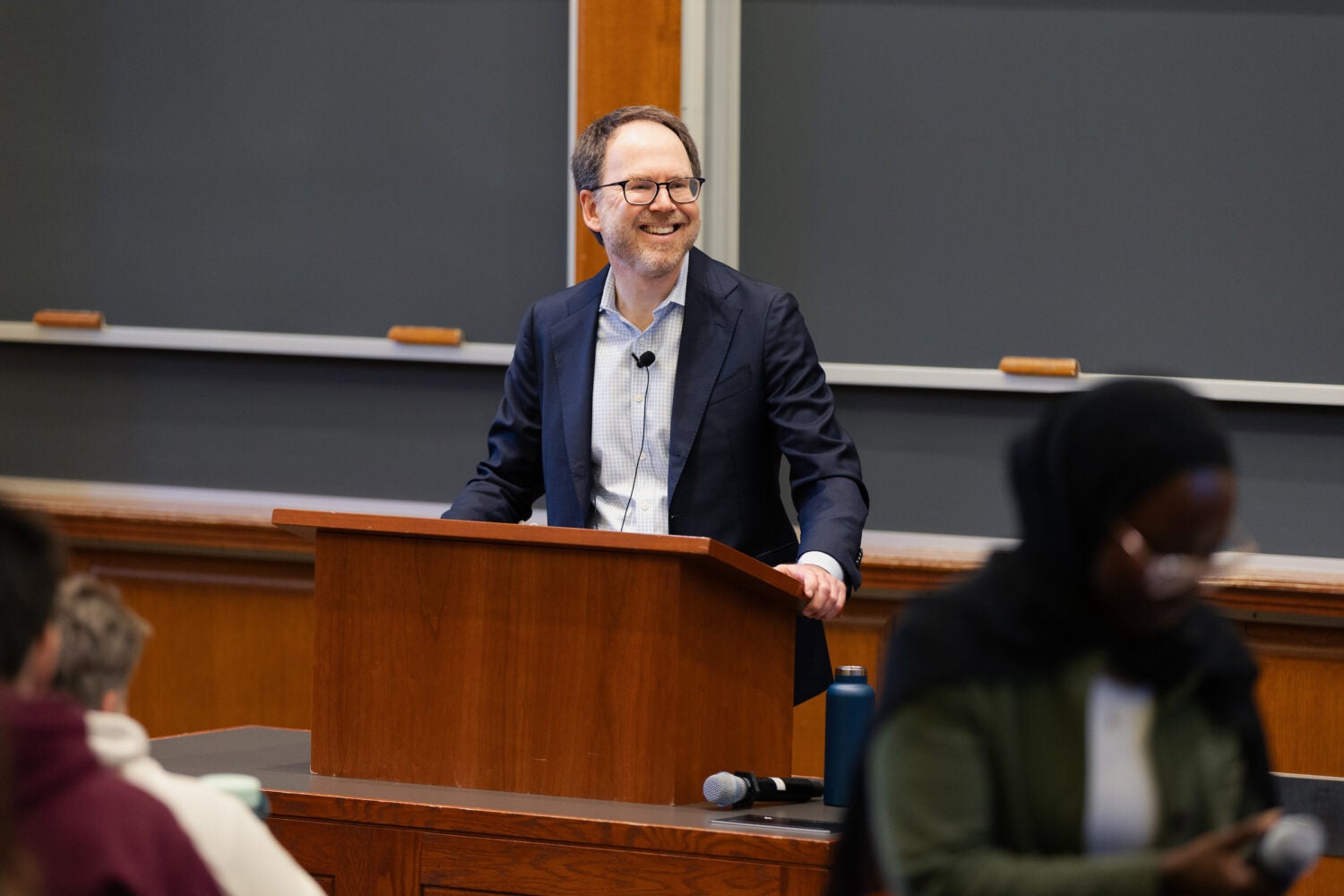
For his last lecture to the Class of 2026 — a Harvard Law School tradition in which cherished faculty members deliver words of advice to graduating students — Professor Benjamin I. Sachs said he would begin with words from his favorite book. But to the audience’s surprise, Sachs quoted neither John Rawls nor Charles Dickens, neither Karl Marx nor William Shakespeare.
Instead, he channeled J.R.R. Tolkien, author of “The Lord of the Rings,” a popular fantasy trilogy published in the 1950s.
“I think the books contain some important lessons about life, maybe especially these days,” said Sachs, the Kestnbaum Professor of Labor and Industry.
The novels follow the story of hobbit Frodo Baggins as he departs on what seems like a Sisyphean task to destroy a dangerous ring that imbues its wearer with incredible — yet corrupting — powers.
Frodo was a reluctant hero who nonetheless came forward when he was needed, Sachs said. Later, he recounted, Frodo tells the wizard Gandalf that he wished none of the events had ever happened. Sachs quoted Gandalf’s reply: “So do all who live to see such times. But that is not for them to decide. All we have to decide is what to do with the time that is given us.”
That same dilemma, Sachs suggested, now confronted the soon-to-be graduates.
“Class of 2026, we all wish that the world you are graduating into were different than it is, that it wasn’t beset by democratic decline, by the disconcerting advance of AI, by an economy that is unaffordable to more and more people, by climate change and by war,” he said.
The audience might not be responsible for this mess, he said. Nonetheless, “what you do get to decide is what to do about those things.”
And while the natural response to such serious issues may be to “duck and cover,” to hide one’s head in the sand, Sachs said, it was incumbent on the future lawyers to be a bit more like Frodo.
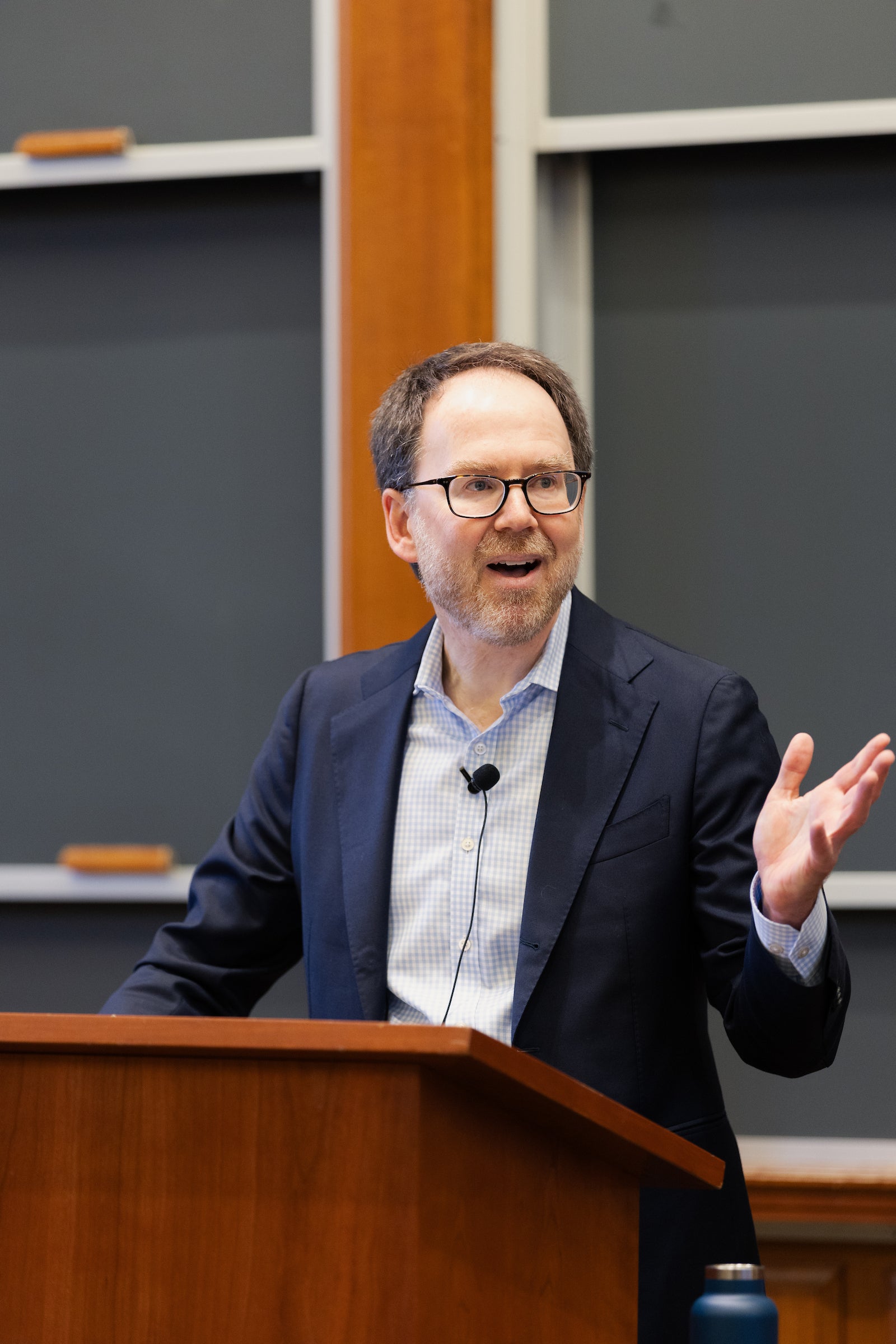
“All of you have the capacity to look serious problems in the eye and imagine new strategies for addressing them. That’s part of the power of a Harvard Law School education.”
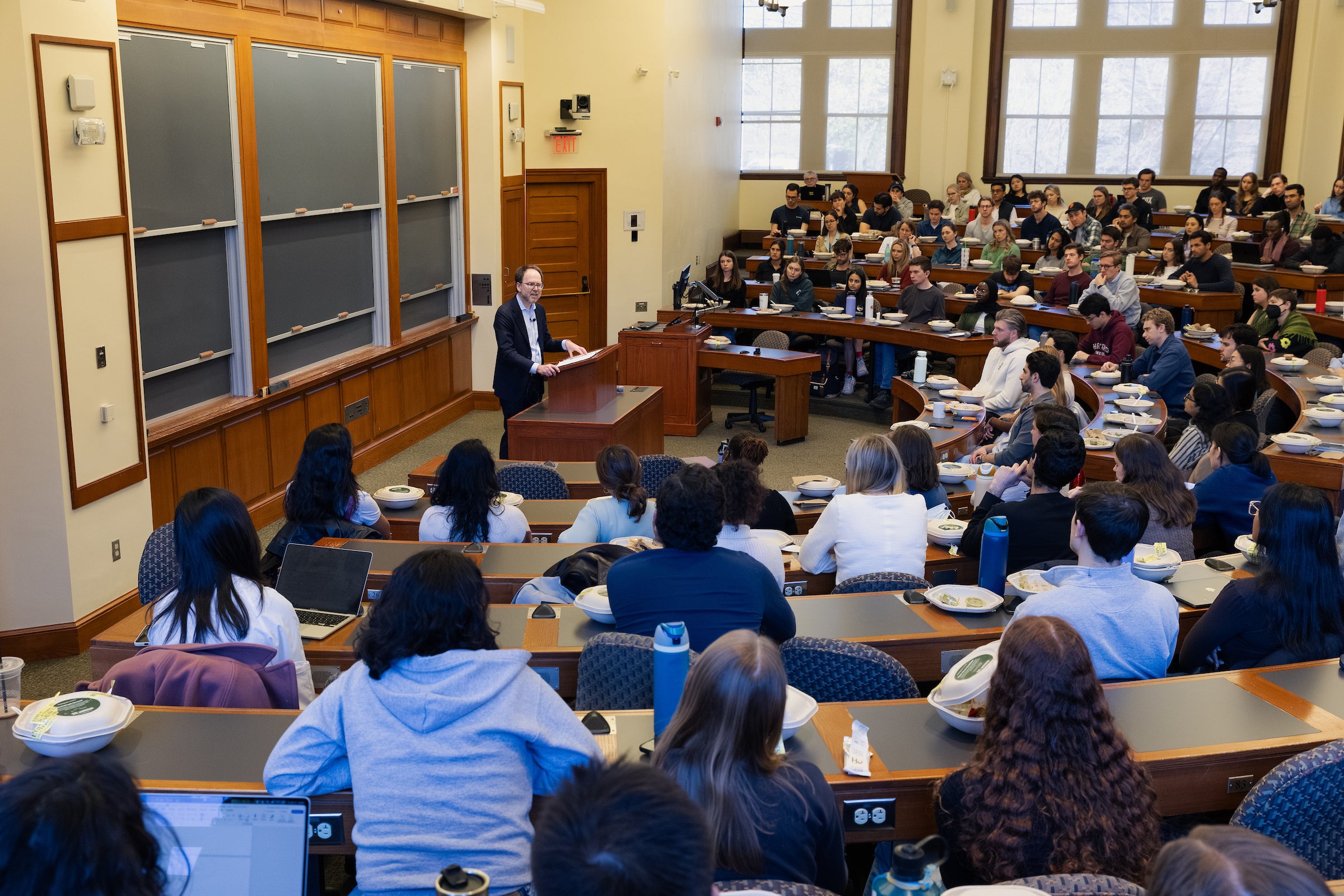
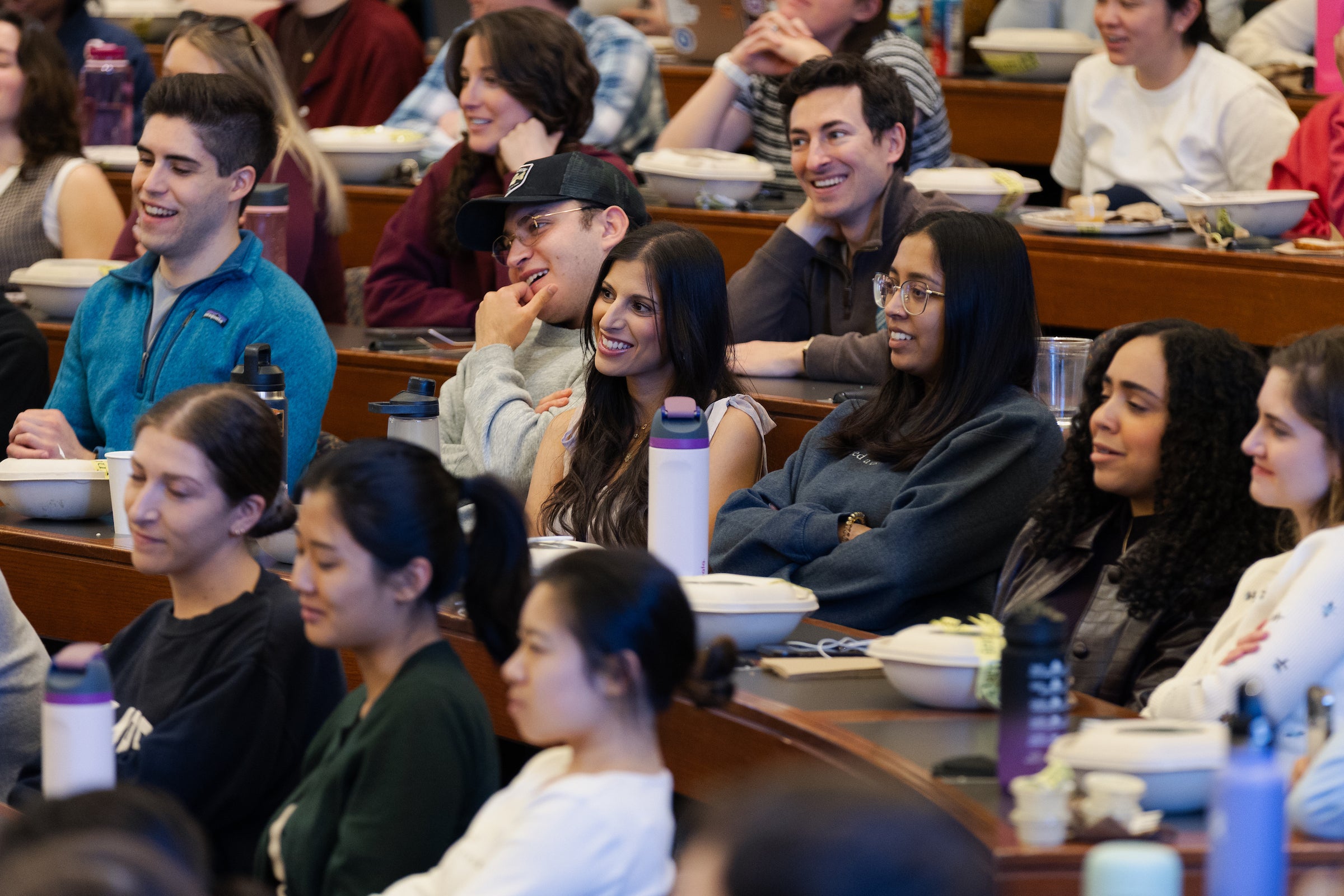
“In the end, the only way to protect ourselves from problems like the ones we now face is to solve them, because if we stay on defense, if we retreat from public challenges into spheres of private self-protection, we will eventually fail. We will eventually lose our democracy and our environment and our economy,” he said.
Sachs argued that addressing these problems would necessitate legal tools and creative, experimental approaches — and would sometimes require advocates to “make the road” where one does not yet exist.
Sachs acknowledged that not every historical movement has succeeded, but in his view, those that did share at least one thing in common. “They involved people trying something new, not inventing a new approach out of whole cloth, not ignoring the history of what had been done before, but nonetheless, doing something that hadn’t been done before.”
He gave two examples, the first of which involved Depression-era auto workers in Flint, Michigan, who came up with a new type of organized action — the sit-down strike — to prevent laborers from being replaced during a work stoppage. And during the Civil Rights Movement, Black college students refused to leave lunch counters and other public accommodations when denied service, forging the sit-in protest.
But not all “make the road” moments have such high stakes, Sachs said. “Some are far more modest, smaller scale, even personal.”
Sachs had faith that those in the audience could envision new solutions to issues, whether they chose to work in government, at a nonprofit, or in private practice.
“All of you have the capacity to look serious problems in the eye and imagine new strategies for addressing them,” he said. “That’s part of the power of a Harvard Law School education.”
And you can’t wait to do so, he told the Class of 2026. “Take advantage of the spirit that comes with being young and new and unconstrained by old habits of practice. Your youth, by which I mean your age and your newness to the profession, is an enormous advantage and a critical resource at moments like we face.”
At the end of “The Lord of the Rings,” Frodo ultimately succeeds in his quest, after much hardship, and with the support of many others along the way.
Similarly, Sachs advised the students to stay connected, to work together to make change, adding that while not everyone will always agree with one another, “We share enough that HLS can be a meaningful community for the rest of our lives. This includes our core commitment to the rule of law as the basis for democratic government, and it includes our commitment to the promise, though far from actualized, of equal justice.”
Sachs suggested that the possibility of a shared community with the graduates “makes this moment much less sad for me.”
In fact, he concluded, “It makes it a moment not of saying goodbye, but of looking forward to working together on solving the problems that confront our world.”
Want to stay up to date with Harvard Law Today? Sign up for our weekly newsletter.