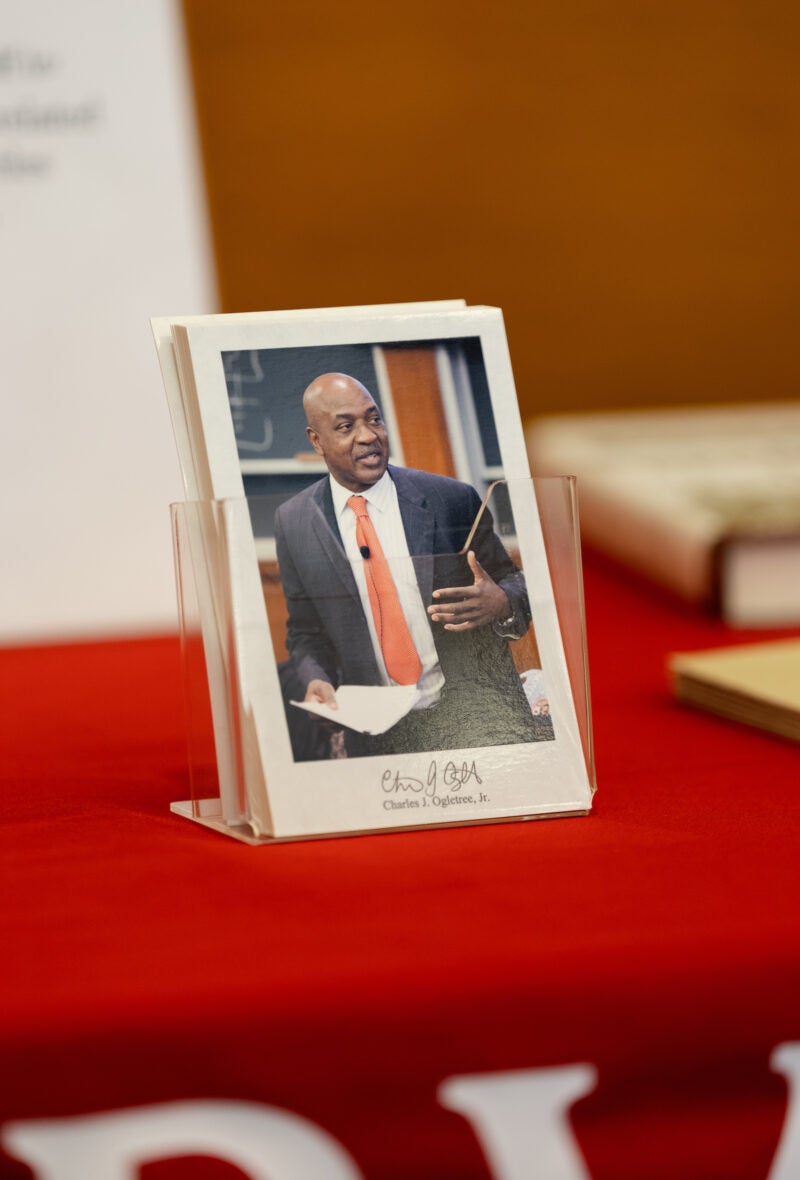
The Harvard Law School Library recently hosted an event commemorating the sweeping legacy of Charles J. Ogletree Jr. ’78 and celebrating the completion of the Charles J. Ogletree Jr. Working Papers Digitization Project, ensuring his deep insights will continue to benefit future scholars.
Ogletree, who died in 2023, was a champion for racial equality and an esteemed educator at Harvard Law School, where he taught for 36 years.
At the law school, Ogletree, known affectionately as “Tree,” founded the Criminal Justice Institute, the Charles Hamilton Houston Institute for Race and Justice, and the famed “Saturday School” program. He was also a legendary defense attorney who represented many high-profile clients — including Anita Hill and the late Tupac Shakur — and spearheaded a reparations movement for victims of the 1921 Tulsa Race Massacre and their descendants.
The Ogletree Working Papers Digitization Project at Harvard Law School began after Ogletree’s family donated the collection to the library in 2022. As the largest collection of Harvard Law faculty papers in existence, it consists of 654 boxes and 566 linear feet of materials from his career as a professor, author, legal theorist, and advocate.
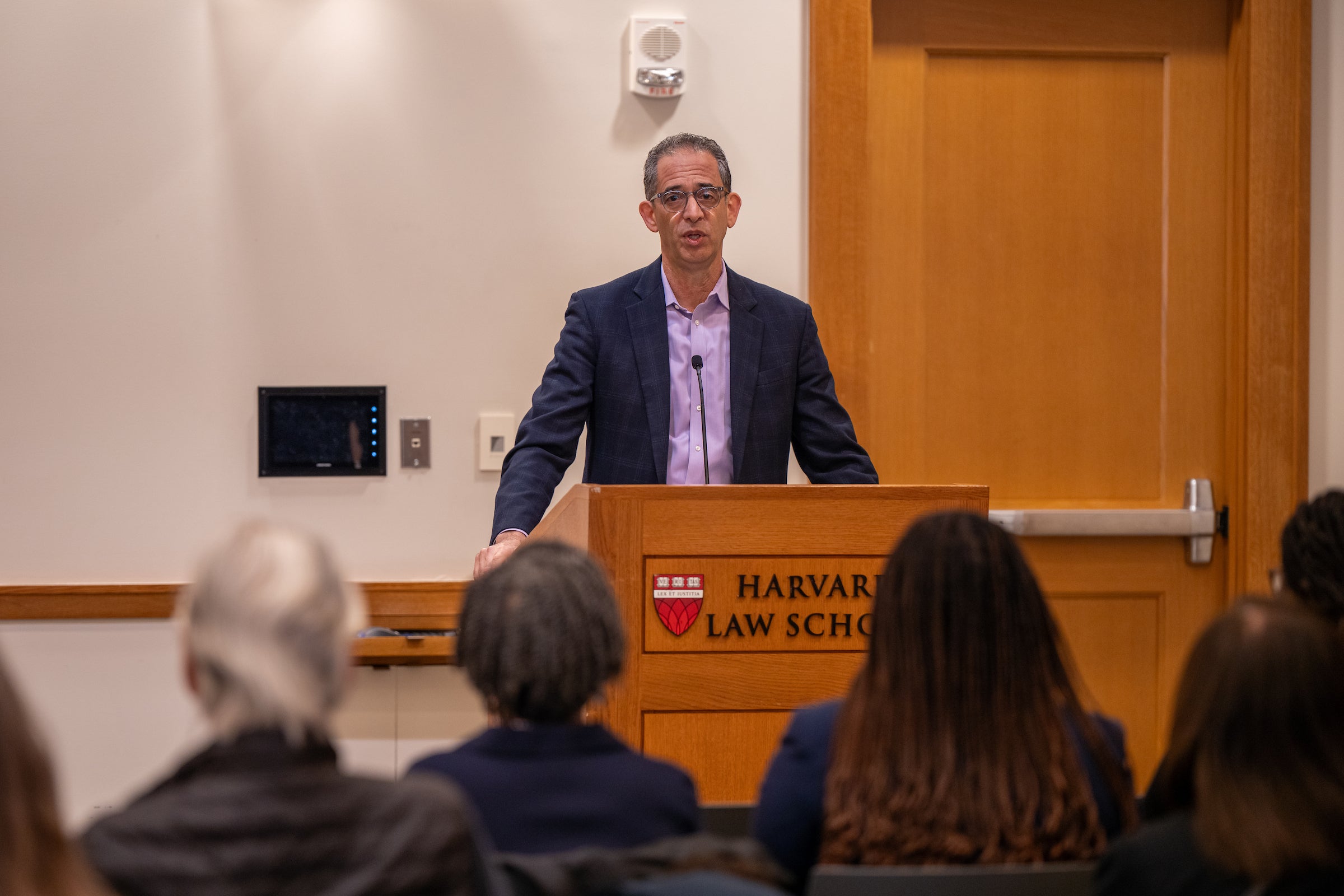
Jonathan Zittrain ’95, the George Bemis Professor of International Law at the law school and vice dean for library and information resources, opened the March 25 event by sharing how as a middle-school student he was inspired to attend Harvard Law after watching Ogletree and Weld Professor of Law Charles Nesson ’63 debate controversial issues on the PBS’s series “The Constitution: That Delicate Balance.”
“The gravitas that they brought, the quick thinking on their feet, the gentle — even playful at times — puncturing pretension they offered was, for me, a sort of siren’s call, like a moth to a flame, to Harvard Law School,” said Zittrain.
Zittrain, who eventually cofounded the Berkman Klein Center for Internet & Society with Nesson, also described what it was like to eventually work with Ogletree as a colleague.
“When I had a really, really hard problem, the opportunity to talk to Tree and see not only the gravity and the playfulness but also a wisdom that I don’t know where it comes from — it was a beacon,” recalled Zittrain. “For so many people, [Tree] was the person they turned to when they had their hardest problems.”
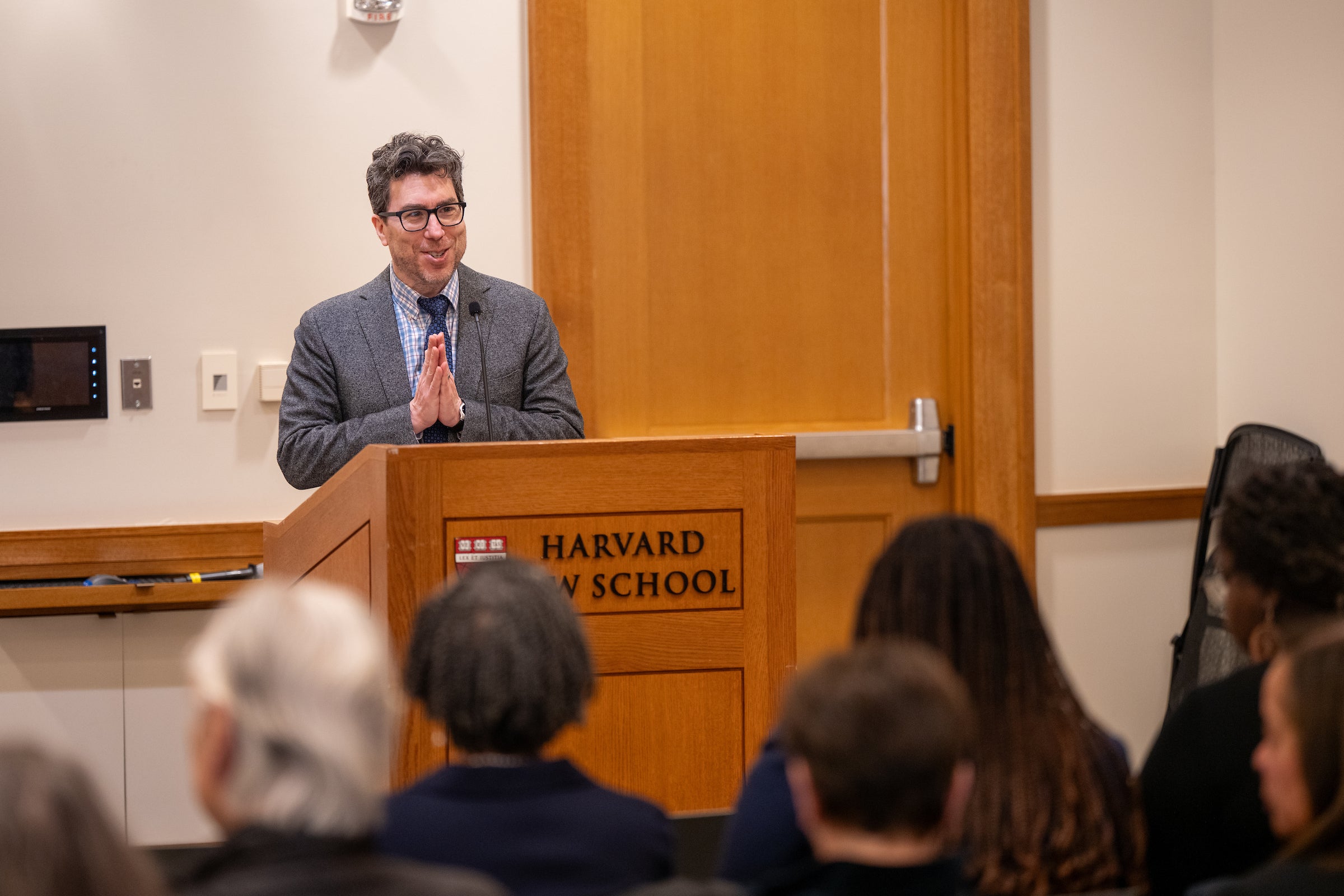
John Goldberg, the Morgan and Helen Chu Dean and Professor of Law at the law school, described Ogletree as “a legendary criminal defense attorney, a champion for racial equality, and a beloved and respected educator” and praised his “countless contributions to the study and practice of law, to our community, to the nation, and the world.”
“This collection is a tribute to Tree’s legacy, but it is more than that. It is a vital resource for anyone interested in forging new pathways to advancing justice and meaningful social change. And, starting today, it is fully accessible and available for anyone in the world to use,” said Goldberg.
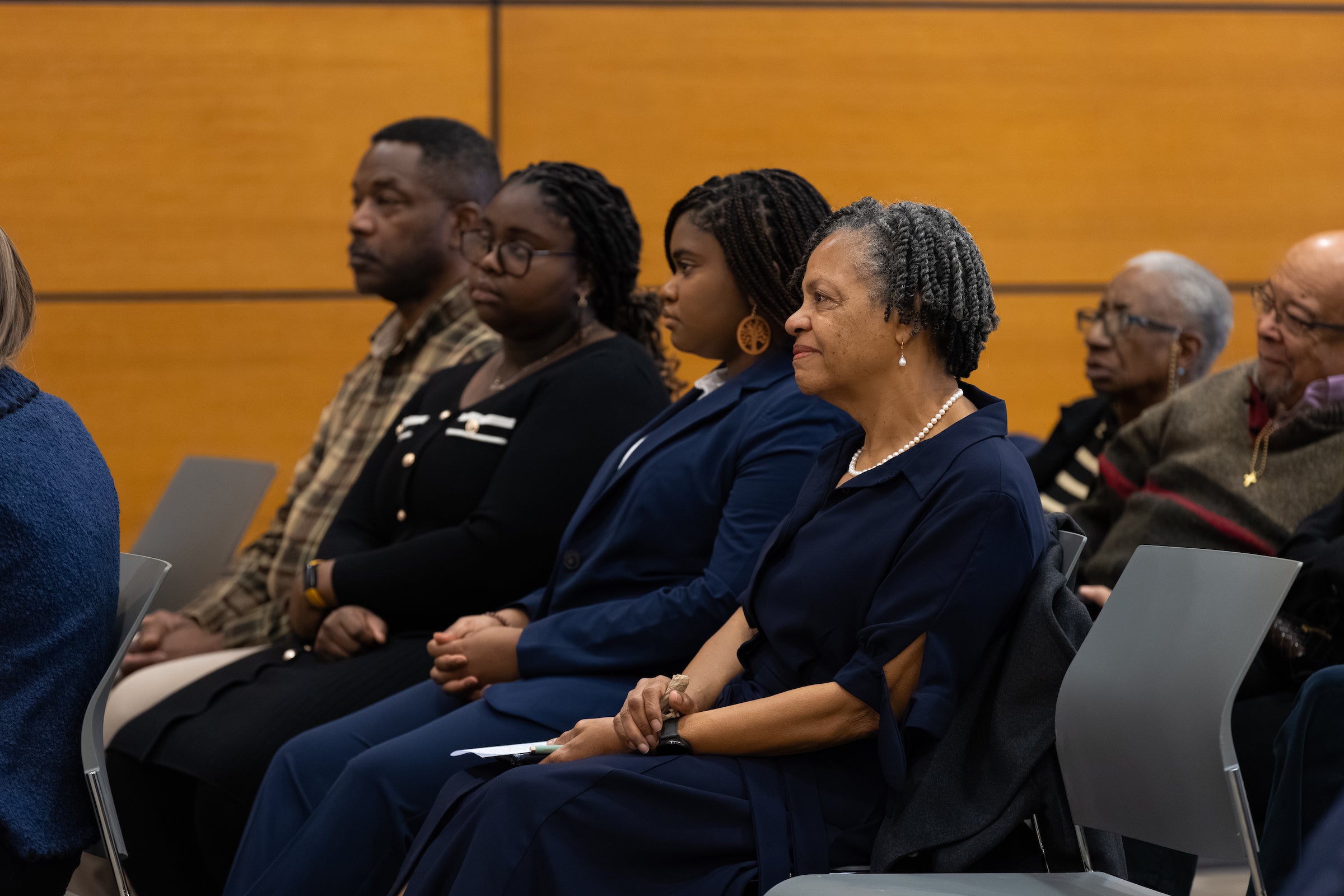
Goldberg thanked Ogletree’s widow, Pamela, and his family members in attendance for supporting the digitization project and donating the collection to the library.
“I am enormously proud of the incredible work of our library staff, I’m beyond grateful to Tree’s family for providing this incredible collection, and I’m eager to see his hugely positive impact on our world continue in perpetuity,” said Goldberg.
Lester Kissel Professor of Law David Wilkins ’80 recounted how he began his first year at Harvard Law while Ogletree was a still third-year student. His initial impressions, he recalled, were of Ogletree’s exceptional leadership and advocacy qualities.
“He was like a larger-than-life personality, a kind of legend already as a third-year student,” said Wilkins. “He had been the national president of BLSA, the Black Law Students Association … and he made it his business to make sure that every incoming Black student, and eventually every student who came in who was looking for support and looking for a home, could find it.”
Wilkins remembered Ogletree as someone who helped to create both academic opportunities and a stronger sense of community among the student body. For example, as a member of “The Black Plague” intramural football team, even after fiercely competitive games, Ogletree would prioritize socializing with players from opposing teams.
“Tree was always starting things, even as a student, whether that was around the Free South Africa protest, whether it’s around advocacy for more Black faculty, whether it was around criminal justice and public defense,” recalled Wilkins.
“Tree was always someone who didn’t just think, ‘Oh, I’m just going to come here and survive.’ [He thought] ‘I’m going to actually come here and make a difference. I’m going to come here and actually try to change this place for the better.’”
“Tree was always someone who didn’t just think, ‘Oh, I’m just going to come here and survive.’ … He thought, ‘I’m going to actually come here and make a difference. I’m going to come here and actually try to change this place for the better.’”
David Wilkins
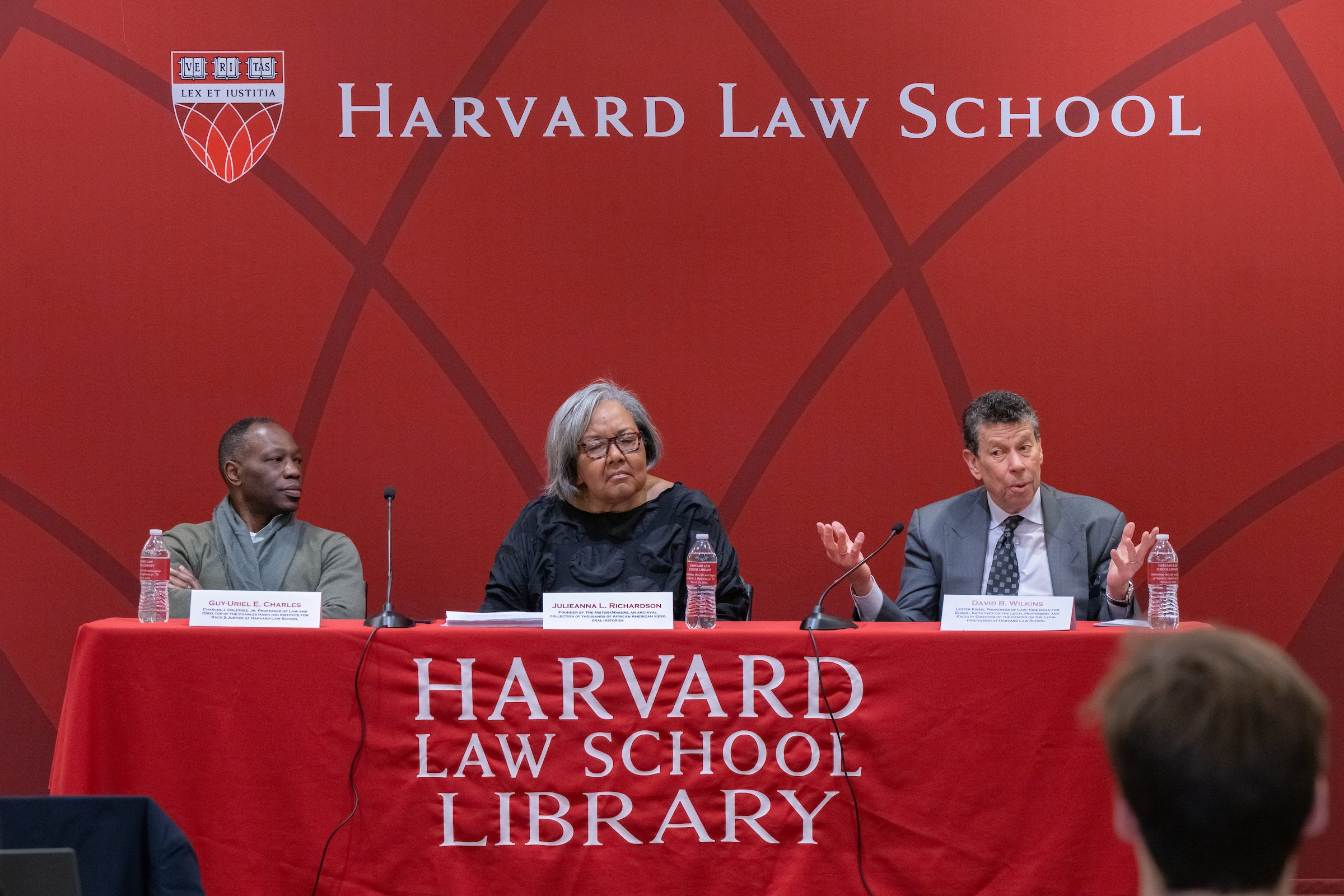
As the Charles Ogletree Jr. Professor of Law and faculty director of the Charles Hamilton Houston Institute, Guy-Uriel Charles spoke about his experiences working with the namesake of his professorship. In particular, he recalled being struck by the uncanny excellence of Ogletree’s communication skills.
“Both reading Professor Ogletree and listening to Professor Ogletree, he was so erudite [when he] spoke, it just seemed to be in complete paragraphs without notes. I watched many of his speeches and they did seem like law review articles in some respects, but in a way that was so much more accessible,” said Charles.
“I was completely in awe of this individual who could command a stage and be thoughtful, direct, articulate, compassionate, but also demonstrate empathy. His intellect was on clear display, but had a moral core to the work.”
Charles also lauded Ogletree’s proactive attitude to the pursuit of new goals and opportunities.
“There were a number of people I’ve come across who said, ‘I talked with Professor Ogletree and then something happened.’ Whereas, I think, if you talk to me, [I might] say ‘Let’s have another conversation’ or ‘Let’s consider this.’” said Charles. “But when you talk to Professor Ogletree, things happen. He had not just an ability to convene, but an ability to see and to take action.”
Charles said Ogletree’s legacy continues to inspire and inform the research, goals, and strategies put forth by the institute. “We’re attempting to do that and rethinking what racial equality means in the 21st century and going forward,” said Charles. “[We’re] trying to think about [how] technology will force us to rethink our fundamental civil rights statutes, rebuild our voting and representational infrastructure, and create a world that is fit for all of us to live in as equals, with equal respect. That is, for me, the lesson that I took from the person that I saw on television.”
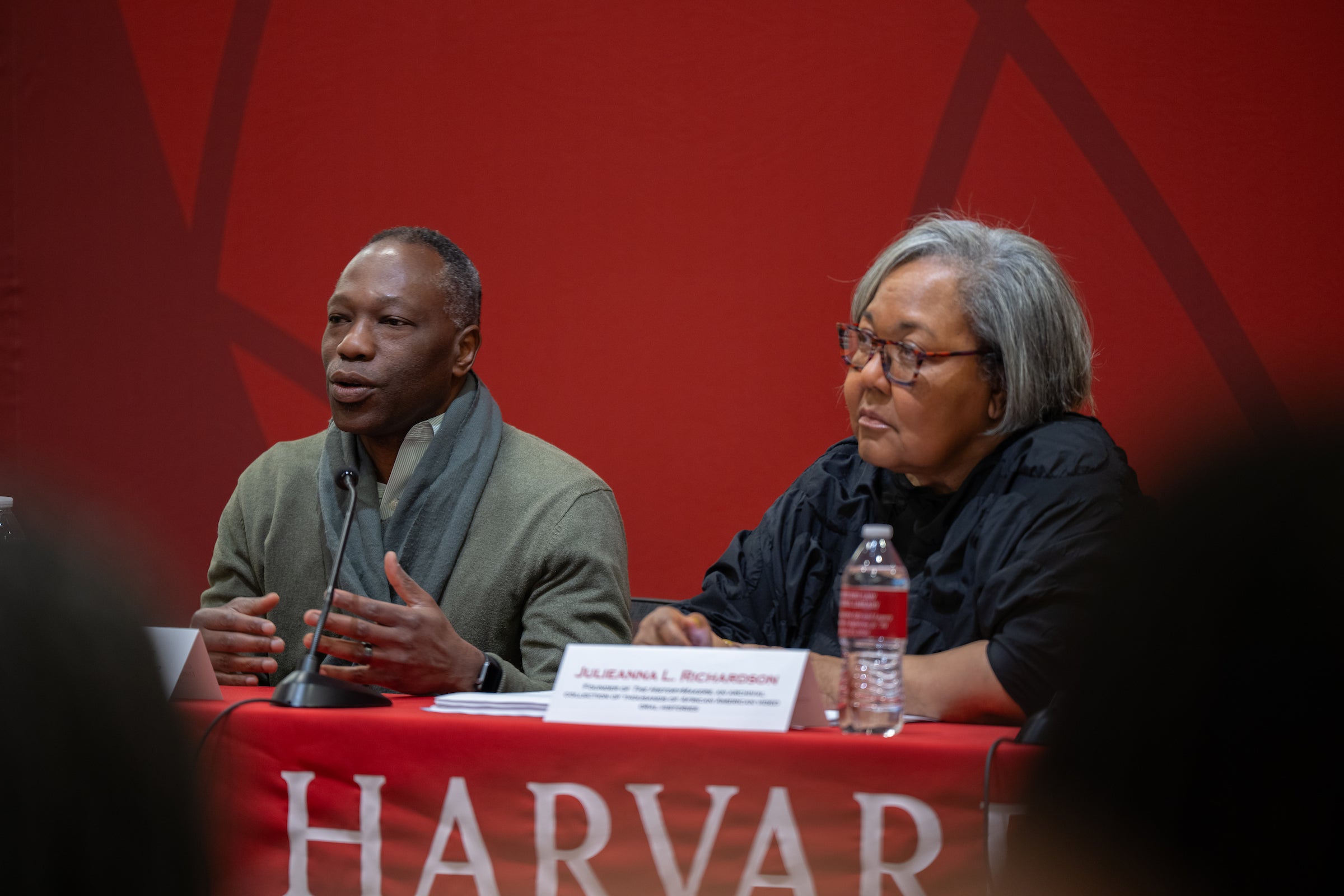
Julieanna Richardson ’80, founder and executive director of The HistoryMakers, also knew Ogletree as a law student. She was quick to corroborate Wilkins’ characterization of Ogletree and “tout the archives” in recognition of the library’s first-of-its-kind digitization project. She credited the innovative “digitize first” approach that library staff utilized to process material from the collection at an unprecedented pace.
“The law school is leading the way with digitizing first and processing second. This is legendary in archival circles. This is viewed as ‘you don’t do that,’ but the law school and the project that I run now called The HistoryMakers are two that are actively involved in digitizing first and processing second,” said Richardson.
“We’re literally just beginning today with the law school making this collection accessible. It is fully digitized …You can access it no matter where you are in the world. All of [Ogletree’s] writings, the cases he’s worked on, his work on reparations, his work with Anita Hill, his trial advocacy work, the ‘Saturday School,’ all of that is there. And in doing that, the law school here is leading archives all around the United States,” said Richardson.
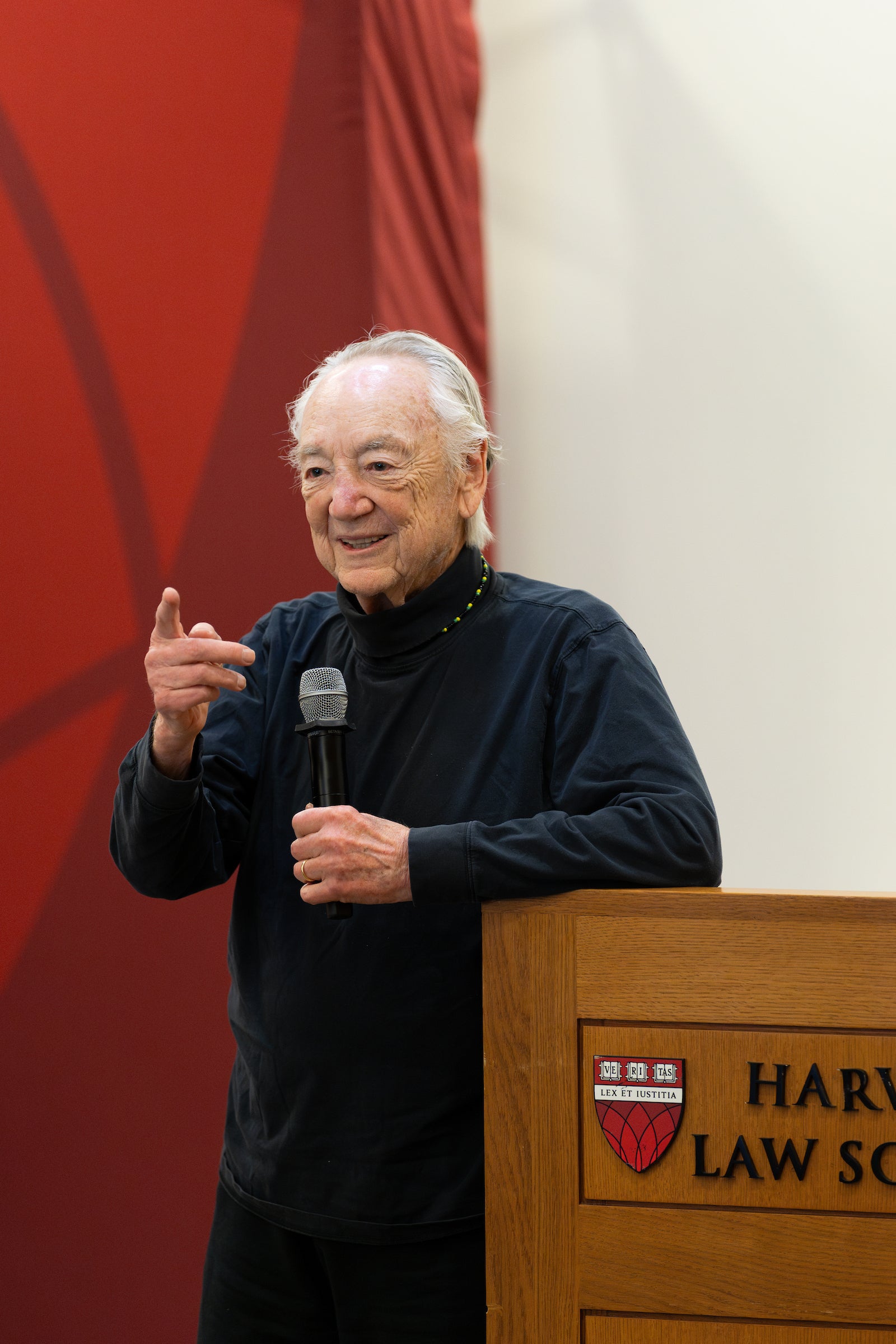
The event also featured impromptu remarks from Nesson, whom the panelists recognized in the audience and invited to speak. Credited with recruiting and hiring Ogletree to teach at Harvard Law, Nesson shared his personal and professional admiration for Ogletree.
“Charles was just the most natural, talented, present human being that I’ve ever known. And it was clear right from the beginning he had the quality of being there with you, whoever you were, whether it was a jury or a classroom or elderly, scary colleagues, or me,” said Nesson. “He was my friend, and to be a friend, and to find a friend, in Charles was one of the gifts of my life, and I’m so pleased that you get to hear about him and share in the honor that you’re paying to him.”
At the conclusion of the faculty panel, the library panel opened with remarks from Amanda Watson, assistant dean for library and information resources, who introduced Petrina Jackson, the Lia Gelin Poorvu Executive Director of the Schlesinger Library at the Harvard Radcliffe Institute; Sarah Martin, associate university archivist for community engagement at the Harvard University Archives; and Ed Moloy, the manager of Historical & Special Collections at the law school library. Panelists described ongoing archival projects underway at their institutions, the challenges they have encountered, and the value of preserving and providing open access to collections.
Jackson discussed a significant collection acquired by the Schlesinger Library in 2018 of papers from Lani Guinier, the first African American woman to be tenured at Harvard Law.
“We received [Guinier’s] papers in 2018. They include her work as assistant counsel to the NAACP Legal Defense and Educational Fund, materials related to her book, ‘The Tyranny of the Meritocracy: Democratizing Higher Education in America,’ and much, much more,” said Jackson.
Jackson also shared an excerpt from the collection derived from a letter that Guinier wrote to a journalist, explaining a goal and wish:
“If I can inspire other young people to commit their lives to the struggle, if I can give renewed hope to the many wiser and more dedicated fighters who showed me the way that I feel comfortable in the context of the greatest effort of many people working together and sharing my personal triumph and perspective.”
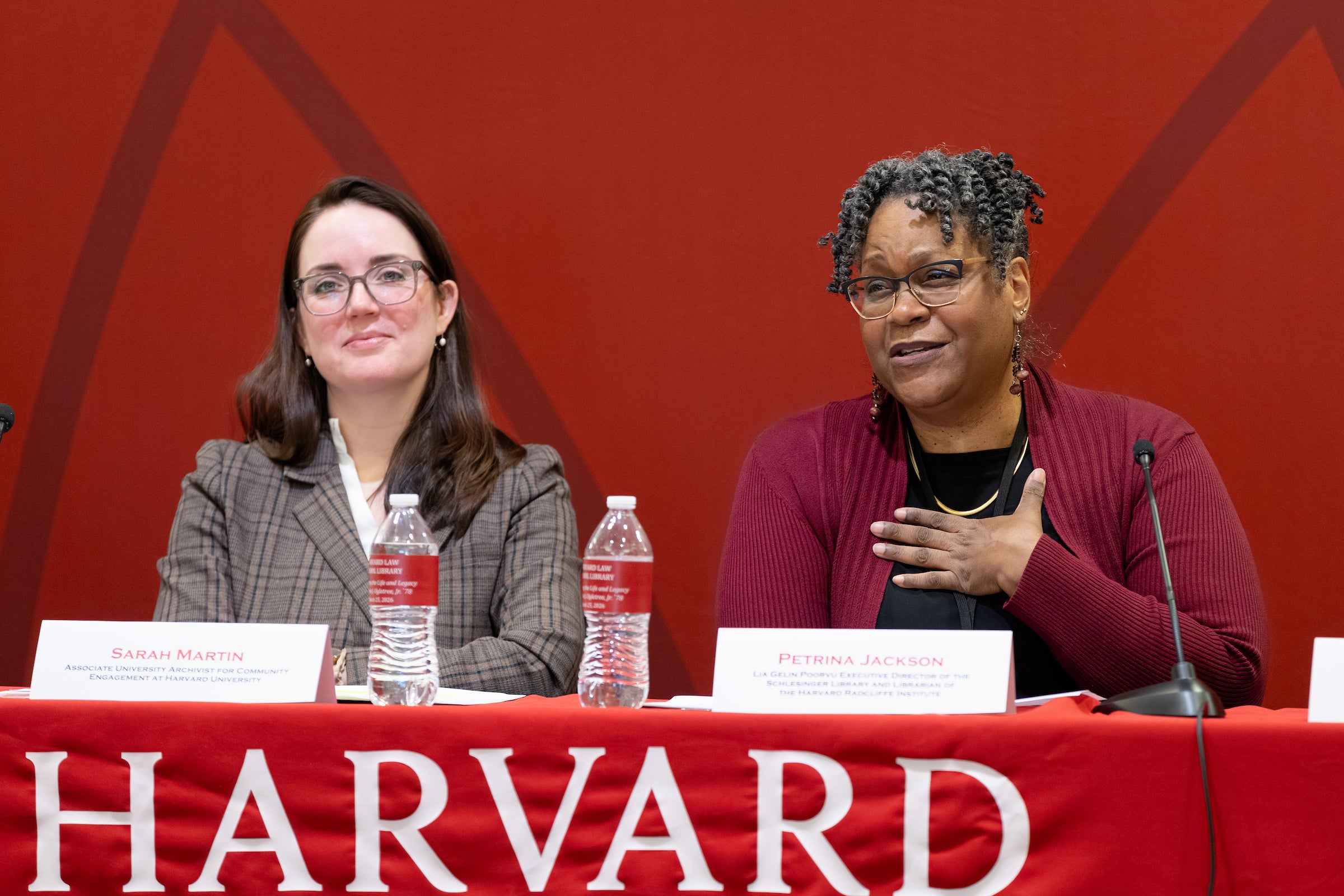
According to Jackson, the Guinier papers collection will hopefully be “research ready” for public access by the end of this year.
After recognizing the work of her colleagues at the law school library, Watson spoke about the value of preserving, archiving, and presenting working papers collections.
“The work of building these collections reflects the fullness of human experience. It’s never finished, and it’s so broad. We’re exhausted, but we want to keep doing it, and it’s among the most important work many of us can do,” said Watson.
Watson also thanked her panelists for participating and sharing their perspectives on advancing library goals.
“I want to close by offering my deep, deep gratitude to each of you for this conversation because what you shared today doesn’t just reflect our professional expertise, which is very deep in this room, but a genuine commitment to the idea that archives are acts of care, acts of justice, and acts of faith in our future,” she said.
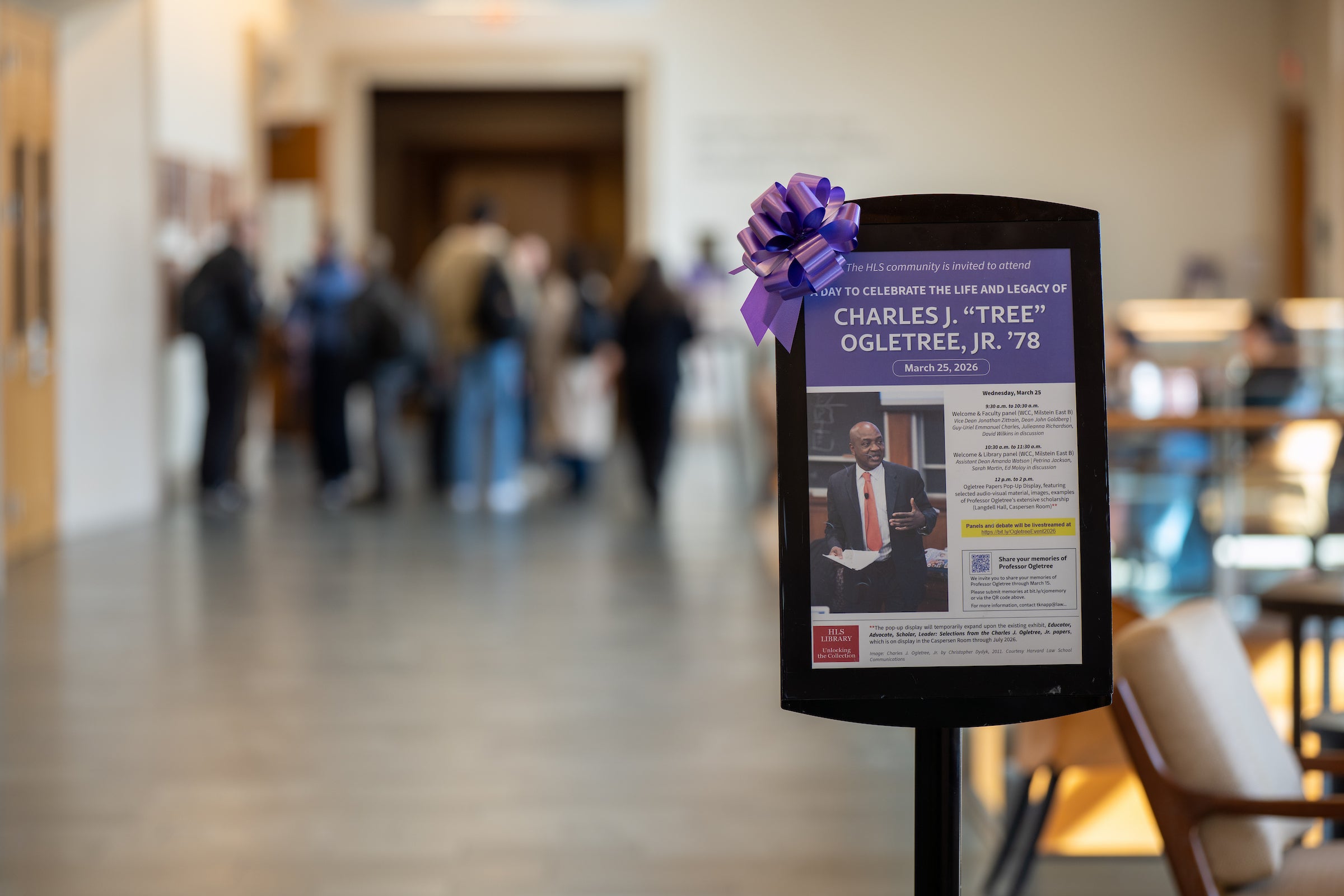
Due to the scope and magnitude of the Ogletree collection, library staff from units across Harvard collaborated intensely to complete the large-scale digitization project in only three-and-a-half years. Under the direction of Harvard Law’s Historical & Special Collections staff, materials were appraised, processed, and sent to digitization, allowing them to be released on a rolling basis.
Visitors can explore the Ogletree collection in an online exhibit celebrating his career, his scholarly achievements, and the impact of his mentorship, leadership, and advocacy. The online exhibit also highlights the physical exhibit, which is on view in the Caspersen Room in the law school library, weekdays from 9 a.m.-5 p.m., through July.
Want to stay up to date with Harvard Law Today? Sign up for our weekly newsletter.