When then-Dean Martha Minow asked Jill Lepore years ago if she’d like to teach a class at Harvard Law School, the prolific author, historian and journalist didn’t hesitate, crafting a course around an area central to legal scholars and historians alike: evidence.
“I’m always fascinated by the very different ways that journalists and historians treat evidence,” said Lepore, a professor of law at Harvard and David Woods Kemper ’41 Professor of American History. “Both of those ways derived from the way the law treats evidence … and I thought [exploring] that would be a fun way to bring my expertise as a historian into a law school classroom.”
Expertise indeed. When not teaching, Lepore is often researching, talking, or writing about American history, law, literature, politics, media, technology, and culture. She is a staff writer at The New Yorker, the author of more than 15 books covering everything from Wonder Woman to the U.S. Constitution, and the host of “The Last Archive,” a podcast about the history of truth.
Digging deeply into a story, a person, a problem, or a past has become second nature to Lepore. She brings that same rigor to “The History of Evidence,” her law school seminar founded on two key questions: “What counts as proof?” and “How has that changed over time?”
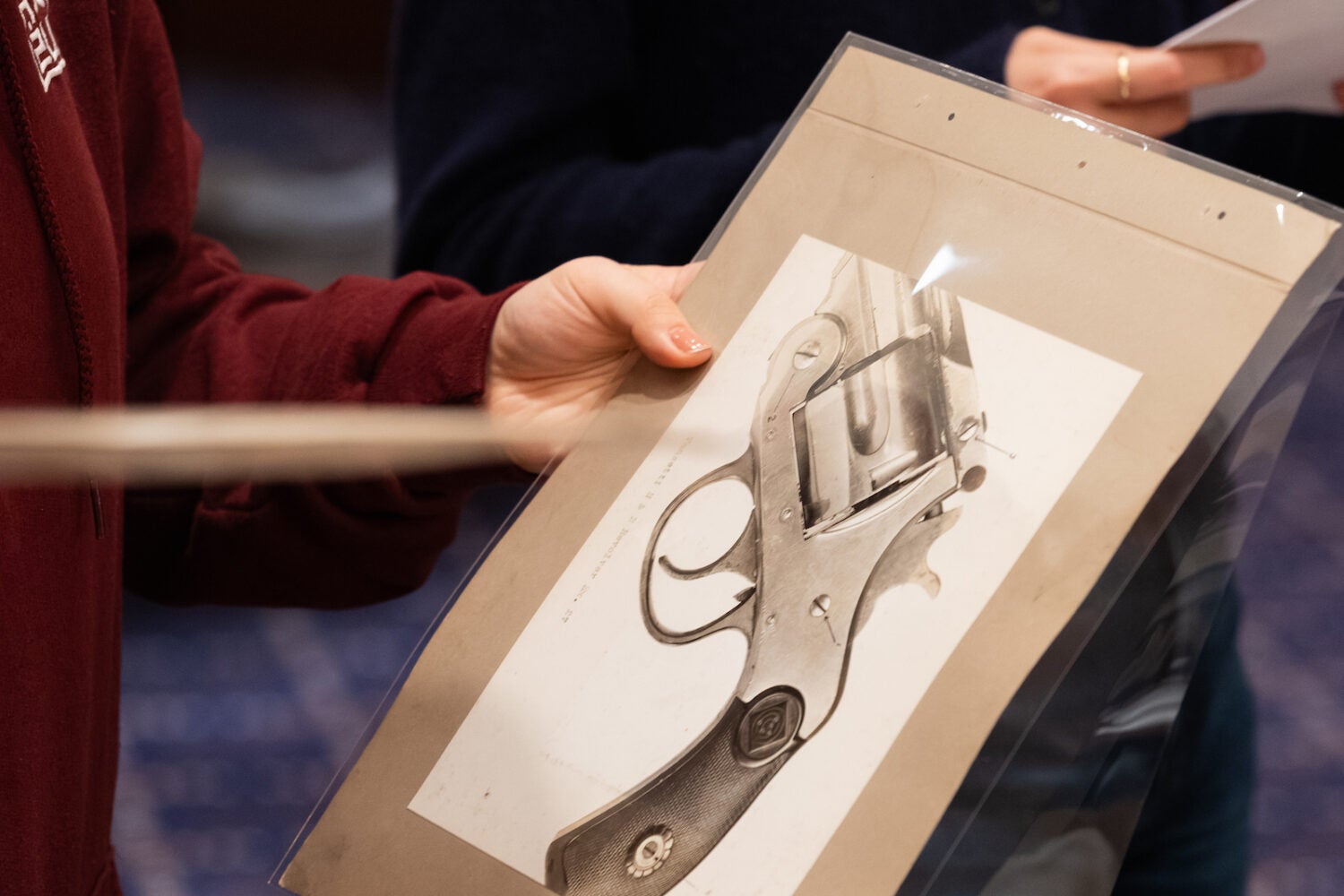
To help students find the answers, Lepore enlists both the new, such as artificial intelligence, and the old, in particular the case records at the Harvard Law School Library’s Historical & Special Collections for the famed trial of Nicola Sacco and Bartolomeo Vanzetti, two Italian immigrants and anarchists found guilty in 1921 of armed robbery and murder in Massachusetts and executed in 1927 after repeated appeals.
Many observers believed that the men were innocent and that the trial was marred by partiality and prejudice, anti-immigrant bias and unreliable evidence. Shortly before the two accused were sent to the electric chair, Felix Frankfurter ’04, then a Harvard law professor and a future Supreme Court justice, penned an article for The Atlantic Monthly arguing why the trial had been a “complete travesty on evidentiary grounds,” said Lepore, such as flawed forensics reports.
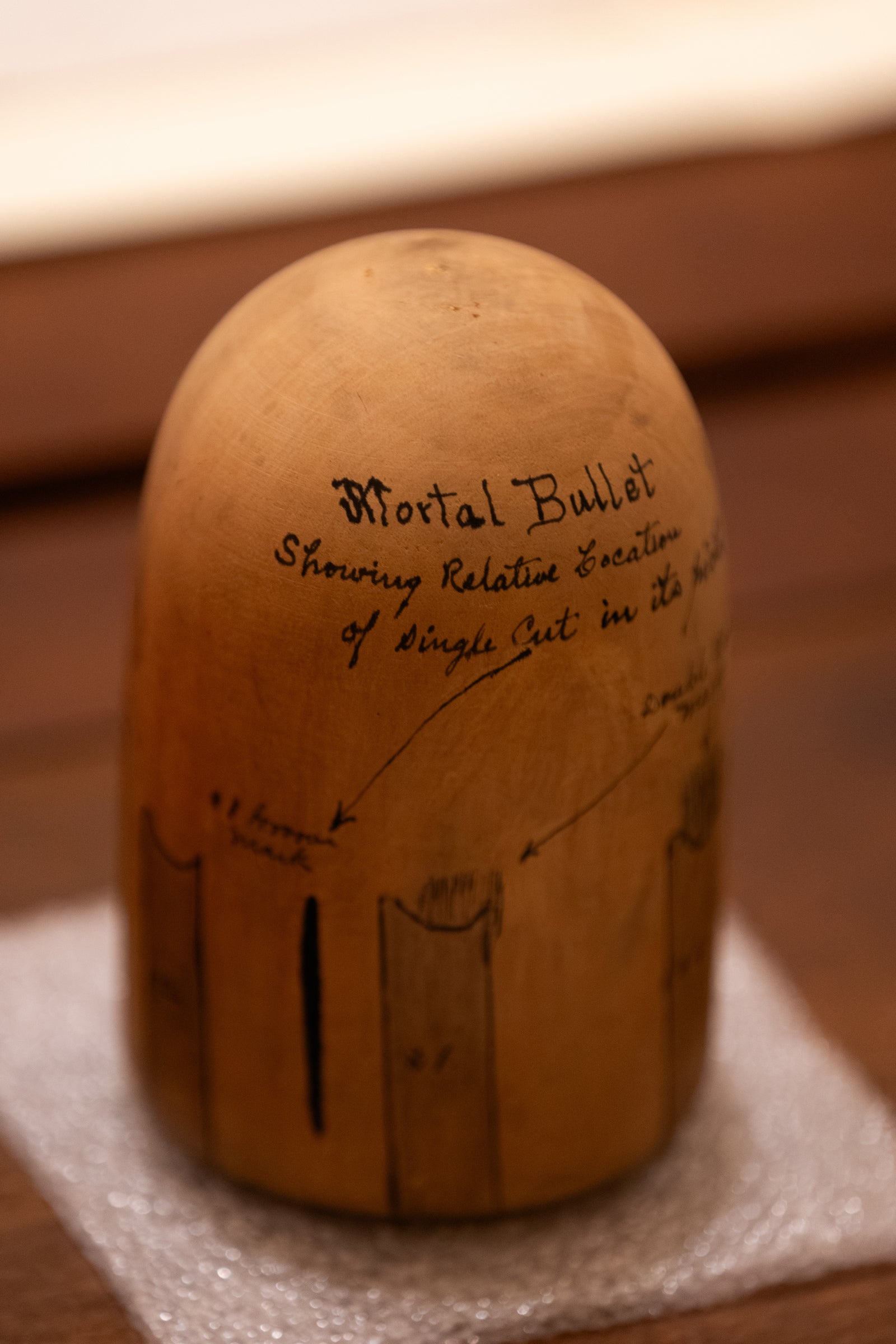
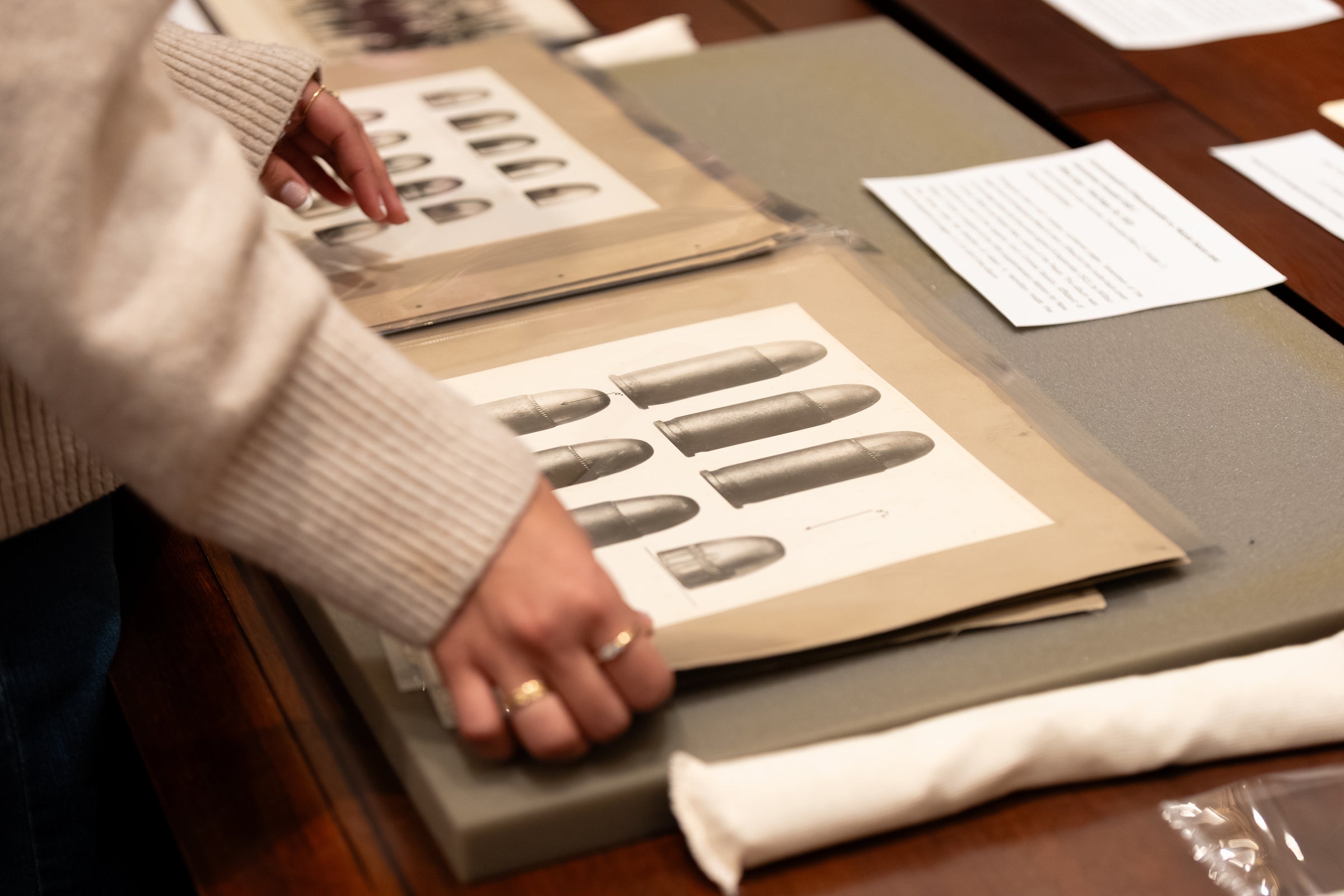
“The ballistics evidence, ultimately, was terrible,” said Lepore, “but it was really important to securing the conviction, and it was because there was such a cultural purchase [in the 1920s] on the popular imagination about the legitimacy and authority of ballistics experts, a little bit like the peak confidence in DNA.”
For Lepore, the Sacco and Vanzetti case is a critical reminder that evidence, no matter if scientifically based, may not always be reliable. It’s also an important entry point into AI discussions. “We’re looking at this case, which represents the high point of confidence in forensic evidence,” said Lepore, “and this current moment, which represents a kind of diluted confidence in AI and its usefulness to criminal law.”
Bringing an AI lens into the classroom is new for Lepore but it’s already become a key part of her curriculum. The course’s weekly readings touch on myriad topics including DNA and photographic evidence, witness testimony, big data, the legal origins of fact, and the history of trial by jury, but they always conclude with an article or excerpt that gives an AI perspective to the subject.
Classroom discussions also explore AI and its effects on the law. During a recent class on film and photographic evidence, students examined a case from the 1870s that relied heavily on photos. The students also looked at how films were used at the Nuremberg trials after World War II and examined the studies done by Harvard Professor of Law Anna Lvovsky ’13 on surveillance films of gay men in the 1950s and ’60s.
The class concluded with a discussion of a recent sentencing hearing for a man convicted of killing another in a road rage incident. The judge allowed the victim’s sister to introduce a video created with AI featuring her murdered brother. Lepore called the ensuing discussion an “honestly painful one” that touched on the victim’s family, the judge’s desire to impose the correct sentence, and the question of whether a victim impact statement created with AI and shown in court could “possibly be a fair use of that tool.”
“We all have an obligation to understand these tools, both their capacities, and their weaknesses,” said Lepore, “but also the ethics of using them.”
As part of the course, students deliver a presentation that contrasts their own analysis of evidence related to the Sacco and Vanzetti case with an analysis of the same material done by one or more Al tools. During one presentation, a student discussed her study of a trove of letters written by Sacco and Vanzetti, and the ways in which AI had assessed the same information.
She said she was impressed “by the fact that as a computer, as a machine, it can hold so much more information than I can … maybe comparing or finding patterns across a wider range of material than l can physically hold in my head after one read through.” But she also said the research experience felt less personal.
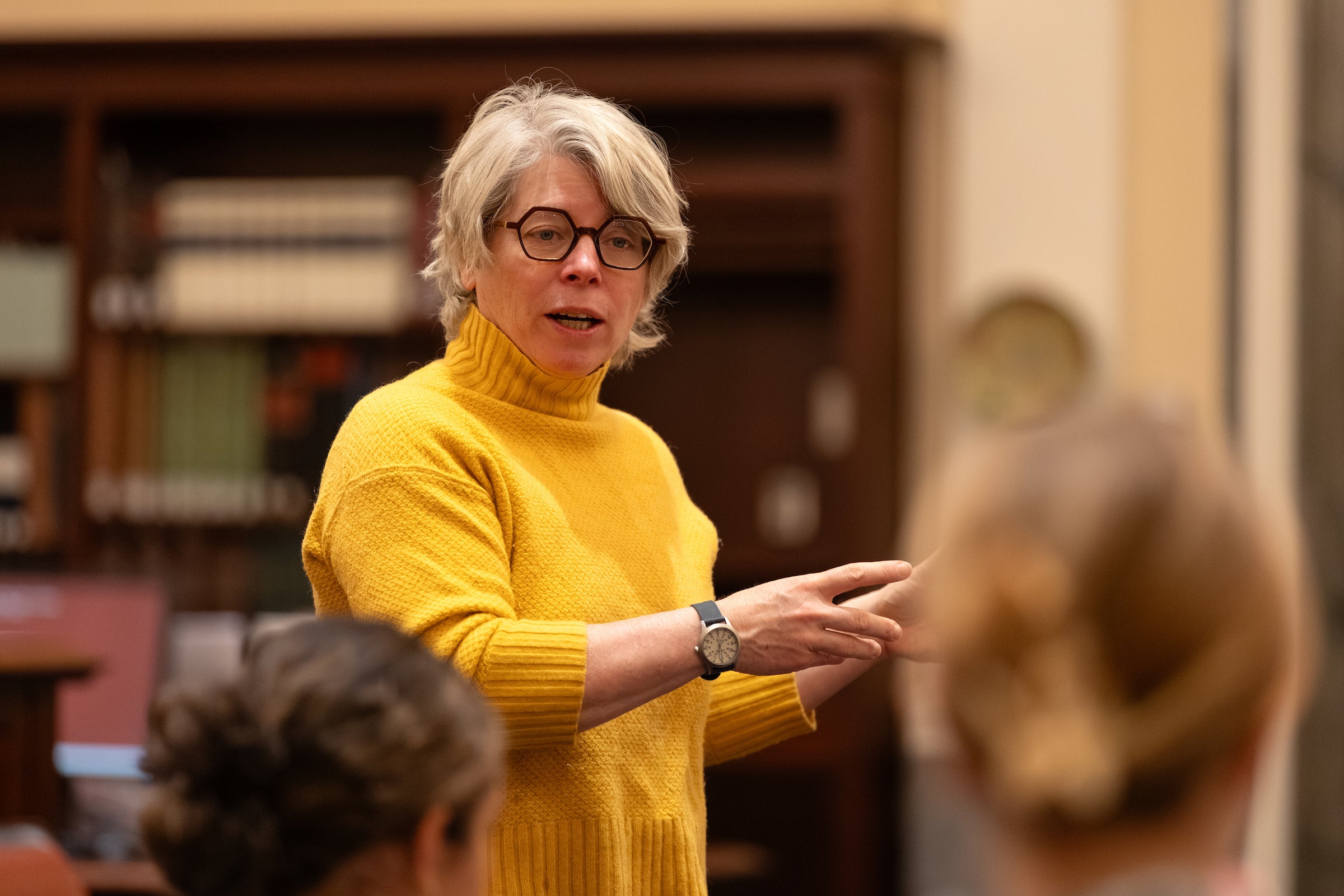
“We all have an obligation to understand [AI] tools, both their capacities, and their weaknesses, but also the ethics of using them.”
Jill Lepore
Holding the actual letters in her hands felt “very powerful,” she said. Seeing the men’s polished handwriting, the tiny folds in the stationery, and a small “thank you” added to one letter in what looked to be an afterthought left an impression. “That’s something maybe AI is not going to include in a compilation,” she added.
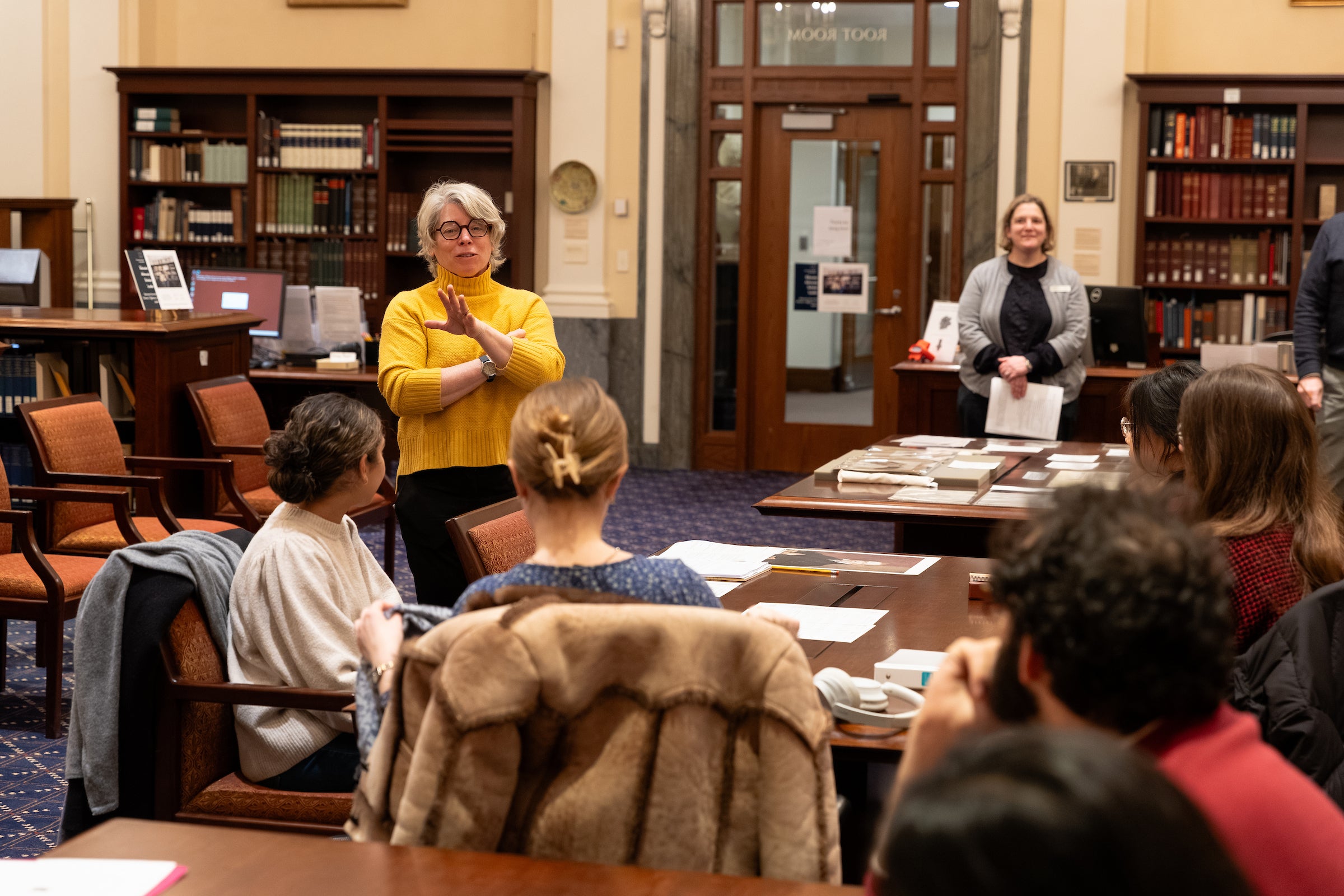
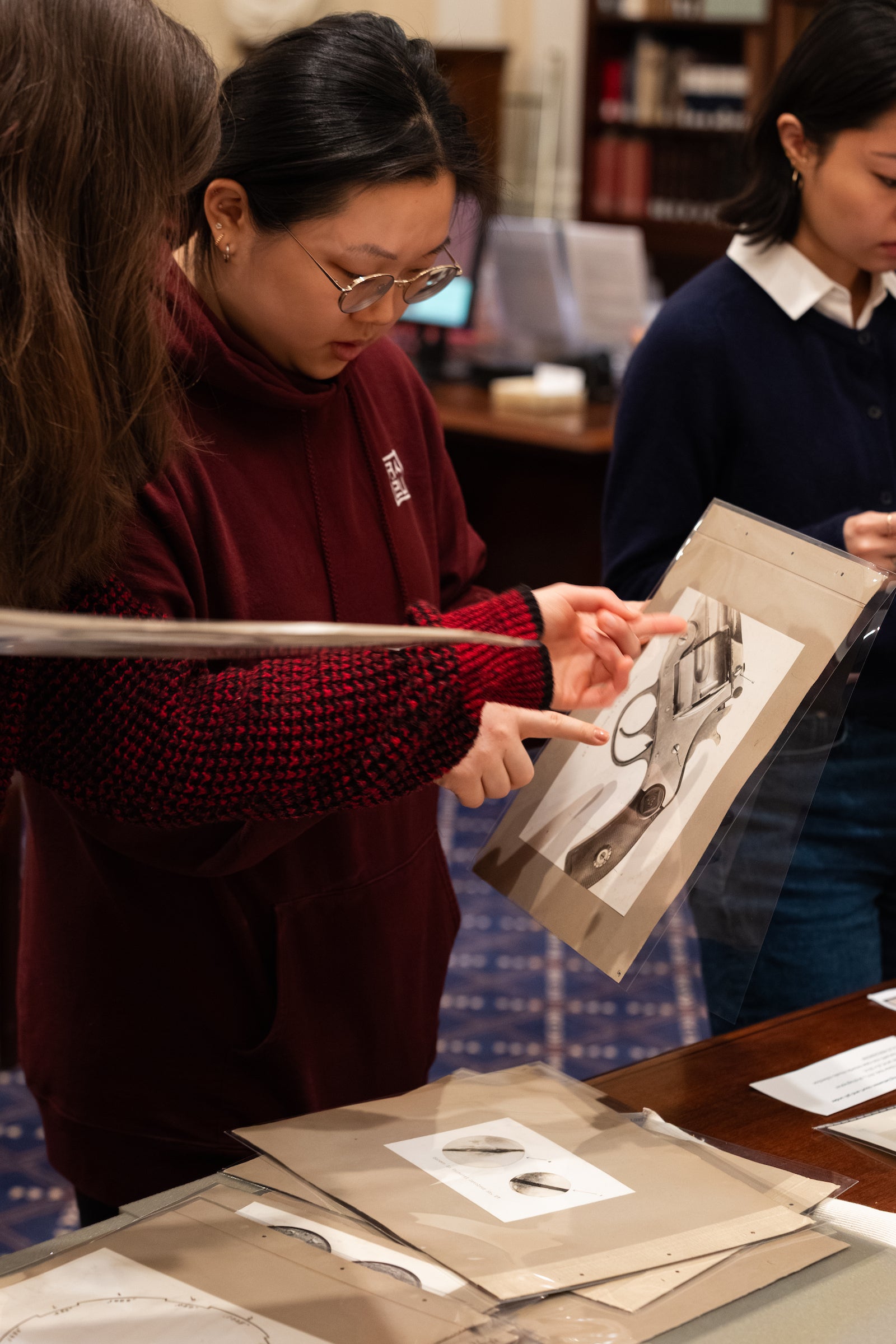
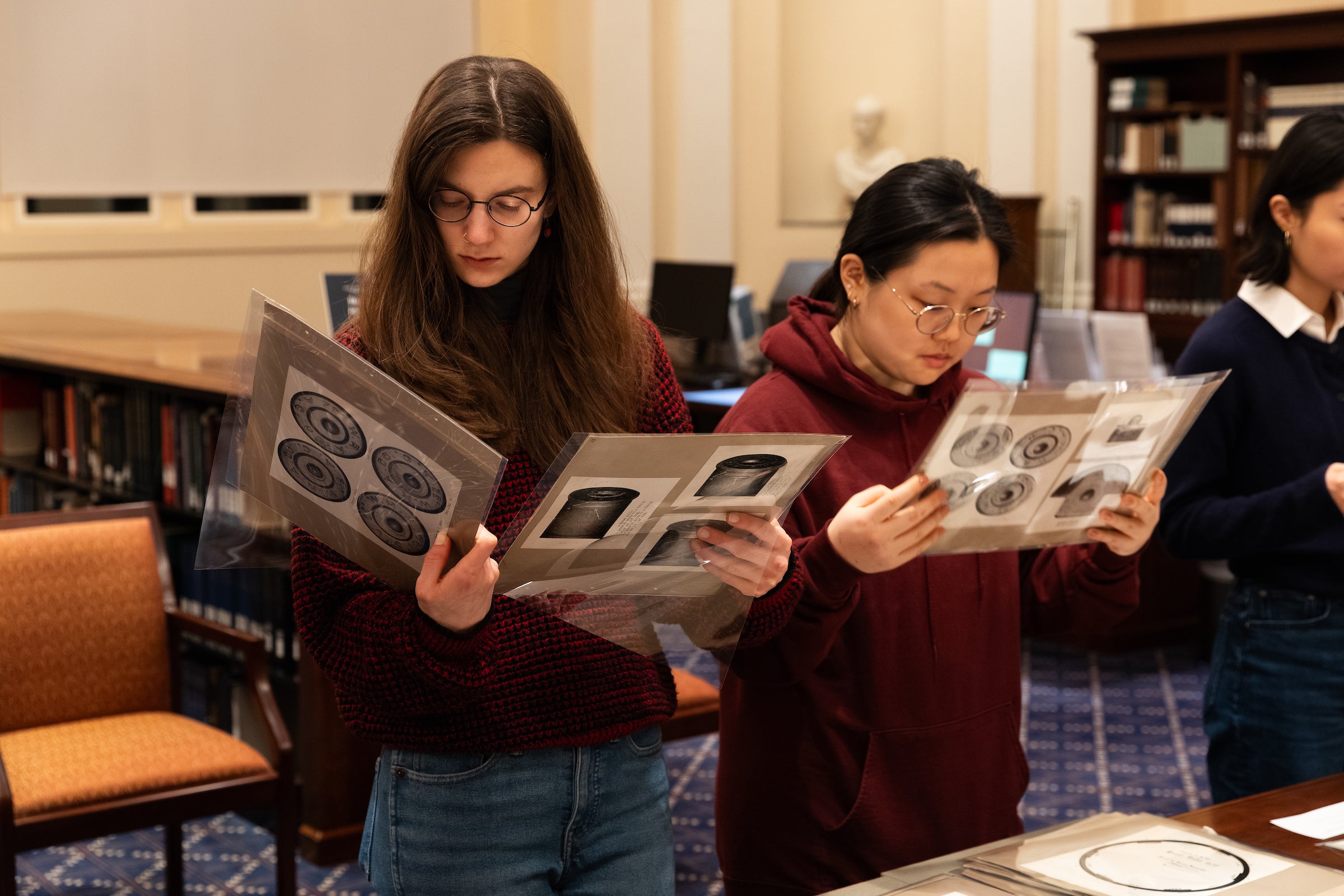
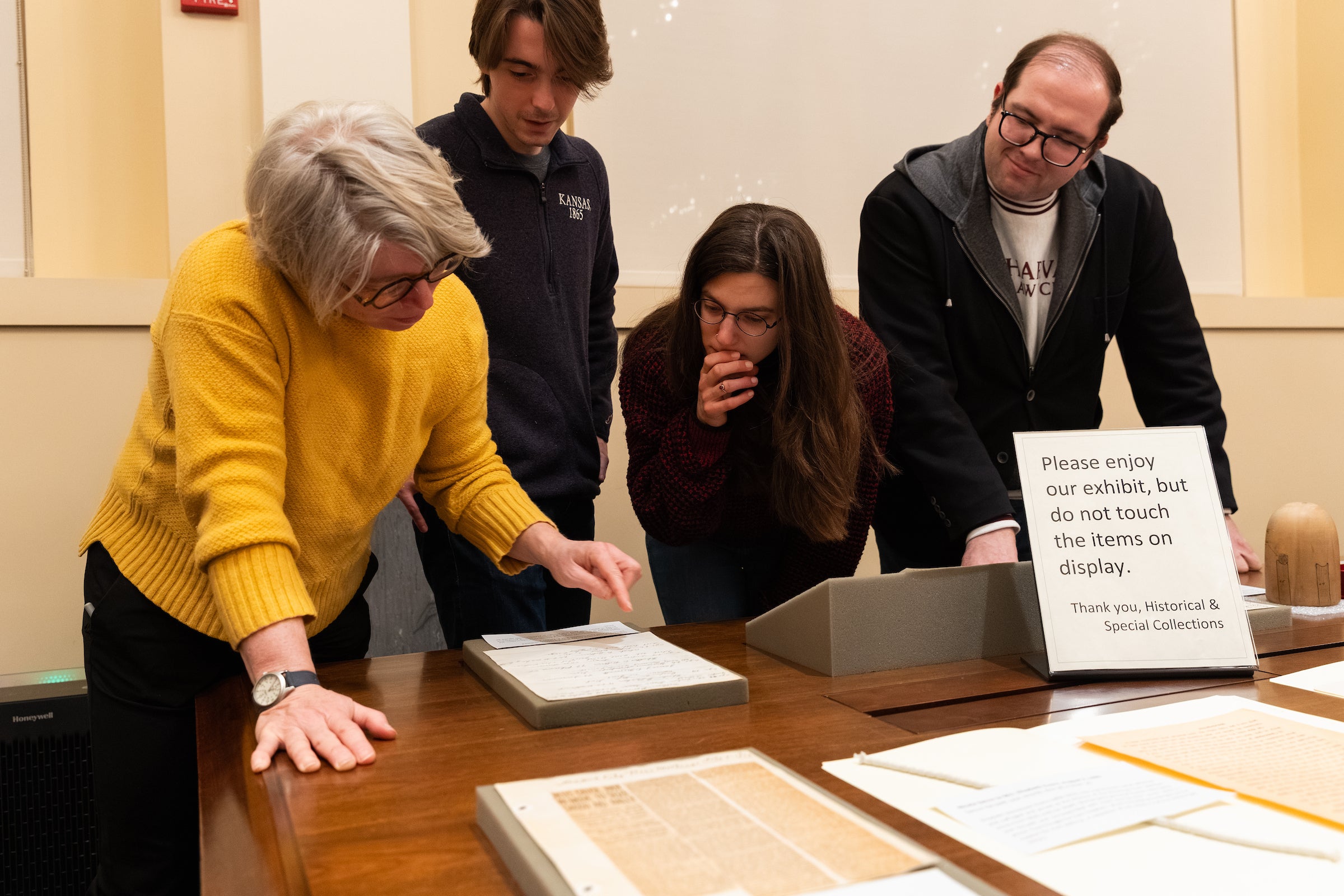
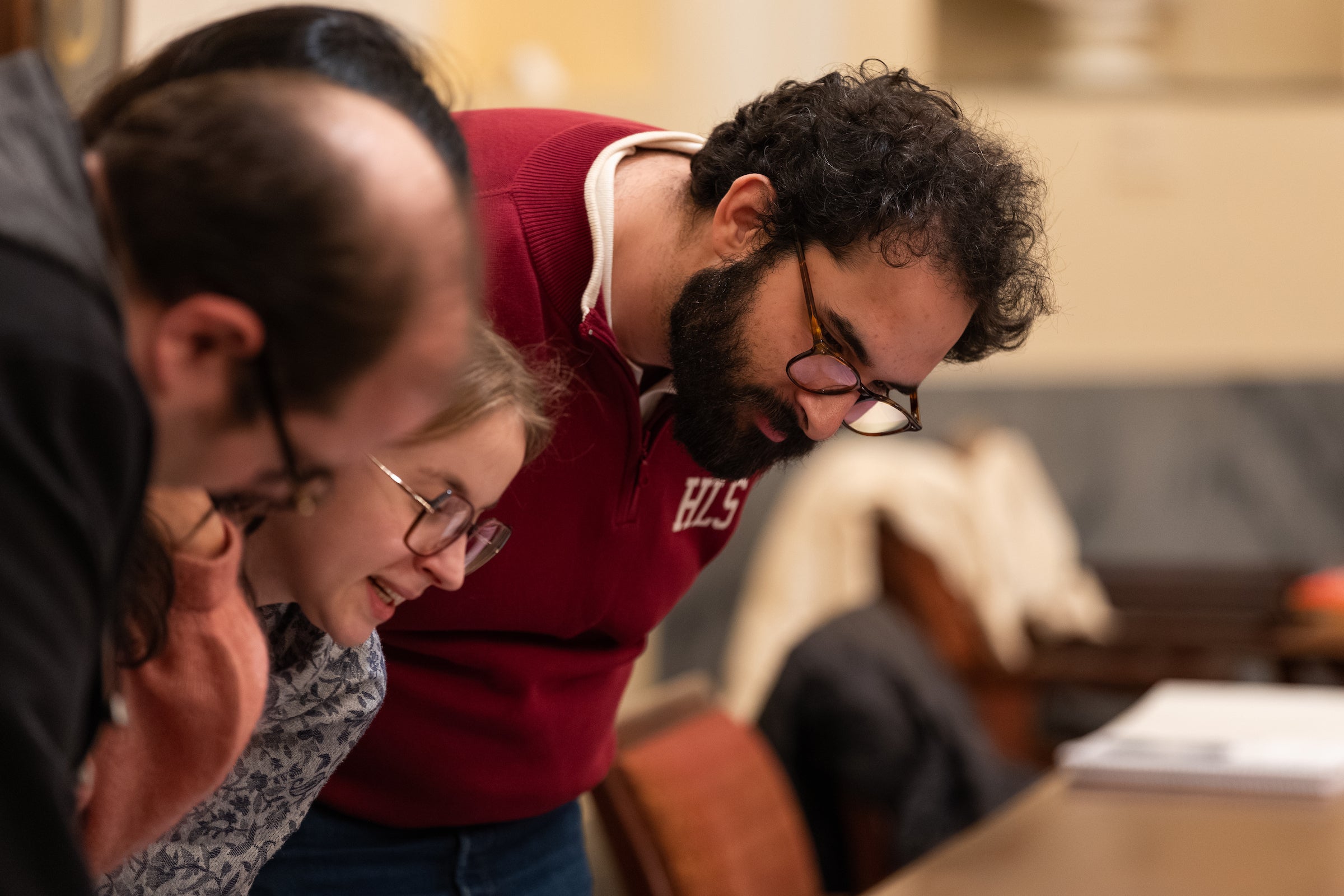
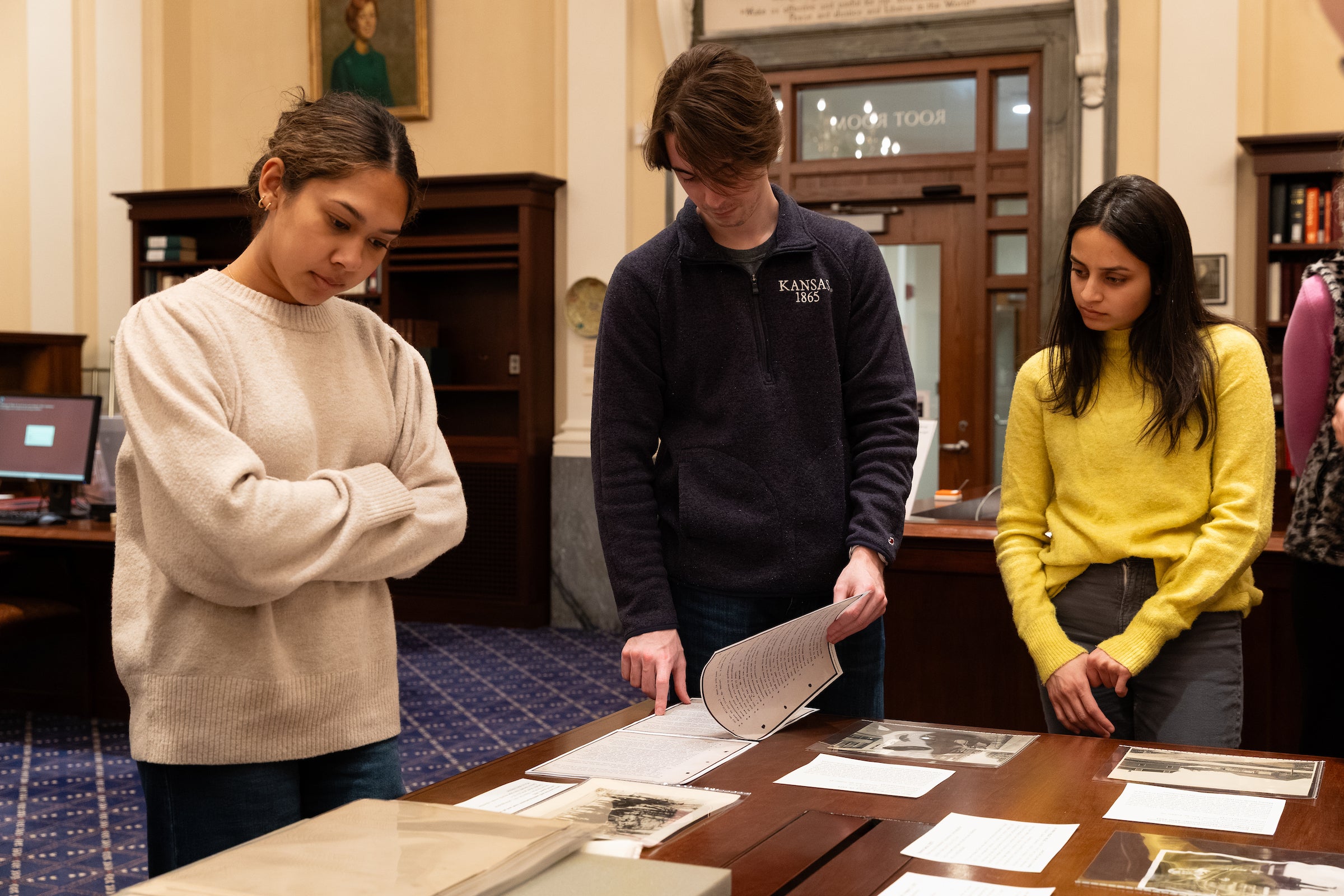
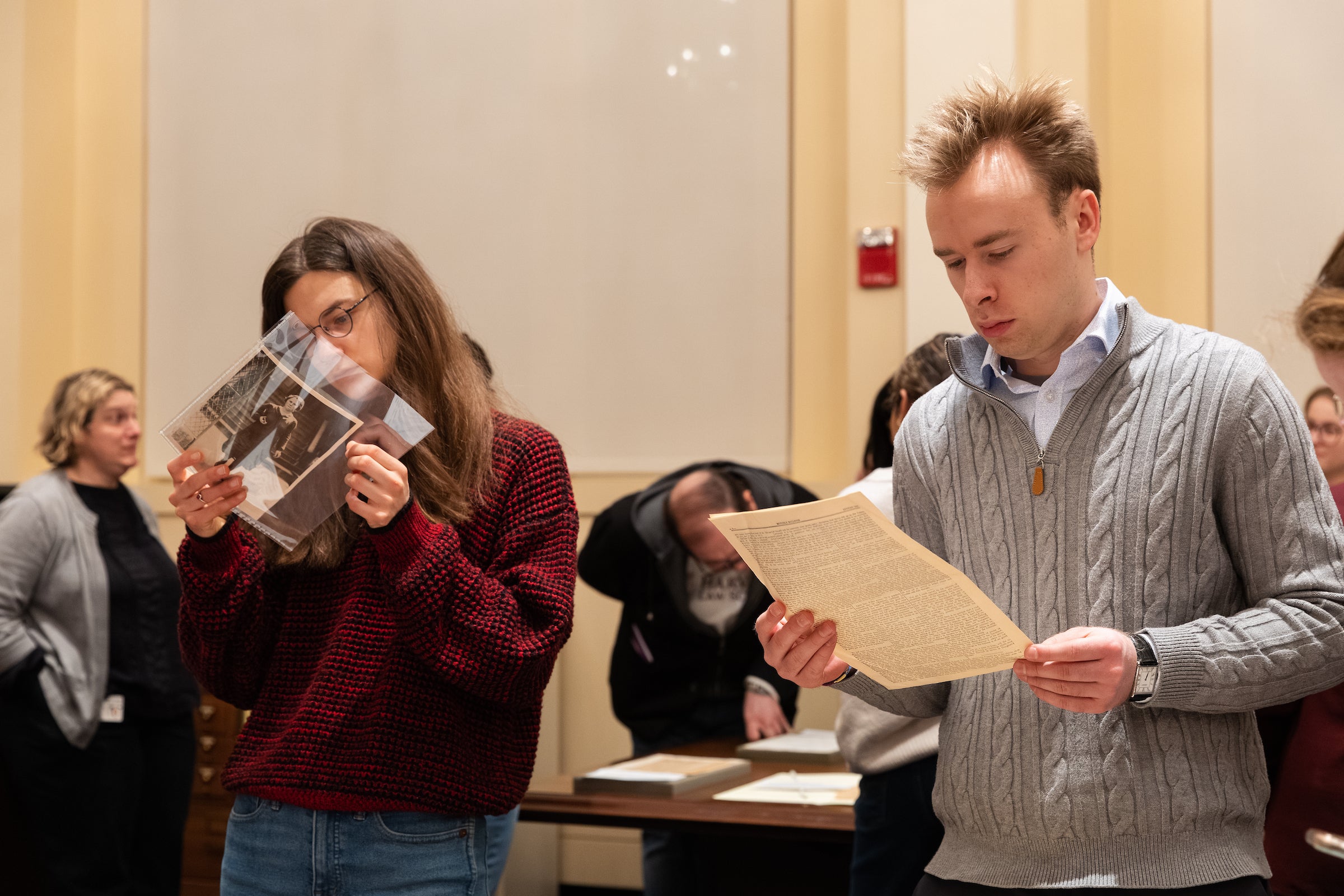
Having the archives nearby is a bonus. On a recent Tuesday, the class spent its first hour in the library poring over the case material, including images and forensic studies of bullets, photos, interview transcripts, descriptions of jurors, and letters to and from the defendants.
While Lepore acknowledged the importance of having a digitized collection, for historians, “There remains a kind of premium on working with the original archival material in the same way that the law privileges the original. You can’t introduce a copy of a will as evidence. You have to have the original will. Historians have that same sort of fetish, where you want to hold in your hand the thing that someone you’re writing about held in their hands.”
Third-year student Jackson Faulkner ’26 said he was attracted to the class in part because of Lepore’s renown as a historian, and in part because the concept of evidence is “central to the epistemology of law and what we’re talking about in any courtroom setting or any court order.”
He called the seminar “one of my favorite experiences at Harvard Law.”
Faulkner, who heads to New Mexico after graduation for a state supreme court clerkship and is leaning toward a career in public interest law, said learning how evidence has been approached over time was eye opening.
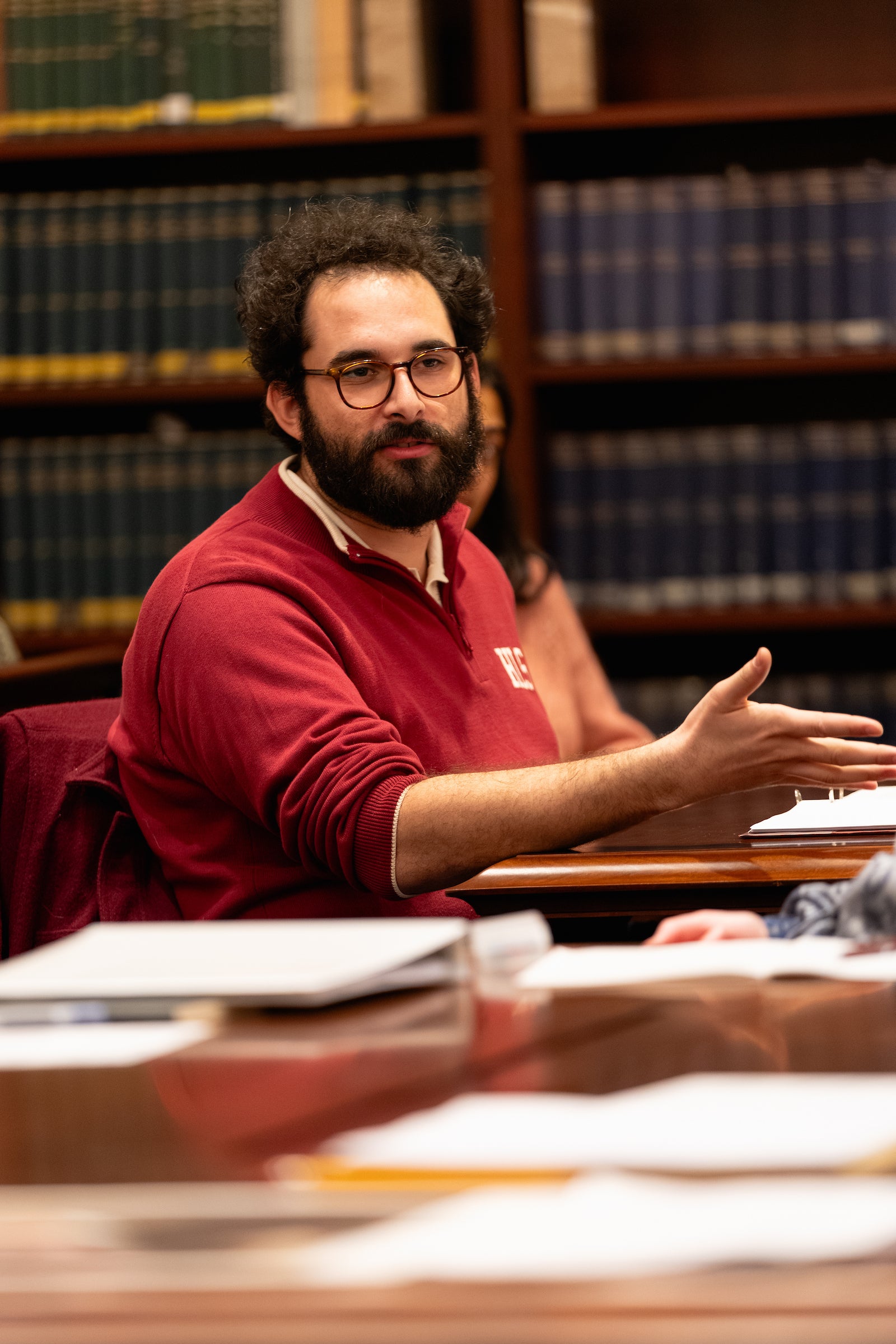
“I’ve just really appreciated understanding the depths to what I feel is a deeper truth, which is that evidence, like any legal principle, is very malleable with social constructs and values, and seeing that across history, and seeing how we have a lot of expectations that our beliefs about evidence are modern and clean and are only going to get better with AI,” said Faulkner. “But if the history we are reading or being exposed to in this class is any evidence for the future, that’s not the case, and it’ll be a very messy transition.”
That’s just the kind of deeper truth that Lepore is trying to mine.
“I’m hoping students take away from the class a sense that the rules of evidence have a past, that it is a rich and centuries-long past, and the traditions that they take for granted emerged out of significant contestation, and that they are also under significant pressure in this moment.”
Want to stay up to date with Harvard Law Today? Sign up for our weekly newsletter.