As we near the 2026 midterm elections, Harvard Law Today rounds up election law coverage and commentary from faculty, alums, and affiliates.
From the Harvard Law Bulletin: Can Election Law Restore Trust in American Democracy?
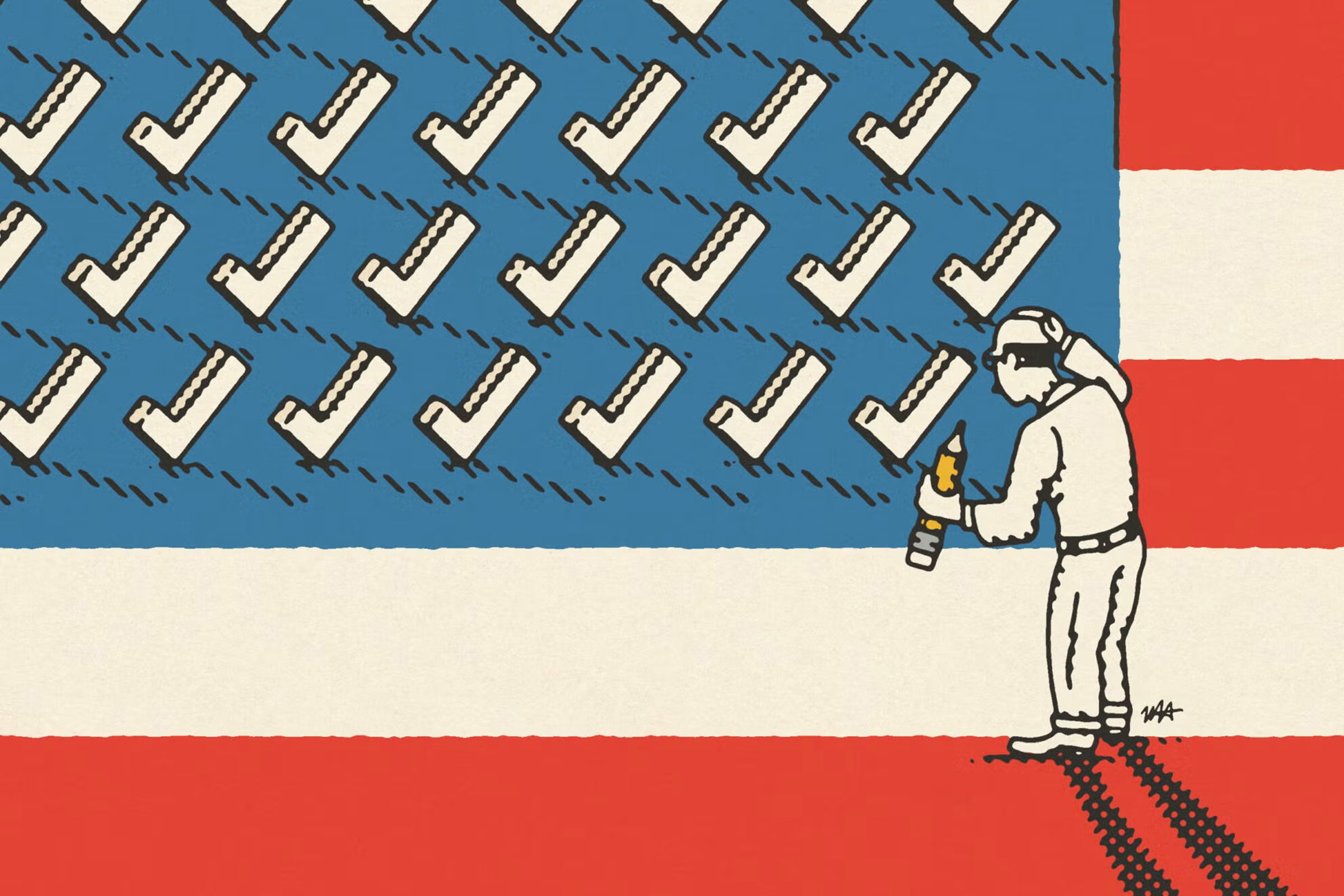
As the U.S. reckons with this month’s midterm elections, Harvard Law School faculty and alumni examine how election laws shape political power, and whether revisions to these laws could help restore Americans’ faith in democracy.
Will gerrymandering decide the midterms?
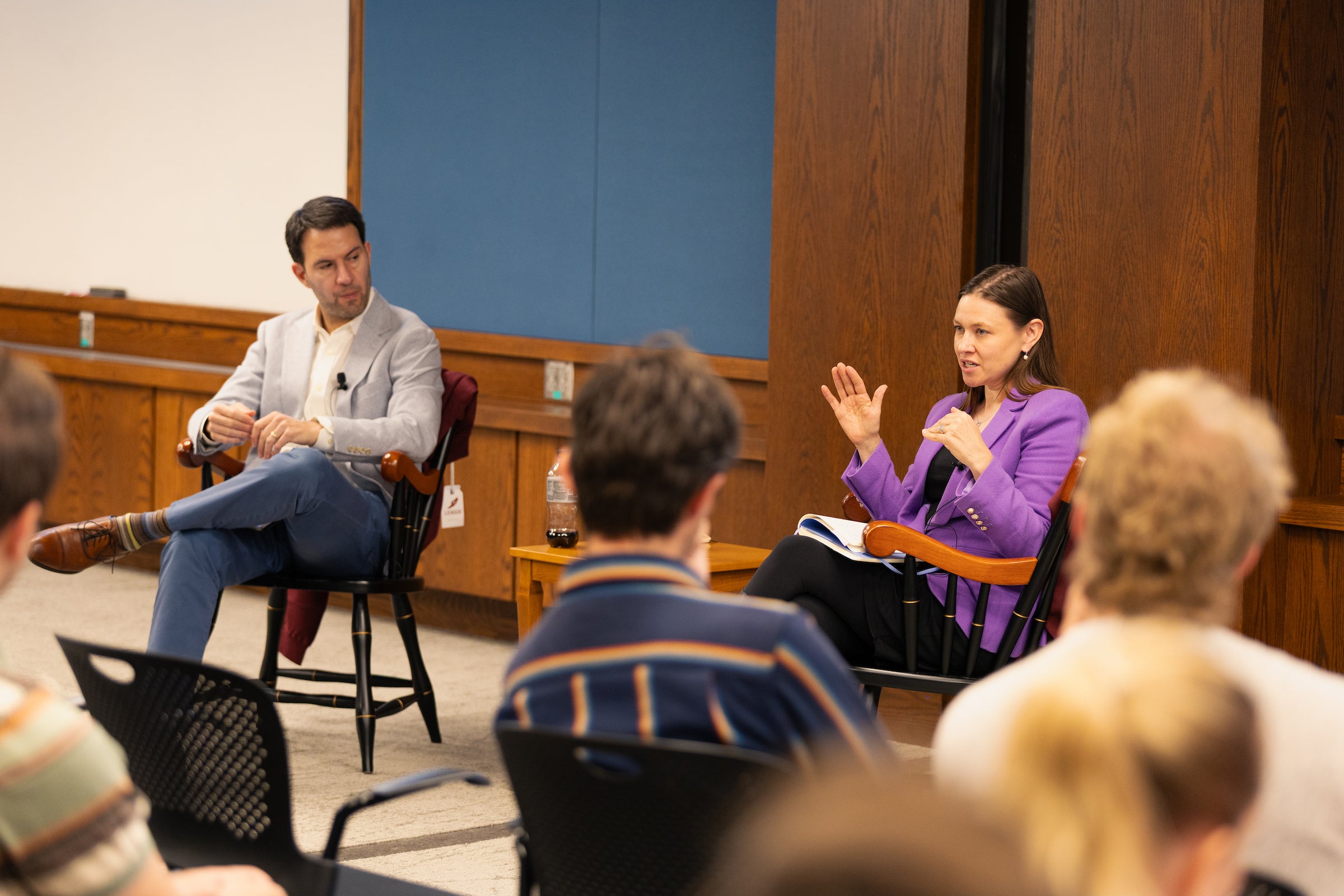
Harvard Law Professors Ruth Greenwood and Nicholas Stephanopoulos assess the recent redistricting battle and what could come next.
The worry over federal incursions into state, local elections
The panel was titled “When Washington Comes Knocking: Federal Government Involvement in the 2026 Election.” But according to the panelists , Washington already has knocked and let itself in, and the effects on the nation’s midterm elections could be unprecedented. Moderated by Election Law Clinic Director Ruth Greenwood, the discussion featured Harvard Law Professor of Practice Larry Schwartztol, director of Harvard’s Democracy and the Rule of Law Clinic; Chelsea Rice, senior counsel in the Rule of Law Program at States United Democracy Center; and Stephen Richer, former recorder of Maricopa County, Arizona from 2021-2025.
Economist Eric Maskin: How to improve America’s voting system
Nobel Prize-winning economist Eric Maskin argues that changing how Americans vote could make election results fairer. In this talk, he presents other possible voting systems — European-style proportional representation, majority-rule voting (like ranked choice voting), and multi-member districting — and explores how each method would play out in the U.S. context to produce more truly representative electoral results.
Will Supreme Court ruling on campaign finance yield big changes for parties?

In a July interview with the Harvard Gazette, Nicholas Stephanopoulos, Kirkland & Ellis Professor of Law at Harvard Law School, spoke about the ruling by the Supreme Court that lifted restrictions on how much money political parties can spend in coordination with candidates, its downside and potential upside, and its possible impact on the midterm elections.
‘Money and politics, and partisan gerrymandering, matter more than any other electoral rules today’

If you worry that the wealthy control U.S. politics, you’re only partly right, Professor Nicholas Stephanopoulos told his Harvard Law School audience at a book talk in January 2025 on “Aligning Election Law.” In the book, Stephanopoulos examines alignment — the idea that the output of the government should correspond to what the people want the government to do — from a variety of angles, including its democratic value, its place in legal doctrine, its rarity in modern American politics, and its application to particular election law topics.
Can mail-in ballots be counted after election day?

In a March interview in advance of SCOTUS’ decision in Watson v. Republican National Committee, Nicholas Stephanopoulos explained how the justices might think through the case — and why the stakes may not have been as high as they initially appeared. Stephanopoulos expected that most of the Supreme Court’s justices would take a textualist approach to the dispute — that is, they would attempt to understand the so-called “ordinary meaning” of “election” in the relevant statutes in deciding whether to uphold the Mississippi law. [In a 5-4 decision on June 29, 2026 the Court held that federal statutes do not prevent Mississippi from counting absentee ballots postmarked by Election Day but received up to five days thereafter.]
“I think the Supreme Court will be inclined to look thoroughly at dictionary definitions, and to give them substantial weight.”
Lawrence Lessig on election law and campaign finance reform

Lawrence Lessig, the Roy L. Furman Professor of Law and Leadership, discusses the purpose of election law, where the U.S. system falls short, and how we can achieve a more representative democracy. He also makes the case that campaign finance reform is the most critical change the United States could make to its election laws.
Is more partisan redistricting coming to a state near you?

Last August, at the height of the Texas redistricting controversy, Nicholas Stephanopoulos met with Harvard Law Today to explain redistricting, gerrymandering, and the legal standards underlying our American democracy in action.
Election Law Clinic wins voting rights challenge in New York’s highest court
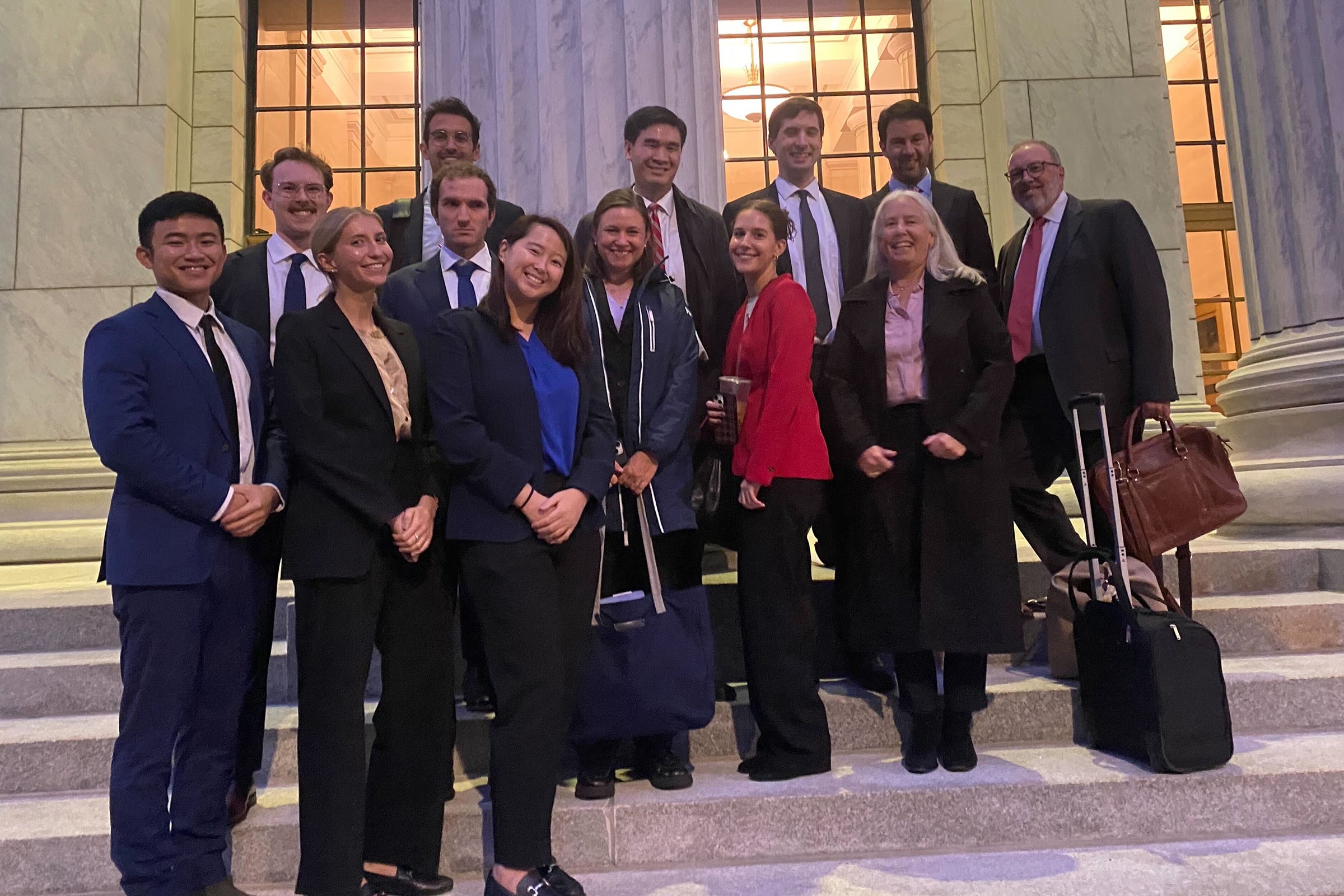
In October 2025, Students from Harvard Law School’s Election Law Clinic traveled to Albany to see the culmination of months of preparation as their professor argued a case with statewide implications before the New York Court of Appeals. The case, Clarke v. Town of Newburgh, challenged the town’s at-large voting system under the New York Voting Rights Act (NYVRA) — but the constitutional validity of that state law itself hung in the balance.
State of Democracy
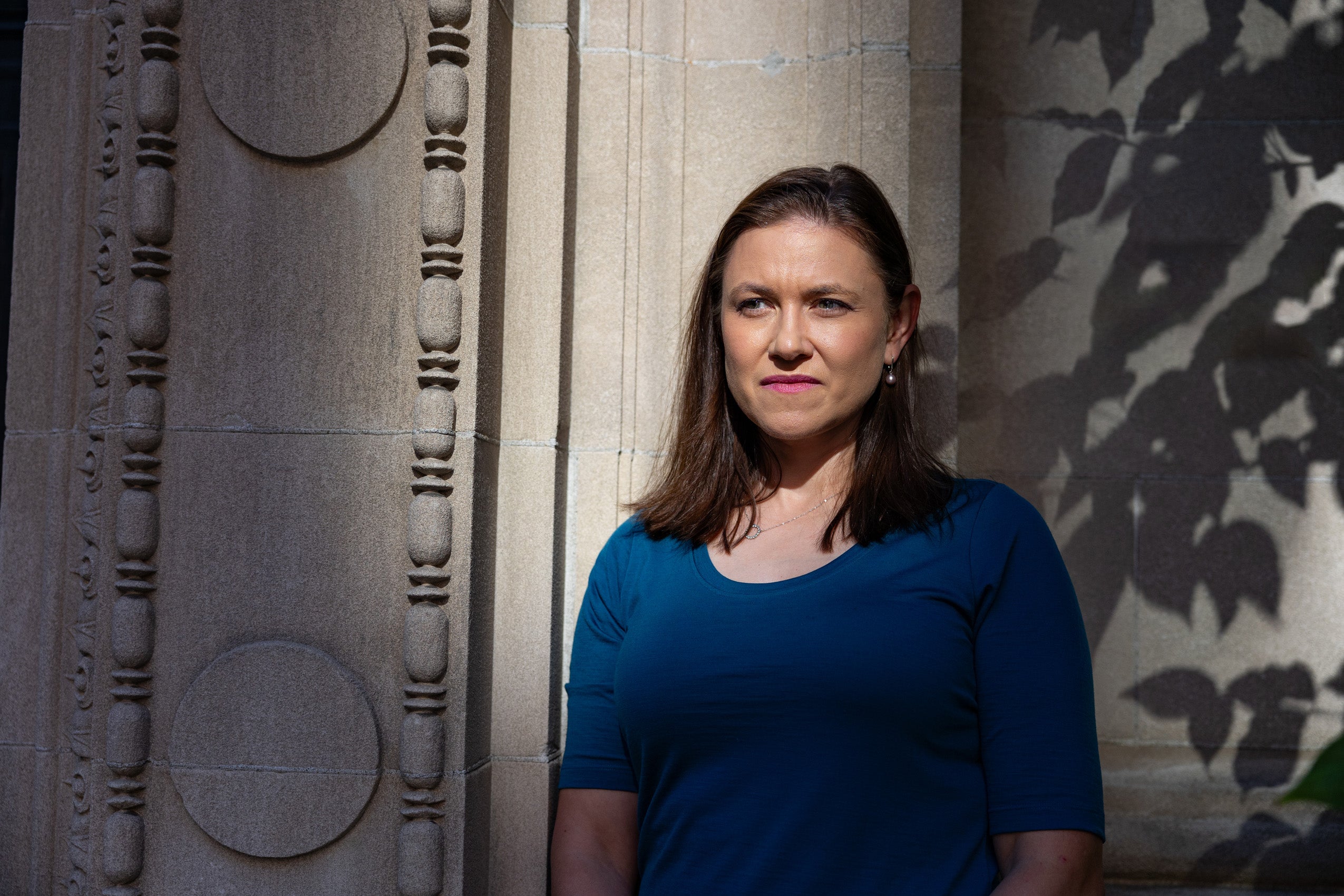
In 2024, in the shadow of a weakened Voting Rights Act, Harvard Law’s Election Law Clinic helped harness state power to protect the franchise in the picturesque town of Mount Pleasant, New York. The clinic, on behalf four of the town’s Hispanic residents, filed a lawsuit claiming that Latinos have routinely been denied the ability to elect a candidate of their choice because of the town’s at-large voting system. The lawsuit was one of the Election Law Clinic’s major efforts to support state voting rights acts, as they seek to reinstate — and even expand on — protections once granted under the federal Voting Rights Act, which have been pared back in recent years by a string of court rulings.
[Update from the Election Law Clinic: In March 2026 the Town of Mount Pleasant agreed to change its at-large Town Board elections to a district-based electoral system that will allow Hispanic voters the opportunity to elect candidates to the Town Board. The Town also agreed to take all necessary actions to publicize this change in both English and Spanish, and to pay some of the fees and costs associated with litigation.]
Talking Frankly
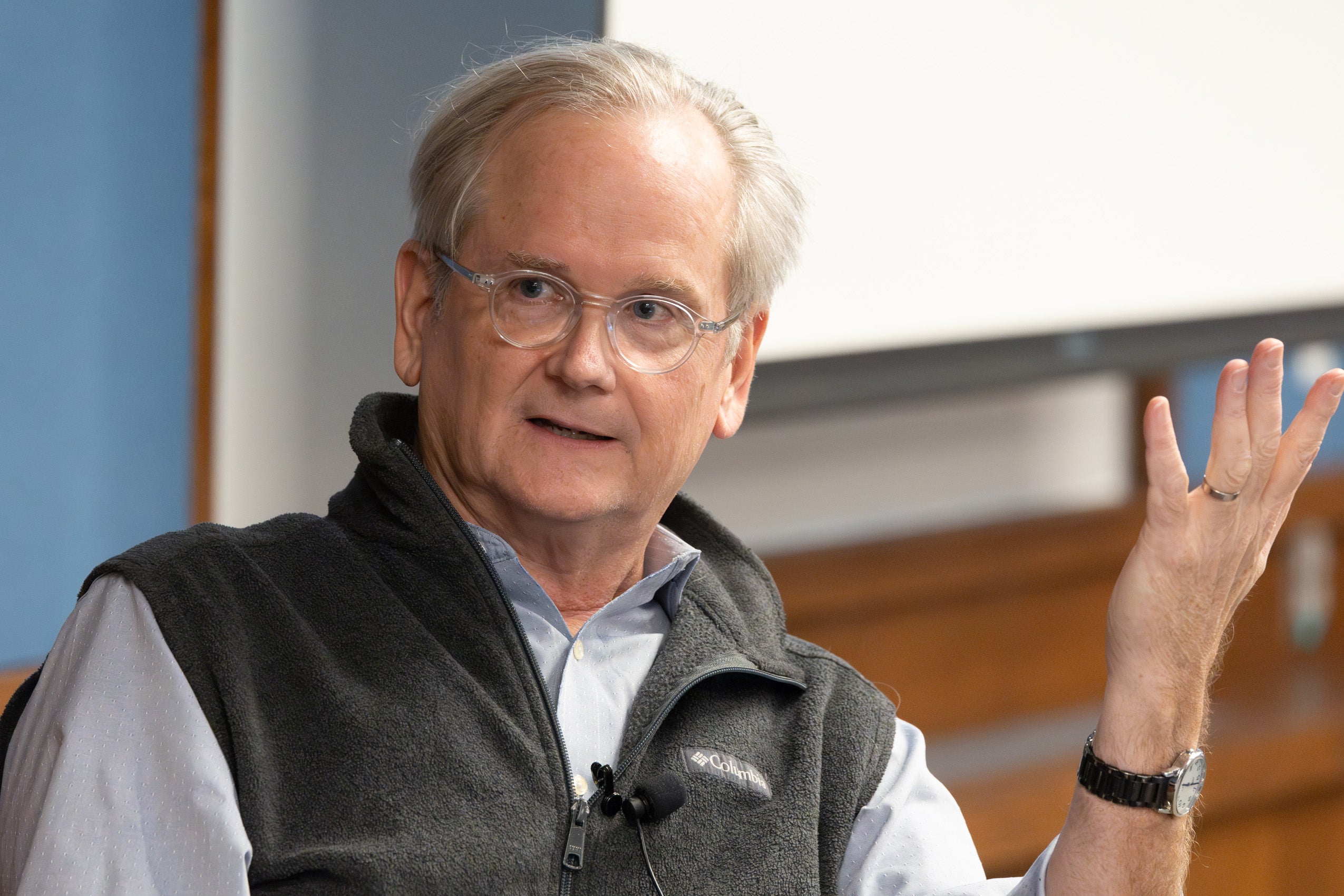
Last July, Nevadans from across the state sat down for a heart-to-heart about the rising cost of living, housing affordability, and how to build better schools for their children. But instead of convening in person for a town hall meeting, these residents discussed their concerns—and possible solutions—using an online platform called “Frankly.”
Created by Harvard Law Professor Lawrence Lessig and his colleagues at the Applied Social Media Lab at the Berkman Klein Center for Internet & Society, Frankly is an open-source video platform designed to facilitate small-group discussions and decision-making. It’s like Zoom—but with more tools to foster productive, open conversations among friends and strangers alike, such as a time-bound agenda; the ability to create breakout rooms based on age, political affiliation, or other characteristics; and mechanisms designed to ensure that everyone in the room has a chance to speak.
In other words, the developers say, Frankly enables community members to have old-fashioned face-to-face conversations about issues they care about—in a distinctly modern way.
Truth in advertising, and now in politics
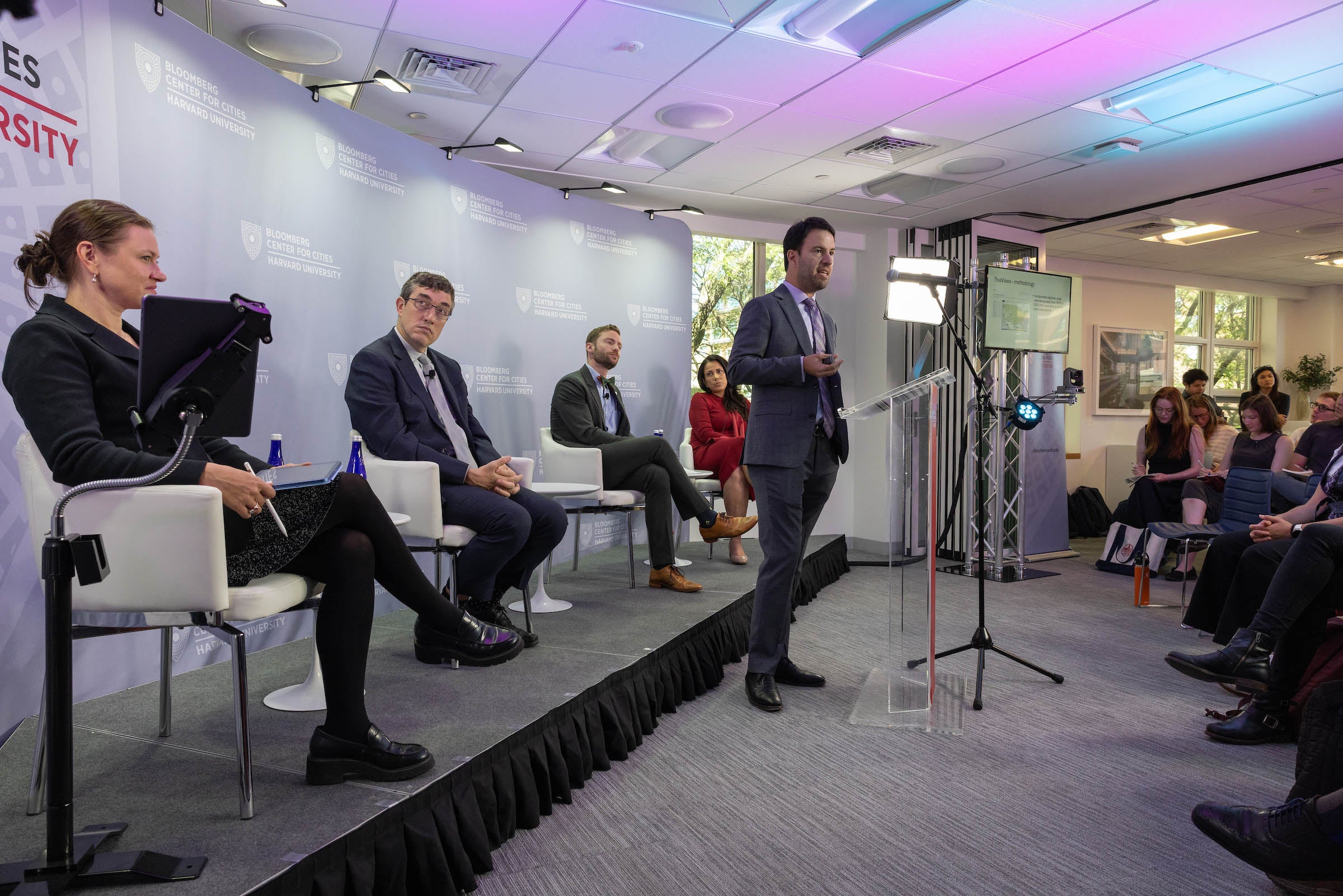
At a launch event in 2024, experts from Harvard Law School and the Bloomberg Center for Cities at Harvard University unveiled “TrueViews,” a jointly-developed freeware data tool designed to make viewable the policy preferences of constituents in any geographic location within the United States. Using survey results from over one million Americans, TrueViews provides users an immediate snapshot of how residents in any particular state, county, district, city/town, or zip code feel about 32 different policy issues ranging from marijuana decriminalization to universal healthcare to fossil fuel emission limits.
Want to stay up to date with Harvard Law Today? Sign up for our weekly newsletter.