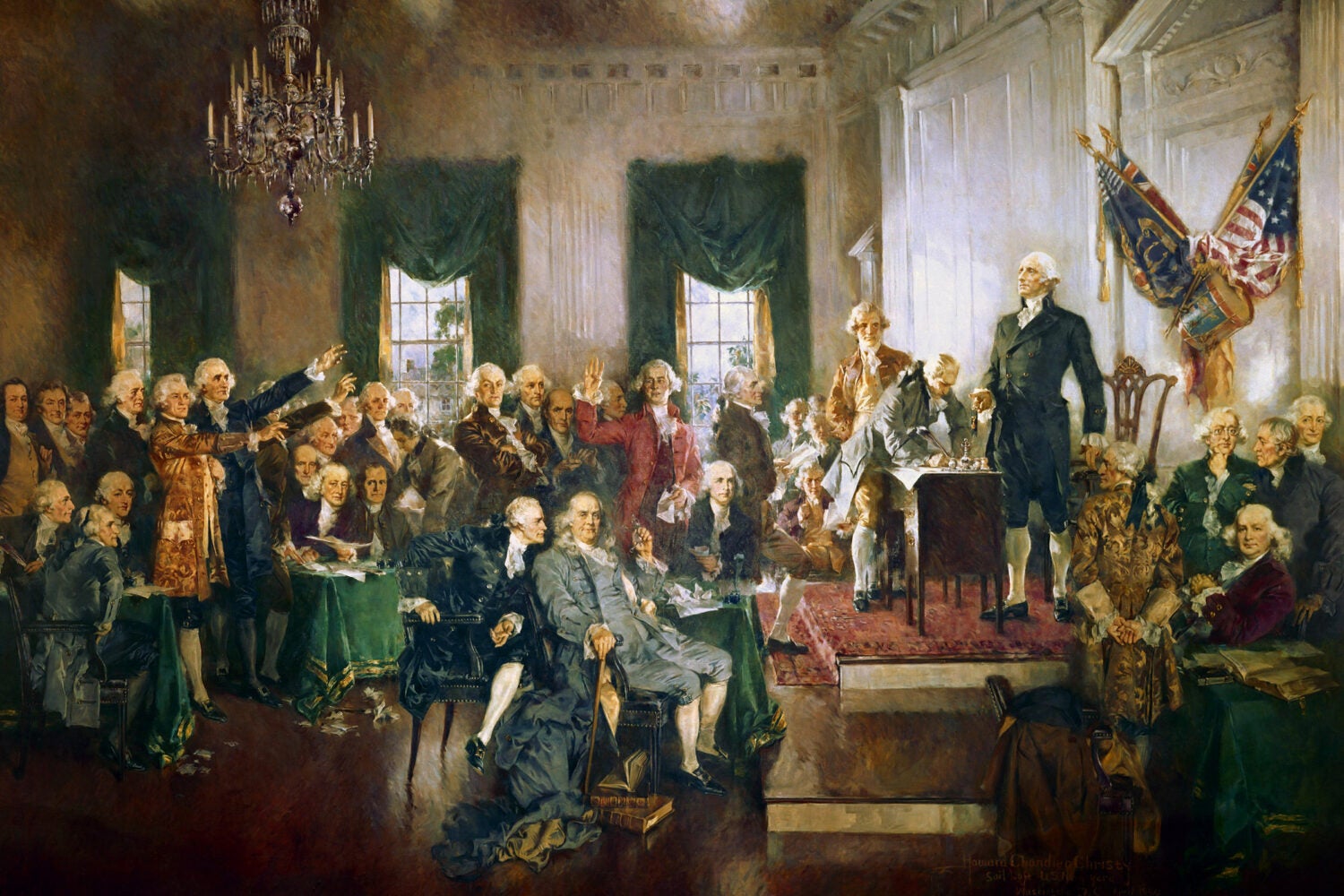
Could a never-used provision of the U.S. Constitution give Americans a new way to debate changes to their government?
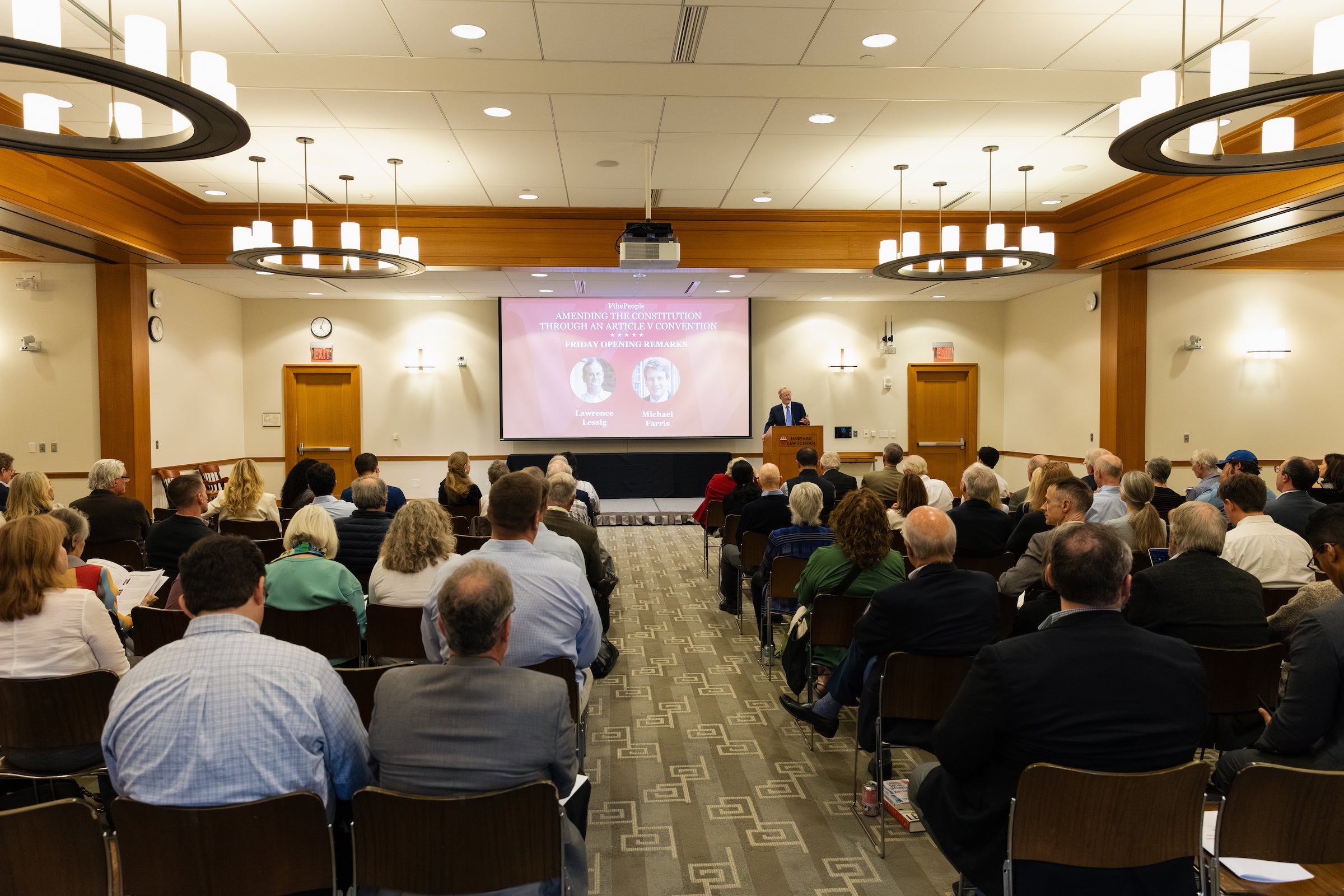
That’s what Harvard Law School Professor Lawrence Lessig asked scholars, legislators, and advocates to consider as he kicked off a two-day conference called VthePeople.
Participants in the Oct. 2 and 3 conference considered the unprecedented potential for — and advantages and disadvantages of — changing the U.S. Constitution through a federal convention that could be called under Article V by two-thirds of the states. Lessig also asked participants to consider whether citizen assemblies, composed of ordinary people drawing on their lived experiences, might play a role in the process.
“I think the objective of today is to begin to imagine even something more democratically exciting,” said Lessig, the Roy L. Furman Professor of Law and Leadership. “To begin to think about … something different, some better structure that might actually give people even more confidence in what a convention here might be.”
Lessig, who founded Equal Citizens, an organization that, among other things, advocates for reform of the Electoral College system, was joined during his opening remarks by Michael Farris, cofounder and senior advisor of the Convention of States Project, which is encouraging states to call a federal convention to propose amendments limiting the power of the federal government.
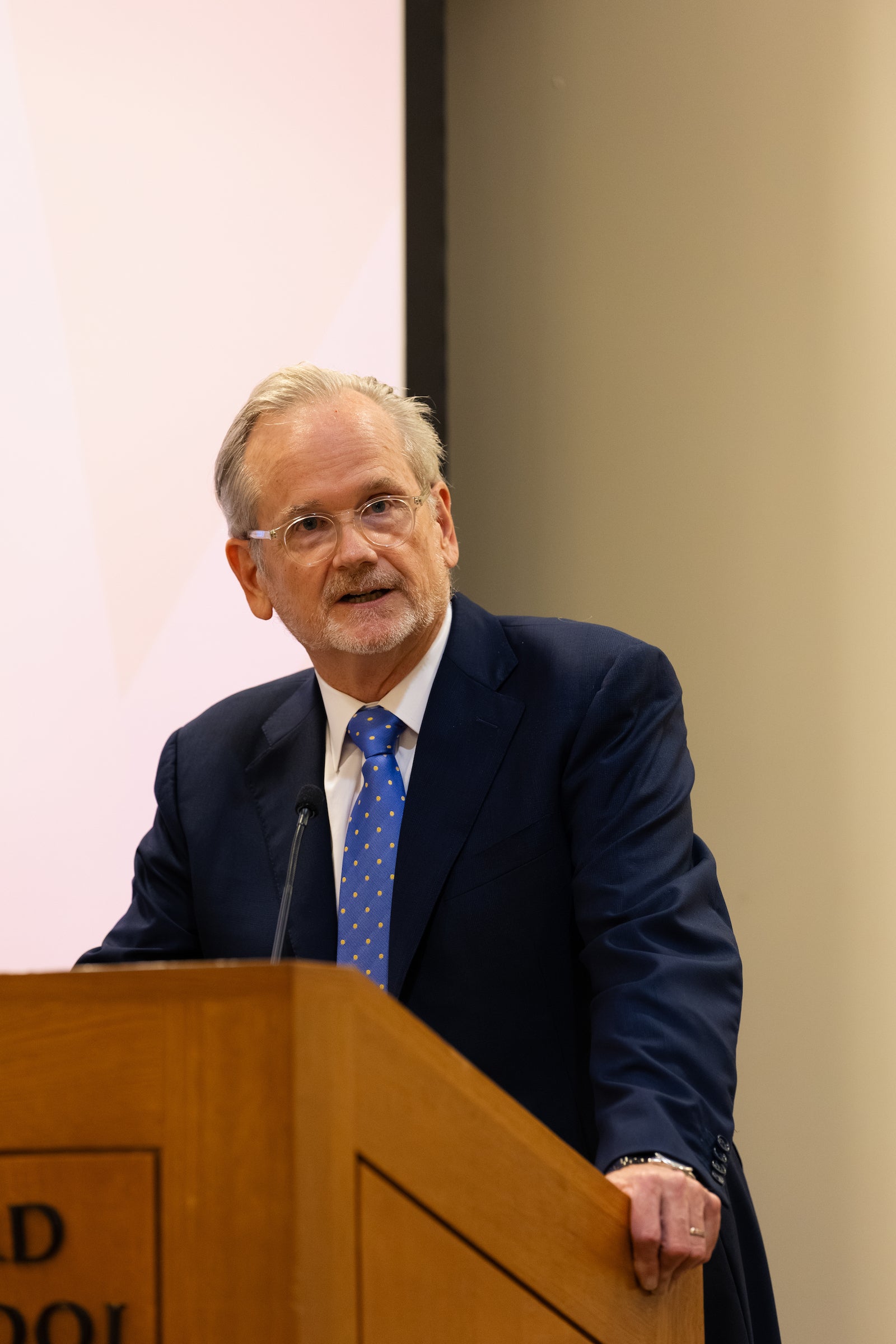
“The founders were very aware that the document they were creating would prove to contain imperfections,” Farris said. “Why did they create the convention process to authorize the states to propose amendments as an alternative to Congress? … This power to curb federal abuses just made sense. The future need for an amendment that would grant additional powers to the federal government would likely come from Congress. But if the federal government needed to be reined in, an amendment of that sort was far more likely to come from the states.”
The conference drew more than 30 speakers from across the political spectrum, including both supporters and opponents of an Article V convention. Lessig and another Convention of States Project cofounder, Mark Meckler (who cofounded the Tea Party Patriots), hosted a similar event in 2011.
The idea, Lessig said, is to “tee up questions … different ways to imagine us solving what is the core problem we are all here to solve: the problem of bringing our Constitution up to date without relying on five justices of the Supreme Court to do that for us, in a way that respects and reflects and maybe builds on the most important contribution America made to the history of democracy. And that is that citizens ratified the idea of their founding constitutional document. That … needs to happen again now, especially now, given the anxiety and frustration and anger and hope all of us have about this nation.”
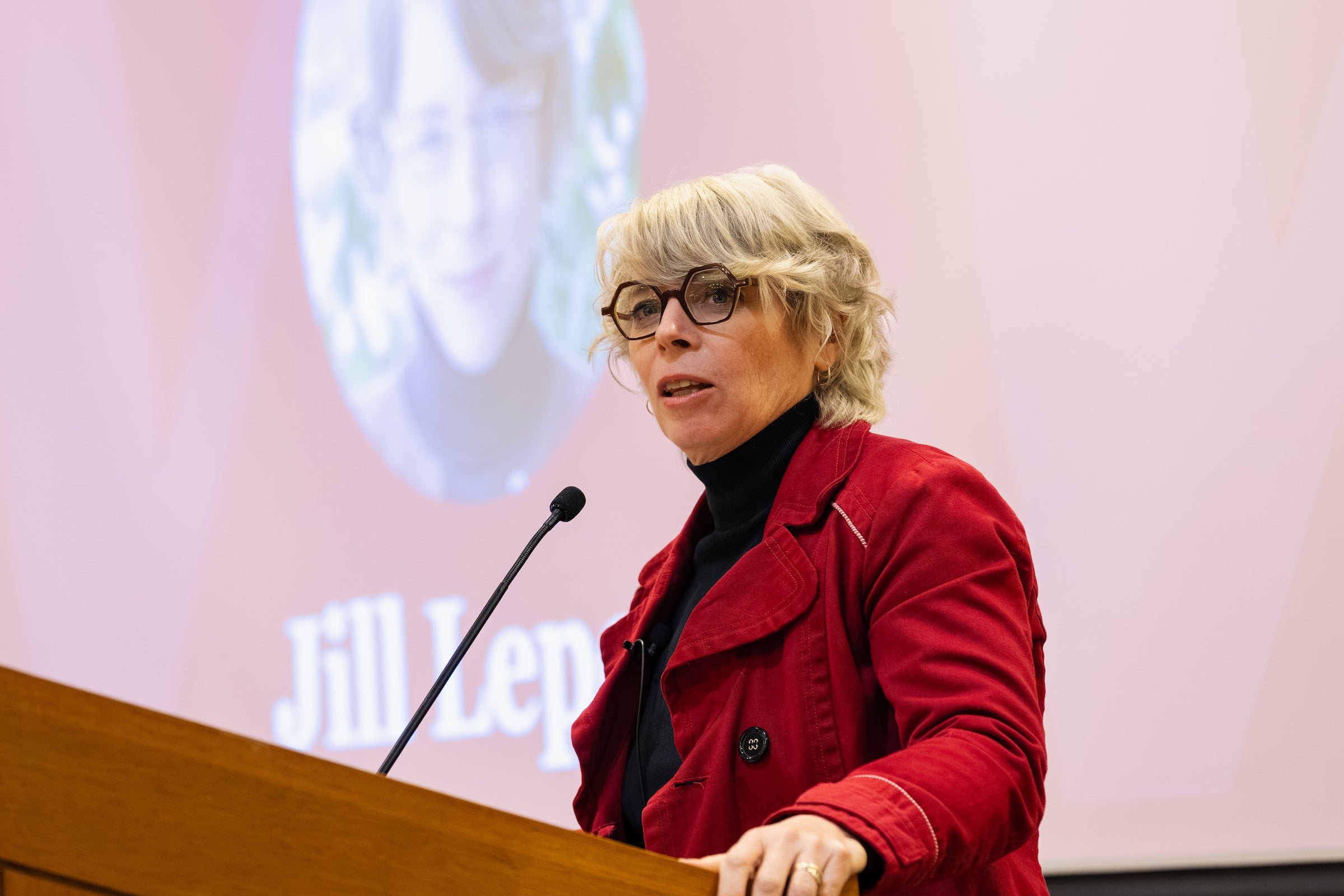
Among the featured speakers were Harvard Law Professor Jill Lepore, whose latest book “We the People: A History of the U.S. Constitution” argues the Constitution has been effectively unamendable for decades, and Laurence Tribe ’66, the Carl M. Loeb University Professor Emeritus, and a skeptic of a federal constitutional convention. Other speakers included Chris Sununu, the former governor of New Hampshire, David Walker, a former U.S. comptroller general, and people who have participated in similar efforts in other countries. Topics included grassroots Article V advocacy, arguments against a federal convention, and past successful processes.
Unconventional history and tradition
Harvard Law’s Richard M. Re, Fessenden Professor of Law, moderated a discussion on the history and traditions of Article V, which lays out the two ways to amend the Constitution. All 27 ratified amendments have originated in Congress, where a proposed change requires approval from two-thirds of both the U.S. House and the Senate. The second path requires Congress to call a convention for proposing amendments upon applications from two-thirds of state legislatures. In either case, a proposed amendment must be ratified by three-fourths of the states. No Article V convention has ever been called.
University of Chicago Law School Professor Farah Peterson pointed out that the Constitution meant something very different at the time of its ratification, not least because the federal government had a far more limited role in people’s everyday lives.
“Their Constitution was not ours,” she said. “The way that an American knew that he had a federal government … might be the Post Office. There were powers explicitly granted in the Constitution that could have created a strong national government … but … these were paper powers.”
A better comparison for Americans’ current relationship to the Constitution, he said, would have been 18th- and 19th-century Americans’ relationships to their state constitutions which, as Lepore described in her keynote address, have been more easily amended over the centuries.
Could a convention go walkabout?
University of San Diego School of Law Professor Michael Rappaport, like many speakers, addressed concerns about “runaway” conventions in which delegates might propose amendments they had not originally set out to consider. But Rappaport argued that the Constitution’s text would constrain what a convention could do. Other speakers pointed out that the subsequent ratification process also could guard against proposals considered too extreme.
“The convention cannot decide to meet on its own without a call,” he said. Likewise, “if a convention proposed an amendment contrary to the call … it would be no more constitutional than if the convention decided to meet on its own without a congressional call.”
University of Texas School of Law Professor Sanford V. Levinson, currently a visiting professor at Harvard Law, said concerns about the legality of a convention or the amendment process might be secondary in some cases to any threat the country or its people are facing. Today, he argued, that threat comes from the Constitution in its current form — or, perhaps more accurately, from people’s veneration of the document.
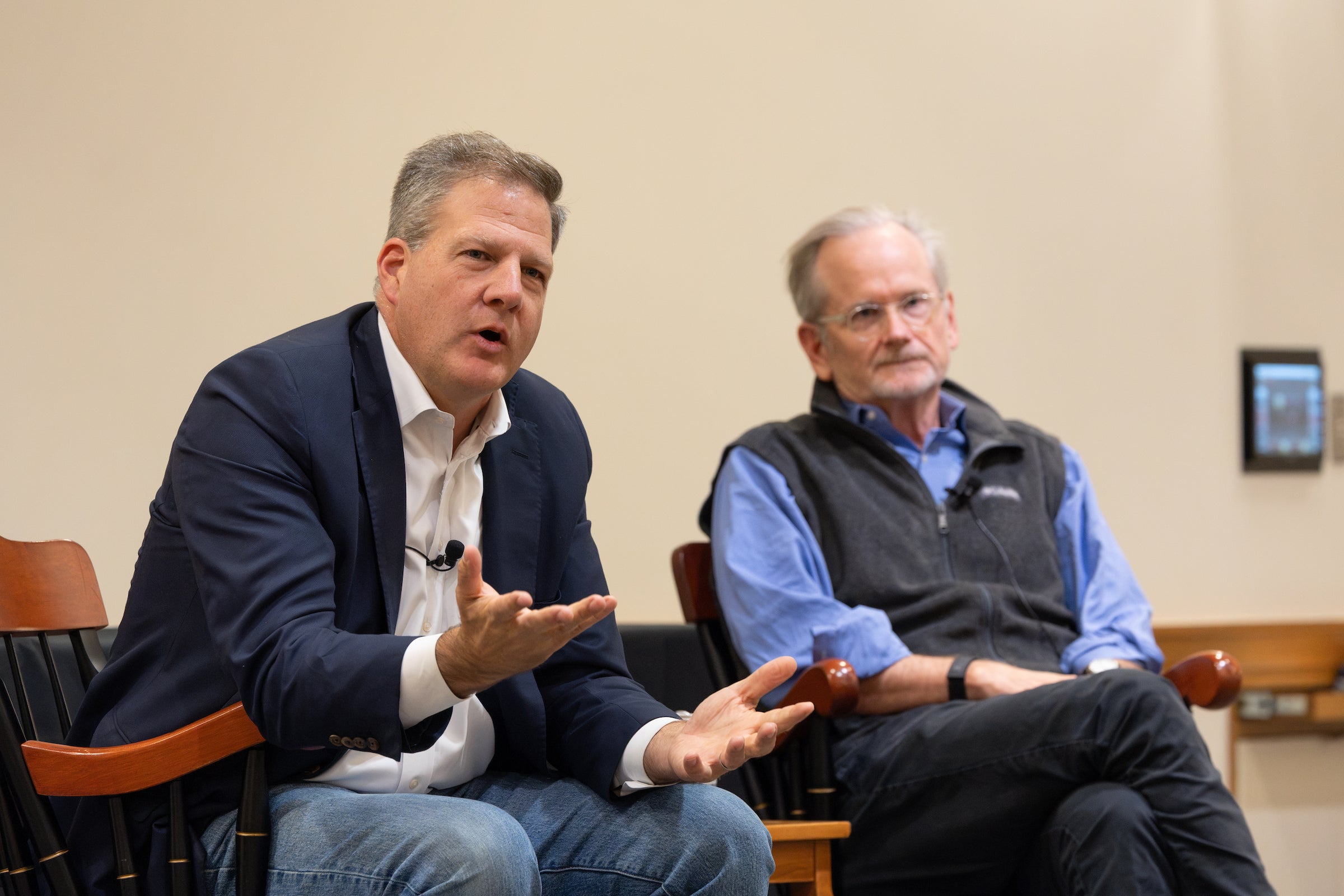
“I’m an increasingly vociferous critic of the Constitution,” he said. “It constitutes a clear and present danger, even an existential risk to our national survival. … [That’s] why I support the need for a new constitutional convention, in order to engage in the kind of remodeling that I believe is both necessary and proper.”
He said the most important lesson from the Declaration of Independence, written 250 years ago, is that “an aroused people have the right to overthrow a completely legal regime.”
He quoted from Federalist No. 14, one of many papers written in support of a constitution, in which James Madison praised Americans for not having “a blind veneration for antiquity, for custom, or for names,” and from Alexander Hamilton’s first essay in the series of papers, in which he asked, “whether societies of men are really capable or not of establishing good government from reflection and choice, or whether they are forever destined to depend for their political constitutions on accident and force.”
“That is the question before us,” Levinson said. “Are we capable of engaging in the kind of audacious reflection and choice that the framers at their best give us as an example to follow?”
In addition to panels and social gatherings, the conference organizers also created an artificial intelligence chatbot trained on Article V scholarship that Lessig invited the public to engage with and use.
Harvard Law Dean John C.P. Goldberg welcomed participants and the discussion on “one of our Constitution’s most interesting and under-theorized and under-discussed provisions.”
He read a passage from the book “The Framers’ Coup: The Making of the United States Constitution,” by Michael Klarman, Charles Warren Professor of American Legal History, which quoted a Massachusetts delegate saying “great or important change in government had too often been written in blood … if in the course of its operation, this government shall appear to be too severe, [Article V is] the means by which this severity may be attempted and corrected.”
“Whether in these challenging times an amendment convention can deliver on this promise is exactly what you have been discussing and will be discussing,” Goldberg said, calling those “fundamental and urgent questions.”
Want to stay up to date with Harvard Law Today? Sign up for our weekly newsletter.