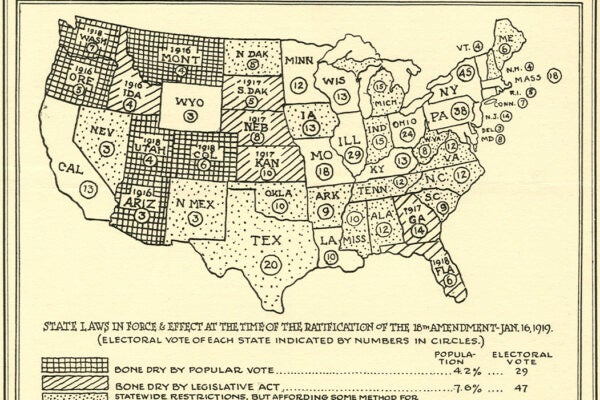
Stories from the Vault Series
This series highlights popular posts from the now-retired Harvard Law School Library blog, Et Seq. When Et Seq. debuted on February 1, 2007, it was the Library’s first foray into public blogging. Upon its retirement on February 28, 2024, the blog included more than 1,000 posts covering topics such as Harvard Law School history, research tips and guides, collection highlights, and Library-sponsored events.
This 2014 post was written by Edwin Moloy, Curator of Modern Manuscripts, Historical & Special Collections. This “revisited” version includes some additional information and new images.
View the archived web page of the original post, which is part of the Harvard University Archive’s A-Sites: Archived Harvard Websites collection, or read below…
May 14, 2014
By Edwin Moloy
In May 1929, President Herbert Hoover formed the National Commission on Law Observance and Enforcement, more commonly known as the United States Wickersham Commission (after the chairman, George W. Wickersham), and charged its members with studying the problem of the enforcement of laws – with special attention to be given to the problems and abuses stemming from the Prohibition laws. (National prohibition, under the Eighteenth Amendment, was enacted under the Volstead Act and lasted from 1920 – 1933.)
The United States Wickersham Commission Records, 1928-1931, part of Historical & Special Collections at the Harvard Law Library, contains correspondence, reports, and collected research materials. Examples of research material include government circulars with titles like, “How to Take Fingerprints” and the “Effect of Prohibition Law on Workers and Families.”
The collection was given to the Library by Harvard Law School Dean Roscoe Pound (one of the 11 members of the Commission) and Professor Sidney Post Simpson, who served the Commission as Director of the “Study of the Cost of Administration of Criminal Justice”.
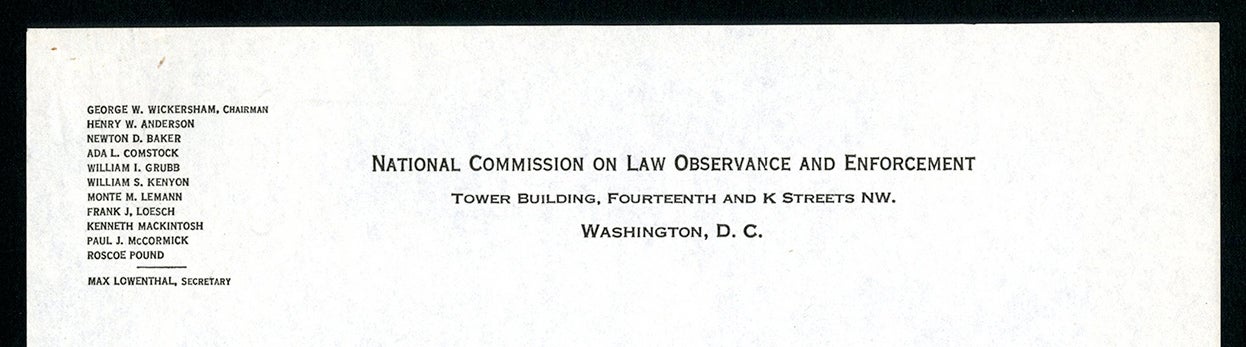
Of course, when most people think of Prohibition, they think of gangsters, and the most famous gangster of the day was Al Capone. He is mentioned (by his alias, Al Brown) multiple times in an August 1927 confidential report written by two Treasury Department Special Agents, in which they outline possible corruption among Prohibition Agents in Chicago. During their investigation, they surveilled multiple breweries run by Capone.
“We kept the place under surveillance for a number of days and took… the license number of the automobiles used by the gangsters associated with Al Brown that happened to be touring around in the immediate vicinity of the brewery.”
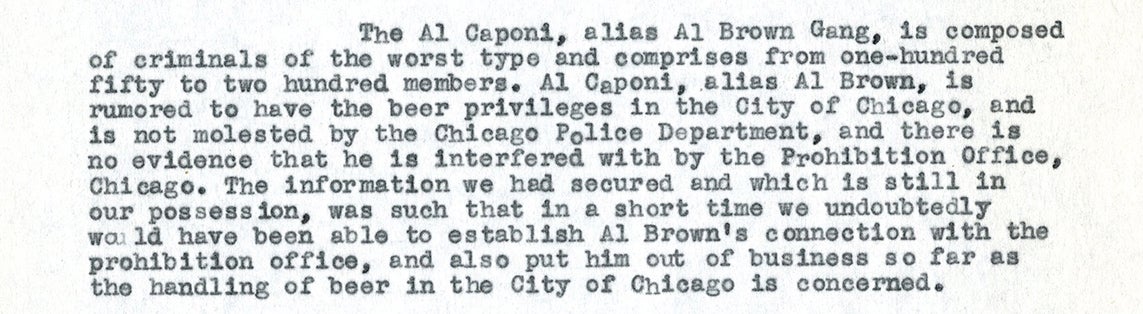
They went on to write, “While carrying on the investigation…we procured a great deal of valuable information regarding the Al Brown gang, in connection with their handling of beer in the City of Chicago.” Ultimately, they determined that without the authority to investigate independently of the Chicago Prohibition Office, it did not make sense to proceed, and they recommended closing the case. Al Capone may have escaped prosecution then, but in October 1931, he was found guilty of tax evasion and on May 4, 1932, was sent to a federal prison in Georgia to serve an 11-year sentence.
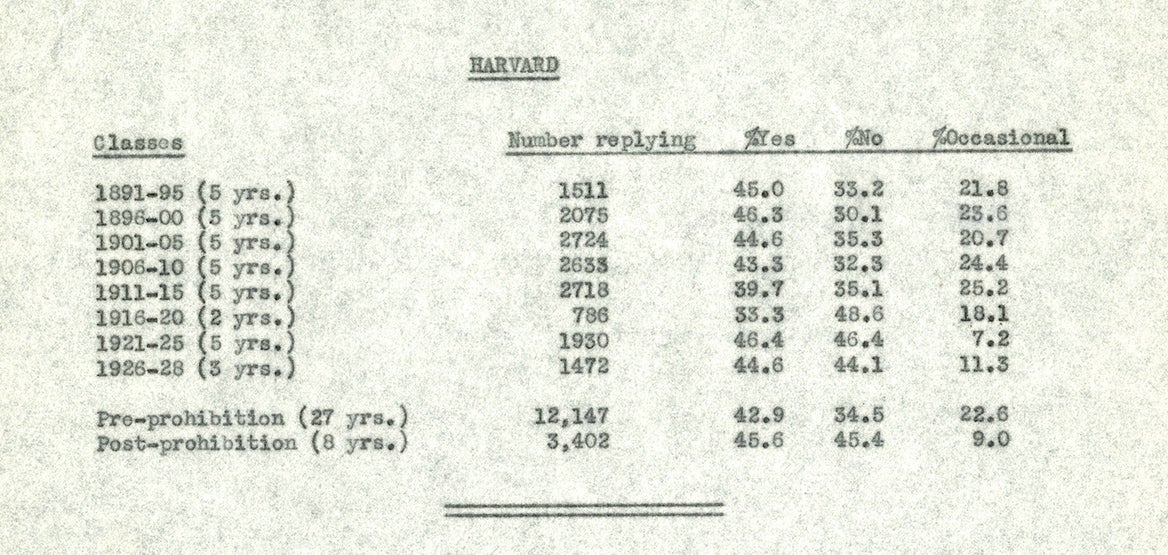
The investigative work of the Commission was both broad and comprehensive. An example of this is a report sent to Wickersham that showed the extent to which Prohibition was affecting drinking among college undergraduates. Harvard was included in this report, which noted that Prohibition had little effect on the drinking habits of undergraduates.
The Law Library also holds the papers of Miriam Van Waters, who was asked by the Commission to make a study of juvenile delinquency. Other collections containing research on this topic include the Sheldon Glueck papers and Eleanor T. and Sheldon Glueck papers.
Addendum:
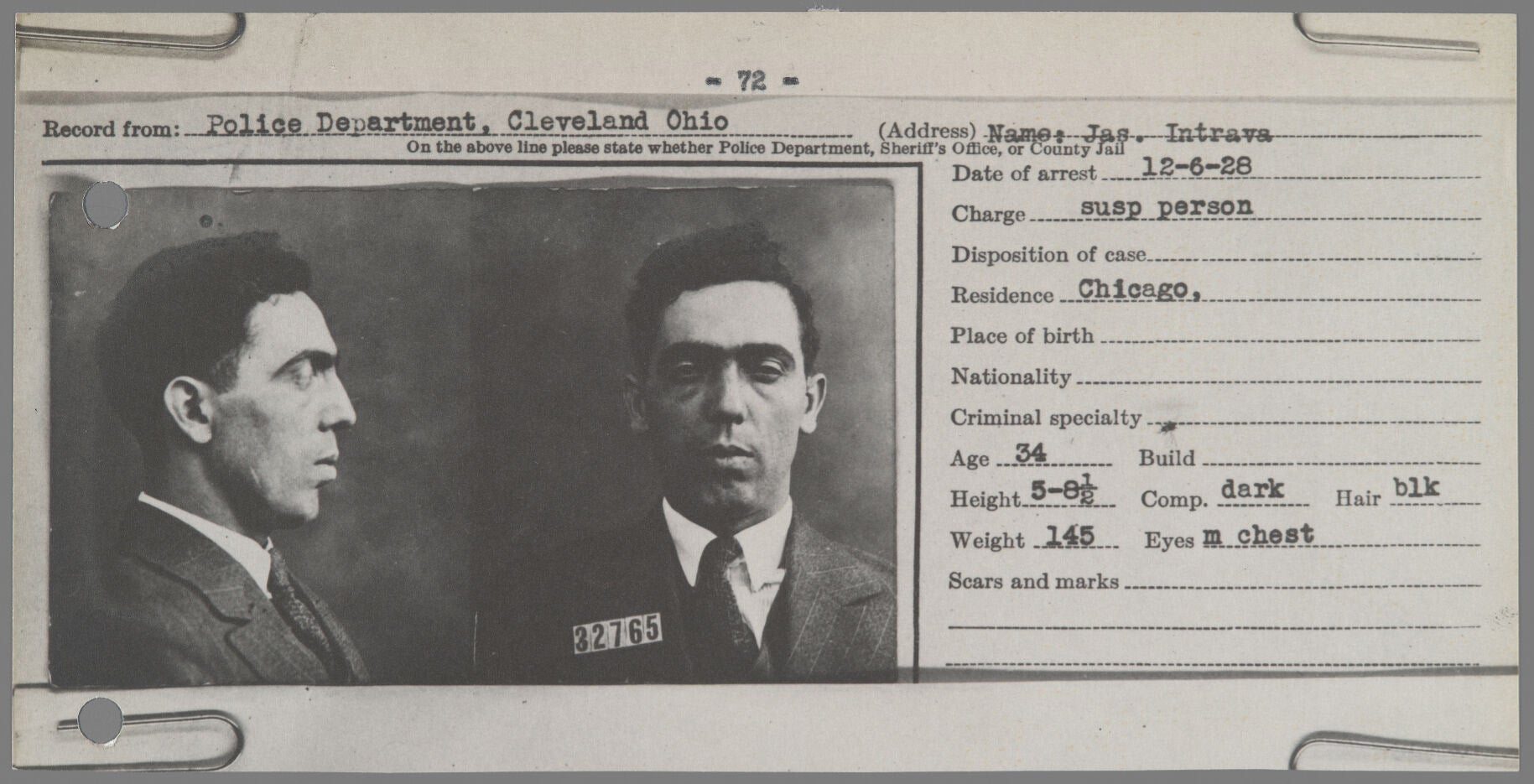
Since this post was originally published, we have cataloged and digitized a set of mugshots from the arrests at a meeting of known criminal figures at the Hotel Statler in Cleveland, Ohio, on December 5, 1928. The copy prints of the mugshots were part of a report titled “Part I. The Prohibition Situation in Illinois with Special Reference to Chicago,” submitted July 19, 1930, by Guy L. Nichols, Treasury Department. The report was given to Roscoe Pound in connection with his membership on the United States Wickersham Commission. Explore the images by doing a keyword search for “Unione Siciliano Heads” in Harvard’s online image catalog, HOLLIS Images.
Filed in: Et Seq
Contact Us
phone: 617-495-3455
email: asklib@law.harvard.edu
library website: hls.harvard.edu/library
Stay Connected
Library Innovation Lab (LIL) Blog
Instagram @hlslibrary
Facebook @hlslibrary
Et Seq blog (archived)