Editor’s note: After this article was published, Paramount voluntarily agreed to postpone the merger for one year, until June 2027, or until the court issues a ruling in the case.
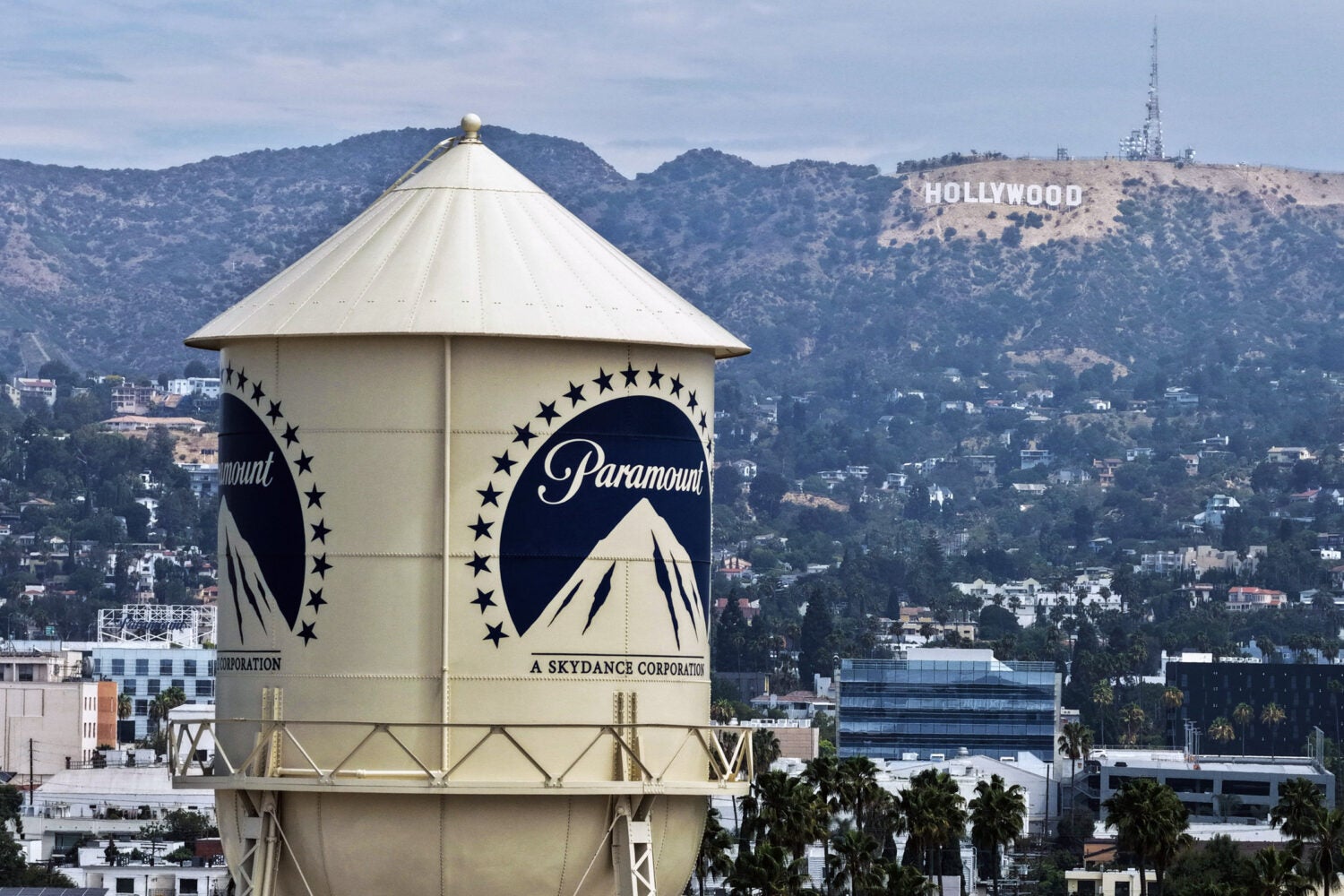
Could a deal between Paramount Skydance and Warner Bros. be headed for the cutting room floor? For weeks, the two Hollywood titans have been planning a $111 billion merger, which, the New York Times reports, would be one of the largest media deals in history. The companies say the move will help them compete in a rapidly changing global entertainment market that includes behemoths like Netflix, Amazon, and YouTube.
After receiving approval from the U.S. Department of Justice, Paramount and Warner Bros. announced their intention to close the deal by fall 2026. But in mid-July, 12 states, led by California, sued to stop the merger, arguing that it would violate antitrust law and ultimately harm movie theaters, consumers, and employees. The coalition of attorneys general contend that the transaction would reduce competition for basic cable TV channels and the distribution of films — particularly major blockbusters — and therefore lead to higher prices and fewer choices.
On July 20, a judge in California halted the merger for two weeks as she considered a longer-term injunction against the deal while the states’ lawsuit proceeds.
Peter Brann, a lecturer on law at Harvard, says that if the states receive a temporary restraining order soon, the deal could be dead on arrival. But even without a TRO, he notes, the states could still pursue — and eventually win — their suit.
“And then the companies would have to unwind their deal, which as you can imagine, is incredibly difficult,” he says.
Brann emphasizes that states are not strangers to antitrust enforcement. In fact, he says, they invented it, and he expects to see more state-driven antitrust cases in the years ahead — from both Democratic and Republican attorneys general.
“State antitrust suits don’t always line up neatly on a partisan basis. Instead of politics, these suits are often driven more by economics,” he says.
In an interview with Harvard Law Today, Brann shared more about the current lawsuit, how it could affect Hollywood, and the growing role of state attorneys general in antitrust enforcement.

Harvard Law Today: What is the history of state antitrust enforcement?
Peter Brann: States started bringing antitrust cases before there was a federal antitrust law. In the late 19th century, there was a movement to rein in the “trusts,” or companies, that were taking over the country following the Civil War — first, the railroads, then later oil and gas. States were the first ones to address these problems.
Later, the feds passed the statutes that we’re all familiar with — the Sherman Antitrust Act and later the Clayton Antitrust Act. Since then, the amount of state enforcement has ebbed and flowed over the years, depending a lot on what the federal government is doing. After all, the federal government has a lot more resources.
HLT: The New York Times reported that the Justice Department approved the Paramount-Warner Bros. merger, yet 12 states are now trying to stop it. How unusual is that? And how are states able to bring claims under the federal Clayton Act after the federal government has stepped aside?
Brann: A number of years ago, the Supreme Court said that the states could bring actions even if the federal government chose not to, and no one’s challenged that law in recent years. That means that either the states or the feds can jump in on any of these actions. Recently, some states have looked at what the current administration is doing, and they concluded it’s just unacceptable — that deals are not being looked at on their facts, but rather on political connections, and therefore they’re willing to step in.
The states, as a matter of statute, have the right to bring these cases under the Clayton Act. In some other cases, the Supreme Court has said the states have “special solicitude,” which relaxes standing to bring lawsuits — not just in the antitrust space. But with respect to antitrust, the states are empowered under the statutes, and they must show how this negatively affects people in their state. The state attorney general can step in if they can argue that it’s not in the public interest for a deal to go forward.
HLT: California has emerged as one of the country’s most active antitrust enforcers. Why has the state taken on such a prominent role?
Brann: California is the big kahuna. It’s the most populous state. It’s the fourth largest economy in the world. They have more resources than other states. But I want to note that when states band together, they have the ability to make their presence known. Therefore, other states can and do bring these types of cases.
HLT: What are the states concerned about? What do they have to prove to stop the merger?
Brann: What you’re looking for is antitrust injury, such as how this will lead to increased costs for consumers. The companies don’t have to be headquartered in any of the states involved in the lawsuit. The states in this case, and California in particular, are also interested in whether there could be adverse consequences or collateral damage to employees of these companies — a bunch of people could lose their jobs, for example. A court’s antitrust inquiry will look at what this deal could do to competition and prices.
HLT: The states say they are concerned about the merger’s potential impact on theatrical film distribution and cable programming. Why does market definition matter so much in antitrust cases?
Brann: Market matters the most in antitrust. To put it simply, if you define the market widely enough, there’s never an antitrust violation. And if you make it small enough, there always is. If you define the market narrowly enough, then it’s a lot easier to find that a particular deal will lead to an illegal or unhealthy concentration. But if you define it very broadly, then there may be plenty of competition and therefore no antitrust violation.
To give you a very different example, say we are filing an antitrust case having to do with theme parks in Florida. The plaintiffs might argue that the market is “theme parks in the Orlando area,” but then the defendants come in and say, “No, no, no! People could take their dollars and do something completely else. They could go skiing in Colorado instead. They could go on a cruise in the Caribbean. Therefore, you’ve got the market wrong.” They have an incentive to define the market more broadly.
HLT: How are Paramount and Warner Bros. likely to want to define the market? And how does a court evaluate these arguments?
Brann: They will probably point to larger players in the market, whether it’s Amazon or Netflix or something like that, and argue that they need this deal in order to compete with companies even bigger and more dangerous than them. They will probably argue that their merger is pro-competitive and will lead to more content for consumers and better jobs for the companies’ employees. A court will have to conduct a very fact-bound inquiry to evaluate these claims.
HLT: Paramount and Warner Bros. are hoping to complete their merger very soon, so the states are seeking a temporary restraining order to stop it while the case proceeds. A judge recently ordered a 14-day restraining order and is expected to rule on a longer-term one soon. What effect would a temporary restraining order have on this merger?
Brann: Well, it’s often the whole fight, because if you get a TRO or preliminary injunction — it’s the same standard — it could cause the merger to collapse completely. If you think about it, the companies have all the financing lined up, they often have contingencies on both sides. As you can imagine, it makes an enormous difference if you can win that preliminary injunction on the front end.
On the other hand, if the injunction is denied, it doesn’t mean the lawsuit is over. There are examples of antitrust cases where the plaintiff, whether it’s the state or the federal government or a private party, goes forward even after they’ve lost the preliminary injunction, and they could still get to the end and win the case. If they have already merged, the companies would have to unwind the deal, which as you can imagine, is incredibly difficult. So, there are still risks, even if the states don’t get their temporary restraining order.
HLT: Given this case, and other recent high-stakes state antitrust suits, such as the one against Live Nation/Ticketmaster, do you think we’re seeing a renaissance in state antitrust action today?
Brann: Again, it ebbs and flows. One thing I want to mention is that, although you don’t see it in this particular case, state antitrust suits don’t always line up neatly on a partisan basis. Instead of politics, these suits are often driven more by economics. For example, the states involved in fighting the JetBlue-American alliance involved both Democratic and Republican attorneys general. Notably, it didn’t involve the Democratic AG of New York, which was the home of JetBlue. The states have also tended to work with the federal government on various antitrust cases, such as one brought a few years ago by the Idaho AG revolving around a merger of two hospitals.
There’s definitely a feeling under the current administration that they have different views of antitrust than the traditional views that the states have had. There have been accusations of backroom deals negotiated by the Trump administration. That causes some states to think that they’re going to have to do this themselves. The Live Nation suit is a good example. The states were left in a lurch right before trial started, because the Department of Justice had been doing a lot of the work, and they announced a settlement on what the states thought were incredibly weak terms. The Republican and Democratic AGs who were part of that case decided to go forth and try the case anyway — and they won.
HLT: Can you share another example of a recent state antitrust lawsuit that succeeded in preventing a merger?
Brann: The states were very heavily involved in fighting the Albertsons-Kroger grocery merger several years ago. They argued that the deal could lead to significantly higher food prices or food deserts. The inquiry ultimately looked at the impact within the states — and they successfully prevented the merger at the end of 2024.
HLT: Regardless of who ultimately prevails in this current case, what should lawyers, businesses, and other states be watching most closely as the litigation unfolds?
Brann: I’m sure that the lawyers in the antitrust world already know this, but it’s clear that even if you get a clean bill of health from the federal government, you can’t just assume you’re good to close a deal. They really need to pay attention to whether the states are interested in this. That goes for issues beyond antitrust — it could be the environment, health issues, etc. The real takeaway is that lawyers should be thinking, “Well, it’s nice that we seem to have gotten the federal government off our back, but are the states looking at this as well?”
This interview has been edited for length and clarity.
Want to stay up to date with Harvard Law Today? Sign up for our weekly newsletter.