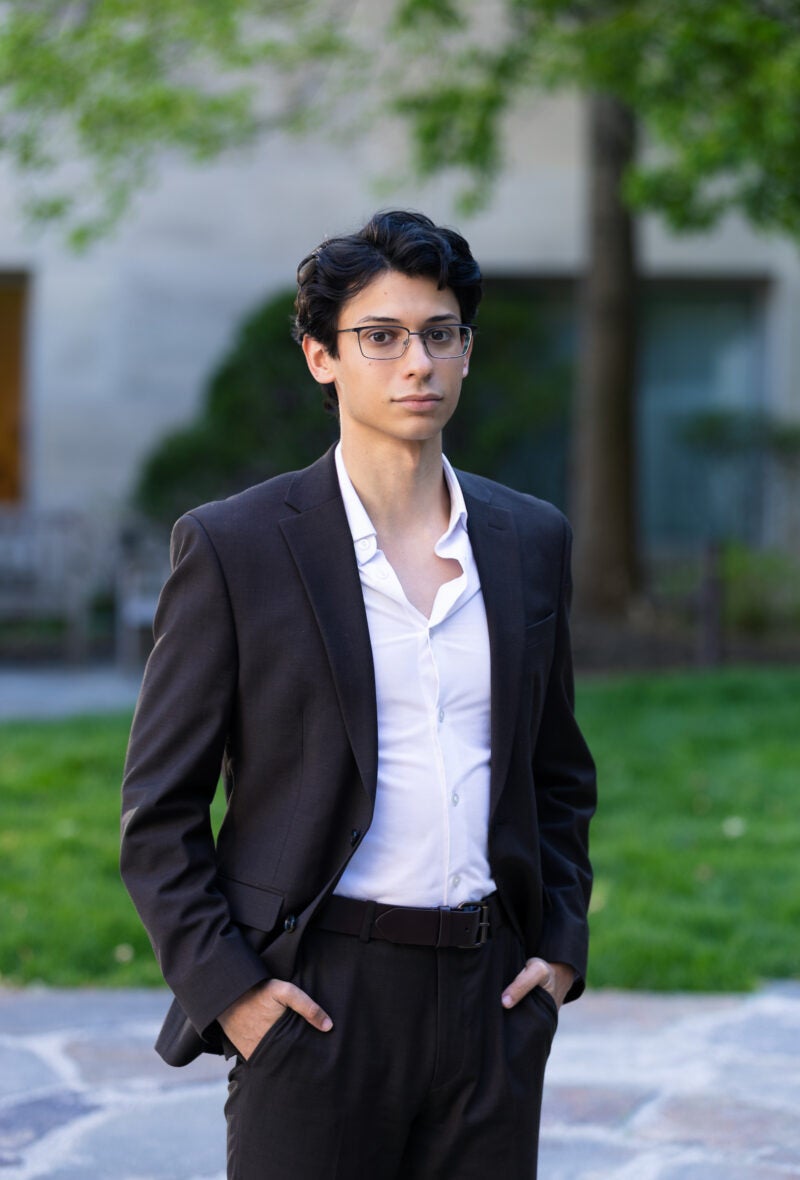
Jordan Hoogsteden ’26 has a philosophy that underlines his studies at Harvard Law School and his work as a public defender. For him, “The name of the game is harm reduction.”
“In a system that is really hellbent on denying people their humanity, we are doing the utmost to recenter the story,” he said, and his motivations go beyond law. “This work is really built on the strong belief that there is a light inside everyone and that, despite the horrors, humanity will persist. That’s the crux of what public defense comes down to.”
Hoogsteden’s zeal and sensitivity, along with a distinguished Harvard Law record that includes his presidency of the Harvard Defenders, have earned him this year’s William J. Stuntz Memorial Award for Justice, Human Dignity, and Compassion. The award recognizes a graduating student who has demonstrated an exemplary commitment to those principles.
Hoogsteden said that, growing up comfortably in New Jersey, his privilege initially inhibited his sense of mission. “I wish I could say I had a discrete moment that would make a good talking point. But I fell into public defense work through my academic studies and how that coalesced with my life experience.”
He began as a neuroscience major at Pomona College, where he became interested in the former asylum system and the “mental health to prison pipeline.” He then switched his major to public policy analysis with a focus on housing policy, when the issue of public defense again arose.
“There is an obvious connection between people experiencing homelessness and mass incarceration. If there is a social problem, the people who are viewed as embodying that problem are just thrown away for it — that didn’t feel right to me. So through my studies, no matter where I pivot, all roads led to mass incarceration and the criminal legal system.”
He joined Defenders in his first semester, and “dove right in. I was really lucky that I found the type of work I wanted to devote my life to.” And he’s proud to point out that the organization just had a banner year, representing 550 clients, the highest caseload in the organization’s history.
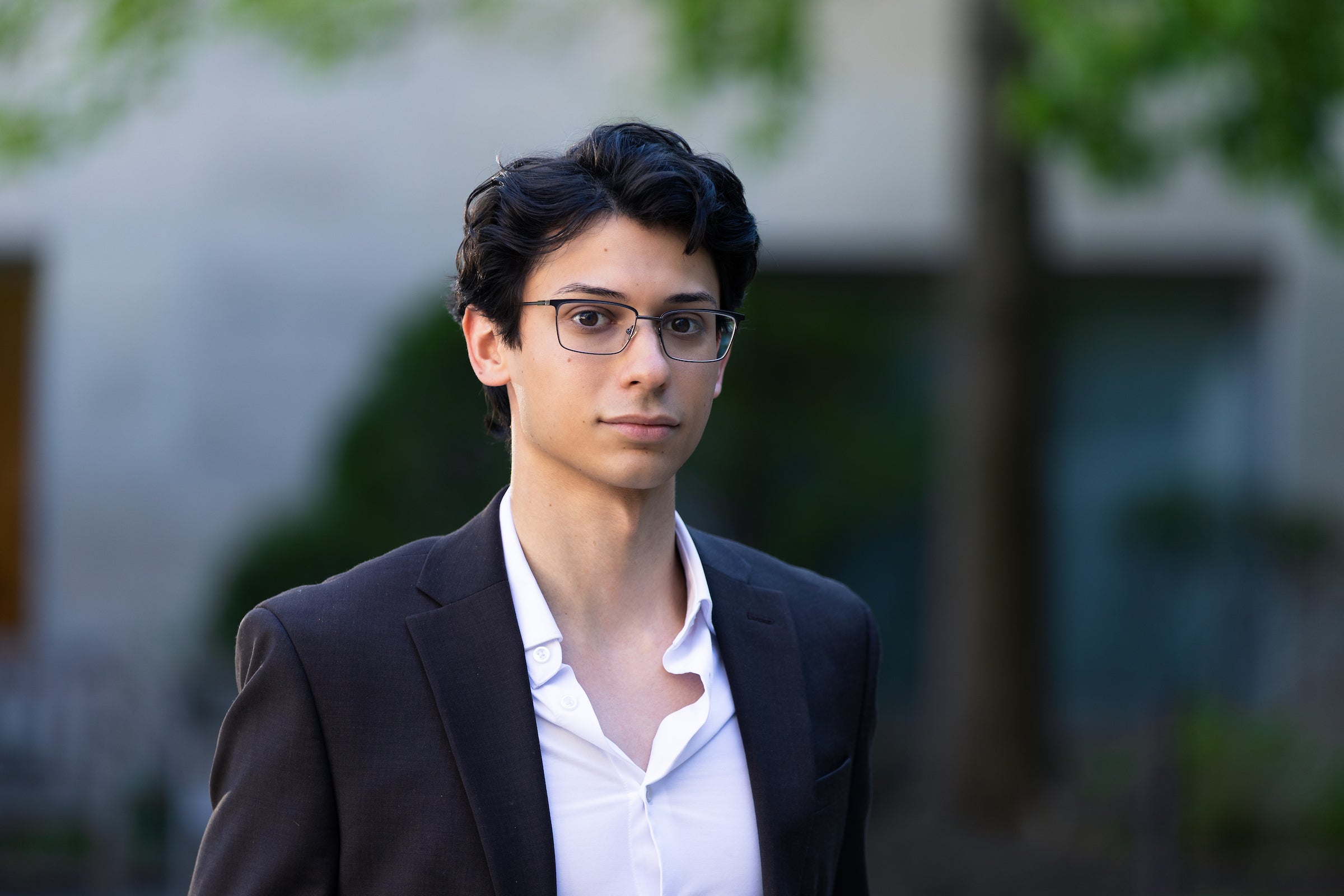
“[Public defense] is really built on the strong belief that there is a light inside everyone and that, despite the horrors, humanity will persist.”
His year as president has also put a new emphasis on “holistic training,” collaborating with other clinics from throughout the law school. These have included immigration training and collaborations with the LGBTQ Clinic, and the Housing Law Clinic at the Legal Services Center. He also credits his work with the Crimmigration Clinic, the Criminal Justice Institute, and the Housing Clinic for “helping me find my own voice in advocacy, and learning a lot of the hard legal skills.”
Toward the end of his first year, he became involved in a project that continued through the rest of his time at law school. He took on a client whose circumstances were unusual. The client was younger than Hoogsteden, who was 23 at the time, and was already facing multiple charges.
“It was hard to believe how badly the system had failed this person,” he said. The young man had an inordinate number of factors to deal with: He was born into poverty, taken from his home and placed into care; his mother had substance abuse issues; and his brother died of gun violence. Further, the client faced numerous mental health challenges.
What surprised Hoogsteden was the legal system’s apparent indifference toward his client. “When we did the initial hearing, I could see a court that wasn’t very sympathetic, looking to throw the book at a young man of color.” The hearing was kept open for two years, but during that time the client faced a daunting list of obligations — everything from staying on certain medications to contacting care providers regularly and never interacting with others.
“It was more than any 21-year-old could navigate. It was obvious they were setting him up to fail. For two years I had to beg and plead with these care providers to actually care.” The effort succeeded, and charges against his client were dropped just weeks ago.
After graduation, Hoogsteden plans to work with the Bronx Defenders, for whom he worked during his second law school summer. And he can now say that he feels well equipped to make a difference.
“I am the first person in my family to go to law school. I don’t have any background in this field,” said Hoogsteden, who nonetheless broke the organizational record for most cases taken by a single member in his time with Defenders. “All I had were strong beliefs about it — and now my skill set can live up to those beliefs. That is what my clients deserve, and I feel that is a legal education well spent.”
Want to stay up to date with Harvard Law Today? Sign up for our weekly newsletter.