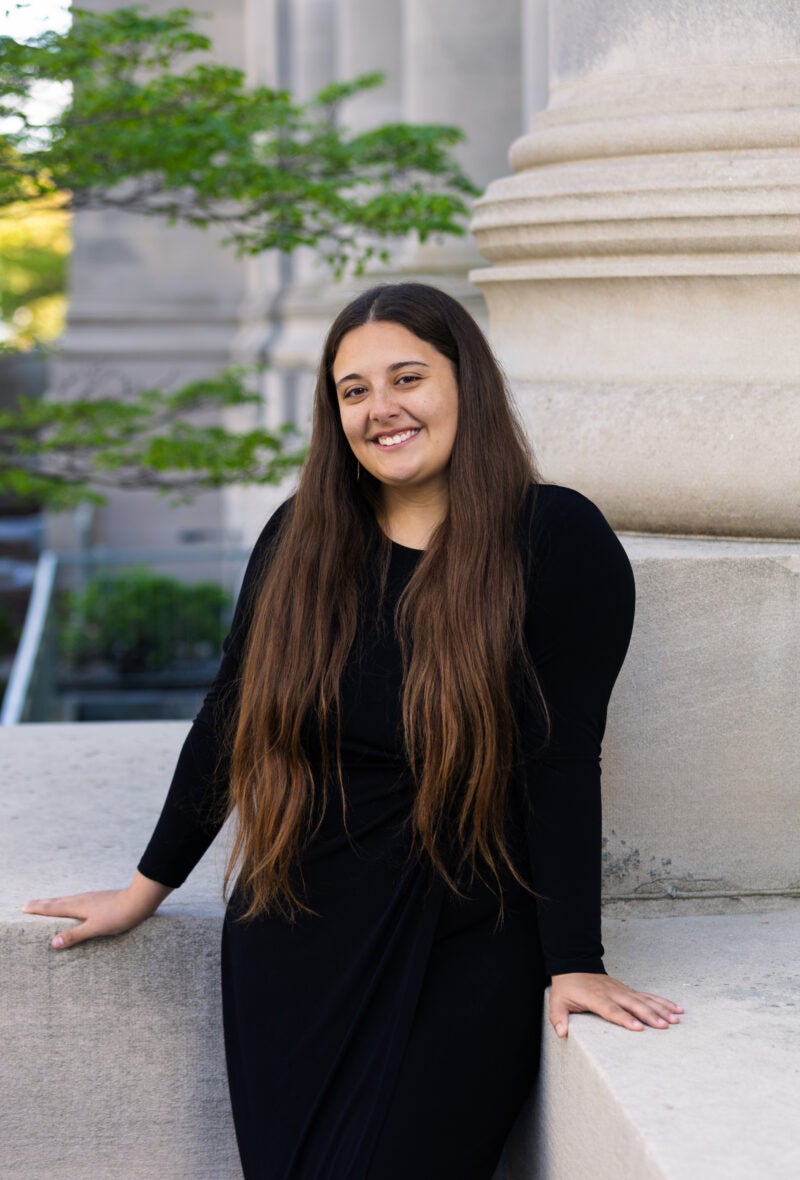
Tabitha Escalante ’26 is the recipient of the 2026 Ralph D. Gants Access to Justice Award. As executive director of both Harvard Defenders and Harvard Prison Legal Assistance Project this year, Escalante is honored for her outstanding dedication to advocating for those involved in the criminal legal system. With humility, patience, and a single-minded focus on how to do the most good for the most people, she has served as a true example of what it means to put purpose into practice.
The Ralph D. Gants Access to Justice Award was established in 2021 to honor the late Massachusetts Supreme Judicial Court Chief Justice and revered advocate for social justice, Ralph D. Gants ’80. The award recognizes a student dedicated to advancing access to justice, racial equity, and criminal justice reform and who has displayed leadership in helping eliminate systemic barriers to justice.
“I am deeply honored to receive the Gants Access to Justice Award and to be recognized in the name of such a fearless and tireless advocate,” says Escalante. “Through Defenders and PLAP, I have had the privilege of representing people with vastly different orientations to the criminal legal system — clients just a few years older than me facing their first contact with police and those petitioning for freedom after serving decades. It has been the honor of a lifetime to learn from and alongside clients, other students, and my instructors about the meaning of zealous, collaborative, life-affirming advocacy.”
As a 1L, Escalante immediately devoted herself to serving clients in Defenders and PLAP, two distinct student practice organizations, on top of her already challenging 1L curriculum. She quickly became a leader among her peers as she devoted hundreds of hours to the organizations within her first year.
Harvard Defenders offers pro bono representation to low-income defendants in criminal show-cause hearings and criminal records sealing services. Escalante’s journey as a leader in the organization began as a 1L representative on the student board, then as intake director her 2L year, then as executive director, managing the organization’s internal affairs. Escalante has spearheaded changes in culture and organization that have grown Defenders’ overall capacity to take cases. Not only has Escalante provided representation in over 50 cases herself, but she has offered countless training and practice sessions for her peers in Defenders, attending mock hearings, reviewing arguments, and curating training materials.
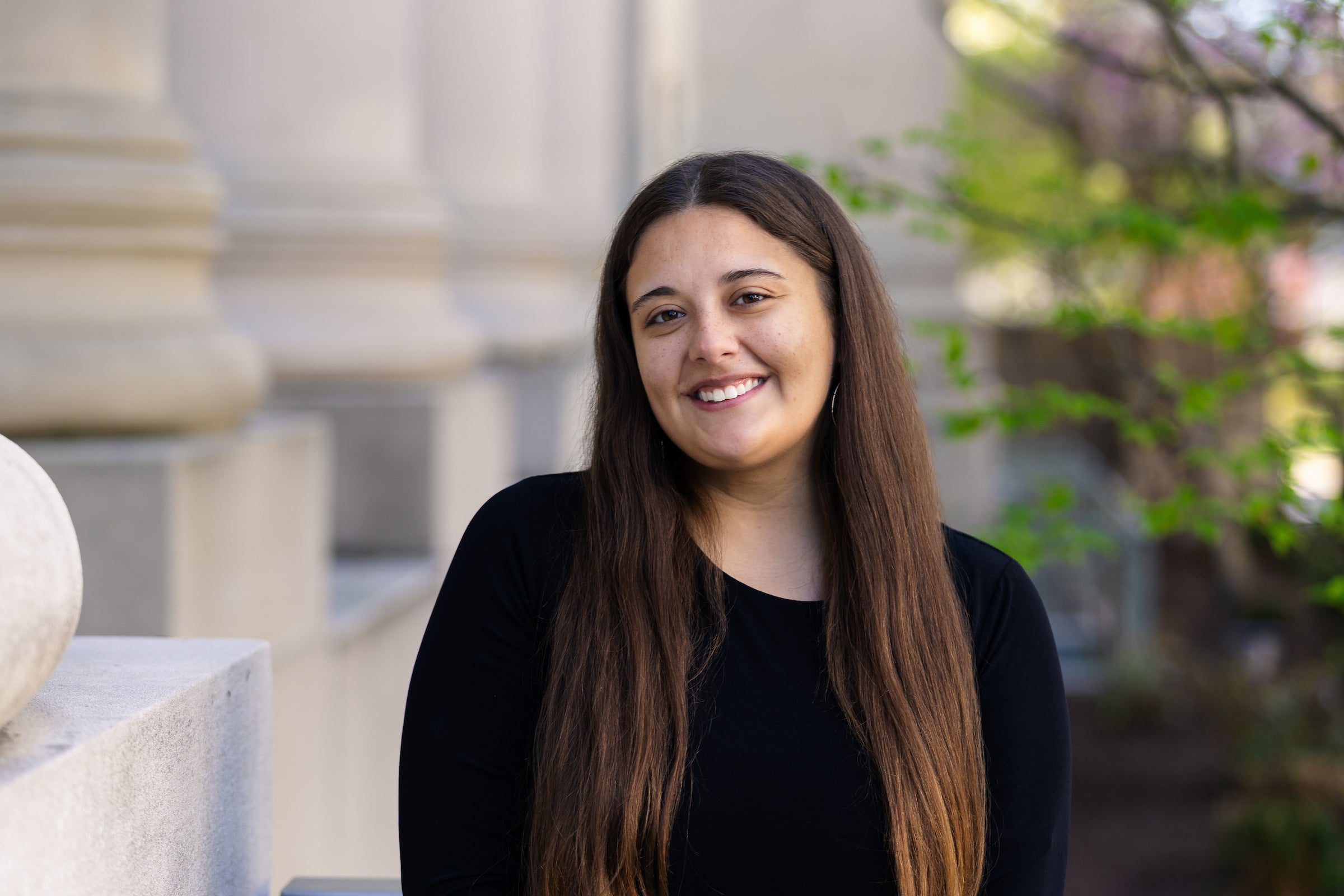
“I can think of no greater job in the world than to look for the very best in people each day, and to extend grace, care, and compassion in the face of a system bent on denying it.”
During her 3L year, Escalante did the unprecedented: stepping into the co-executive director role at PLAP while also serving in the role at Defenders — the first Harvard Law student to ever simultaneously lead both organizations. Students in PLAP represent clients charged with violating prison regulations at disciplinary hearings and those facing parole revocation or rescission and second-degree life sentence hearings before the Massachusetts Parole Board. Her 2L year, Escalante served as disciplinary hearing director, where she helped match new PLAP students with mentors to improve their confidence heading into hearings. As co-executive director this year, she ensured that every single member fulfilled their case-taking requirement by spearheading an improved case management tracking system and check-in process — the new systems doubled the case-taking capacity of the organization.
Escalante’s peers note that she goes above and beyond not only in her client advocacy, but as a mentor to fellow students. She checks in with students taking on new cases to make sure they feel confident arguing on behalf of incarcerated clients, have prepared an airtight case, and have a plan to get to court. Colleagues in both Defenders and PLAP laud Escalante’s ability to foster a positive and supportive organizational culture, motivating and inspiring her peers to strive for excellence in their client-centered representation. She has garnered the trust and respect of her peers because they know that for Tabitha, everything is solely about the mission of providing her clients with the best representation possible.
In Harvard Law’s clinics, Escalante has sought out further opportunities to learn about how to serve clients in the criminal legal system from various angles: During her 2L fall, Escalante worked with youth clients on their criminal cases in the Committee for Public Counsel Services’ Youth Advocacy Division, through a placement in the Child Advocacy Clinic. The subsequent winter and spring, she participated in an externship with the MacArthur Justice Center through the Criminal Justice Appellate Clinic, working on an appellate brief about the use of excessive force in a prison and qualified immunity. Finally, she joined the Criminal Justice Institute this year, representing indigent defendants, which has involved preparing for a full trial, representing clients at substantive hearings, arguing motions to dismiss, and counseling clients through myriad difficult situations. Through her clinical experiences, Escalante has moved deliberately across interconnected parts of the system — from juvenile proceedings to adult incarceration, from state parole boards to federal appellate courts — building a strategic understanding of how these agencies reinforce and compound one another. That vantage point, she says, is what she’ll carry into her career.
Next year, Escalante will continue representing clients as a trial attorney at New Hampshire Public Defender, where she spent her 2L summer. “I can think of no greater job in the world than to look for the very best in people each day, and to extend grace, care, and compassion in the face of a system bent on denying it,” she says.
“Each individual who has entrusted me with some aspect of their liberty and story has made a profound impact on my life and the way I hope to shape my practice as a public defender. On days where clients face uncertainty or have shouldered painful losses, I have witnessed the quiet beauty of their bravery, vulnerability, and resilience. I see this beauty at the heart of a public defender’s work, and I am immensely grateful to have begun developing the tools for compassionate, liberatory lawyering while here.”
Want to stay up to date with Harvard Law Today? Sign up for our weekly newsletter.