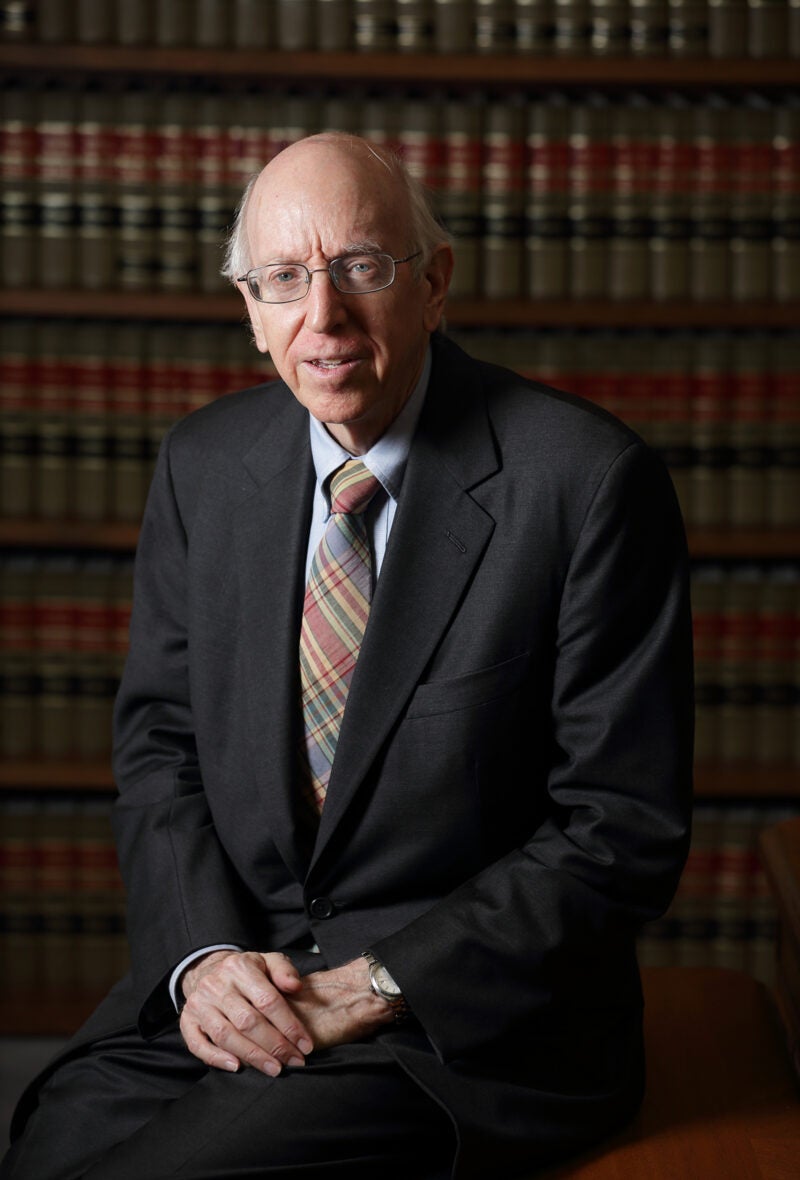
Richard A. Posner ’62, a former president of the Harvard Law Review whose scholarship helped transform the study of law and whose judicial opinions made him one of the nation’s most influential judges, died Nov. 10. He was 87. His death was announced by the University of Chicago Law School, his academic home for more than five decades.
A leading figure in the law and economics movement, Posner brought questions about incentives, costs, and consequences into fields ranging from antitrust to family law. He wrote thousands of judicial opinions, hundreds of scholarly articles, and dozens of books, building a body of work that extended far beyond the subjects considered to be the natural ‘home’ for economic analysis of the law. In 2021, he was identified by the University of Chicago Law Review as the most cited legal scholar of all time.
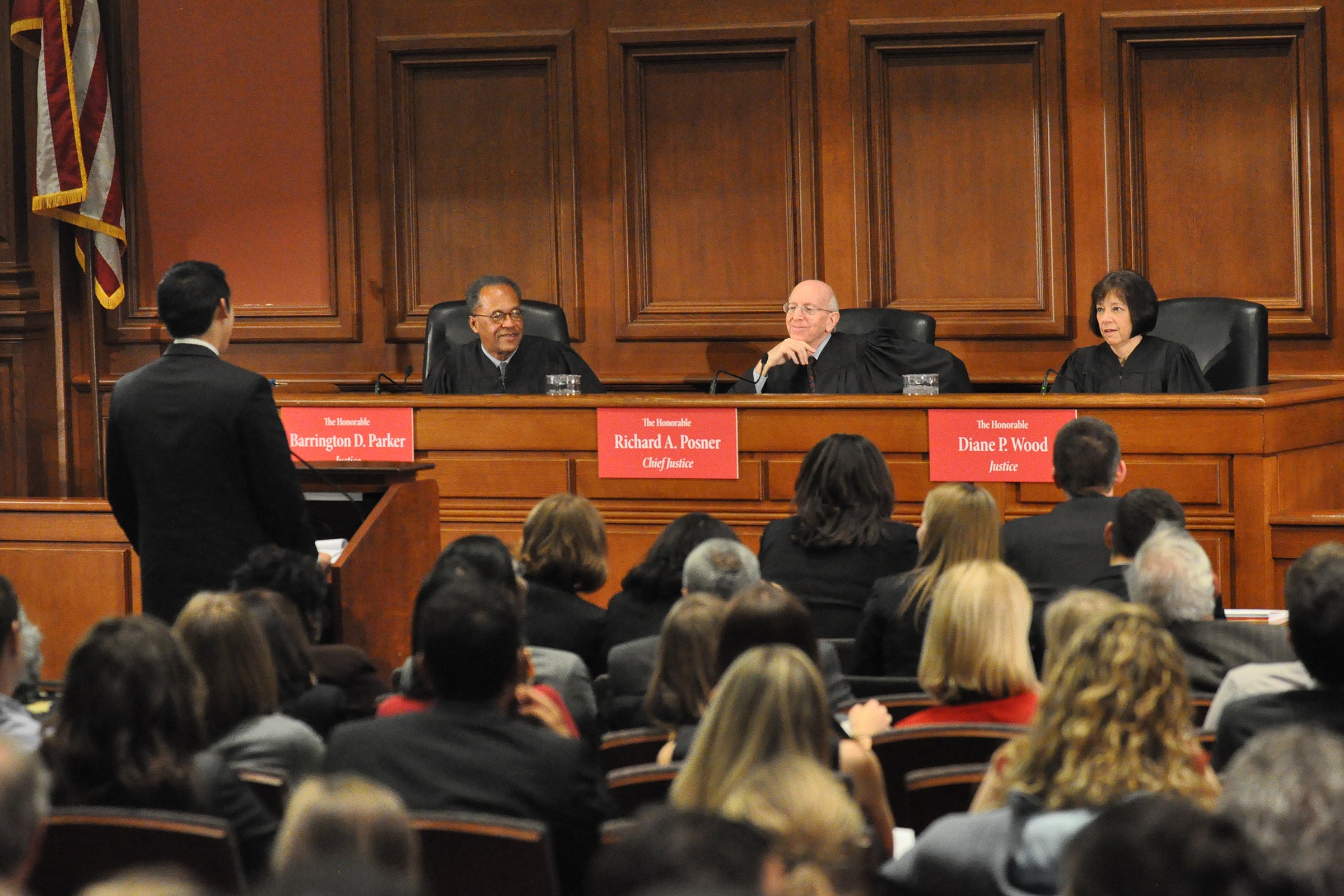
At Harvard Law School, where he graduated first in his class in 1962, his connections spanned more than six decades. He returned to deliver the Oliver Wendell Holmes Lectures in 1997, received the school’s Ames Prize, and questioned student advocates as a judge in two Ames Moot Court Competitions. His former clerks include Harvard Law alumni, as well as current faculty members Lawrence Lessig and Robert H. Sitkoff.
“Richard Posner embodied the academic ideal of brilliant, fearless, independent thought,” said John Goldberg, Harvard Law School dean. “And, despite his refusal to recognize legal reasoning as a distinct form of analysis, his best judicial opinions demonstrate a facility with law that puts him in league with the likes of Holmes, Brandeis and Learned Hand.”
Born in New York City on Jan. 11, 1939, Posner studied English at Yale, graduating summa cum laude in 1959. He then enrolled at Harvard Law School, where his academic distinction was recognized with the Sears and Beale Prizes and the Fay Diploma, awarded to the graduating student with the highest grade point average.
In his 2013 memoir, “Reflections on Judging,” Posner wrote that he applied to law school and got in “with no burning interest in law” and as “a default career choice,” in part because his father was a lawyer. He was ultimately pleased with his decision.
“I loved my first year at the Harvard Law School,” he wrote, “in all its brutishness. Harvard stacked its best teachers in the first year and they were superb, though cold, demanding, and at times nasty. At the end of the year, I had the strange feeling that I was more intelligent than I had been a year earlier.”
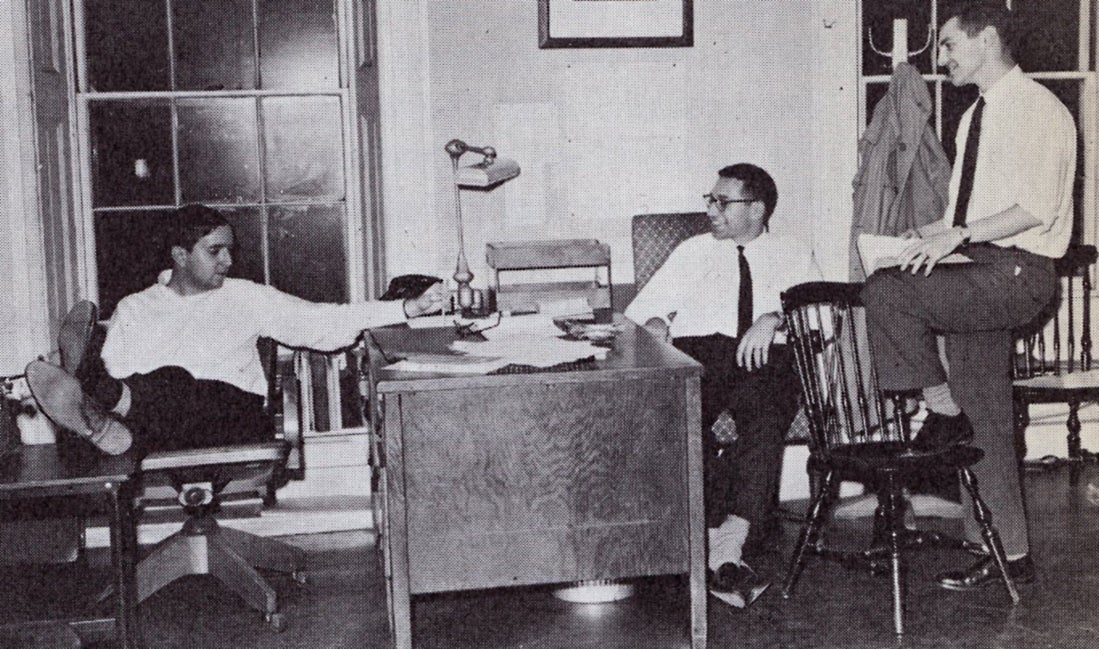
After law school, Posner clerked for U.S. Supreme Court Justice William J. Brennan Jr. ’31 during the 1962-63 term. He subsequently worked at the Federal Trade Commission and as an assistant to Solicitor General Thurgood Marshall, before becoming general counsel to President Lyndon B. Johnson’s Task Force on Communications Policy. He began teaching at Stanford Law School in 1968 and joined the University of Chicago faculty the following year.
Chicago became the center of his academic career. In 1973, he published “Economic Analysis of Law,” a book that would help fundamentally reshape legal scholarship by applying the tools of microeconomic analysis to legal rules. Its reach reflected the ambition of his broader scholarship: to examine legal rules by asking how they influence behavior and how efficiently they allocate resources.
In a recent tribute essay about Posner, Harvard Law Professor Cass Sunstein ’78, a long-time colleague of Posner’s at the University of Chicago before his move to Harvard, argued that it was this distinctive approach to the law that ultimately made Posner “the most important legal thinker of the last 100 years.”
“He focused intensely on the consequences of legal rules,” Sunstein wrote. “You adopt a rent control law. What are its effects? You adopt a maximum hour law. What does that actually do? You move from negligence to strict liability in tort. How are people affected by that? You expand the reach of antitrust law. What does that do for, or to, consumers?… Posner loved the tools of economics because they gave him, and us, some traction on the question: What are the consequences of one or another approach?”
Harvard Law School recognized Posner’s work in 2003, awarding him the Ames Prize in honor of “Economic Analysis of Law.” He was the 25th recipient in the award’s history, joining a group that included John Rawls and Benjamin Cardozo. At the presentation, then-Dean Robert C. Clark said Posner “deserves to be listed among these great writers and thinkers who have won the Ames Prize.”
Posner’s interactions with the law school also included vigorous disagreement over the foundations of legal theory. In his 1997 Oliver Wendell Holmes Lectures at the school, subsequently published in the Harvard Law Review as “The Problematics of Moral and Legal Theory,” he challenged the usefulness of academic moral philosophy as a guide to judicial decisions. He questioned whether its arguments could resolve the contentious moral issues that came before courts.
The lectures prompted responses in the same Harvard Law Review issue from prominent legal scholars including Harvard Law Professor Charles Fried and alumni Ronald Dworkin ’57 and John T. Noonan ’54 — which largely centered on the defense of moral reasoning as essential to law and human progress. Posner fired back in a counter-essay. The exchange placed Posner at the center of a debate about whether law should be driven by principled moral reasoning or by empirical, consequence-driven pragmatism.
Appointed by President Ronald Reagan to the U.S. Court of Appeals for the Seventh Circuit in 1981, Posner served until 2017, including seven years as chief judge, from 1993 to 2000. He continued his affiliation with Chicago while on the bench. By his retirement, he had written approximately 3,300 opinions.
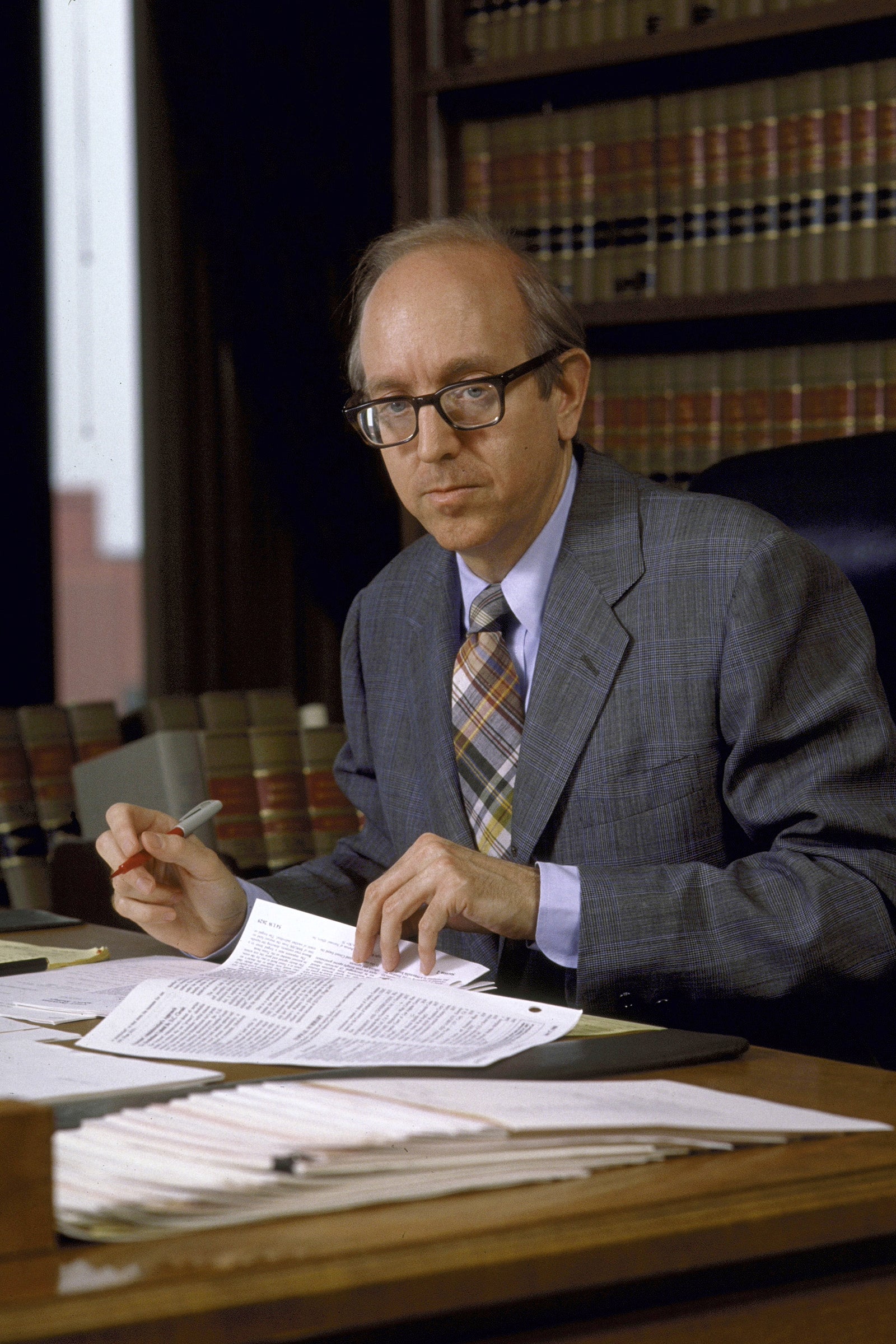
His judicial philosophy reflected the philosophy set out in “The Problematics of Moral and Legal Theory,” emphasizing practical consequences and the facts of individual disputes. He was skeptical that formal legal reasoning alone could supply convincing answers to all but the easiest cases. In a 2009 conversation with his former clerk Jonathan S. Masur ’03, he described judges as working under conditions of uncertainty that sometimes required them to act as “occasional legislators.” He argued that accounts of judging should acknowledge the roles of intuition, experience, and emotion alongside conventional legal analysis.
“He wanted his decisions to make sense,” said Sitkoff, now the Austin Wakeman Scott Professor of Law and the John L. Gray Professor of Law, who clerked for Posner during the 1999-2000 term. “He was astonishingly gifted at doctrinal analysis, but he also wanted his reasoning, and indeed the law itself, to be sensible to a thoughtful nonlawyer. If an argument didn’t account for practical consequences, he would ask, ‘What sense would that make?’”
Posner’s pragmatism continued to attract criticism as well as admiration. Critics questioned whether his approach gave judges too much discretion and power. Posner, in turn, challenged judges and academics to explain how alternative approaches worked when applied to actual disputes.
His decisions also resisted easy political classification. In 2014, he wrote the unanimous appellate opinion striking down Indiana’s and Wisconsin’s prohibitions on same-sex marriage. He had earlier upheld Indiana’s voter identification law, but later publicly questioned that decision and criticized the use of such requirements to suppress voting. His willingness to reconsider an earlier position became part of his reputation for intellectual independence.
“He was the perfect model of a judge: He did his work, he did his own writing, and he was constrained by the law in that writing, often forced to reverse an initial decision because, as he would say, ‘it just wouldn’t write,’” said Lessig, now the Roy L. Furman Professor of Law and Leadership, who clerked for Posner in 1989-90. “But most importantly to me, he was not afraid. He lived a rare freedom to say what he believed, and to say when what he had said was wrong.”
His interests as an author were similarly expansive. Books examined literature, aging, sexuality, public intellectuals, national security, and the behavior of judges. Titles included “Law and Literature,” “How Judges Think,” and “A Failure of Capitalism,” his response to the financial crisis of 2008. Across those subjects, he repeatedly returned to the problem of how institutions functioned and how their performance might be improved.
For members of the Harvard Law community, his influence also came through his mentorship and the experience of working in his chambers.
“Transformative” is how Sitkoff described his clerkship year. “His insatiable but playful curiosity taught us the power of asking ‘why?’ The best lawyers, and the best analysts of law and legal institutions, never stop pressing for answers to that question. In his chambers there was no dogma; everything was open to debate.”
Posner retired from the bench in September 2017. In a statement announcing his departure, he wrote that he was “proud to have promoted a pragmatic approach to judging during my time on the Court, and to have had the opportunity to apply my view that judicial opinions should be easy to understand and that judges should focus on the right and wrong in every case.”
Reflecting in Bloomberg upon Posner’s passing, Harvard Law Professor Noah Feldman called him the “godfather of the law and economics movement,” also noting “his penchant for extreme provocation.”
“His style of thought was brilliant and outrageous, penetrating, provocative, and perverse — qualities rare in a scholar and rarer still in an appellate judge,” Feldman wrote. “We will not see his like again.”
Want to stay up to date with Harvard Law Today? Sign up for our weekly newsletter.