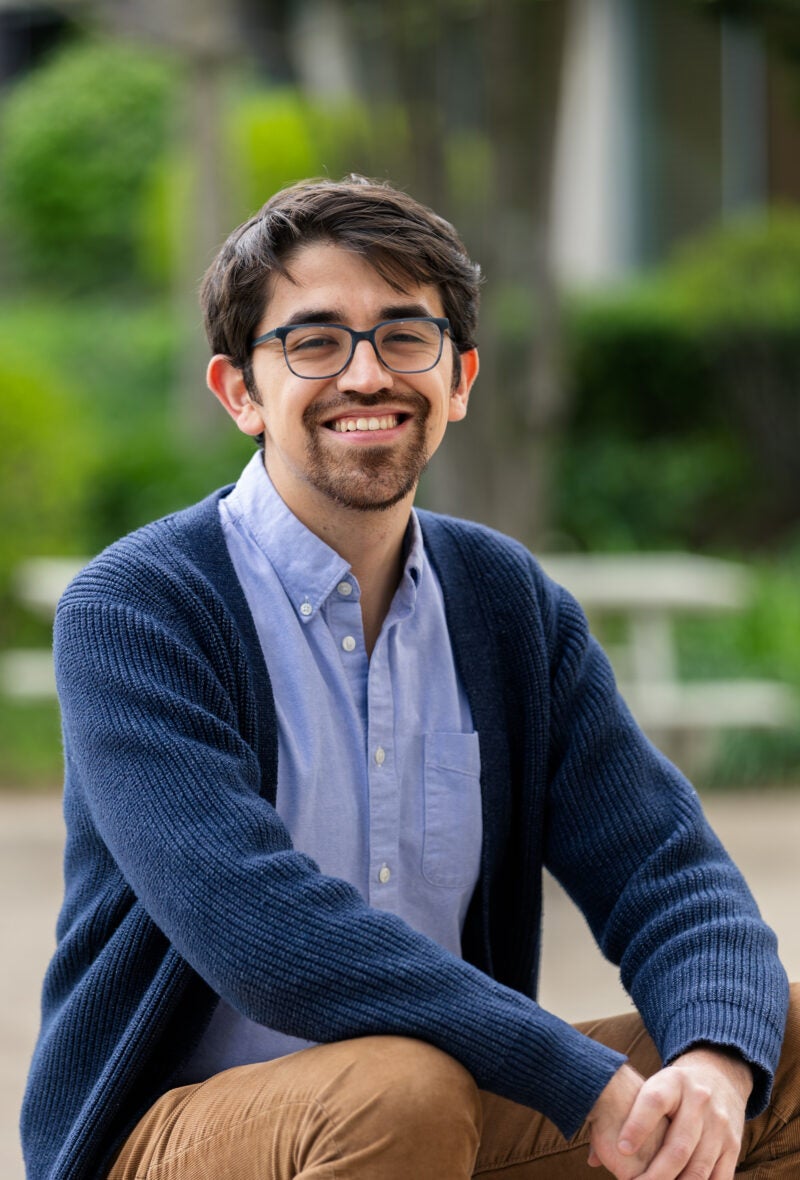
Micael Ben Guzman ’26 is the recipient of the 2026 Andrew L. Kaufman Pro Bono Service Award. The award, granted in honor of Professor Andrew Kaufman ’54 who spearheaded creation of the Pro Bono Program at Harvard Law School, is given to a graduating J.D. student who exemplifies a pro bono spirit and an extraordinary commitment to delivering high-quality legal services to disadvantaged communities. During law school, Guzman contributed more than 2,100 pro bono hours, a number that represents countless conversations supporting clients, late night case work, and advocacy efforts for housing and immigrant justice.
“The first thing that came to mind when I heard that I received this award was the clients and organizers I’ve had the pleasure of working with over the past few years,” said Guzman. “Their resilience and strength in times of hardship drives me to do this work, and this recognition is as much a testament to them as to any of my own efforts. This award would also not have been possible without the support from my classmates and clinical instructors. The empathy, dedication, and joy that so many of them bring to their work inspires me to be a better attorney and make me hopeful for a brighter future for the communities we serve.”
Since his first year of law school, Guzman has demonstrated a deep commitment to service, particularly on behalf of immigrant communities. His first year, Guzman joined a student practice organization dedicated to serving immigrant communities, the Harvard Law School Immigration Project, where he contributed to community outreach and legal clinic events in the Boston area. During his second year, he was the organization’s co-president and spent many volunteer hours fostering community among the project’s members. He also organized a spring break pro bono service trip to San Diego for 10 Harvard Law students to work with Jewish Family Service of San Diego.
“These experiences affirmed my commitment to public interest work and taught me the necessary skills to be a successful public interest attorney.”
Guzman joined the Harvard Legal Aid Bureau (HLAB) during his second year of law school, making a two-year commitment to the student-run civil legal aid organization dedicated to providing free representation to low-income and marginalized communities in the Boston area. At the bureau, Guzman served as intake director, setting policy and procedure in that area and facilitating intake decisions with potential clients. As a member of the organization’s housing practice, he represented clients facing evictions and housing subsidy terminations. Deeply dedicated to delivering the highest quality legal services, Guzman particularly shone in interactions with immigrant clients, using his fluency in Spanish to forge connections and bring comfort to his clients.
In one bureau housing case, Guzman and another student attorney represented both individual households and the tenant association in a building set to be demolished. The landlord threatened eviction within a month, offering only a few thousand dollars to the tenants. As a result of Guzman and his partner’s skilled advocacy, involving meticulous organization of each household’s case and regular communication with the tenant association, the landlord eventually agreed to allow residents more than six months to vacate and $30,000 to each family — resulting in nearly $250,000 in damages for the clients.
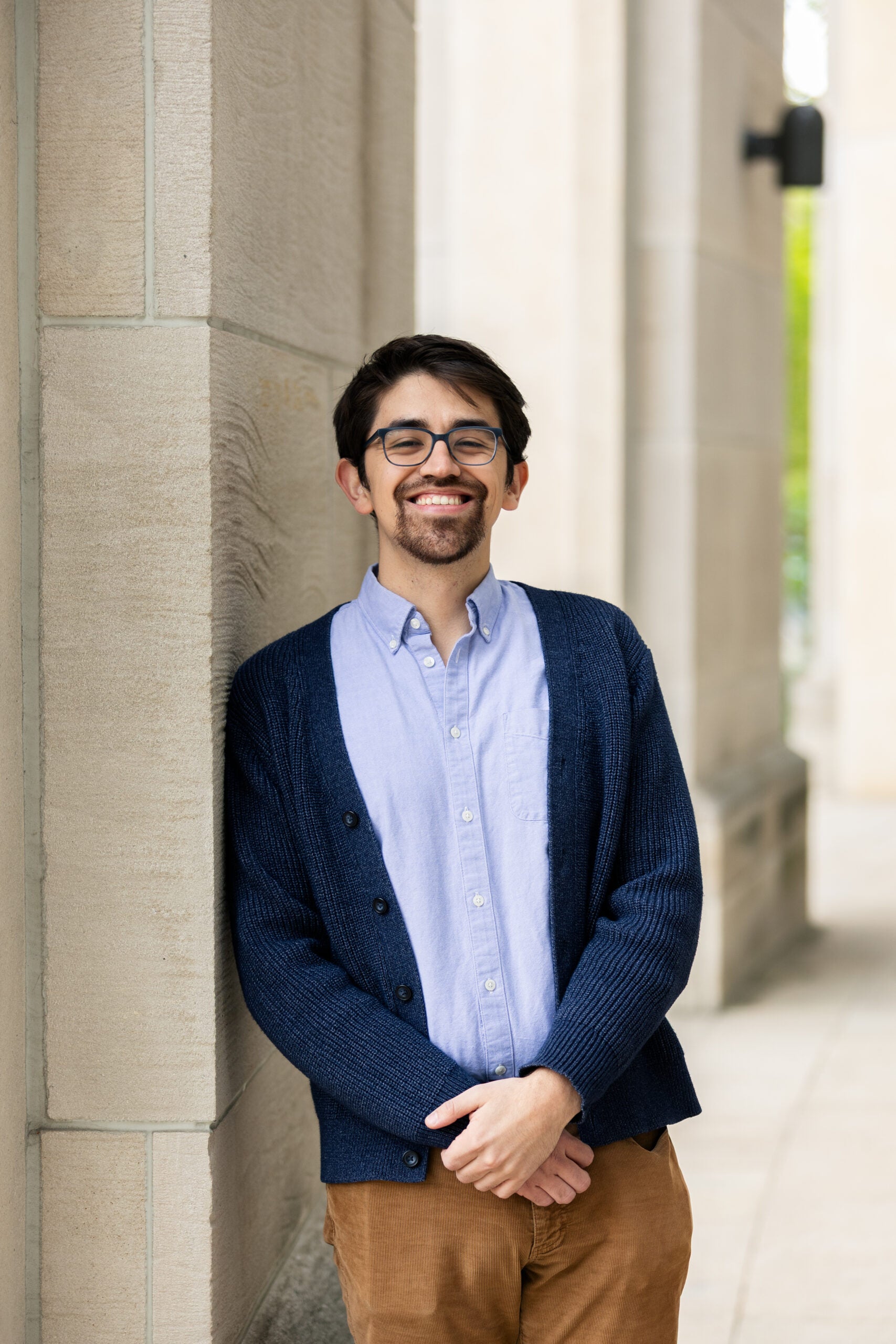
On top of his day-to-day case work, Guzman made a point to innovate systems that will outlast his tenure in the clinic and make processes smoother and more efficient for the next generation of students. After spending his 1L summer as an intern at the Harvard Immigration and Refugee Clinic (HIRC), he brought his relationships there to bear in the bureau, creating a system for communication between the two clinics. The system has already improved cross-clinic assistance for clients who are facing both housing and immigration challenges, allowing them to receive holistic services from experts in both fields.
He also overhauled the bureau’s client intake process after identifying key flaws slowing the system down, persuading the student board to adopt a new process. Intake calls are now handled by pairs of students, improving accuracy of legal advice and enabling more issues to be addressed in real time. This change has enhanced the student experience, reduced follow-up calls, and allowed more community members to receive legal advice.
Guzman’s commitment to serving the public good extends further. Every year of law school, he has been a member of Project No One Leaves, a canvassing group that partners with local community organizers to connect low-income and oppressed communities to resources that build community power and provide opportunities to protect and assert residents’ rights. His 2L summer was spent working at the American Bar Association’s Immigration Justice Project.
“I’ve been lucky enough to have many great clinical experiences, but what stands out the most are the small moments during drives around the Boston area with my classmates and clinical instructors,” Guzman said. “Whether driving back to Cambridge after a night of consultations at City Life/Vida Urbana’s community meeting, after a long day volunteering in New Bedford, or after a contentious housing court hearing, these moments allowed us to bond through lighthearted conversation and reflections on our work. Looking back on these experiences reminds me that what I will miss most are the incredible people I’ve had the privilege of working with.”
After graduation, Guzman will work on an Equal Justice Works fellowship project with Make the Road New Jersey, aiming to combat the displacement of immigrant communities through holistic representation in both housing and immigration proceedings. “This approach is directly influenced by my experiences at HLAB and HIRC, where we often had clients seeking representation for interconnected issues,” Guzman says. “These experiences affirmed my commitment to public interest work and taught me the necessary skills to be a successful public interest attorney.”
Want to stay up to date with Harvard Law Today? Sign up for our weekly newsletter.