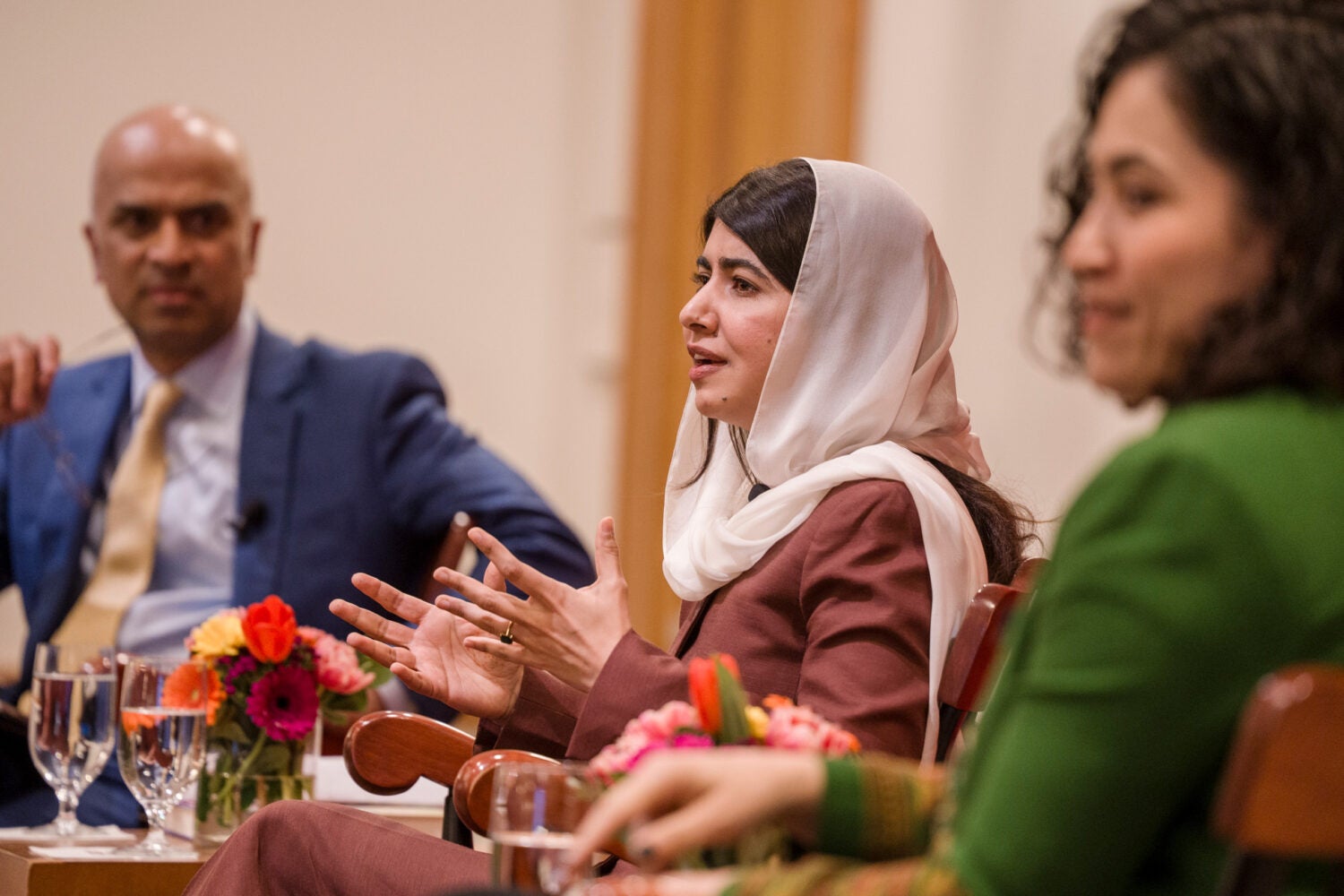
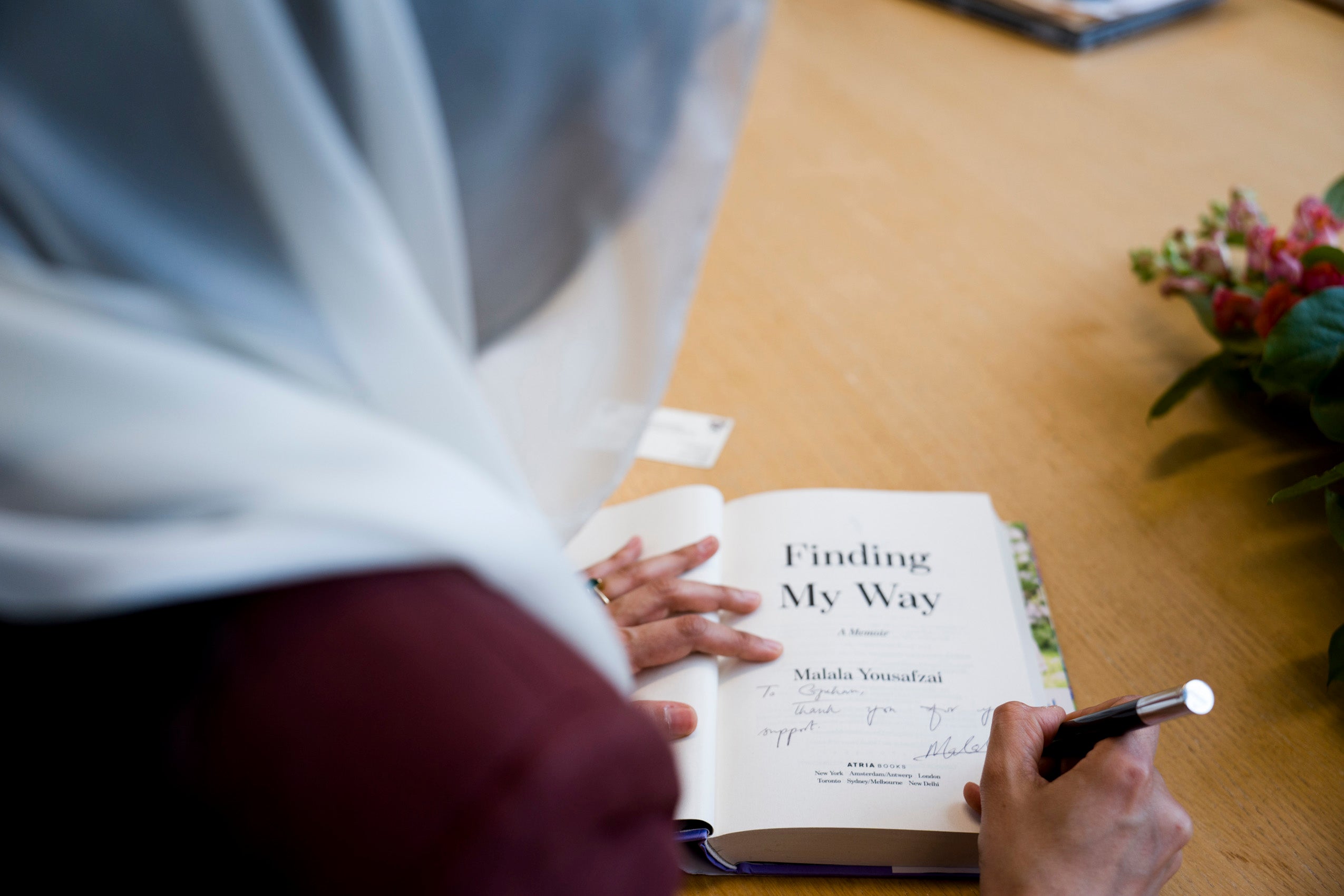
Since the rise of the Taliban in Afghanistan in 2021, women and girls have been excluded from education, work, and the possibility of a better future, says Malala Yousafzai, the acclaimed women’s rights advocate and Nobel laureate.
Yousafzai, speaking at an event at Harvard Law School on March 23, lamented that Afghan women are increasingly subjected to control not only over their public activities — such as being required to have a male guardian while outside — but also their private lives. One law she cited, for example, forbids women from singing at a volume that can be heard outside her home.
“Now that the Taliban have been in control for the past nearly five years, women’s rights have been compromised,” said Yousafzai, who began advocating for women’s rights and education as a child in Pakistan.
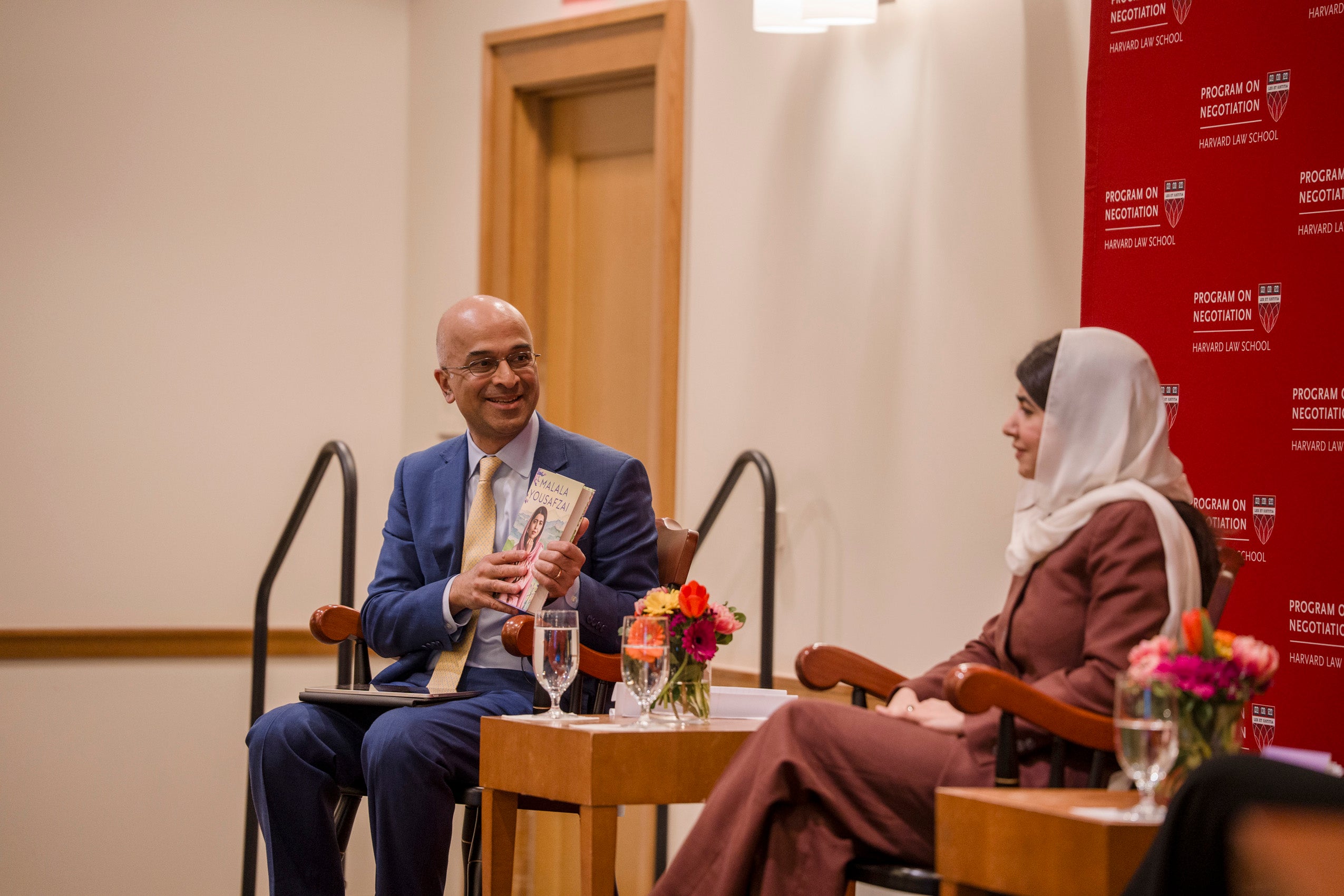
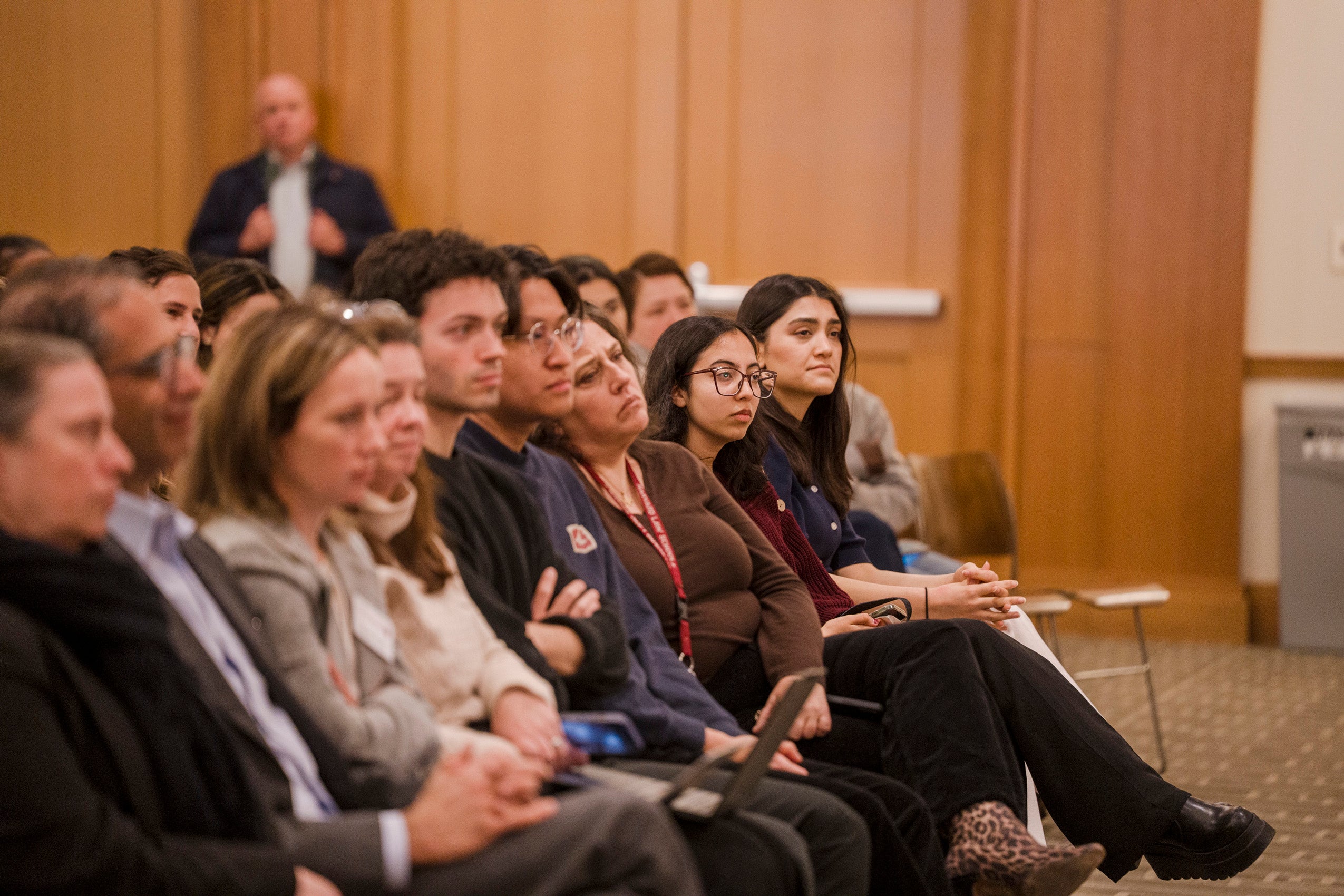
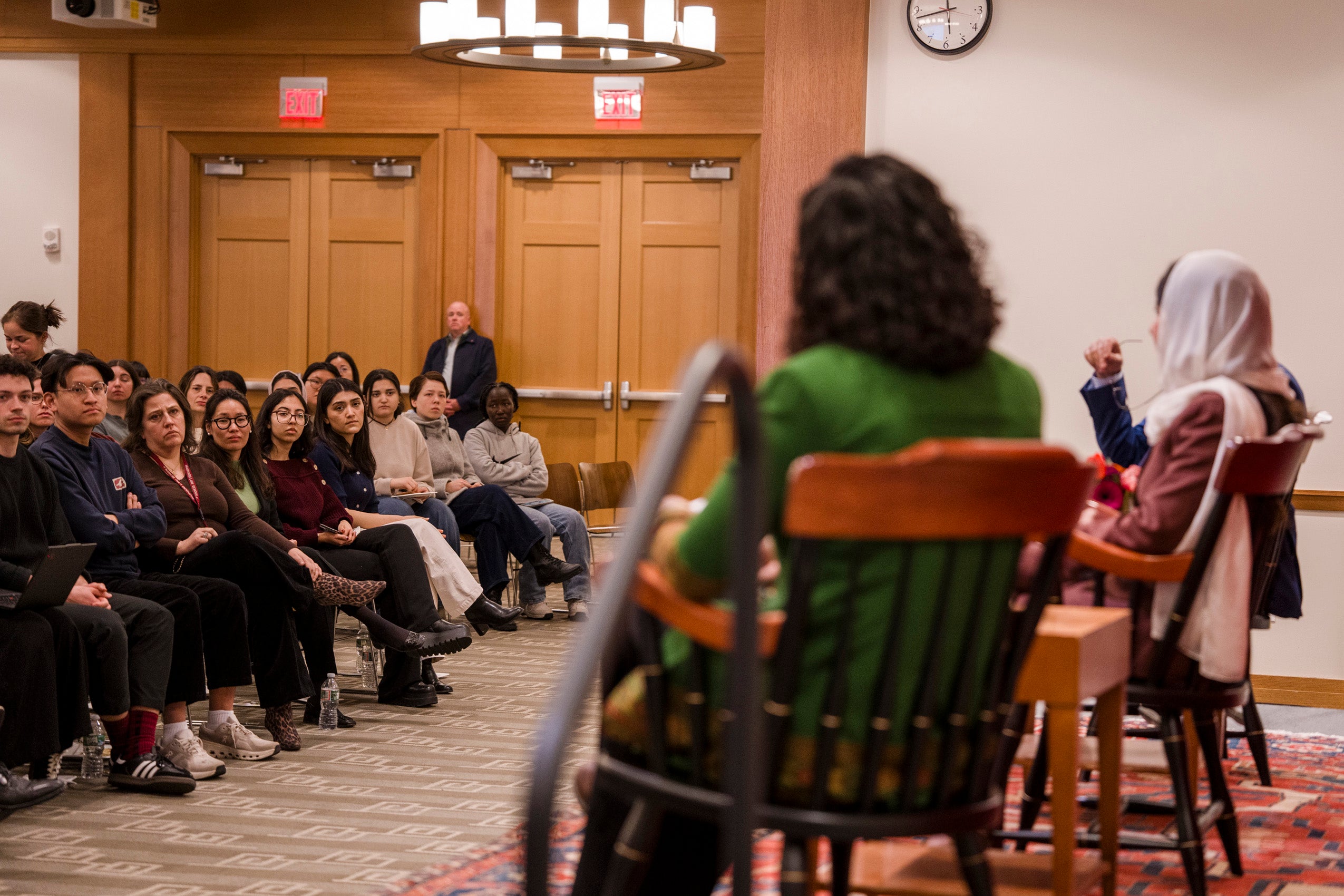
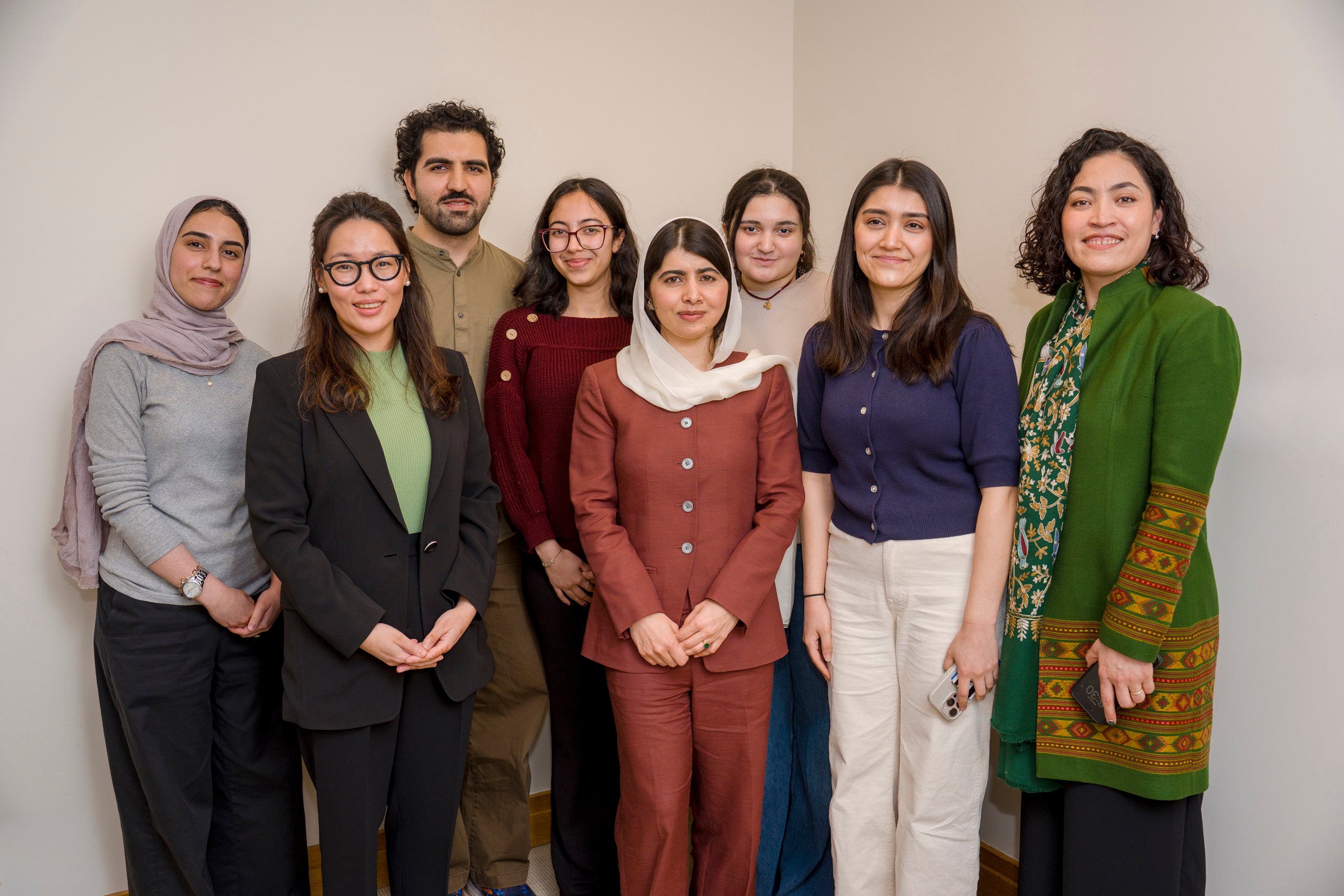
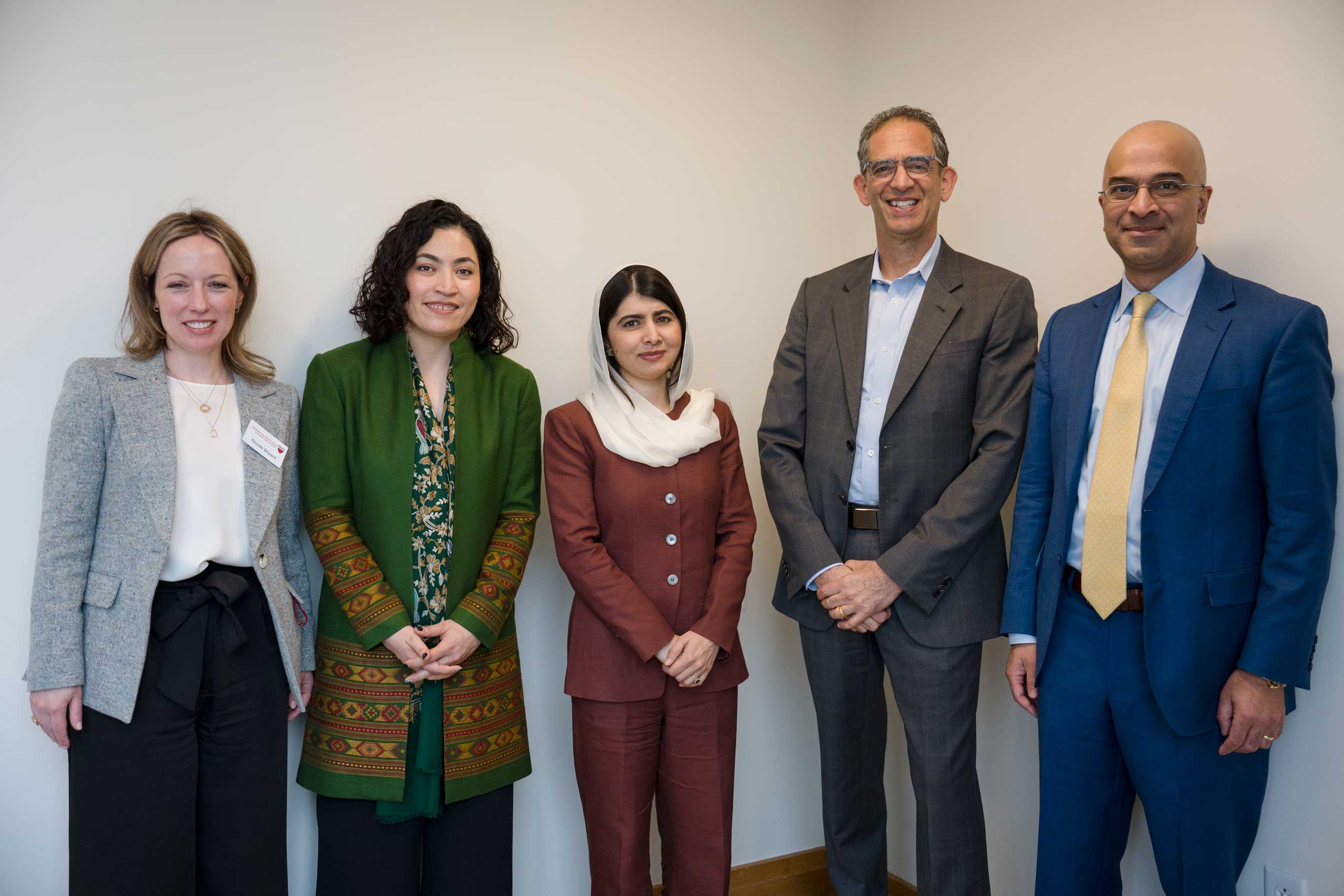
Yousafzai delivered her remarks after a screening of “Bread and Roses,” a documentary she produced with actor Jennifer Lawrence about the lives of three Afghan women. The event, sponsored by the Program on Negotiation at Harvard Law School, also featured Gaisu Yari, a policy manager at The Malala Fund, with moderator Guhan Subramanian J.D./M.B.A ’98, chair of the Program on Negotiation.
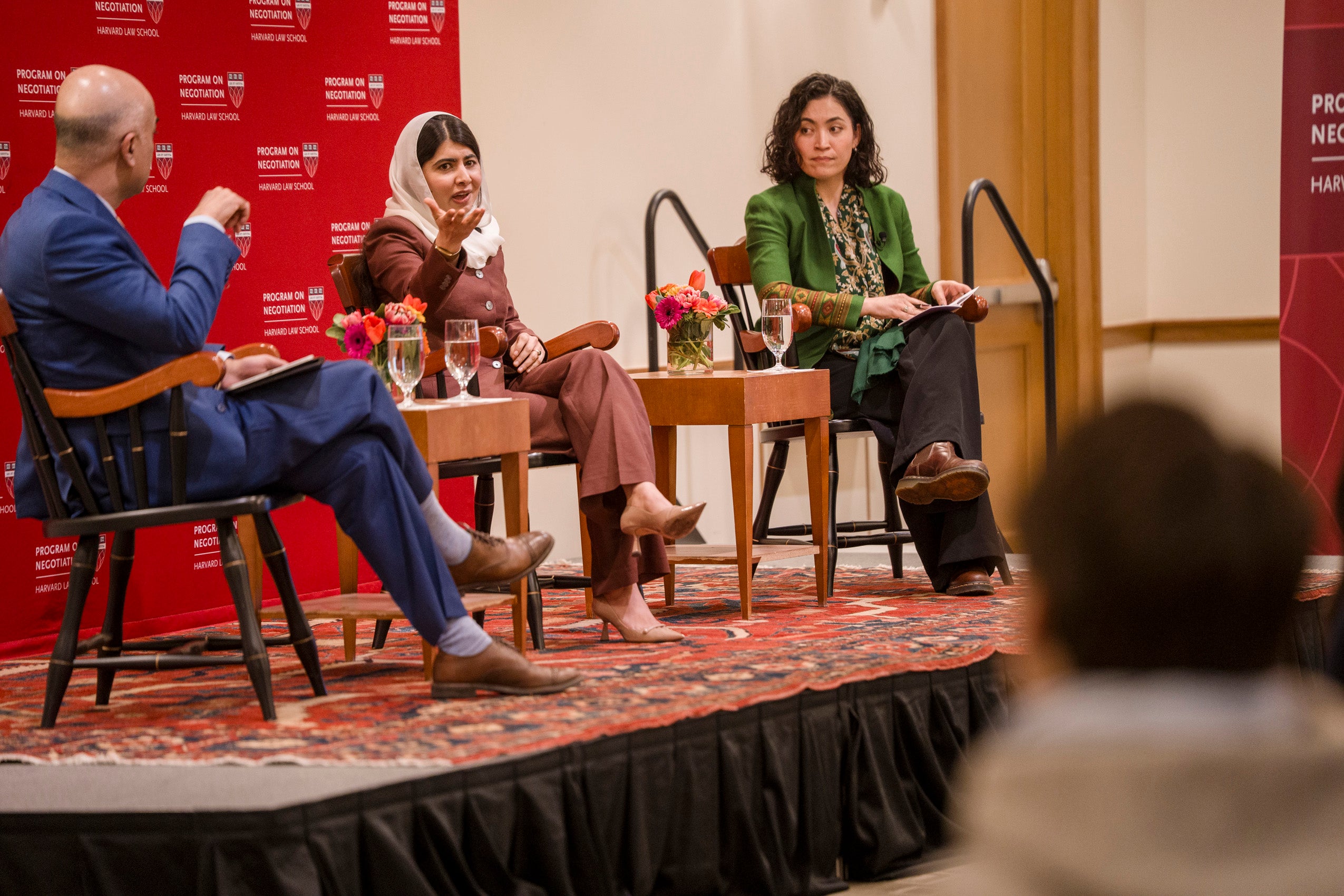
The film highlights efforts by some Afghan women and girls to continue their education and share knowledge, and on acts of resistance through organizing and protesting — all despite grave risks.
“One girl said that even reading a book alone in her room is an act of resistance for her,” Yousafzai said. “Learning … means so much to Afghan girls. It gives them hope, even in these dark times.”
Yousafzai, who survived an assassination attempt by the Pakistani Taliban at 15, said she founded her nonprofit The Malala Fund in 2013 to support women’s rights around the world. In Afghanistan, Yousafzai’s nonprofit supports women activists, including those running secret underground schools for girls, who are forbidden from receiving an education after primary school.
“Women have to be in the room. It should be women’s rights should be a nonnegotiable condition. … You cannot determine the future of a country when half of the population is held back.”
Malala Yousafzai
“I have been finding ways to help amplify the voices of Afghan women and girls, because [since] the Taliban took control in 2021, they have been erasing women from public life,” Yousafzai said.
According to Yousafzai, the 2023 film — featuring a former government employee, a dentist forced to stop working, and a women’s rights activist — would “be literally impossible” to make now due to further restrictions on women’s activities.
“One thing which I keep highlighting to people is that the situation has only worsened since this documentary was filmed,” she said.
“I think what we see inside Afghanistan is meeting the threshold of systematic discrimination against women and girls in Afghanistan,” agreed Yari, the advocacy and policy manager for Afghanistan at The Malala Fund.
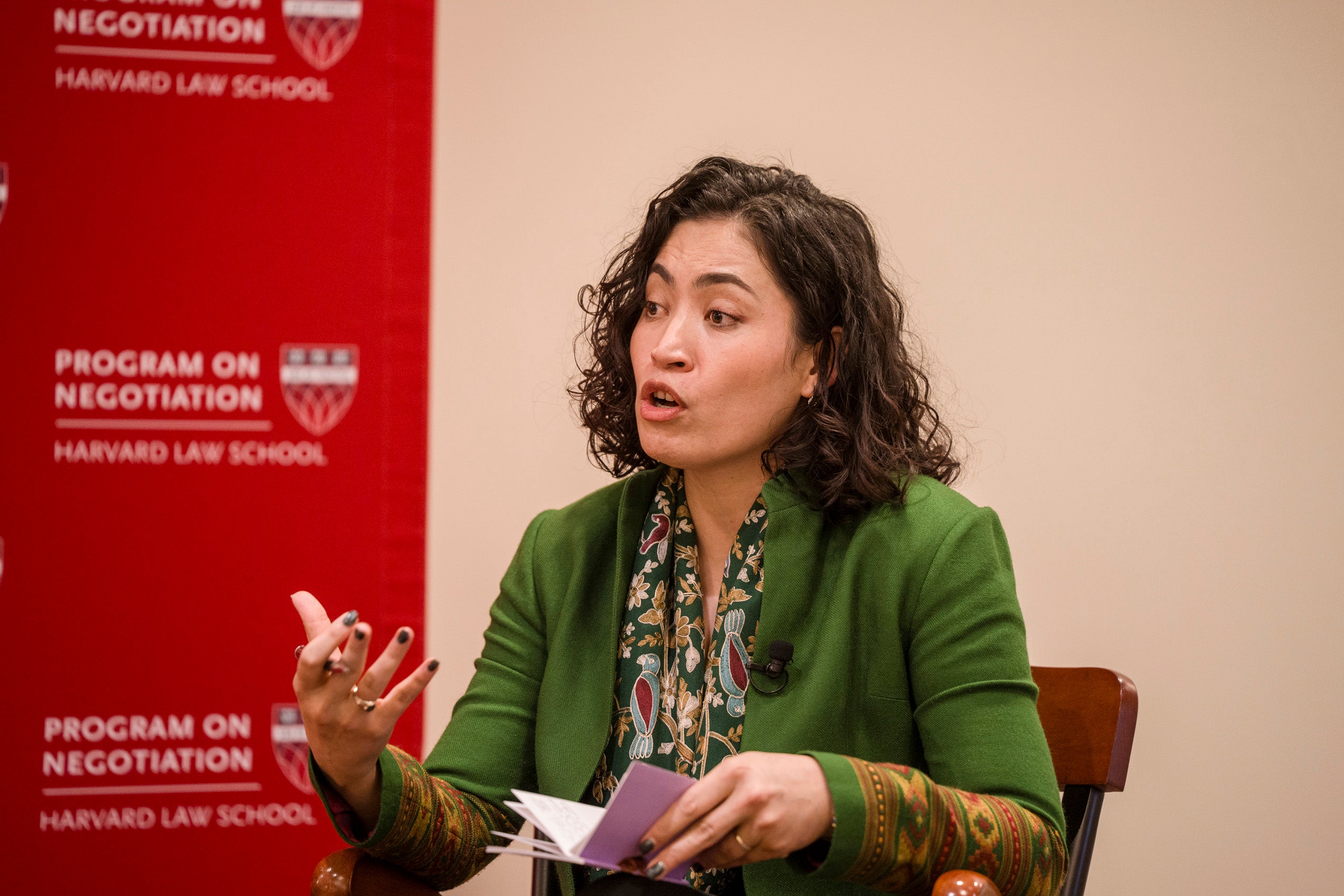
Yari, who herself fled Afghanistan after the Taliban’s takeover, said that recent laws prevent women from attending school, working, participating in public life without a male chaperone, and even restrict what women can do in their own home.
“The Taliban are trying to make sure that Afghan women and girls are invisible, but we are pushing … to make sure that they are visible at the international level,” Yari said.
Yousafzai cautioned against dismissing Afghan women’s issues as solely cultural or religious. “We need to challenge that, and we need to treat it as a human rights issue, and we need to center it around the voices of Afghan women and girls.”
She also faulted past negotiations organized by the United States with the Taliban, noting that women’s rights were excluded from the agenda – and that women themselves were absent entirely from the talks.
“[Women] have to be in the room. It should be women’s rights should be a nonnegotiable condition,” Yousafzai said. “You cannot determine the future of a country when half of the population is held back.”
Fighting ‘gender apartheid’
Yousafzai said that the film fits neatly within a key priority of The Malala Fund: opposing what she called the “gender apartheid” of women – an “institutionalized form of oppression against women and girls simply because they’re women and girls.”
“There is no mechanism that can protect women against institutionalized oppression, institutionalized segregation” in international law, Yousafzai argued.
Subramanian, the Joseph H. Flom Professor of Law and Business, wondered what those interested in supporting Yousafzai and Yari’s efforts could do.
Yari encouraged law students to bolster research on gender apartheid and how it might fit within international law, and to raise awareness of women’s struggles in Afghanistan and globally. “Whatever you do in your communities,” she added, “you need to make sure that you center the voices of Afghan women and girls.”
In response to a question about what role, if any, men are playing in resisting the persecution of women in Afghanistan, Yari noted that the situation is also dangerous for men sympathetic to women’s rights. After all, she said, when women break the law, their fathers, brothers, and other male relatives are also punished for failing to control them.
“The system is so oppressive that it’s very challenging for men to actually have the courage to come forward,” Yari said.
Nevertheless, she added, “I think there are [those who are resisting] within Afghanistan. Most of them are hidden. But we do have storytellers. We do have artists that are coming together, and they’re doing it through art and creative ways to mobilize.”
Ultimately, Yari and Yousafzai concluded, it will take a global effort to foster change for Afghanistan’s women and girls.
“I believe in the power of one voice starting a change, but I believe even more in the power of collective work and activism, and we can really shift a narrative when we join hands,” Yousafzai said.
Finally, Yousafzai recalled how she felt five years ago, when the Taliban first seized control. She had been in Boston undergoing the last of several major surgeries after being shot in the head in 2012, and yet her focus was on Afghan women’s future.
“I just cannot imagine what Afghan women have witnessed and how dark things are going to be for them in the years ahead,” she said. “Afghan women are very brave and resilient and courageous, but this is a call for more support and global solidarity. Afghan women should not be alone in this.”
Want to stay up to date with Harvard Law Today? Sign up for our weekly newsletter.