
It was 2:30 a.m. one October night in 2024 when an alarm jolted Sofia Bliek ’29 awake. Something was wrong aboard the USS Chosin, a guided-missile cruiser docked in San Diego.
Warning bells had gone off in shaft alley, the lowest part of the 567-foot, Ticonderoga-class ship, near the stern housing large rotating shafts that connect the engine turbines to its propellers. Next came a warning over the intercom: The massive craft was taking on water.
And her job was to fix that.
“It was one of the scariest moments on duty,” said Bliek, then a naval lieutenant, surface warfare officer, and the Chosin’s damage control assistant in charge of a team of 30 first responders. Her blood was pumping as her training kicked in.
“I had to run down and take control of the situation and start directing people, figure out what was going on, deal with incoming reports, allocating resources, and then eventually communicating to my captain who was not on the ship at that point,” said Bliek, whose team isolated the leak within minutes.
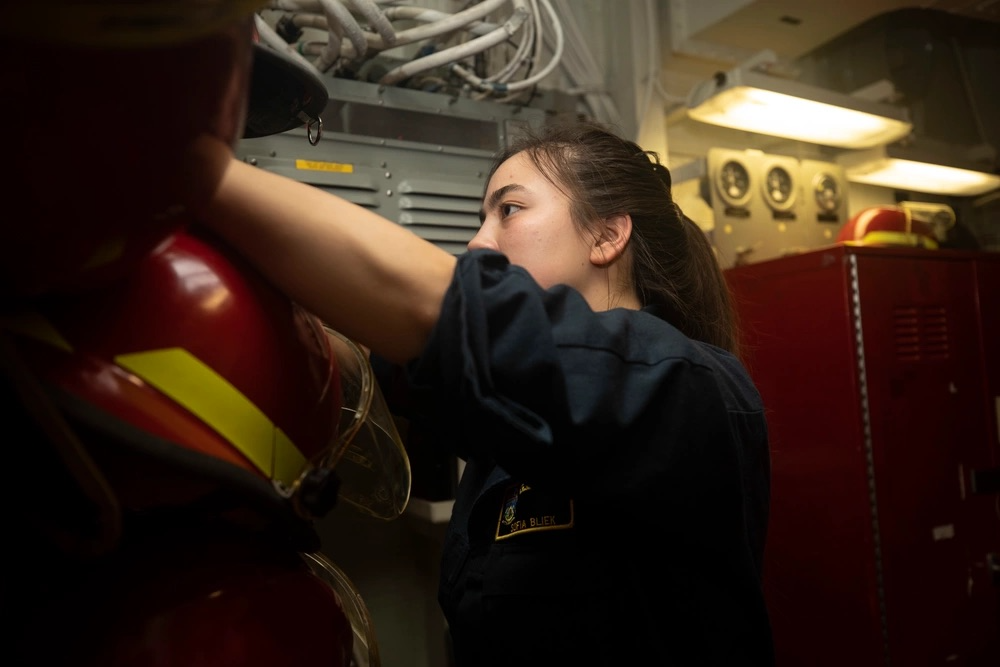
Though it would have taken a lot of water to destabilize a ship that large, when the ocean is coming in “those lower spaces are kind of scary,” she said. Yet looking back, she knows that the crisis provided a vital lesson in keeping cool under pressure.
“I think that is one of the most high-stress situations I’ve ever been in. But thinking about it now, I’m like, ‘Wow! I really, I did that.’ And that makes me feel like, OK, maybe a cold call is manageable.”
Now a 1L at Harvard Law School, Bliek draws comparisons between her time in the Navy and her time in school. For the Connecticut native, hard work, dedication, problem-solving, and a commitment to serving others have been common threads.
Being surrounded in the Navy and at the law school by a group of talented, passionate people with a broad range of experiences whom you can always rely on, she said, makes a big difference.
“I think it’s always such a beautiful and comforting thing when you go to an intense and competitive place and people still help each other and look out for each other,” said Bliek, who served two Navy tours, first aboard the destroyer USS Dewey stationed in Yokosuka, Japan from 2022-2024, and then with the Chosin from 2024-2026.
“I think it’s always such a beautiful and comforting thing when you go to an intense and competitive place and people still help each other and look out for each other.”
“I felt that here [at Harvard Law]. I think we did a really good job of that in the military, and in the Navy I got really close to my friends because we were all kind of going through it together, and we were looking out for each other, and we were doing that regardless of where we came from … because we were in it together. And I do think the same thing is true here.”
Given her clear sense of mission and what matters, it’s not surprising Bliek ended up in the military, where service and helping others are core founding principles. Raised by a Dutch father, who never attended college and started his own business, and a mother, who grew up in China where choices and freedoms were often restricted, she watched her parents carve out their own path to success in the United States despite limited means.
“Part of me has always been drawn to doing work where I can have the biggest impact. I am grateful for my parents’ sacrifices. They have allowed me to pursue interests that I am passionate about. It is such a privilege to spend my days mulling over how I envision a more just world, whether that is fighting for the underdog or thinking about how our government and legal system can best serve the people.”
“I think I was just drawn to how much of a public-service-oriented presence Harvard has. There are so many people to learn from here, and so many places to learn from.”
Bliek, who headed overseas after completing the Reserve Officers’ Training Corps program at Yale University, learned about discipline and leadership, how to help navigate a moving city on the water, how to manage a team, and how to stay calm in a crisis. She also learned about the law on both a large and small scale.
During her two tours, Bliek volunteered as a sexual assault prevention and response victim advocate, and later as her ship’s legal officer, where she helped fellow sailors navigate a range of issues, from how to invoke the Servicemembers Civil Relief Act to get out of a lease or postpone a hearing, to disciplinary investigations.
“Those are just some of the worst moments sailors can have, either as victims or facing disciplinary issues. It’s just a very vulnerable place to be, and being able to be someone they could turn to get the resources they needed or someone to advocate for them, it was so rewarding,” said Bliek. She added that learning “what it means to be a good advocate and tell somebody’s story in a compelling way” are lessons she brought with her to campus.
She also saw how the law could play a part in “medium scale” issues such as the inflated price she’d had to pay for a replacement valve on her warship for a part that would cost much less in the private sector. “That made me interested in contracts and the law at that scale,” said Bliek.
She began to appreciate how the law informs the way the United States engages with the rest of the world. As part of her training, Bliek studied the United Nations Convention on the Law of the Sea, an international treaty that establishes a legal framework for how countries use the world’s oceans. Upon learning that the United States has never ratified the treaty, she started “questioning the law on an international scale.”
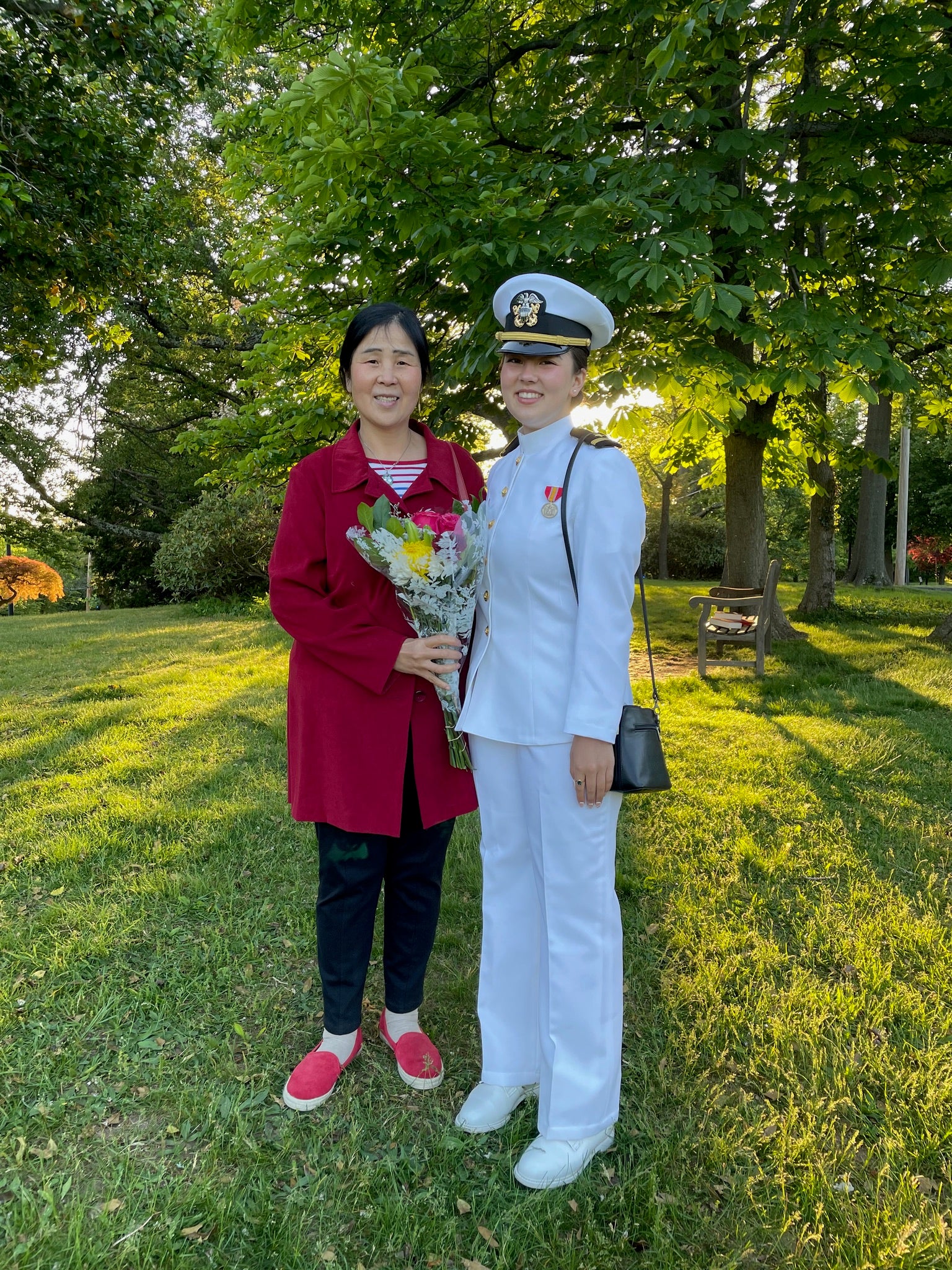
With those legal questions percolating, law school for Bliek was the natural next step. She pored over LSAT study guides during her downtime at sea and remembers submitting her application to Harvard while somewhere off the coast of California. “Thankfully,” she laughed, “the internet was good enough.”
Her decision to apply to Harvard was never in doubt. Inspired by her military career, service had long been a driving force, and she saw that same commitment manifested not only at the law school but across the university. “I think I was just drawn to how much of a public-service-oriented presence Harvard has. There are so many people to learn from here, and so many places to learn from … from the law school to the Kennedy School, to the business school. … It felt like the best place to learn from the best people.”
Bliek said she loves the Socratic method, the law school’s intellectual rigor, and working with the school’s Tenant Advocacy Project, representing tenants facing eviction and other housing issues, and training to be part of the Harvard Prison Legal Assistance Project.
Her post-Harvard plans are still coming into focus. But one thing is clear: Helping others will be at the heart of whatever she does, whether it’s working directly with clients or asking how an institution might be reformed from within. “I’m really trying to balance my desire for … bigger-picture change,” said Bliek, “with how much energy I get from working at an individual level.”
Want to stay up to date with Harvard Law Today? Sign up for our weekly newsletter.