America needs a renewed spirit of civic engagement — one that prioritizes in-person interaction and begins in local communities.
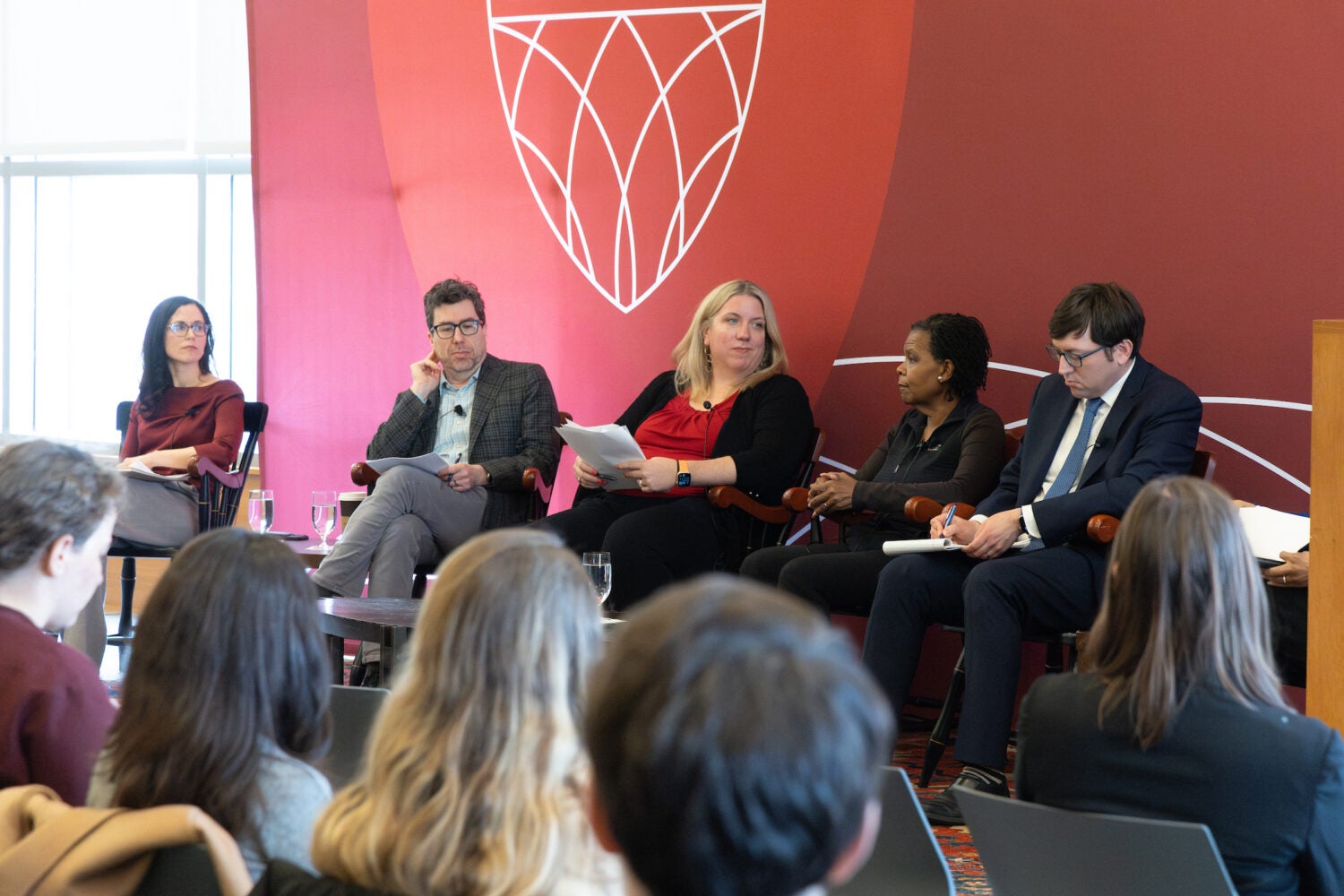
That was one of the central messages at an event hosted on March 24 at Harvard Law School, titled The American Experiment at 250, which examined the challenges facing law and governance in the United States today.
Introducing the discussion — the first in a series planned to commemorate the 250th anniversary of the Declaration of Independence — John Goldberg, the Morgan and Helen Chu Dean and Professor of Law, noted the significance of the occasion and its connection to the law and legal system.
“As we commemorate this nation’s 250th birthday, I am proud that Harvard Law students, faculty, alumni, and staff are playing their part in our never-finished collective undertaking to build a nation committed to liberty, democracy, justice, and the rule of law,” Goldberg said.
During the panel, which was moderated by Tomiko Brown-Nagin, dean of the Radcliffe Institute for Advanced Study, participants shared ideas from essays reflecting on contemporary political and legal issues in the U.S. that will be published in a forthcoming book.
‘All men are created equal’
To Annette Gordon-Reed ’84, the Carl M. Loeb University Professor, the semiquincentennial is an opportunity to examine a longstanding debate over citizenship and belonging in the U.S.
The Declaration’s preamble includes the phrase “all men are created equal,” she noted. But do these words and others in the document mean that the country is united by the shared national creed it appears to embody?
“You can see how the country of ideals would work and how it made sense in a country where most people come from somewhere else,” she said. “It’s always been a way of saying you could come to this country, and if you believe in the Declaration and the Constitution, and you agree to abide by those rules, you are an American.”
Gordon-Reed pointed out that this had been President Ronald Reagan’s enduring message about American identity. She then contrasted Reagan’s view with more contemporary debates. “The notion of the nation of immigrants who become American by believing in the things that America stands for is controversial at this particular moment,” she said.
“The notion of the nation of immigrants who become American by believing in the things that America stands for is controversial at this particular moment.”
Annette Gordon-Reed
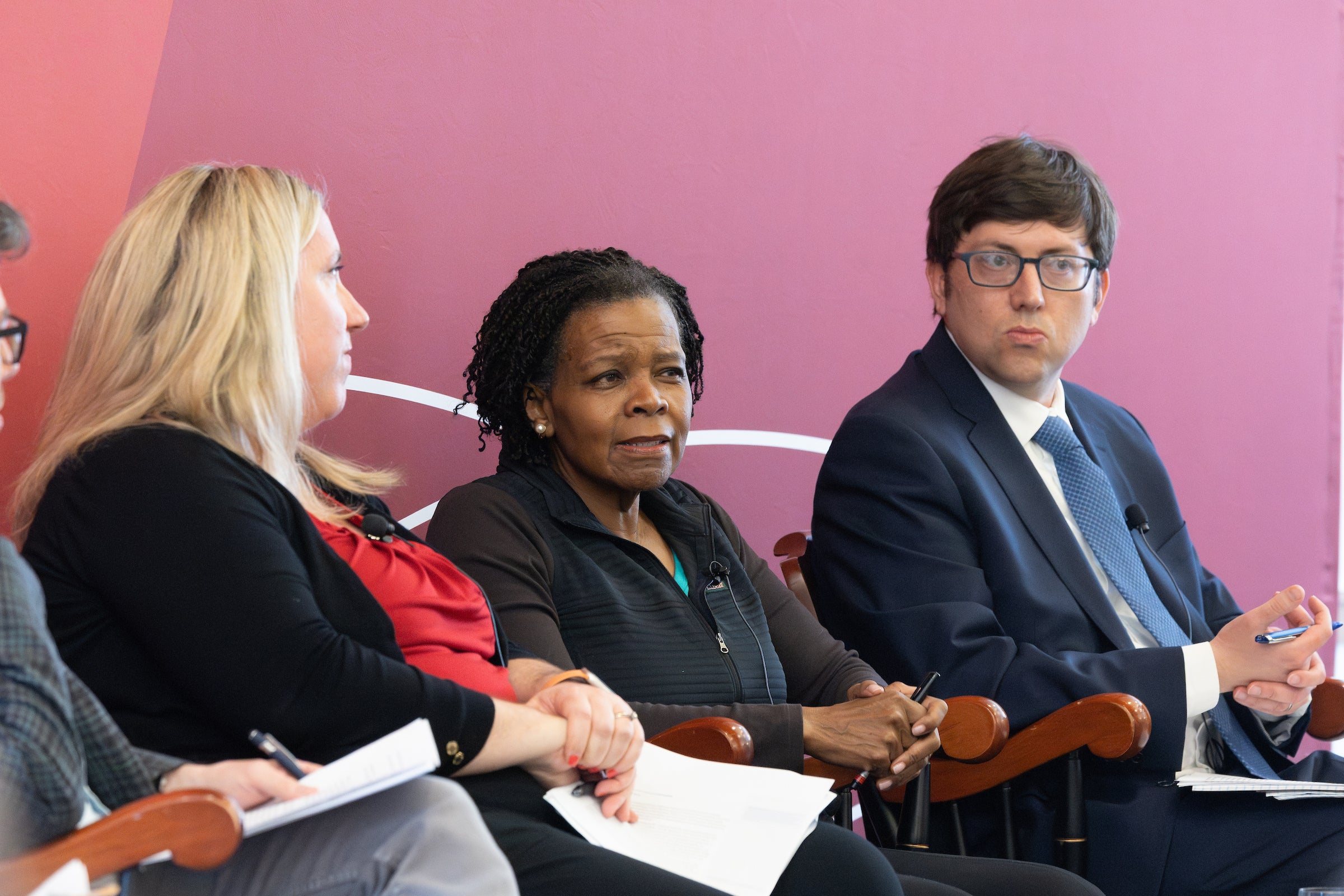
But, she insisted, the discussion about what it means to be American isn’t new. “It’s always been there — this warring understanding about America and what we’re supposed to be,” she said. “The question for me is … which will prevail?”
Many early Americans who rejected the idea of a “creedal” nation also wanted to exclude African Americans — even free Black people — despite their presence in and contributions to the country even before its founding, Gordon-Reed said. But she noted that, by the time she was growing up, the idea of a creedal nation was the predominant view, thanks to the Civil Rights Movement and other fights for social justice.
Yet American history is also filled with stories of backlash to such progress, she said. “And we seem to be in that moment now.”
Gordon-Reed described her essay as an attempt to understand where the U.S. may be going in this eternal debate: “Will we go back to the notion that the country is fulfilling a promise when it does things that take it along the route and the road that the Declaration points to? Or do we revert to a notion of blood and soil?”
As the Constitutional Convention came to a close in 1787, Benjamin Franklin is famously reputed to have told a Philadelphia resident inquiring after the gathering’s outcome — perhaps apocryphally, Gordon-Reed noted — that the U.S. was to be “a republic … if you can keep it.”
The question of whether Americans can keep their republic endures, she said. “If we can keep a republic, a republic that has been multicultural, in fact, from the very beginning.”
A ‘slow unraveling’ of civic life
Molly Brady, the Louis D. Brandeis Professor of Law, said the topic immediately made her think of two forces that shaped her own life — and that she believes are “more broadly shaping our democracy.”
These are, she said, the “slow unraveling of physical forms of community” that bring people together, coupled with the “rise of digital connection to take its place.”
“I see law as the architect of both,” added Brady, a property law expert.
“I think our property law choices inflated disinvestment and physical decay, while at the same time, law did a lot … to enable tech growth with limited regulation and almost no liability,” she said.
Yet Brady noted that people, perhaps especially those who spend a lot of time online, seem to be increasingly nostalgic for in-person community. And while she blamed contemporary land use regulations, such as zoning, for facilitating the decay of the shared built environment, she also saw hope in the ancient roots of property law to restore that community.
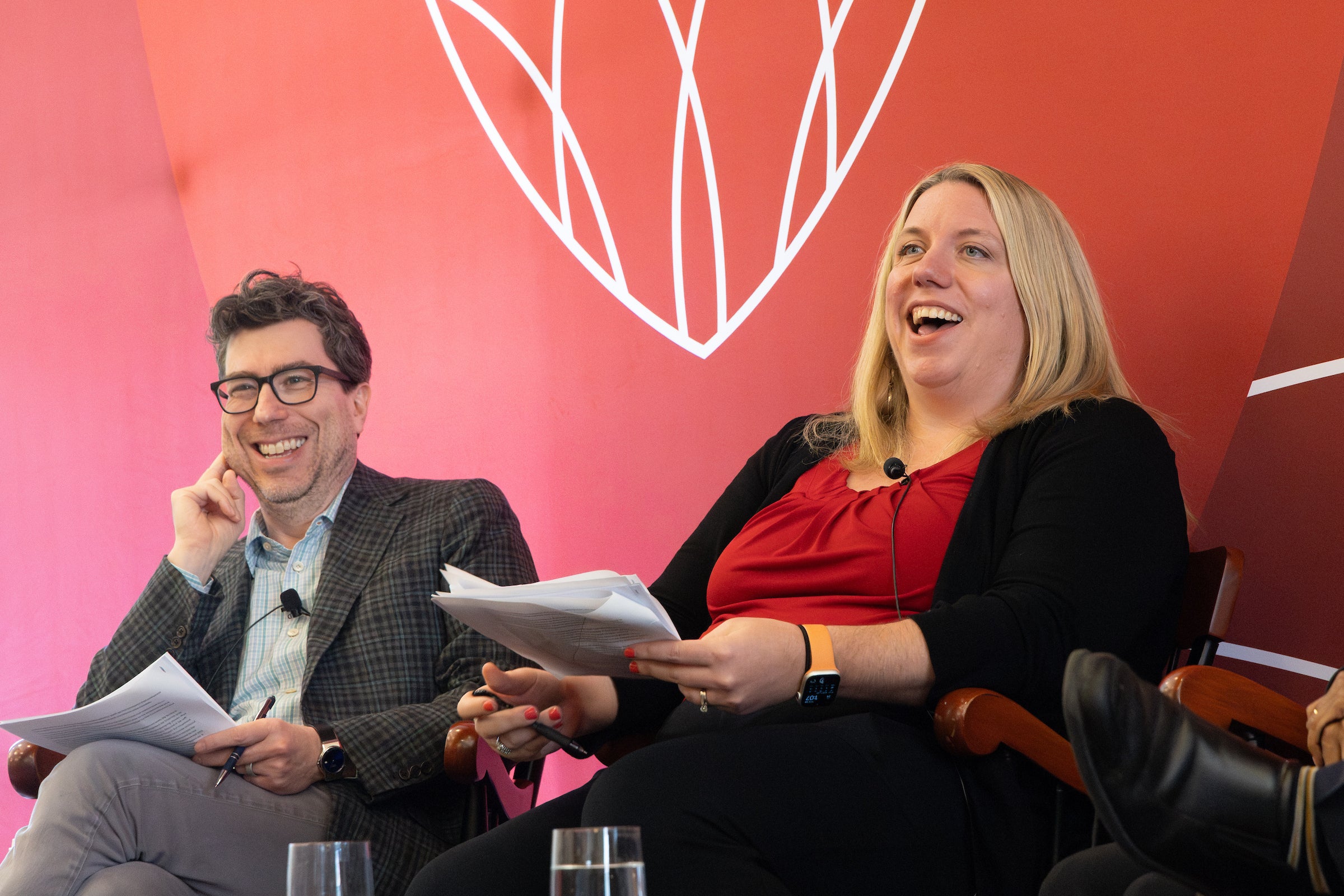
“The common law assumed that people would live near each other and interact repeatedly, and bear responsibility socially for the consequences of those interactions,” she said.
Older concepts such as nuisance or adverse possession, she added, “rewarded people who asked around the neighborhood, who structured ongoing relationships, who got along in circumstances where it could have been about conflict.”
But online spaces, she argued, while potentially beneficial in other ways, have contributed to the degradation of the social norms required to make real-life communities function.
“Community requires and fosters civility,” she said. “And I think that civility — some degree of having to give and take, win sometimes, lose sometimes — is extremely important.”
Brady ultimately expressed faith in property law, in her students, and perhaps most importantly, in Americans everywhere to tackle these thorny problems in their local communities.
“Local policies and local participation are just crucial,” she said. “I really believe that part of our approach to fixing the problems in our democracy has to be local.”
Recapturing the humanity we ‘hunger for’
Jonathan L. Zittrain ’95, the George Bemis Professor of International Law, also had something to say about community — or at least, the common guideposts Americans increasingly turn to in hopes of making sense of the world around them.
Throughout history, and especially in times of turmoil, people have looked “for things in common, that amidst ‘one damn thing after another,’ we can point to and rely upon for stability amidst all the waves,” Zittrain said.
He argued that the U.S. Constitution has often been that “carapace,” or “a common referent, even as people may be aggressively debating with one another everything else.”
But despite its wisdom, the Constitution is also more than 200 years old, written in a time in which there were more “physical constraints, both on what governments can do and on what individuals can do,” he argued.
Zittrain pointed out that in the 18th century, British Red Coats searching a home might be able to “turn over your straw pallet,” but “how much would really be written down and discoverable where the default is everything is pretty much ephemeral?” And in an era before social media, individuals wouldn’t as easily have been able to, for example, summon a mob to the Supreme Court to protest an unpopular decision.
“Much of what our Constitution has served, which is how to shape and exercise what we assumed would be paramount power in public hands, no longer seems as applicable.”
Jonathan Zittrain
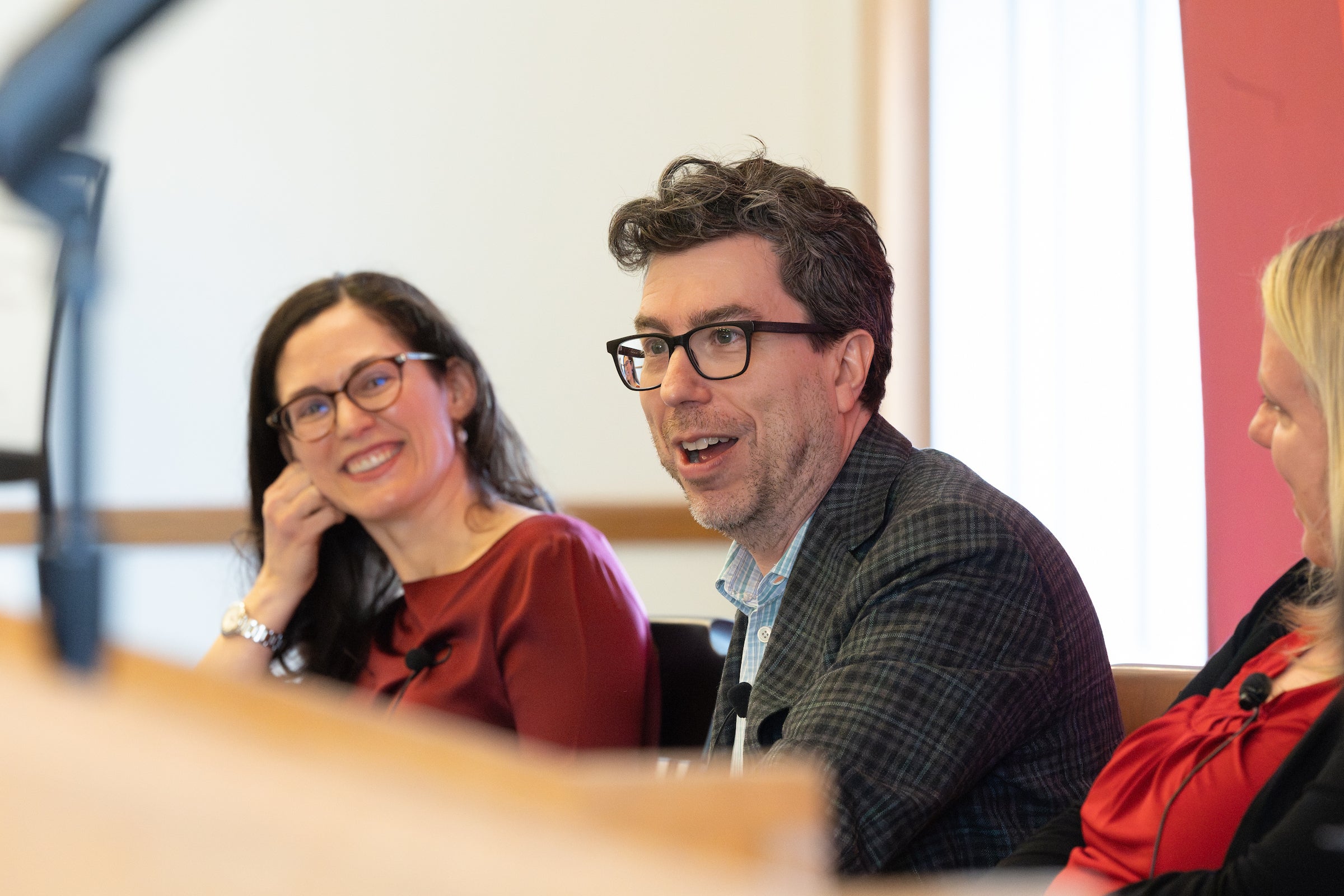
But what does it mean for today, Zittrain asked, when digital tools record our every move? Or when facial recognition technology can identify everyone in a room? “That seems like a lot of power for the government,” he said.
On the other hand, AI chatbots have democratized access to institutions and processes that once required a “learned intermediary” who sometimes served important gatekeeping roles — including the law, Zittrain said.
“We are, for example, about to get very well-framed litigation by people who didn’t need to find a lawyer and pay for one to make it happen,” he said. “That could be very good! But the system isn’t ready for it. And that question is repeated across so many other areas.”
That all adds up to a shared carapace — the Constitution — that may not fully reflect our modern realities, Zittrain suggested. “Much of what our Constitution has served, which is how to shape and exercise what we assumed would be paramount power in public hands, no longer seems as applicable.”
He concluded by sharing that he hoped technology could be harnessed to “further the conversation” to “recapture the community, the humanity, that I think so many of us still hunger for.”
Tackling ‘judicial supremacy’
“I want to suggest that we should rethink the power of the Supreme Court to invalidate federal legislation where five justices disagree with that statute’s constitutional status,” said Daphna Renan, the Peter B. Munroe and Mary J. Munroe Professor of Law.
Renan, whose essay was written with Nikolas Bowie ’14, the Louis D. Brandeis Professor of Law, argued that fixing what she termed “judicial supremacy” would “be a crucial part of how we can build a more robust constitutional democracy for the future.”
Renan gave a short history lesson to illustrate how the Supreme Court’s current approach to federal legislation has evolved.
In the infamous Dred Scott decision of 1857, she said, the Court “denied a long-accepted power of Congress to limit the spread of slavery in U.S. territory and invalidated a federal statute, the Missouri Compromise, as a violation of the property rights of enslavers.” But in the 1860s Americans elected representatives to Congress to reject that interpretation and enact their own — construing the Guarantee Clause of the original Constitution and later the 13th, 14th, and 15th Amendments, “each of which reiterates Congress’s authority to bring equal citizenship to life.”
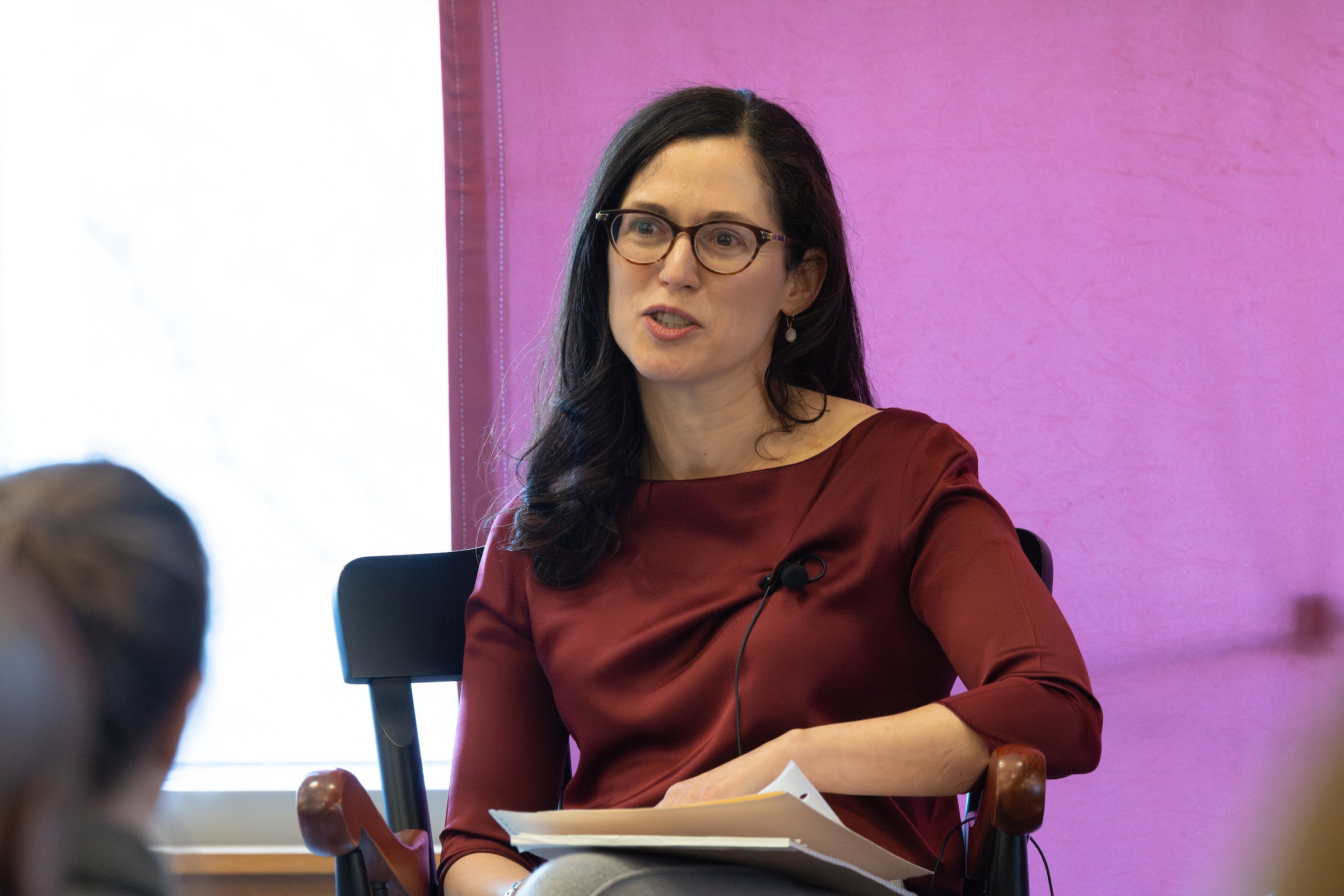
Yet the Court also invalidated many of the Reconstruction-era civil rights laws passed under these new amendments and, Renan argued, continues to undermine the “project of a multiracial democracy” even today. A series of decisions this term, she added, are likely to “[gut] what’s left of the landmark Voting Rights Act.” Renan also pointed to cases expected to remove statutory barriers to a “totalizing control by the presidency of the administrative state.”
But the Court’s power to invalidate federal legislation is not a given under the Constitution, Renan argued. The founding charter “says nothing about how we should manage a conflict between an interpretation of the Constitution held by five justices, and an interpretation of the Constitution reflected in a federal law,” she said.
Renan explained that rejecting what she described as judicial supremacy “does not mean rejecting the role of courts in federal constitutional democracy and the rule of law.” Drawing from history, she offered a range of ideas for reform, including requiring a supermajority of the justices to overturn federal legislation.
In any case, Renan said, the issue is critical to America’s future. “I think one way or another, we should have a conversation about what possibilities suggest a path forward for us today.”
A Court in crisis
While Richard M. Re, a professor of law, who also saw the Supreme Court in crisis, he proposed a different path forward than Renan.
In his view, two problems plague the modern Court — the first involving the “very aggressive behavior” of the executive branch, which has led to what he called a rule of law or separation of powers crisis. The second crisis is about “the Court’s own legitimacy,” he said, stemming largely from the fact that it “has a quite strong, conservative ideological valence.”
“There’s an easy story to tell that the two are just feeding each other and exacerbating one another and leading the whole system into disequilibrium,” Re said. He added that those who hold this view may also favor drastic reforms “that include greatly disempowering or altering the nature of the Supreme Court itself.”
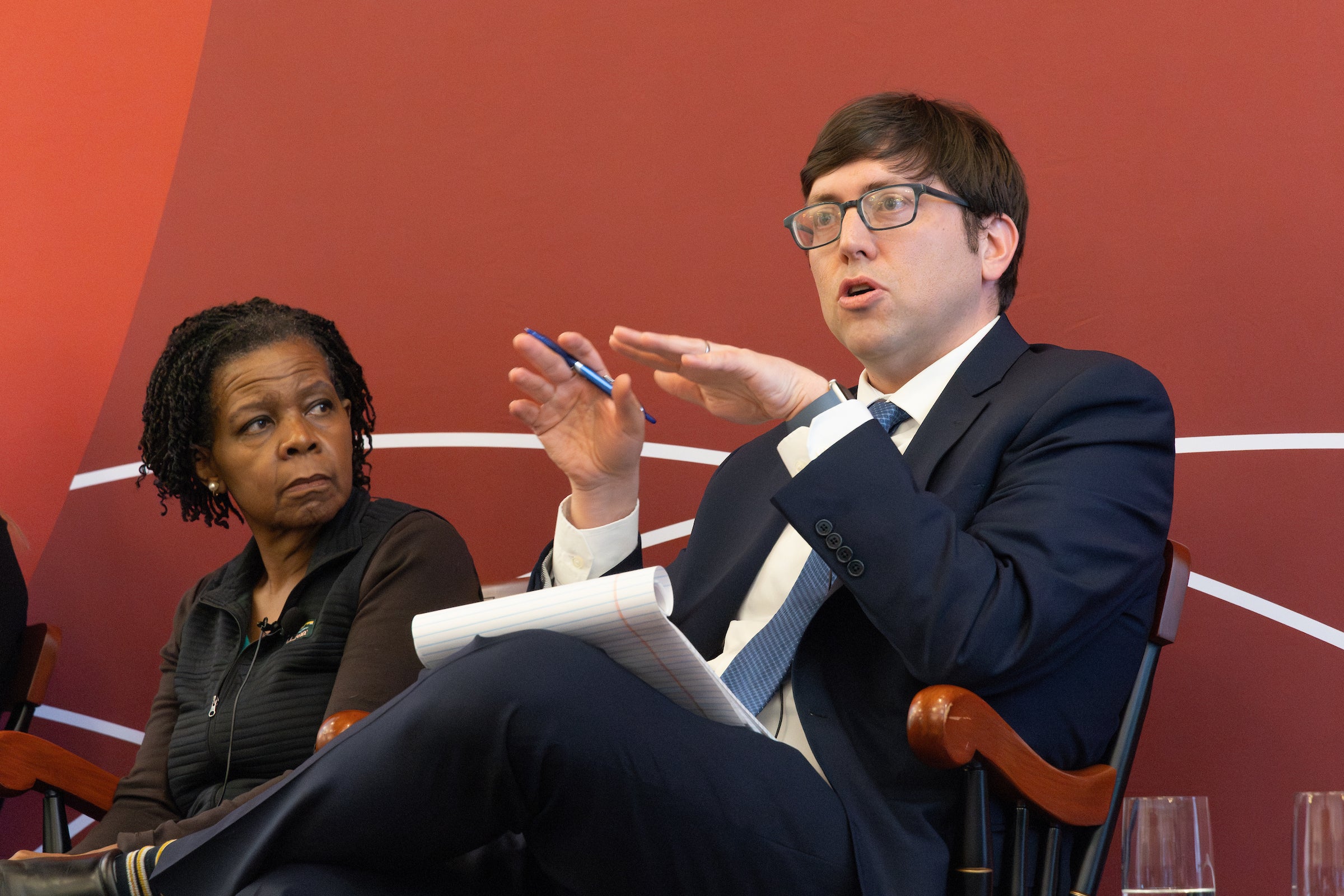
But some of the proposed changes — to weaken the institution or make it “more overtly partisan” by expanding the number of justices — could make the problems worse, Re suggested, by “making the Court less able to preserve any kind of institutional neutrality.”
Re suggested an alternative approach, one that he called “more optimistic.” He proposed recasting the Court’s role as one that is ultimately “stabilizing,” because “by nature of its design, it’s less subject to normal forces of partisan politics, electoral politics, than the other major branches.” Although elections often swing party politics dramatically in either direction, the Court’s composition is more consistent. “That makes it still subject to politics and still a product of politics and still an object of political mobilization … but it’s not on the same clock as the electoral clock.”
Re argued that, over the past year, the Supreme Court has played an important checking role with respect to President Donald Trump’s agenda. If the Court continues to do this, even as it sometimes rules in favor of the administration, the dual crises might find resolution, he argued.
“I think you look back at history, there have been a number of times the Supreme Court has done wrong,” he concluded. “There are times the Supreme Court has been under political fire. [But] despite its many mistakes, the Supreme Court has often managed to get through and flourish as an institution again. And I think it’s possible that that result could occur” in our era.
Want to stay up to date with Harvard Law Today? Sign up for our weekly newsletter.