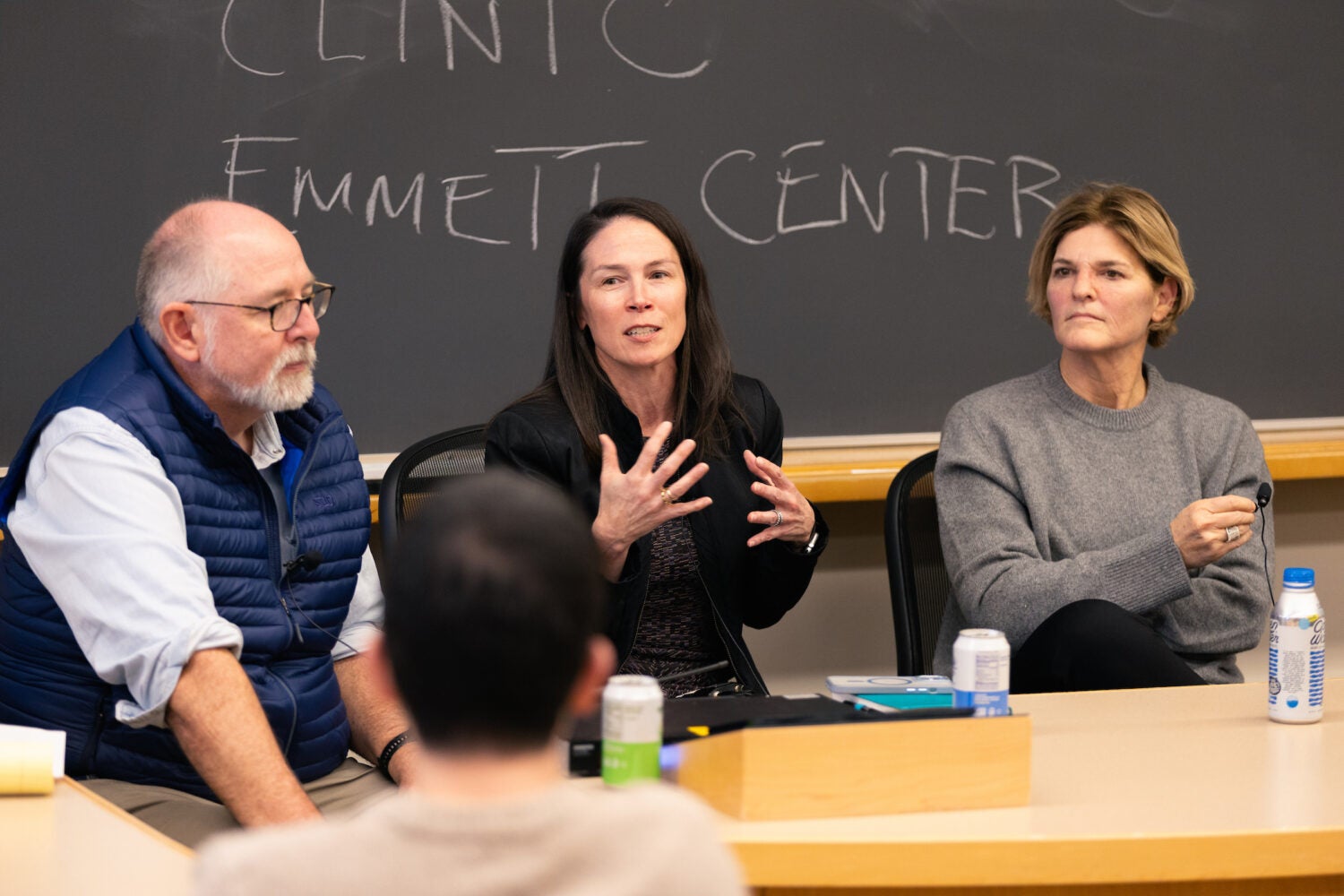
Since January 2025, the United States government has implemented sweeping changes to federal climate and clean energy policies. At a recent session called “Climate Law: The Path Forward,” a panel of four energy and environmental law experts discussed the scope of these changes and their impact on the future of climate policy.
Hosted by the Environmental & Energy Law Program, the event featured remarks by Jody Freeman LL.M. ’91 S.J.D. ’95, the Archibald Cox Professor of Law and director of the Environmental and Energy Law Program; Richard Lazarus ’79, the Charles Stebbins Fairchild Professor of Law; Andrew Mergen, the Emmett Visiting Assistant Clinical Professor of Law in Environmental Law and faculty director of Emmett Environmental Law and Policy Clinic; and Carrie Jenks, the executive director of the Environmental & Energy Law Program.
Lazarus opened the event with a stark status report of the current state of affairs amid the ongoing administrative effort to reverse federal laws and regulations designed to combat climate change and protect the environment. Instead of making climate rules less stringent, he described an effort that reaches much further — blocking clean-energy projects on public lands, pulling back funding, and trying to undercut the market for renewable energy.
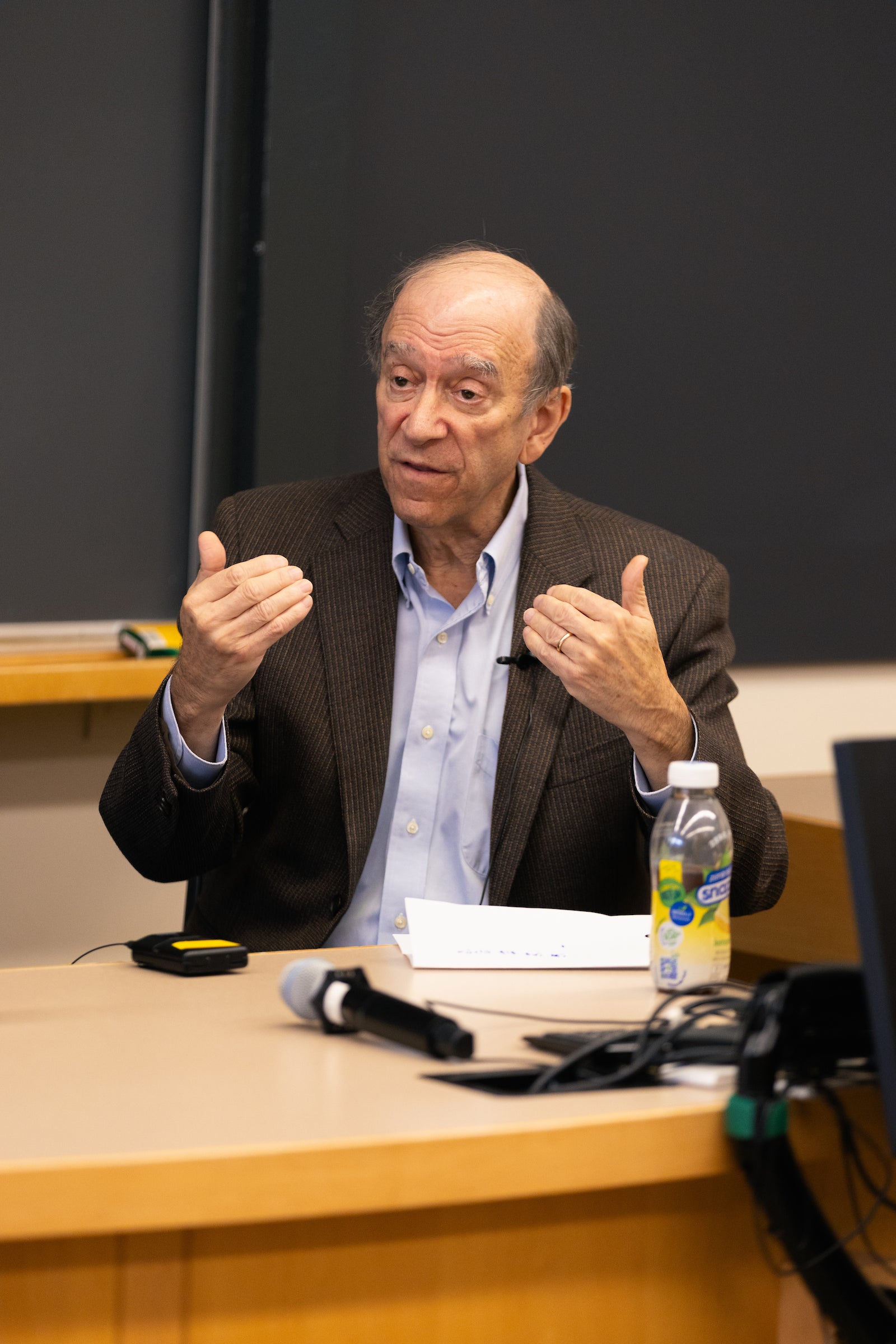
“It’s not just the normal reversals or roll-backs. It is much, much deeper in terms of its challenges across the board,” he said. “I think it’s fair to say it’s no less than a wholesale effort to destroy environmental law, at least at the federal level, with a bull’s eye on environmental justice and climate change.”
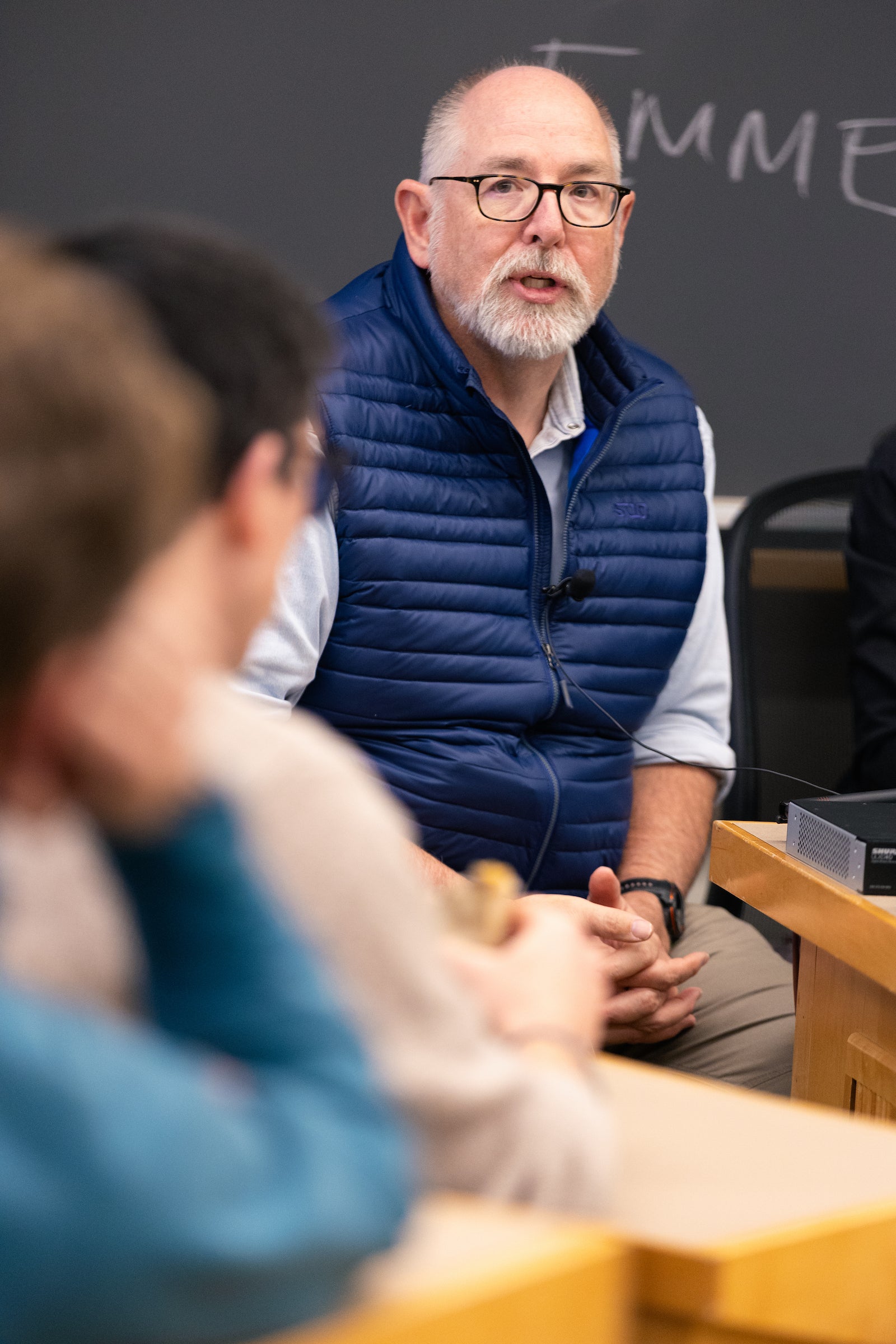
Mergen, drawing on three decades at the Department of Justice, described similarly unprecedented changes inside federal agencies.
“I was a career attorney throughout the first Trump administration and what we’re seeing now is radically different,” said Mergen. “Information has been removed from websites. The professional core has been hollowed out. There is a contempt for agency expertise, and we’re losing that expertise daily, in a dramatic fashion, which is going to make going forward much, much harder.”
“All of these things big and small are happening within the agency, and it is truly, truly unprecedented,” said Mergen. “I think there’s reason we’re going to be hopeful at the end of this conversation, but I don’t want to sugarcoat what’s happening within the agencies, because it’s truly dramatic.”
Jenks provided historical context by discussing federal climate policy strategies under previous administrations. She cited modest bipartisan support during the early 2000s for legislation designed to reduce carbon pollution; however, that changed during the presidency of Barack Obama ’91.
Climate policy “became really political, and so during the Obama administration, we shifted to thinking about how to use executive authority under the Clean Air Act,” said Jenks.
According to Jenks, important emission reductions occurred during that time, but several climate policies were met with opposition by the courts. The Biden administration attempted a new strategy by using industrial policies and legislative incentives such as those in the Inflation Reduction Act.
“The thought was economics — regardless of political association, [people] would care about jobs in their state,” recalled Jenks.
According to Jenks, “Climate policies have remained very political, so, Congress and the Trump administration have eliminated many of the incentives for renewables that were part of IRA.”
Concerning the recent reversals on federal climate policy, Jenks emphasized the importance of pursuing bipartisan solutions that achieve progress on the emission reduction trajectory rather than trying to reach political consensus on “the end point.” She also said that, under existing circumstances, there are some in the private sector calling for durable regulations.
“Normally, you’d have a Republican administration pull things back, a Democrat would make it more stringent, and there were some boundaries to that,” said Jenks. “Now we have everything or nothing, and that’s not working for industry.”
“Normally, you’d have a Republican administration pull things back, a Democrat would make it more stringent, and there were some boundaries to that. … Now we have everything or nothing, and that’s not working for industry.”
Carrie Jenks
Freeman closed the discussion with a call for rethinking how climate and energy advocates communicate and build coalitions.
“There are real opportunities now to do some new thinking about how to make progress on climate and energy and environmental protection. How to talk about it differently, how to attract supporters who may not speak the same language as you speak, how to build coalitions with either unlikely partners, or previously unwilling partners,” said Freeman.
By avoiding certain labels, she also noted, energy and environmental policy advocates are more likely to receive bipartisan support.
“Things don’t have to always sound like climate policy. They can sound like good economic policy, they can sound like sustainability, they can sound like policies that will be efficient and save people money and produce a reliable energy system and an affordable energy system. There are opportunities to learn how to talk differently, how to frame arguments differently, and how to attract different kinds of support.”
Freeman also acknowledged that existing mechanisms for pursuing climate and clean energy goals at the federal level may need to be supplemented with additional legislative action if meaningful progress is to be achieved.
“The Clean Air Act is still a mechanism for regulating pollution,” said Freeman. “For some aspects of climate change, for some sectors, it may still be a perfectly useful and valuable tool. But we can also think of other tools, and it shouldn’t be too ambitious to think about new legislation.”
She also cited the need to combat the longstanding perception that energy and environmental regulations have a significant negative financial impact on businesses and affordability.
“Environmental rules aren’t the reason we don’t build things in this country,” she said. “We don’t build things in this country for lots of different reasons: There are high costs […], supply chain challenges, limited government capacity, labor shortages — and a lot of red tape that doesn’t have to do with environmental rules. But environmental regulation is taking the brunt of the blame right now. And I think that’s quite dangerous and worrisome.”
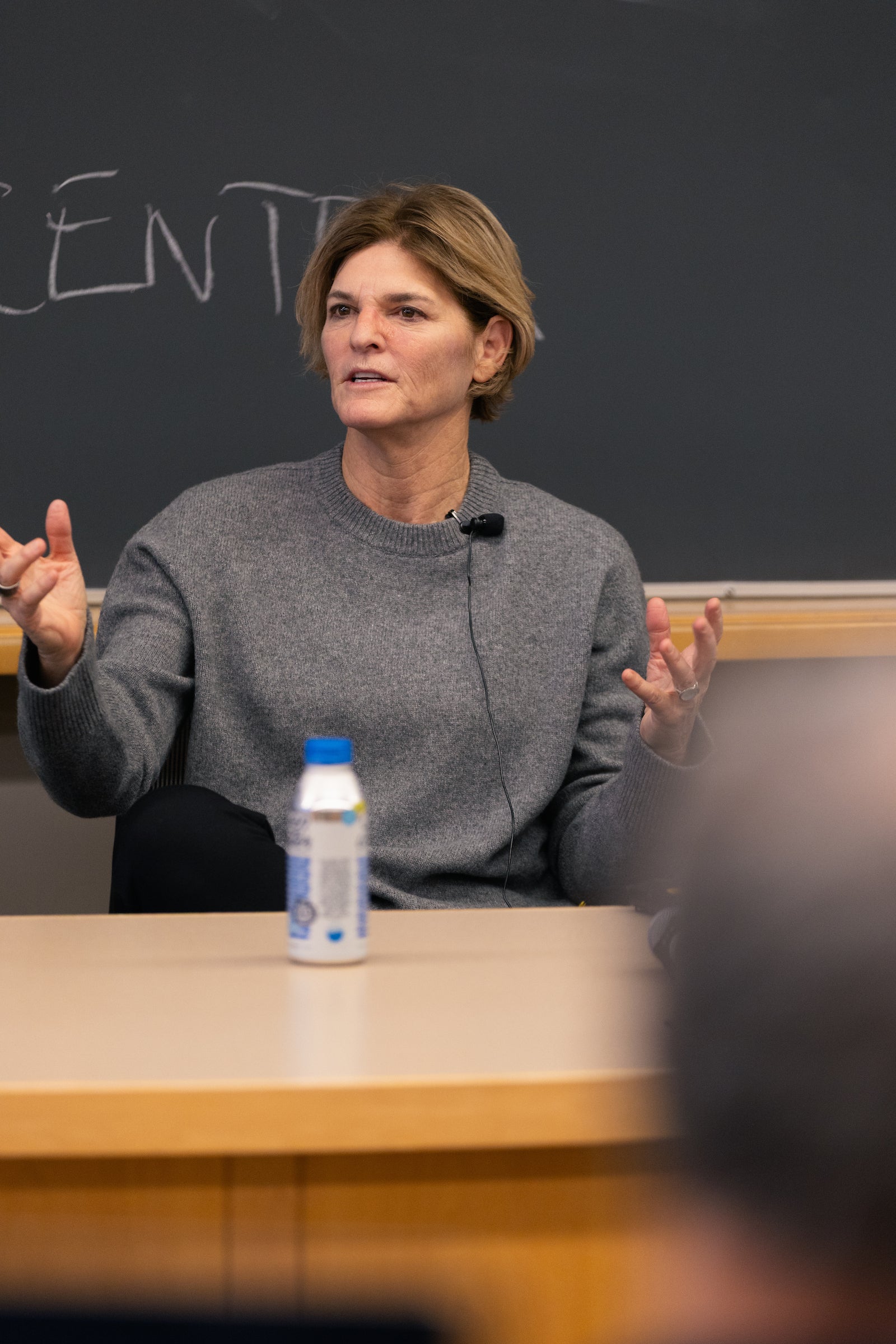
“Environmental rules aren’t the reason we don’t build things in this country … but environmental regulation is taking the brunt of the blame right now. And I think that’s quite dangerous and worrisome.”
Jody Freeman
And despite industry’s mixed track record, Freeman encouraged engaging with businesses more thoughtfully: “It is a mistake to overlook that industry is made up of many different players, some of which are quite interested in solutions.”
In response to questions from HLS students on what they can be doing now, Mergen replied, “One of the things that’s most critical for you in terms of what can be done now I think is focusing on acquiring the skills, the critical thinking skills that law school teaches you. And you have the opportunity, to really develop the critical thinking skills to think hard about how do we get at equity, how do we get at justice?”
Lazarus added, “a problem that environmental law has had in losing its voice and its ability to be effective in the political arena is that it seems to always be talking about things in distant places and at distant times. And people forget that these laws have real, meaningful impact for people right now. And it cuts across demographics, it cuts across politics. … What environment law is about is helping people with things that are happening right now in their neighborhoods.”
Want to stay up to date with Harvard Law Today? Sign up for our weekly newsletter.