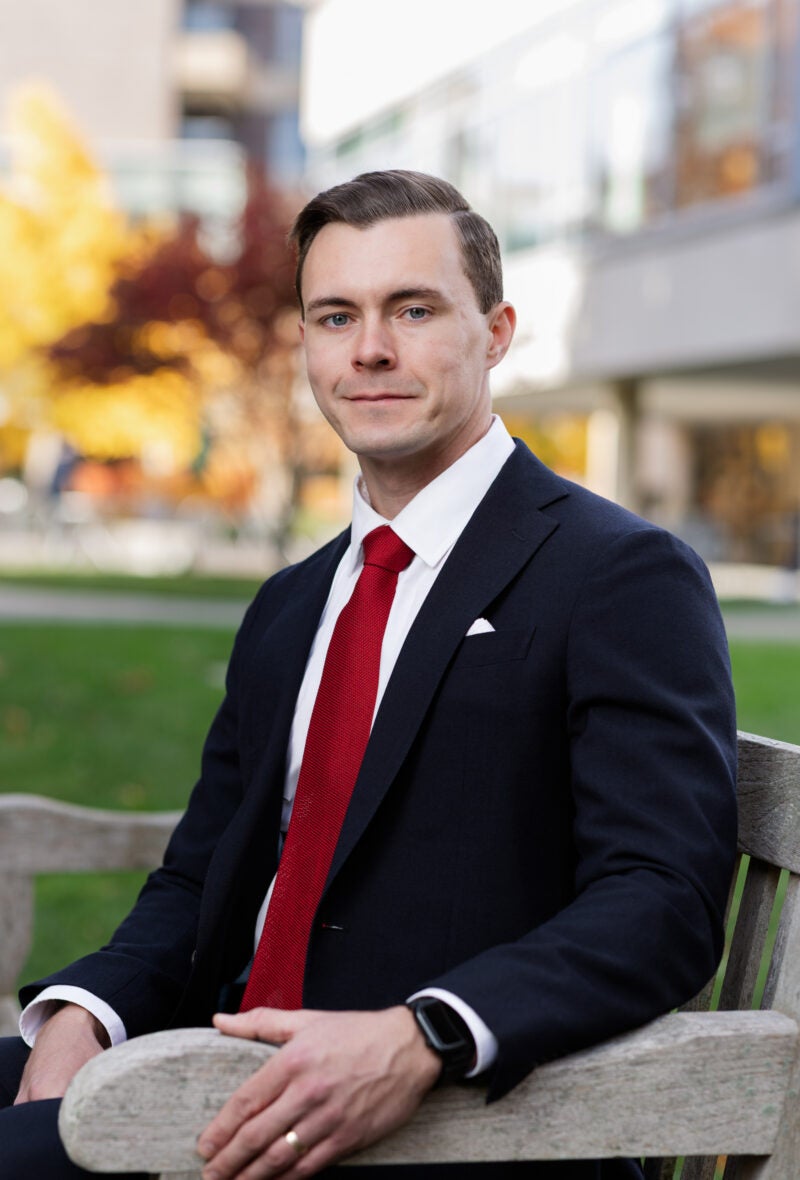
Austin Griffin ’29 was a company commander in the United States Army the first time he saw the stakes of legal decision-making directly.
Griffin, who led 45 service members, had received a report from one of his soldiers accusing another of spousal abuse. These were serious allegations, Griffin recalls — ones that would require careful handling to support everyone’s safety and dignity while respecting the legal rights of all involved.
“We suddenly had to balance all these different interests — showing empathy for everyone, including the accused soldier, while taking the allegation seriously and not just writing it off, and ensuring that we gave the legal investigators everything they needed to do their jobs,” Griffin recalls.
“I’m still trying to figure out what I want to be when I grow up. I just hope that I’m able to have the feeling that I’m making my community or country safer in some way, and that I end every day knowing I did the right thing.”
It was a lengthy process, and Griffin says he is proud of how he and his first sergeant ultimately handled the situation. But that challenging moment convinced Griffin that lawyers are just as important within the military as outside of it.
“There are a lot of legal questions that can impede the operations of a day-to-day unit, and I’m not even talking about bigger political questions like, Is this a legal order? I’m talking about the more common, smaller legal questions that can make an army unit run much less effectively,” he says.
The experience also confirmed Griffin’s long-held interest in attending law school, one fostered while growing up in Sylvester, Georgia — “an extremely small town in between two slightly bigger towns.”
“I wasn’t really sure what I wanted to do or wanted to be, but my mother always told me I had to be a lawyer or a doctor so I could buy her a nice house,” he laughs.
Griffin knew he’d have to find a way to pay for college first. In high school, he met Command Sgt. Maj. Russell Beard, who ran his school’s military leadership program and recommended that Griffin consider the United States Military Academy at West Point.
“He became one of the biggest positive influences on my life, like a second father to me,” Griffin says of Beard. “And West Point really appealed to me — a chance to get a world-class education, not bring a massive financial burden on my parents or myself, and serve my country.”
Taking flight in the Army
At West Point, Griffin majored in law and legal studies and selected aviation as his Army branch. “Those guys all loved their jobs,” Griffin says.
He was also interested in flying for a more practical reason: “In the car, I’m one of those backseat drivers,” he says. “I figured that if I’m going to be riding in helicopters, I might as well be the one flying them.”
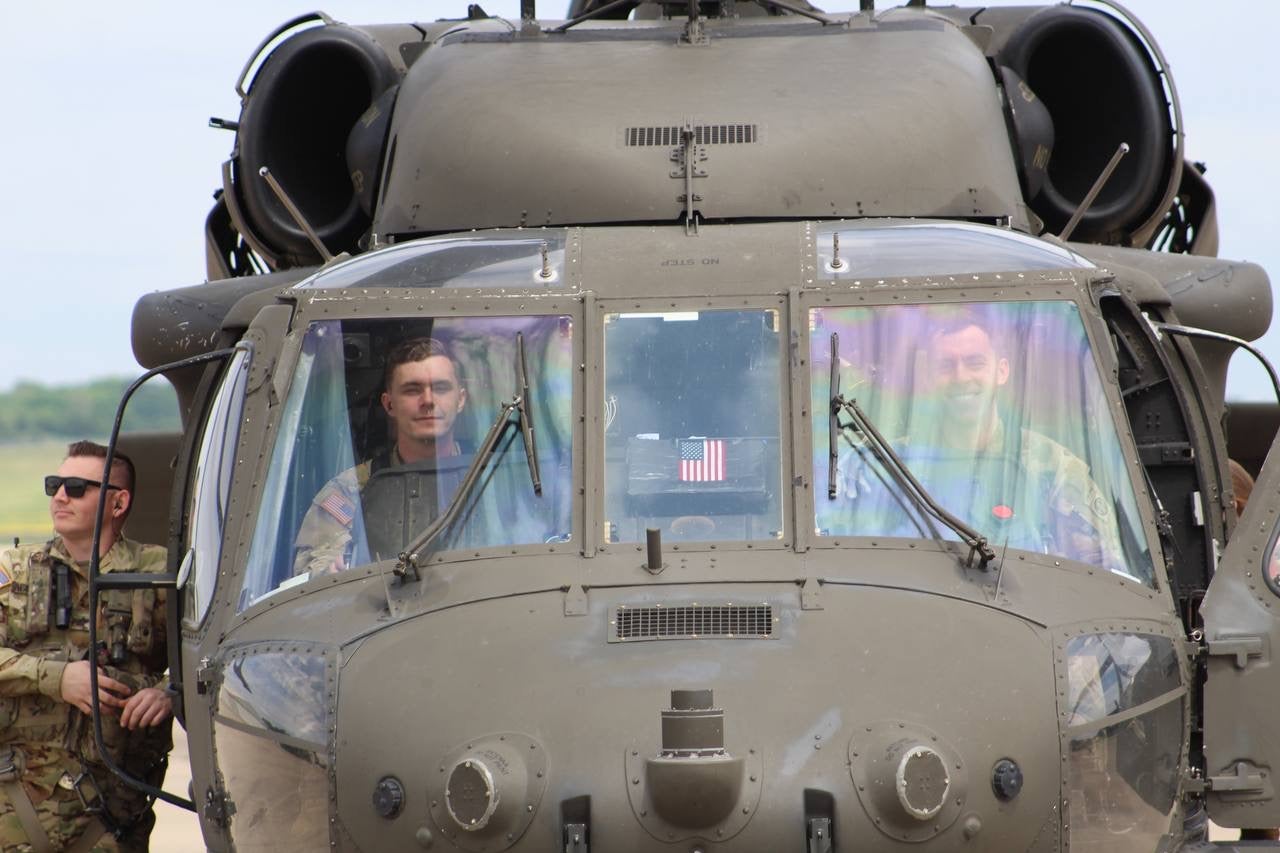
Griffin trained on the UH-72 Lakota helicopter at Fort Rucker in Alabama, and was first stationed at Fort Bragg, where he worked on operations and training for a general support aviation battalion. At the same time, he was required to rack up at least 48 hours of flight training every six months as he continued to master helicopter flying.
“When you come out of flight school, you don’t really know how to fly very well. You’re still learning,” he explains.
Griffin was soon offered a platoon leader position with the command aviation company for the Army’s 82nd Airborne Division — a unit whose main mission was to safely transport important military and civilian leaders. There, Griffin logged more than 300 hours in flight, including 100 as the lead pilot-in-command. This was one of the highlights of his life.
“I was living in the good old days, and I knew it the entire time. I knew this was going to be the best moment of my career,” he says. “My commander was an amazing leader and pilot, and he cared about all of us. And he went out of his way to develop the officers and especially the lieutenants under his care. The instructor pilots — they didn’t pull punches when you messed up, but they picked you up and dusted you off. And they really desired to make you a better pilot. It was truly a team that was focused on looking out for each other and getting better.”
Later, Griffin served as an executive officer, managing 200 people responsible for maintaining 35 military aircraft, then completed the Army’s Captains Career Course, which prepares officers for command and staff roles.
After moving to Fort Bliss, in El Paso, Texas, Griffin was offered a position as commander of the 1st Armored Division’s air traffic services company.
Sometimes, the Army needs to deploy aircraft on an emergency basis in uncontrolled airspace — that is, an area not subject to oversight by air traffic control, Griffin explains. When that happens, pilots need to understand how to navigate around other planes and obstructions without outside support. That’s where Griffin’s unit came in.
“The main goal was to prepare my people for if and when we’re truly needed, which might mean a large amount of aviation assets coming into a smaller remote airport or airfield,” he says.
Griffin says it was important for his soldiers to train on the Army’s portable air traffic control units, but he also wanted them to see how civilian air traffic control officials work.
“I wanted to get them in a real air traffic control tower, where they can learn from true experts of their craft, civilians who’ve been doing it for decades,” he says. “That way, if we had to support a relief mission, or let’s say there was a major nuclear incident in some major city, and you had to get a lot of relief work in and out of the nearby airport, they’d be able to run an airport or airfield effectively to provide that support.”
On a nine-month deployment to Germany, Griffin made it his mission to find training slots with airports around the country, with the goal of getting as many of his soldiers as possible certified as F.A.A. control tower operators — a useful designation for aviation roles inside and outside the military, he points out.
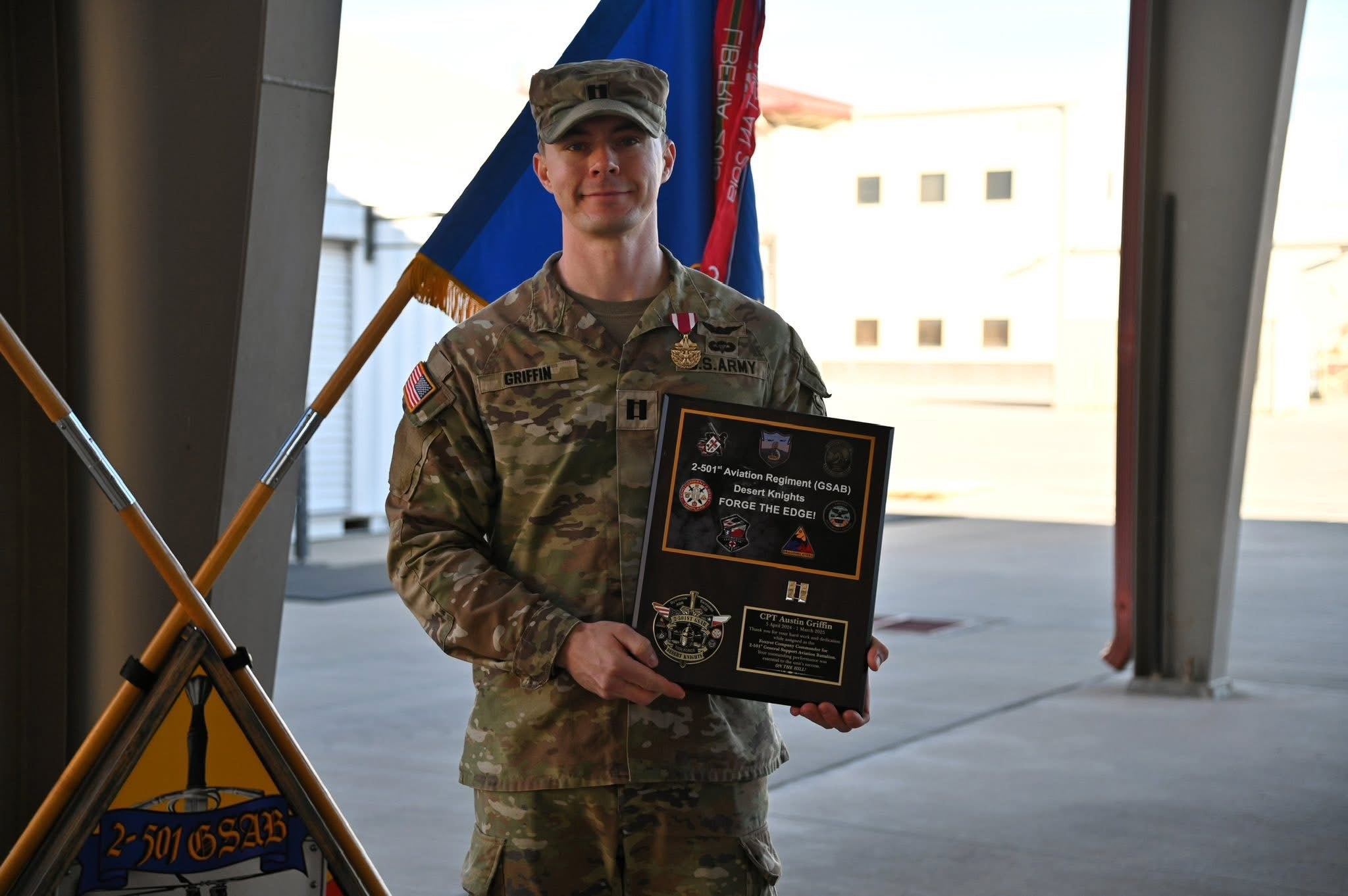
Despite some initial skepticism from higher-ups, seven of Griffin’s nine participating soldiers left the country with control tower operator certificates, which he calls his “crowning achievement” in the Army. The achievement earned him a Meritorious Service Medal for his work as a company commander.
From the Army to Harvard Law
By the end of 2021, Griffin’s Army career was flourishing, but there was another important development in his life: His wife was pregnant. Griffin says the upcoming birth of his son shifted his priorities somewhat, and he began to think seriously about going to law school.
He had hoped to pursue a career as an Army judge advocate, applying during his last year of eligibility. But to his disappointment, Griffin wasn’t selected for funding under the program.
“I don’t want to say it was a shock for me because I thought, I’m so great, I should get this. It’s just that I had put a lot of work throughout the year to give myself the best chance of getting accepted,” he says.
Meanwhile, Griffin’s law school acceptance letters started rolling in.
“I wasn’t even going to apply to Harvard because I thought it was such a long shot,” he says.
But a mentor convinced Griffin to try, and to his surprise, he got in. There was now just one snag — since Griffin hadn’t been admitted to the Army’s legal program, he still had three years left in his service obligation.
He prepared himself for more disappointment: “Before I knew I had gotten into Harvard, I had asked other law schools for deferments, and many of them were acting like I was asking them for like a million dollars,” he jokes.
Not Harvard Law. “They were very understanding and said, ‘Absolutely, how long of a deferment do you need?’” he says. “I will always be grateful for the understanding that the Harvard admissions office showed me, and that definitely sealed in my mind that Harvard Law School is just something different.”
Today, Griffin is a first-year law student, excited to explore Harvard Law’s many academic and clinical offerings. Outside of class, Griffin is active in the Federalist Society and the Harvard Journal of Law & Public Policy, and he hopes to check out other campus groups in the next few years.
Griffin enjoys lifting weights in the morning before his two young sons wake up and exploring Boston with his family. He is deeply appreciative of his wife, whom he says has supported the family throughout his time in the Army and now at law school. “She is absolutely holding it down at home, and I’m very grateful to her for all of her hard work.”
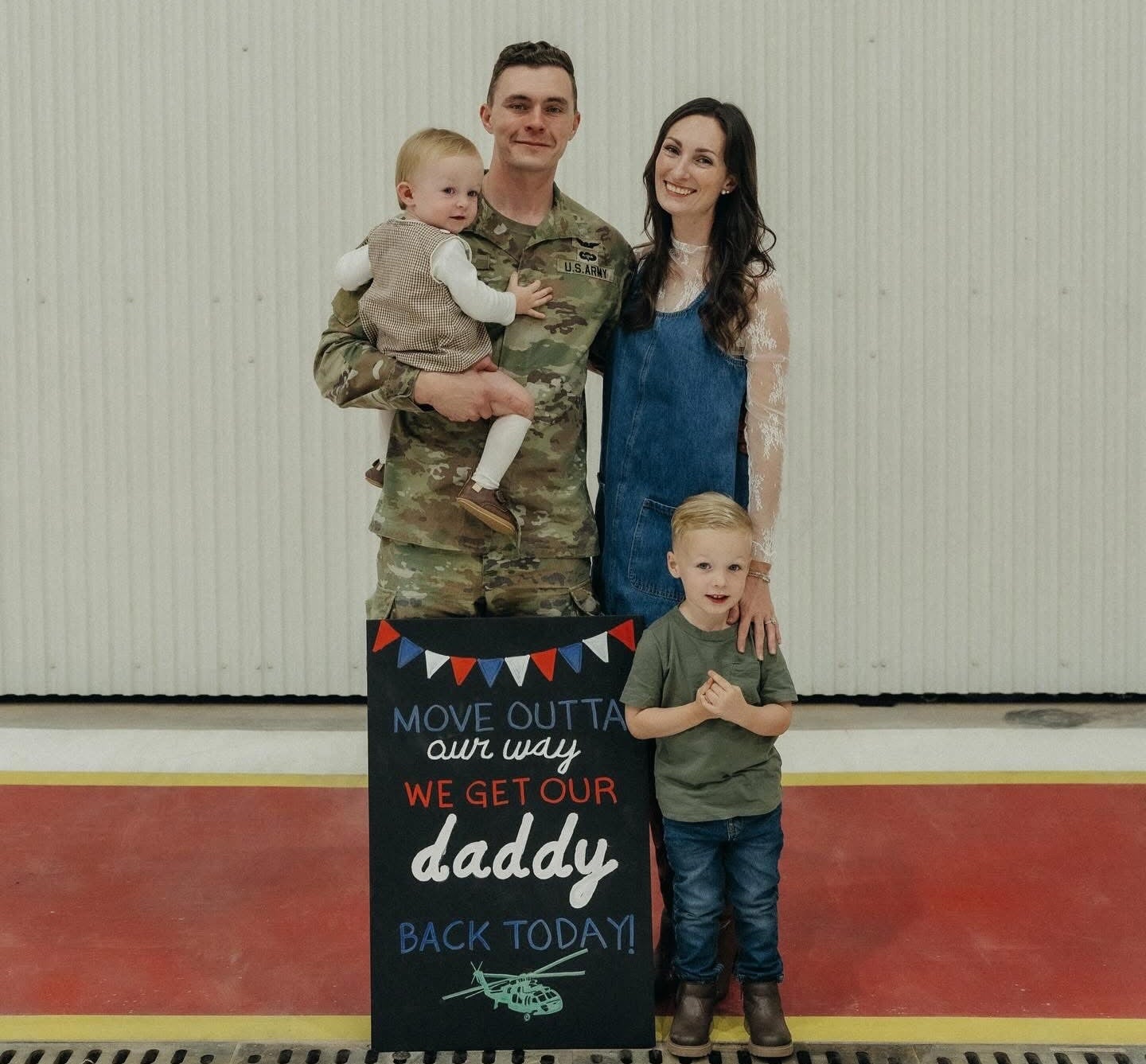
The couple is also expecting their third child in December. “It’s another boy too, so it’s going to be crazy around here,” he laughs.
For now, Griffin isn’t sure what his future legal career holds. He’s interested in prosecutorial work, he says, but he’s open to the word of possibilities his degree will offer.
“I’m still trying to figure out what I want to be when I grow up,” he says. “I just hope that I’m able to have the feeling that I’m making my community or country safer in some way, and that I end every day knowing I did the right thing.”
Want to stay up to date with Harvard Law Today? Sign up for our weekly newsletter.