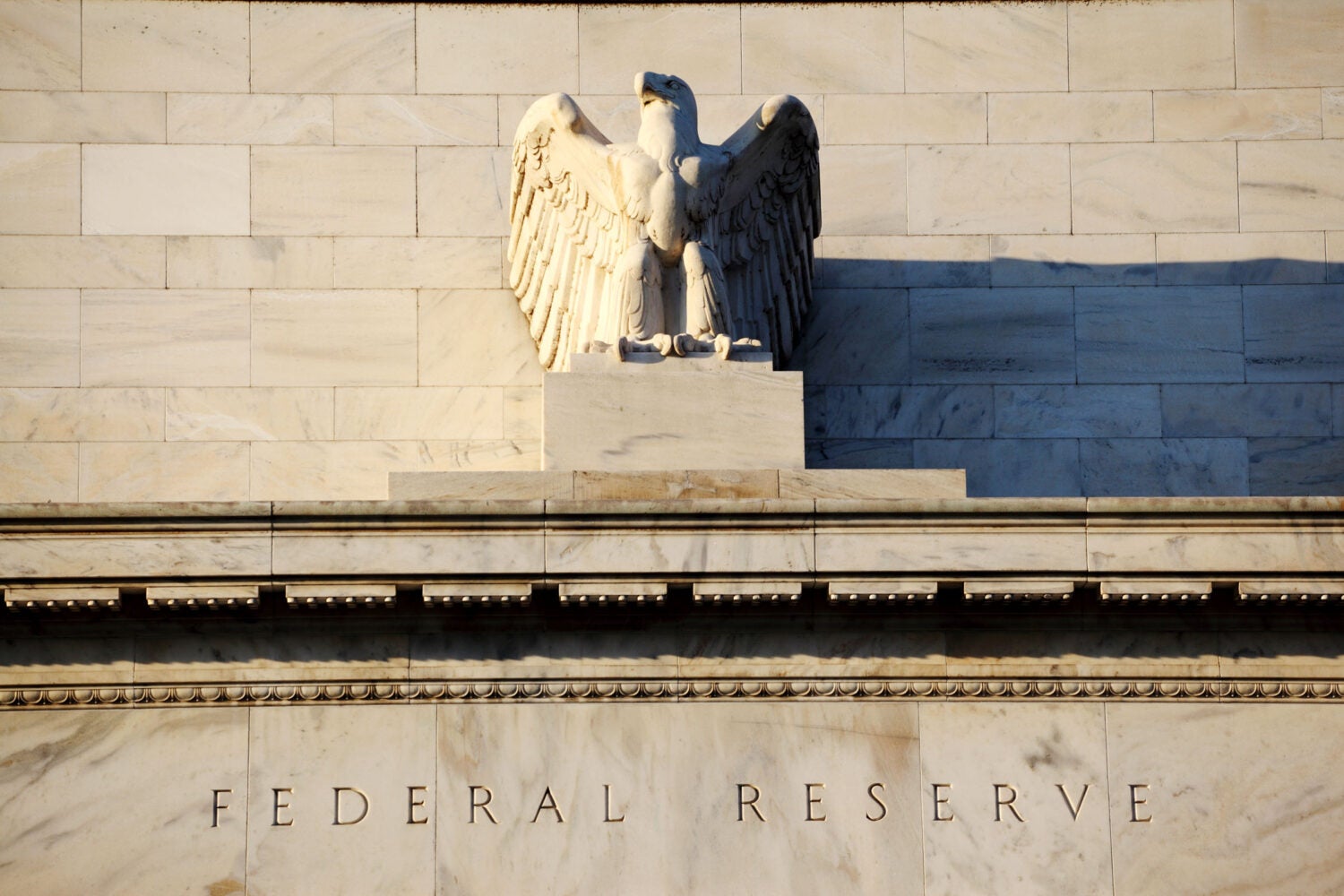
On January 21, the U.S. Supreme Court will hear oral arguments in Trump v. Cook — a case that will, at minimum, decide whether the president has the power to fire Federal Reserve Board of Governors member Lisa Cook.
But according to Harvard Law Professor Daniel Tarullo, the Court’s decision could have much broader impacts. “Cook is really the test case of whether there is any limit to untrammeled power for the president,” he says. “Thus, one way or another, I think it will end up being one of the most important decisions of the Roberts Court.”
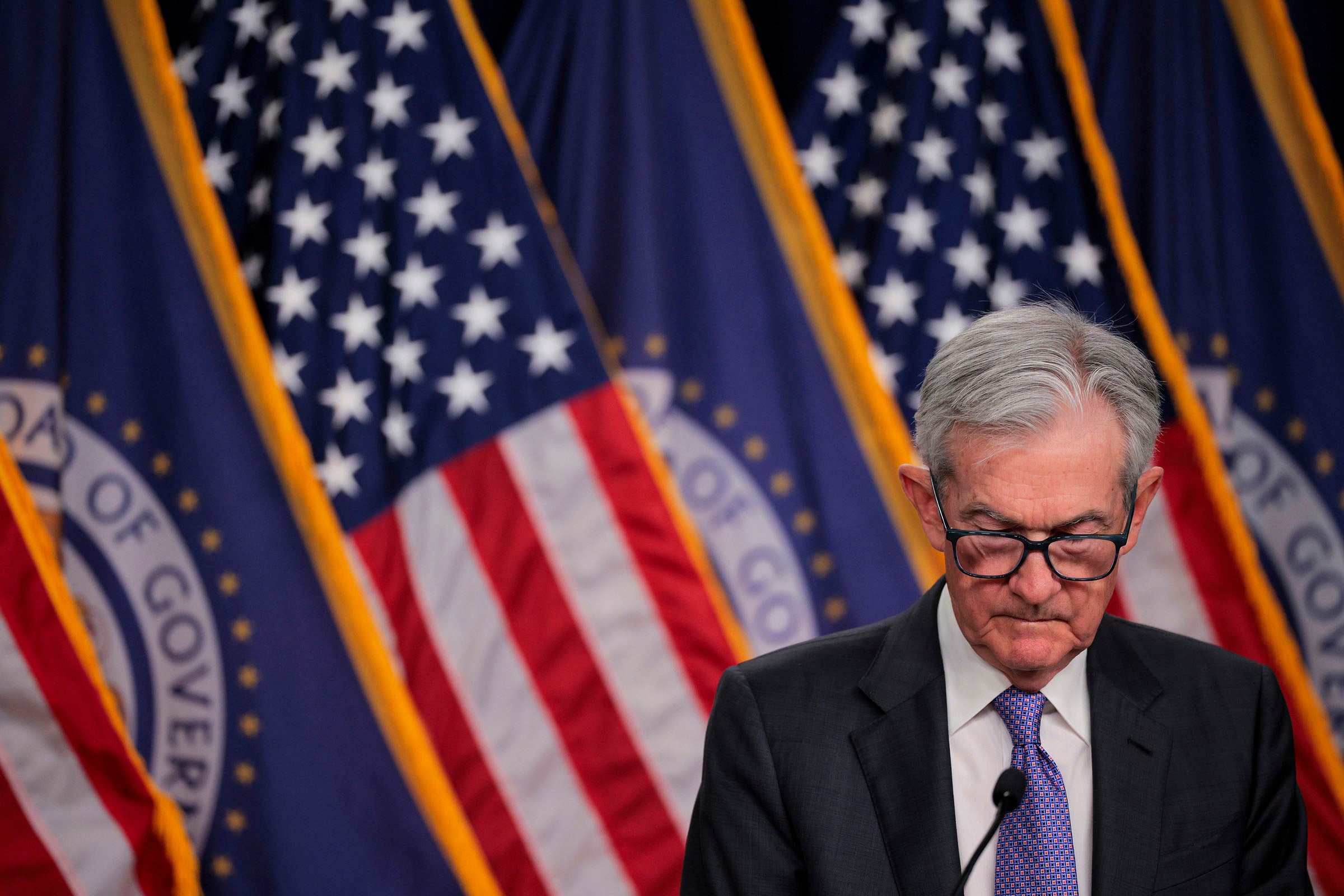
Harvard Law Today spoke with Tarullo, a former member of the Federal Reserve Board of Governors, on January 12, a day after Federal Reserve Board Chair Jerome Powell publicly acknowledged that the U.S. Department of Justice had served the nation’s central bank with grand jury subpoenas related to ongoing work to renovate its Washington, D.C headquarters.

Harvard Law Today: What is the central legal question at issue in Trump v. Cook and why is it important?
Tarullo: The Cook case is important because it poses the question of whether the “for-cause” removal protection afforded to members of the Board of Governors of the Federal Reserve by the Federal Reserve Act has real meaning. Technically, the Court is considering only whether the District Court’s preliminary injunction keeping Governor Cook in place for the pendency of the litigation should be stayed. But, because the likelihood of success on the merits is a key factor in this procedural decision, we are likely to get a pretty clear sense of where the Court stands on the substantive issues.
The administration is arguing that the question of what is sufficient cause, and whether that cause has been demonstrated, is entirely up to the president. As your readers doubtless know by now, last August the president posted on social media a letter in which he said Governor Cook was to be removed immediately, citing allegations that she had made certain misrepresentations in mortgage applications, which he said was “deceitful and potentially criminal.”
Governor Cook, through her attorneys, is arguing first that the causes invoked by the president do not meet that statutory standard. Secondly, that in any event, there needs to be some sort of process to establish whether or not the allegations in question are factually well-founded. So, the case turns on these matters of both substance and process. But I think the basic reason why it’s gotten so much attention from so many different sources is because people recognize that the independence of the Federal Reserve is really at stake here.
Of course, as pointedly observed by her lawyers in their brief, the move against Governor Cook came in the context of persistent criticism of the Fed by the president and other administration officials for not lowering interest rates much more, and more quickly, than the Fed has. That same context is coloring people’s view of the subpoena and possible criminal inquiry involving Chair Powell. I doubt very much the Chief Justice or Justice [Brett] Kavanaugh — one of whom I suspect will write the opinion in this case — would mention this in the Court’s decision. But it’s hard to believe the Court will not be at least somewhat influenced by all this background.
HLT: Why is it important for the Federal Reserve to remain recognized as independent?
Tarullo: The policy justification for central bank independence is pretty straightforward. It is that any administration is generally going to be inclined to looser monetary policy, to lower interest rates, because those lower rates promote more economic activity in the short term. The risk, of course, is that too loose a monetary policy with too much resulting borrowing leads to excessive levels of demand and, somewhere down the line, inflation that is too high. Governments are more interested in economic performance before the next election. Independent central banks are supposed to pursue the longer-term, as well as shorter-term, well-being of the economy.
There’s now a well-developed corpus of academic literature showing how economies with independent central banks end up with better economic performance over time. That’s one key economic rationale. The other is that an independent central bank puts some brakes on a government’s effort to cope with large, continuing budget deficits by printing more money.
The legal question, of course, is a different one.
HLT: Are there any indications from recent precedent about how the Court will rule in Cook?
Tarullo: Well, to answer that question, we first need to back up a bit to explain the context in which it arises. For more than a century, Congress has regularly granted independence, in the sense of for-cause removal protection, to the principals of many agencies, including the Board of Governors of the Federal Reserve. Beginning about 15 years ago, the Supreme Court began declaring this statutory protection unconstitutional in various contexts. These decisions result from the embrace by a majority of the Court of a pretty strong version of what’s called “unitary executive theory” — that the Constitution requires that the president have ultimate control of everything that goes on in the government except in the legislature or the courts, no matter what Congress has said. It appears reasonably likely that the Court is going to double down on this new doctrine and overturn, or at least severely limit, the 90-year-old precedent of Humphrey’s Executor [v. United States], in which the Court upheld removal protections for members of the Federal Trade Commission. So, the question has recently become “Is the Fed different?”
Last fall, in a brief order in a different case involving a member of the National Labor Relations Board, Trump v. Wilcox , the Court included a rather cryptic paragraph suggesting that the Fed was indeed different. So, at this juncture, the Court seems to be leaning towards saying that in general Congress cannot provide for-cause removal protection for principals of agencies except the Fed. This brings us back to the Cook case. If the Fed is indeed different, then the for-cause removal clause in the Federal Reserve Act obviously has to provide some meaningful protection.
“If the Fed is indeed different, then the for-cause removal clause in the Federal Reserve Act obviously has to provide some meaningful protection.”
HLT: On the heels of Wilcox, is anyone else arguing the Fed is not “different” and, if so, can you walk us through that argument?
Tarullo: It’s come up in the context of yet another pending case, Trump v. Slaughter, where FTC Commissioner [Rebecca] Slaughter was removed by the executive [branch] and has challenged that action. The lawyers for Commissioner Slaughter and a number of academics have made the argument that the Fed isn’t, in fact, different. Their argument is essentially that, if Commissioner Slaughter and other members of the FTC or the NLRB are subject to at-will removal, then, by the Court’s own logic, the members of the Board of Governors are as well. Indeed, Justice Kavanaugh evinced some concern about that issue during the oral argument in the Slaughter case in December.
So, Cook and Slaughter are linked in jurisprudential terms, even though they’re not technically related. That’s because the Court is going to have to decide whether it can fashion an explanation for allowing an exception for the Fed. I think the hope of Slaughter and some others is that the Court may find it hard to develop a convincing argument for an exception and, thus, have second thoughts about a broad overturning of Humphrey’s Executor [the precedent that allowed for-cause removal for principals at independent agencies]. My betting is that Humphrey’s will not emerge unscathed from all of this. But it’s clear that Justice Kavanaugh, at least, is trying to figure out how to thread this needle in a way that preserves Fed independence but holds all, or nearly all, other for cause protections unconstitutional.
HLT: What do you think the government’s best argument is here?
Tarullo: Their best argument is probably the textual one — that when the Federal Reserve Act says that Fed Governors have 14-year terms “unless sooner removed for cause,” that “for cause” is a capacious phrase that gives the president a lot of discretion in deciding what is justifiable or adequate cause. The attorneys for Governor Cook have argued that the for-cause clause in the Federal Reserve Act means the same thing as the more explicit “inefficiency, neglect of duty or malfeasance in office” [INM] standard that Congress used for the Federal Trade Commission and some other agencies. With the Court now having embraced textualism as its approach to statutory interpretation, the argument available to the government is to say, “Look, it says something different. It uses different words. They’re more general words. Obviously Congress gave the president more discretion.”
Cook’s argument relies more on that so-called INM standard as upheld in Humphrey’s Executor, being the background standard in 1935 when the for-cause protection clause was reinserted into the Federal Reserve Act and, thus, informing the meaning of “for cause.” It’s quite possible, though, that the Court could take a position somewhere between the arguments of the parties to the case. It could, for example, decide that “for cause” doesn’t exactly mean the same thing as INM, but that it still means something and you need something more than the assertion of facts and some cause — any cause — by the president. By the way, it’s worth noting here that the facts that have emerged through investigative reporting by the press have been pretty favorable to Cook.
HLT: Do you think the Court will settle this issue on constitutional or statutory grounds?
Tarullo: The constitutionality of for-cause protection for the Fed has been stipulated by both parties and, as mentioned earlier, the Court itself has suggested that it agrees. That being the case, I think the decision will read mostly as a statutory interpretation opinion about the meaning of the for-cause provision in the Federal Reserve Act. But lurking in the background is the question of how much discretion the president has, which his lawyers argue he has as a constitutional matter. There’s also lurking the opinion in this case of the D.C. Circuit, which found for Cook based on its conclusion that she has a property interest in her position and thus is constitutionally entitled to due process before it can be taken from her. So, even though the decision will probably be mostly about statutory interpretation, there will be some pretty prominent constitutional shadows hanging over it.
HLT: Apart from the central issue being decided in this case, what else makes the outcome of Cook so important?
Tarullo: This case is forcing the Court to decide just how far it is going to push its unitary executive theory. Assuming it validates for-cause protection for members of the Board of Governors, it will still have to decide how real that protection is. In that sense, Cook is really a test case of whether there is any limit to untrammeled power for the president over the rest of the government. Thus, one way or another, I think it could end up being one of the most important decisions of the Roberts Court.
HLT: Is the administration arguing that the president has unfettered removal authority? If not, why?
Tarullo: It appears as though the administration wants to — at least publicly, formally, nominally — embrace the notion that the Fed is independent. It is presumably concerned about market reactions if the Fed is perceived as operating in accordance with the wishes of the administration. The worry is that longer-term interest rates actually go up, even if the Fed lowers its target for short-term rates, because markets will anticipate more inflation later. So senior administration officials, including the director of the National Economic Council and the Secretary of the Treasury have on a number of occasions said that they believe in an independent Fed.
But the move against Governor Cook and now the move against Chair Powell have, again, raised questions in the minds of all observers, including market observers. So, I suspect that the administration has not wanted to make the argument in formal, nominal terms, that the president does not have at-will removal power for the Fed. But precisely what Governor Cook is arguing in the Supreme Court is that if the if the courts themselves do not apply the for-cause standard, with a requirement for establishing adequate facts through some process, then in effective terms, there will be no for-cause protection. Instead, all the president will have to do is to say, “I find cause, you’re out.” So, that’s really what’s being litigated and that’s what will be argued next Wednesday.
HLT: What does due process look like in the removal of a member of the Federal Reserve Board of Governors and what is the value of that process?
Tarullo: We’ve never had anything like this happen with the Fed before, so there isn’t any direct precedent. The precedents that are being argued by both parties are old and involve very different kinds of officers. One of the issues addressed in the briefs that may well come up in oral argument next week is precisely what kind of process, if any, is due prior to removing a governor. Governor Cook argues that some sort of procedure is necessary in order for the administration to establish its claim, including a formal opportunity for her to respond to, and presumably refute, the allegations. The precise nature of that, if any, is something that the Court is going to have to decide. Without some sort of procedural requirement, or maybe some judicial inquiry into the facts in deciding whether to enjoin a governor’s removal, the for-cause protection clause wouldn’t have much practical meaning.
“There’s really been nothing like this — ‘unprecedented’ is not an exaggeration in this case.”
HLT: If the Court were to side with the administration in the Cook ruling, what happens next?
Tarullo: I don’t expect this to be the outcome; however, if you hypothesize that the decision in Slaughter says “Humphrey’s Executor is hereby overturned,” with no stated exception for the Fed, and then a ruling against Cook, I think you will have at least a moderate market reaction. That reaction will be due to expectations of higher inflation in the future, driving up longer term interest rates, and potentially a negative effect on equities as well. During the Trump administration, markets now have a tendency to take each policy announcement as a contingent or provisional policy announcement and wait to see if it gets modified later. So I don’t know how dramatic the initial reaction of markets would be.
But if, over time, markets become convinced that the Fed is indeed now operating more as a subsidiary of the administration, I think it’s very likely that you’ll see higher interest rates towards the longer end of the yield curve, perhaps significantly higher rates. And, of course, that will have a negative effect on demand and investment. Maintaining a stable price environment is a more tractable proposition if people believe the central bank is prepared to take action if inflation begins to rise substantially higher than the Fed’s stated target. So, I’d expect the basic impact to be a market impact and, over the medium term, quite likely a diminution in the growth potential of the United States.
HLT: As a former member of the Federal Reserve Board of Governors, can you give a perspective on what it’s like to face this kind of legal challenge?
Tarullo: There’s really been nothing like this — “unprecedented” is not an exaggeration in this case. I think Jay Powell has been doing his best to continue to make monetary policy decisions based on his evaluation, and that of his colleagues, of the performance of the economy and expectations of where economy will be headed. I think he has been doing his best to keep politics out of his decision making. And, at this juncture, if you asked me to predict what the what the effect of all of this will be within the Fed, I suspect there’s going to be some rallying around the chair by other members of the FOMC [Federal Open Market Committee]. There are members who have had friendly policy disagreements with him in the past who, I suspect, will nevertheless be circling the metaphorical wagons around Powell.
Want to stay up to date with Harvard Law Today? Sign up for our weekly newsletter.