
In college, Harvard Law School Professor Nikolas Bowie ’14 spent a summer as a hotel union organizer and saw firsthand the differences for people who worked in unionized hotels in Washington, D.C., and those who worked in hotels in Virginia, a “right-to-work” state that prohibits requiring employees to belong to a union or to pay dues.
Bowie went to law school hoping to repeal such laws through the courts.
There was just one problem. An increasingly conservative judiciary wasn’t open to that argument. The realization forced Bowie to reevaluate his approach to advocacy.
“I don’t want to spend my career banging my head against a wall, writing for dissenting justices,” the Louis D. Brandeis Professor of Law recalled thinking. Ultimately, he began to embrace a theory of institutional change that is not “just tied to litigation but is instead tied to more democratic participation.”
In other words, Bowie changed his mind, as he described in the fifth annual panel discussion that asks Harvard Law faculty to reflect on circumstances in which they did just that.
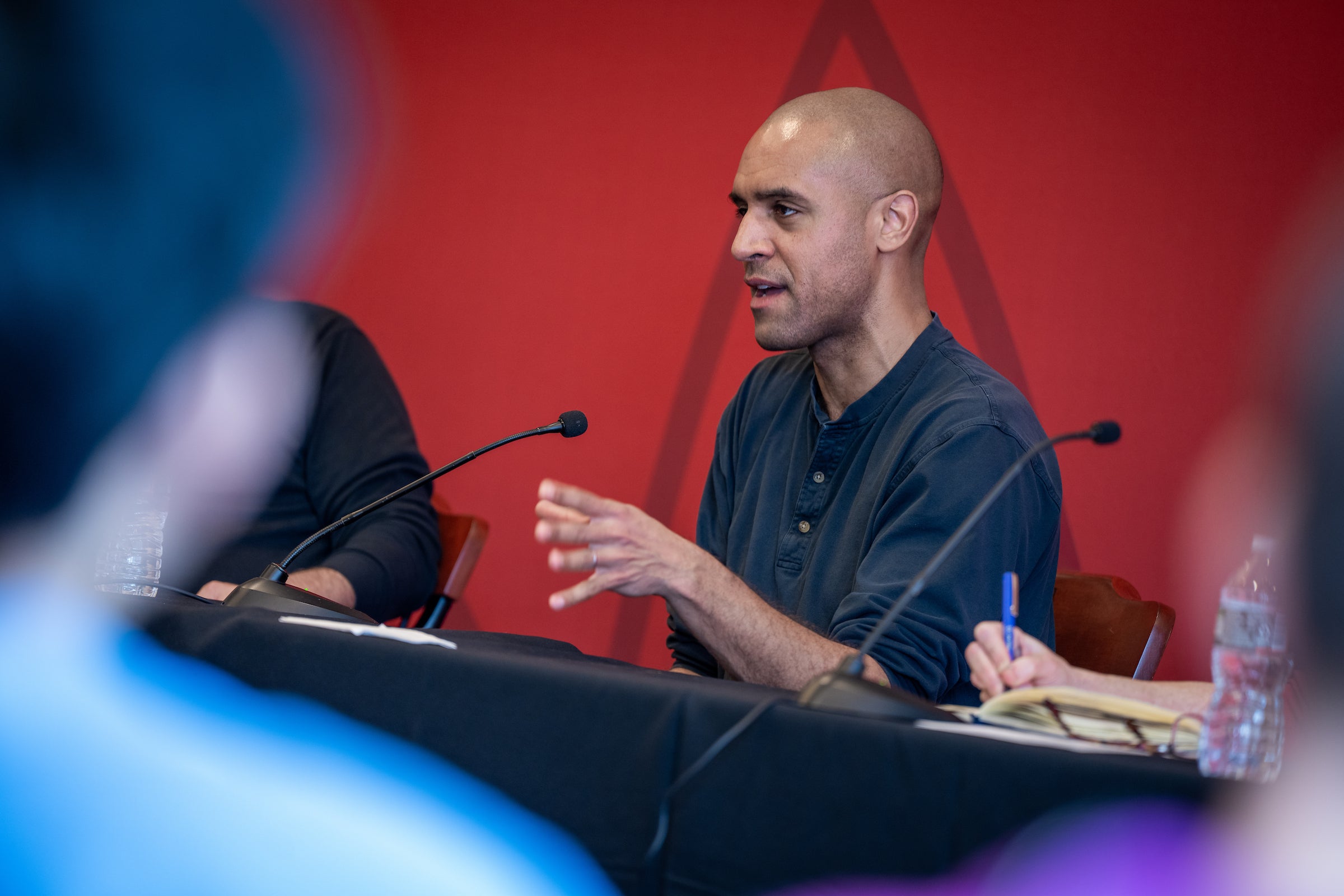
In addition to Bowie, this year’s “Why I Changed My Mind” event featured remarks by Yochai Benkler ’94, the Jack N. and Lillian R. Berkman Professor for Entrepreneurial Legal Studies and faculty co-director of the Berkman Klein Center for Internet and Society; and Samantha Power ’99, the William D. Zabel ’61 Professor of Practice in Human Rights. Jonathan L. Zittrain ’95, the George Bemis Professor of International Law and co-director of the Berkman Klein Center for Internet and Society, moderated the event.
Power, a former U.N. representative, journalist, National Security Council staff member, and administrator for the U.S. Agency for International Development (USAID), explained how she came to rethink a long-held communications theory that the best way to defeat falsehoods in the public sphere is to ignore them. She faced many lies in her own career, including from people who claimed that President Barack Obama ’91 was not a U.S. citizen, that USAID was providing weapons in Ethiopia, and that she had inappropriately sought to reveal the identities of U.S. citizens in intelligence reports during the 2016 presidential campaign.
Although she acknowledged that any effective communications strategy depends on specific circumstances and that beating back disinformation in an era of artificial intelligence and deepfake media is even more difficult, she said “the bottom line is … in fact, it is possible to get out in front of something, to correct something.”
Beyond press conferences and media statements, she said, it may be even more crucial to engage in “door-to-door myth busting,” or speaking directly and privately to other public officials — even, or perhaps especially, members of opposing parties — to “have people being ambassadors for your truth behind the scenes.”

That said, she added, individuals may not have the courage to confront even demonstrably false narratives given the political climate. She noted that most Republicans did not speak out in favor of USAID when the agency was gutted by the Trump administration even though the majority of its funding had been approved by Congress.
“It’s a complicated anthropology and a depressing one,” she said.
Benkler, like Bowie, described an adjustment to his previous theory of change. For the first half of his career, he said, he worked to create and maintain an open internet that allowed knowledge and information to be shared widely and freely. (Think open-source software, Wikipedia, and Linux.)
He believed in “voluntaristic and cooperative action by individuals bringing their own will and mobilization and values to building the system, primarily the technological system, in such a way that it will improve everyone’s life, that it will increase democracy, that it will provide for autonomy, that it will create a more egalitarian economic production system,” he said.
But, as private technology companies have come to dominate the digital space, exerting control over even our most personal data, he has changed his views.
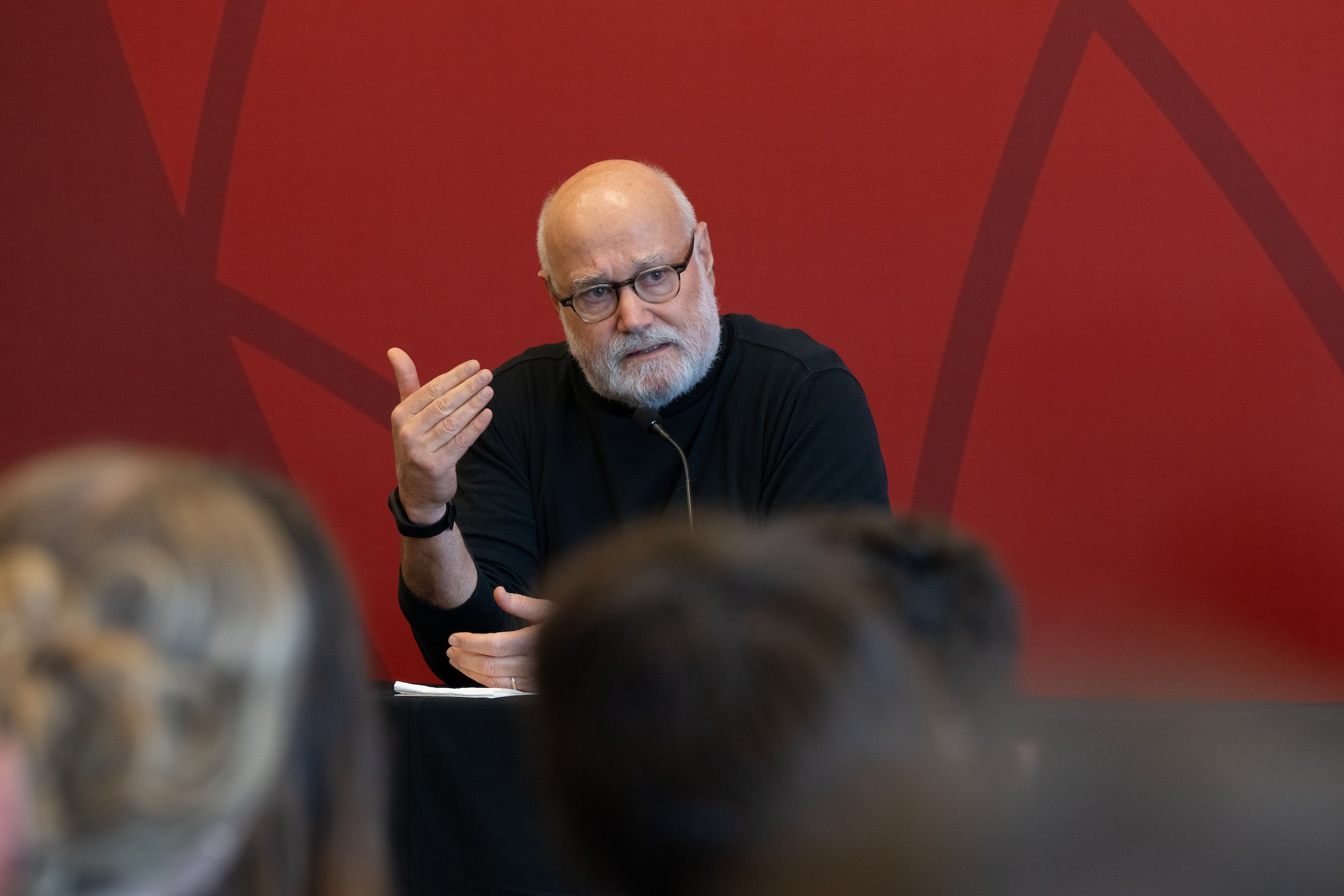
“I’m much more focused on … capitalism than necessarily on technology,” he said. “Fundamentally, the set of institutions we need to understand are the institutions that reinforce market dependence … this incessant pursuit of making money just to keep body and soul together.”
In other words, he said, “Your best understanding of how the world works needs to drive what you focus on and what you do — not only your conception of how the world ought to work.”
Bowie went through a similar reorientation.
“Litigation … is one theory of change, and it is a theory of change that requires certain things outside of your control to be true, especially having a judiciary that is willing to accept your argument,” he said. “It also requires … that you have the training and elite background … to credibly stand before a court and make the argument in the first place.”
Bowie said he has tried to incorporate in his classes lessons about how to write laws, not just argue over them, and also how to organize within communities, the way he did before law school.
“It is important to me that people that come through a law school don’t just come out of it being able to predict what the Supreme Court will say about the law but will have a vision for what the law should be,” he said. “Whether that view is consistent with my own is less important than that people understand that what the law represents is a series of normative commitments … I would be thrilled if the graduates from this school feel equipped to pursue justice as they understand it, even if that understanding is different from my own.”
Want to stay up to date with Harvard Law Today? Sign up for our weekly newsletter.