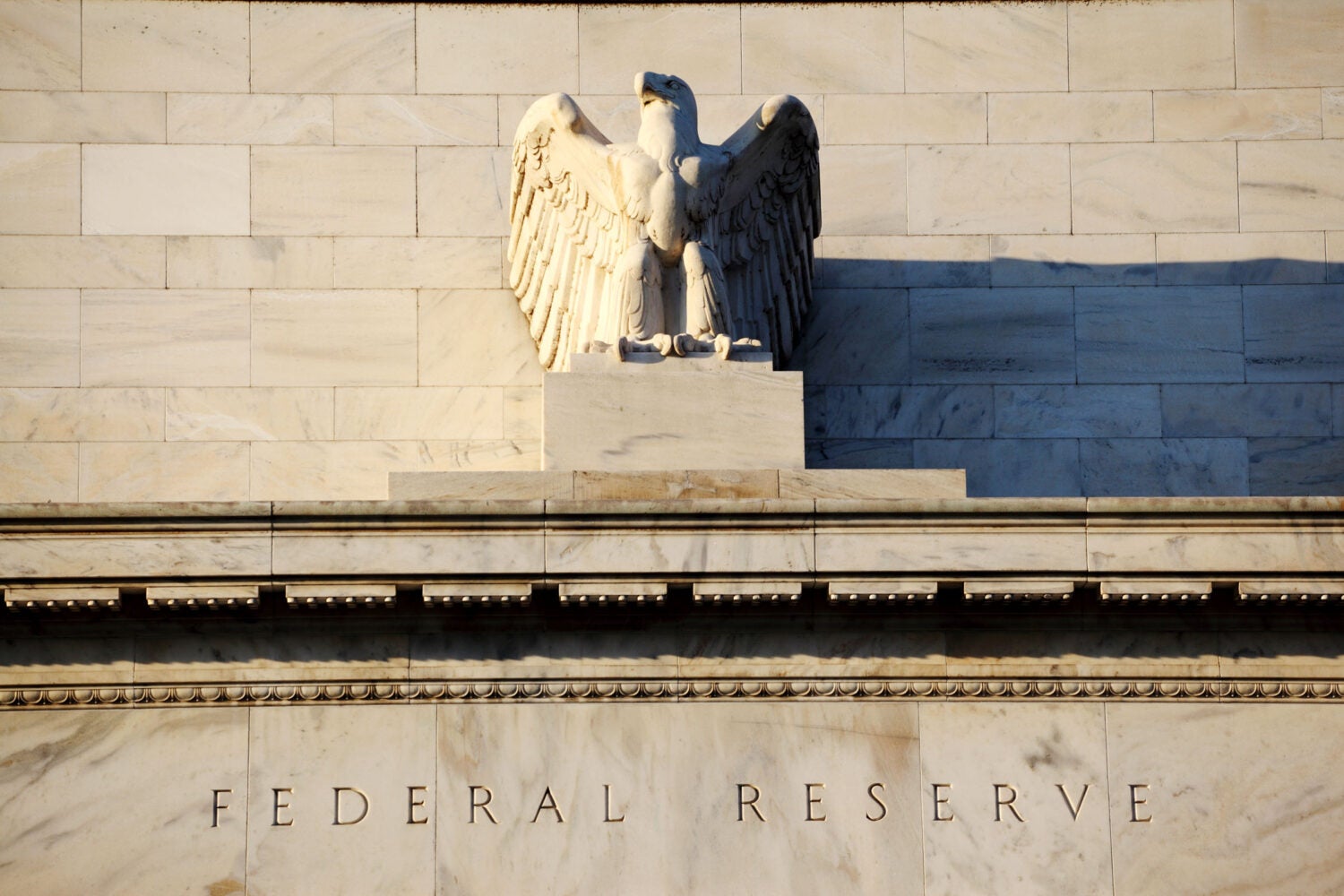
On June 29, the U.S. Supreme Court ruled in Trump v. Cook that the president can only fire members of the Federal Reserve Governing Board for-cause. The case stemmed from the Trump administration’s efforts to dismiss Lisa Cook from her leadership post at the central bank. The 5-4 ruling, written by Chief Justice John Roberts ’79, allows Cook to remain in her role while the case returns to the lower courts.
On the same day, in Trump v. Slaughter, the Court sided with the administration’s efforts to dismiss Rebecca Slaughter from the Federal Trade Commission. The ruling seemingly grants presidents wider latitude to remove at-will leaders of other agencies that, like the Fed, have long operated independently of the White House.
Ahead of oral arguments in Cook earlier this year, Harvard Law School Professor Daniel Tarullo said that the legal dispute over the leadership of the Fed “is really the test case of whether there is any limit to untrammeled power for the president. Thus, one way or another, I think it will end up being one of the most important decisions of the Roberts Court.”
Following the Court’s Cook decision, Harvard Law Today reached out to Tarullo to get his reaction to the Court’s consequential ruling on the independence of the Fed.

Harvard Law Today: What is your immediate reaction to the Court’s decision?
Daniel Tarullo: The most important result of the decision was that it left the status quo intact — the district court’s injunction stopping the president’s effort to remove Governor Cook from her position on the Fed was left in place. In doing so, the chief justice’s opinion makes clear that a president’s effort to remove a Federal Reserve governor is subject to judicial review.
The second important aspect of the majority opinion was the chief justice’s creation of a fairly high bar for demonstrating the “cause” required to remove a member of the Board of Governors during her statutory term in office. Technically, the only basis for the Court’s decision to leave the injunction in place was that the president had not provided any procedural opportunity for Governor Cook to respond to the allegations of mortgage fraud. But the chief justice went on to give the district court some guidance as to how to interpret the “cause” requirement.
He didn’t endorse the argument of Cook’s lawyers that “cause” in the Federal Reserve Act means essentially the same thing as the “inefficiency, neglect of duty or malfeasance in office” formulation found in the FTC Act and other statutes. But he did make clear, in his words, that there must be a “substantial threshold” for the requisite cause. Establishing it will depend on “the seriousness of the alleged misconduct, and the extent of any nexus that may exist to the Governor’s professional duties.” This formulation was a strong rejection of the government’s argument that the sufficiency of the cause was essentially a matter for presidential discretion.
HLT: Was there anything surprising about the Court’s reasoning?
Tarullo: Something that was perhaps not surprising, but still very notable, was the chief justice’s solicitude for the independence of the Federal Reserve. The first part of his opinion in Cook was actually a justification for excluding the Federal Reserve from the sweeping invalidation of agency independence announced in the [Trump v.] Slaughter case (a majority opinion also authored by the chief justice). Of course, as Justice [Amy Coney] Barrett pointed out in her dissent, since the government did not contest the constitutionality of for-cause protection for Fed governors — only its scope — that issue was not even before the Court in this case. But the Slaughter opinion was so far-reaching that Roberts clearly felt the Court needed to affirm the constitutionality of for-cause protection for Fed governors.
In several places later in his opinion, he goes out of his way to stress the importance of the Fed and, at least impliedly, to suggest that the Court should tread carefully when it comes to actions that may undermine the Fed’s independence. So, for example, in responding to Justice Barrett’s complaint that the majority addressed issues not necessary for its decision, the chief justice said “[w]e see no reason to leave the public in limbo, or to sow doubt as to the status of one of our Nation’s (and the world’s) most important financial institutions.”
“In several places … [Chief Justice Roberts] goes out of his way to stress the importance of the Fed and, at least impliedly, to suggest that the Court should tread carefully when it comes to actions that may undermine the Fed’s independence.”
HLT: What do you think will be the impact of the decision?
Tarullo: The Court’s conclusions that the judiciary can review presidential ousters of Fed governors, that some procedural protection is required in that process, and that the “cause” standard has real meaning should together provide moderate reassurance to the Fed, the public, and financial markets that Congress’ grant of legal independence to the Fed has real meaning. Of course, it was a 5-4 decision, and the Court did not come close to opining on whether — if the administration were to follow better procedures — a case could be made for Cook’s removal. It seems kind of doubtful based on the facts surrounding Cook’s mortgage applications that the press has uncovered. But today’s decision does not preclude the government from giving it another try.
HLT: Are there any other points in today’s opinions that caught your eye?
Tarullo: Yes, one interesting point concerns the Fed’s role in bank regulation. The historical justification for treating the Fed differently from other agencies for constitutional purposes rests largely on its pedigree as a successor of the First and Second Banks of the United States. The chief justice himself refers to the importance of that legacy lying in the fact that it establishes there should not be political interference with monetary policy. But what about the Fed’s regulatory powers, including banking regulation? Those seem to be even closer to the kinds of “Executive” functions that the chief justice himself says in Slaughter must be subject to presidential control. And yet, if a president can remove a Fed governor based on disagreement with regulatory policy, what’s really left of monetary policy independence?
The chief justice seems to be aware of that issue, but it also seems as though he didn’t really want to confront it head on. He includes a rather cryptic footnote saying that the Court is upholding the constitutionality of the Fed’s current structure “with its existing enforcement authorities.” That suggests the governors cannot be removed because a president disagrees with their regulatory policies. But he doesn’t explain why, precisely, Fed governors may be able to have for-cause protection in their regulatory capacities when it appears from Slaughter that the members of the Federal Deposit Insurance Corporation, who also regulate banks, no longer do. I think he’s trying to avoid an awkward situation here — what I’ve referred to as the difficulty of trying to split the Fed in two. But he’s trying to do so in a brief footnote that doesn’t provide a very good basis for evaluating how strong the protection may prove to be.
Want to stay up to date with Harvard Law Today? Sign up for our weekly newsletter.