On May 28, the U.S. Supreme Court issued its final decision on Flowers Foods v. Brock, finding that last-mile delivery drivers should not be limited to resolving disputes with their employers through binding arbitration. The decision officially recognizes the right of local transportation workers in the chain of delivery to bring lawsuits against their employers in court.
Kestnbaum Professor of Labor and Industry Benjamin Sachs spoke with Harvard Law Today in March to preview the case ahead of oral argument. Sachs, who recently wrote an article on the Flowers Foods v. Brock decision for OnLabor, also shared his verdict on the Court’s logic and the case’s impact on employment relations with Harvard Law Today.
Harvard Law Today: What is your immediate reaction to the Court’s decision?
Benjamin Sachs: This decision is a complete win for Angelo Brock, the respondent in the case, and for the many workers who will now have their rights to sue in court restored. As we discussed prior to oral argument, Flowers Foods’ theory was that in order for a delivery driver to be engaged in interstate commerce for purposes of the FAA’s exemption clause, the driver must either cross state lines themselves or interact with vehicles that do. In the Court’s blunt phrasing, “That theory is incorrect.” This is a brief, straightforward and unanimous opinion completely rejecting the proposition that being engaged in interstate commerce requires crossing state lines or touching something that does.
HLT: Was there anything surprising about the Court’s reasoning?
Sachs: This is the fourth decision in seven years in which the Supreme Court has taken up a question concerning the FAA’s coverage of workers — cases in which workers are trying to preserve their rights to sue in court and avoid the trap of mandatory arbitration clauses. And in each of these four opinions, the Court has ruled unanimously in favor of the workers. Given the overall track record of this Court on questions concerning workers’ rights and labor rights, and on questions of mandatory arbitration, that is surprising. I happen to agree with the Court in each of these cases. My own view is that the FAA is best read as exempting essentially all employment contracts from its coverage. But for this Court, this expanding pro-worker corner of doctrine is an anomaly.
HLT: What do you think will be the impact of the decision?
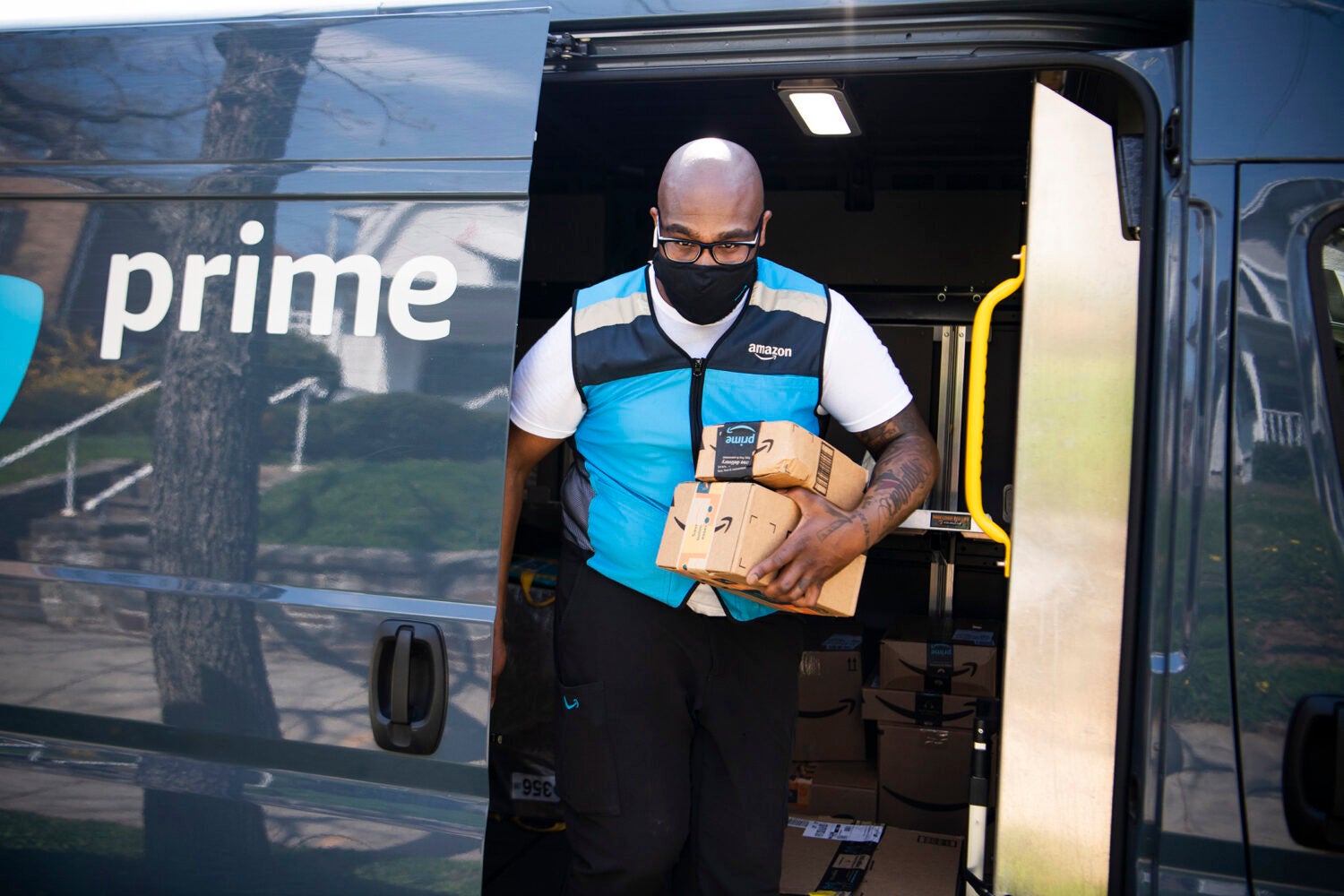
Sachs: The most immediate impact of the decision will be on delivery drivers who participate in interstate commerce flows but who themselves operate within state lines. That likely describes the vast majority of Amazon’s last-mile delivery drivers, whose trucks are becoming ubiquitous on city streets, and thousands more like them. The decision reopens the courthouse to these drivers, restoring to them the right to sue the companies they deliver for when their rights are violated.
There was a paragraph at the end of the opinion in which the Court noted that Flowers Foods had “hinted” at alternative theories as to why Brock was covered by the FAA. These theories were, first, that because Flowers and Brock contracted through a “distribution contract” rather than an employment contract, the exemption to the FAA couldn’t possibly apply. And second, Flowers Foods argued that Brock was not engaged in interstate commerce because he “orders, purchases, and takes title to [Flowers’] goods, before selling them to local stores.” These theories have been rejected by the Court before, but lower courts have seemed amenable to them. The Court did not endorse these theories or invite future litigation to test them, but it seems likely that employers will pursue them in future FAA exemption cases. Here, the Court simply found Flowers to have waived the arguments and concluded “whatever other limits §1 may or may not contain,” it is not limited by a requirement of crossing state lines or interacting with vehicles that do.
Want to stay up to date with Harvard Law Today? Sign up for our weekly newsletter.