When a committee at Harvard Law School recommended retiring the school’s shield, which incorporated the family crest of Isaac Royall Jr., Professor Annette Gordon-Reed ’84 dissented. Royall’s wealth came from the labor of enslaved people, and his bequest to Harvard College endowed its first professorship of law, ultimately contributing to the law school’s foundation in 1817.
Gordon-Reed said she preferred to keep the original insignia, which showed an image of wheat, to remember the people who planted, cultivated, and harvested the crops (mostly sugar cane in Antigua) that made the Royall family rich.
“The Royalls were not in the fields,” said Gordon-Reed, the Carl M. Loeb University Professor and the Pulitzer Prize-winning author of “The Hemingses of Monticello: An American Family.” “The people who were in the fields were the enslaved people … It would have been something to me to have … the law school tied to its origins … in slavery so that people would not forget that.”
Instead, she said, “We don’t talk about the Royalls very much.”
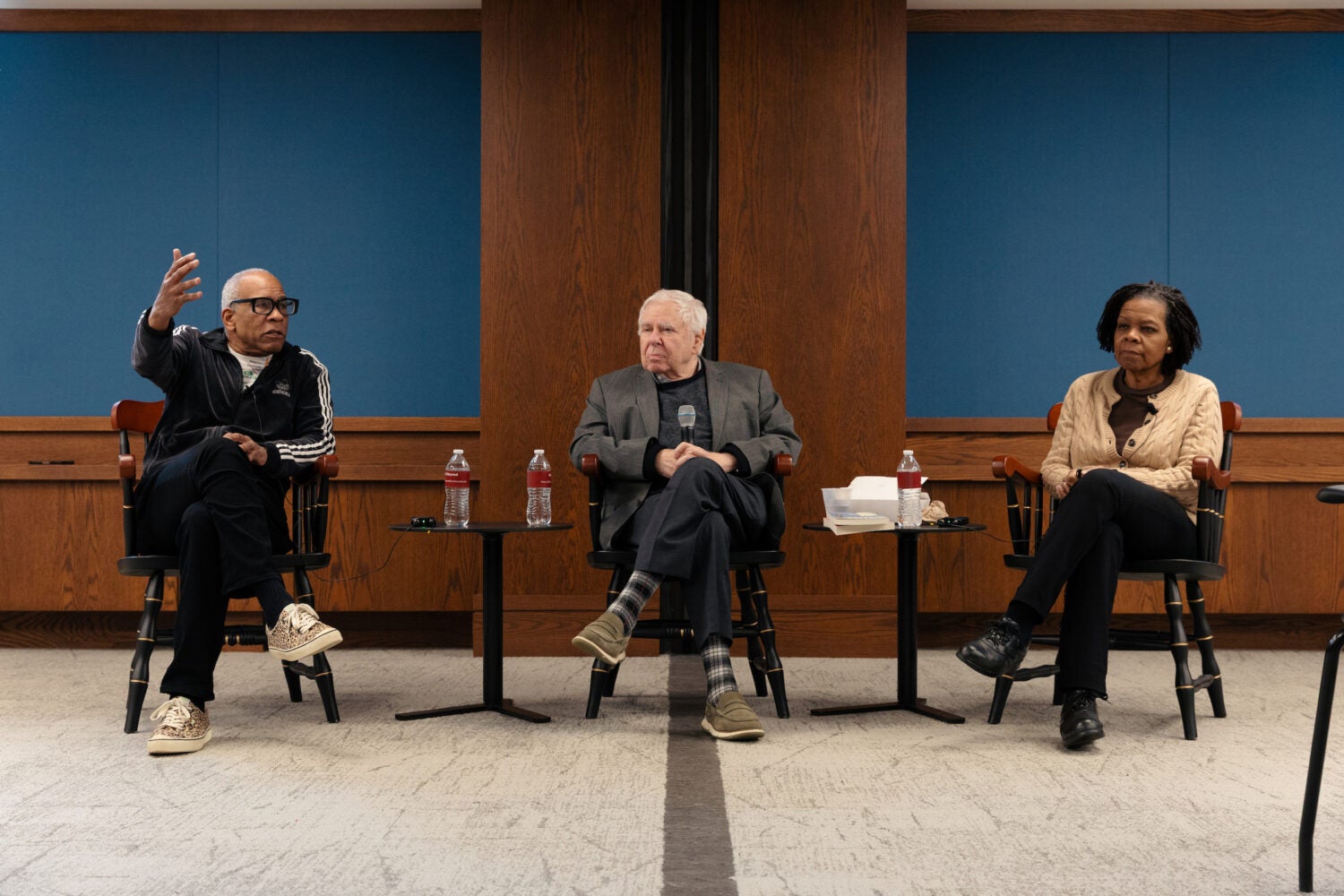
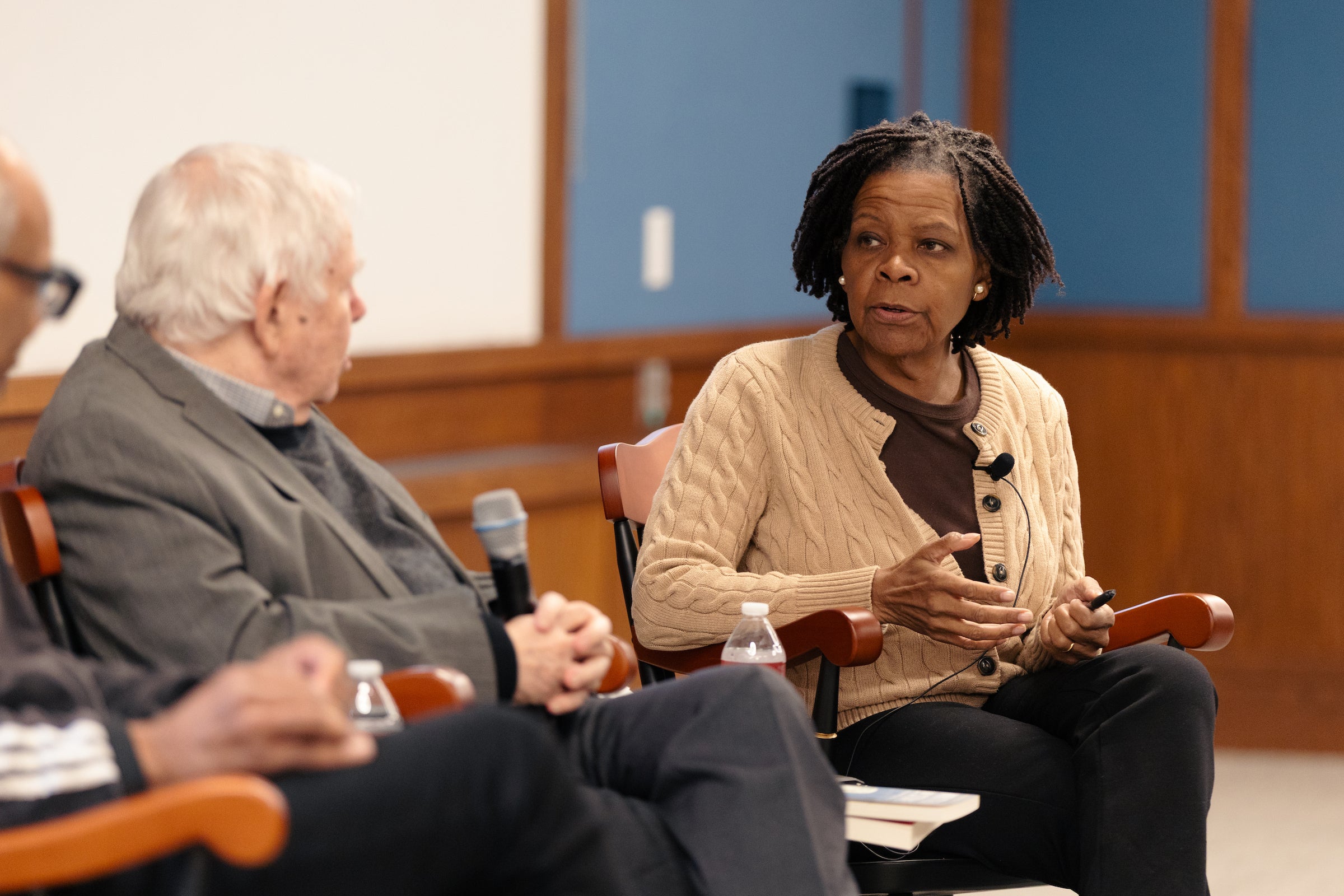
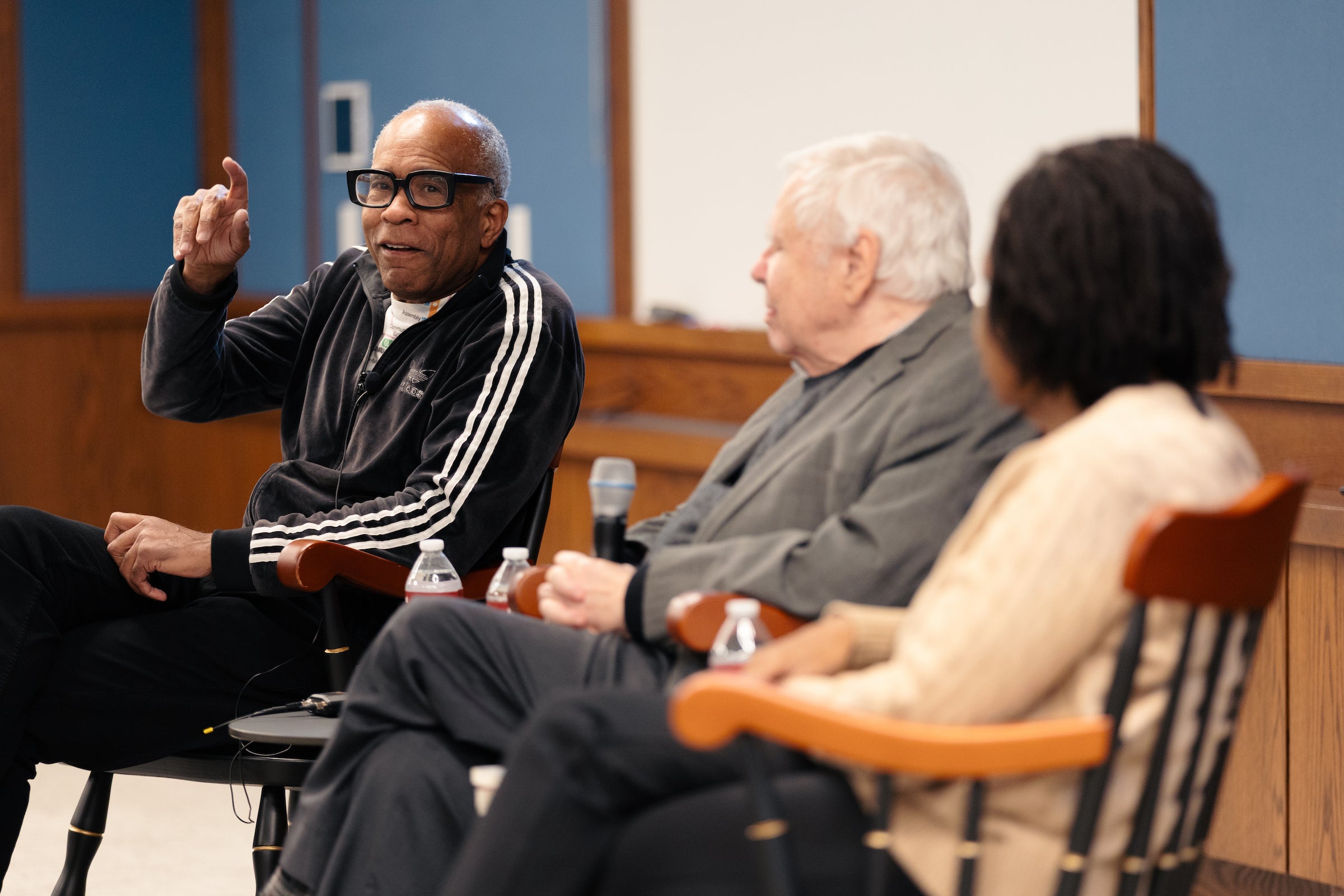
Gordon-Reed spoke as part of a session called, “Who Tells Your Story? On the Construction of Public Memory,” sponsored by HLS Beyond, a program of the law school library. She was joined by Randall L. Kennedy, the Michael R. Klein Professor of Law, and Sanford Levinson, a University of Texas at Austin School of Law professor who is visiting at Harvard Law this fall.
The discussion addressed themes from a book edited by Levinson (The book’s title, used for the event, comes from a song by Lin-Manuel Miranda in his Tony Award-winning play “Hamilton.”)
“Who Tells Your Story” is a collection of essays that contemplates some of the recent controversies over monuments and commemorations in the United States and around the world, including the removal of Confederate statues in the United States and of Vladimir Lenin in Ukraine. Kennedy contributed an essay on the decades-long effort to create a holiday in honor of Martin Luther King, Jr.
The trio seemed to agree that commemorating people with statues and buildings — and deciding to remove, relocate, or rename some such tributes — can only be contemplated on a case-by-case basis that depends on the context and popular opinion in a given historical moment.
For instance, despite favoring retention of the law school’s original insignia, Gordon-Reed was unequivocal in her view that New Orleans was right to remove a statue of Confederate General Robert E. Lee in 2017. She compared that decision to the efforts of the Thomas Jefferson Foundation, which runs the museum at Monticello, to teach and present a more complete history of Jefferson and his former home, including the many enslaved people who lived there.
“There’s a big difference between founding a country and trying to destroy a country,” Gordon-Reed said. “We’ll always learn about Robert E. Lee … but to honor him, no.”
Levinson was prescient in understanding the simmering tensions underlying public memorials. In 1998, he published “Written in Stone: Public Monuments in Changing Societies,” a book that examined how people in power shape public memory and politics. (A second edition was published in 2018 and included the insignia debate at the law school.)
At one point in the discussion, Levinson asked whether it would be safer to stop naming buildings after people or building statues in their likeness.
“People are always going to disappoint us over time,” he said.
Gordon-Reed agreed.
“People change over time,” she said. “There’s never going to be any one anybody. Circumstances make you reassess what you thought. New information comes in … that’s just the nature of human beings.”
Nevertheless, “I like the names,” said Kennedy, who is a trustee emeritus for his alma mater, Princeton, which in 2020 removed the name of President Woodrow Wilson from its public policy school and one of its residential colleges over his racist beliefs.
Kennedy pointed out that many prominent Black people — including Nobel-winning author Toni Morrison, philosopher Cornel West, and Swarthmore President Valerie Smith — had attended or taught at Princeton and were “quite attuned to racial injustice.” Gordon-Reed added that Princeton had decided to keep Wilson’s name a few years earlier but reversed its decision in response to student demands and nationwide protests in the wake of the police killing of George Floyd and other Black people.
“One of the things that interested me when this thing arose was there were students talking as if they had made some big discovery [about Wilson’s racist ideas and policies],” Kennedy said. “This is not a discovery.”
What really matters, Kennedy went on, is that “the record is clear.” Later, he said, “It’s useful for people to be reminded that things are complex.”
Gordon-Reed agreed.
“It’s never going to be precise,” she said. “You have to weigh these things, and there’s no precise formula, but you have to at least go into the process of thinking about it.”
Want to stay up to date with Harvard Law Today? Sign up for our weekly newsletter.