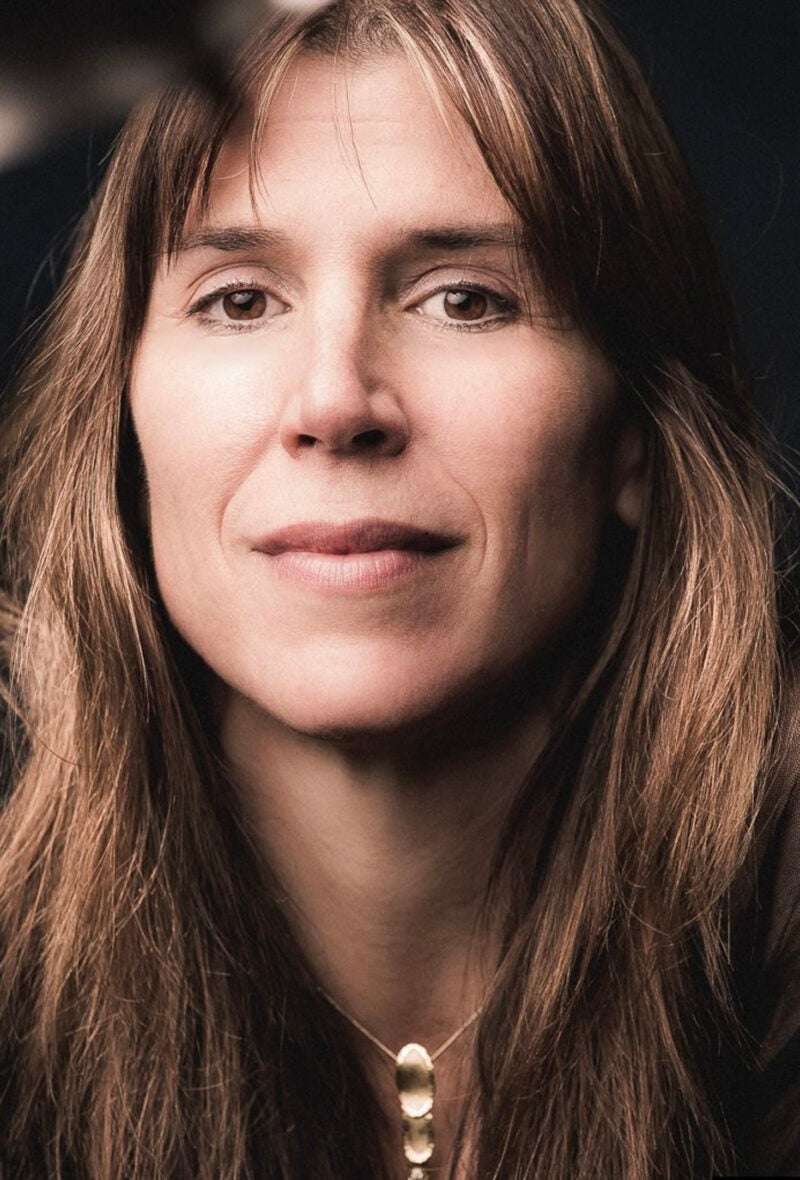
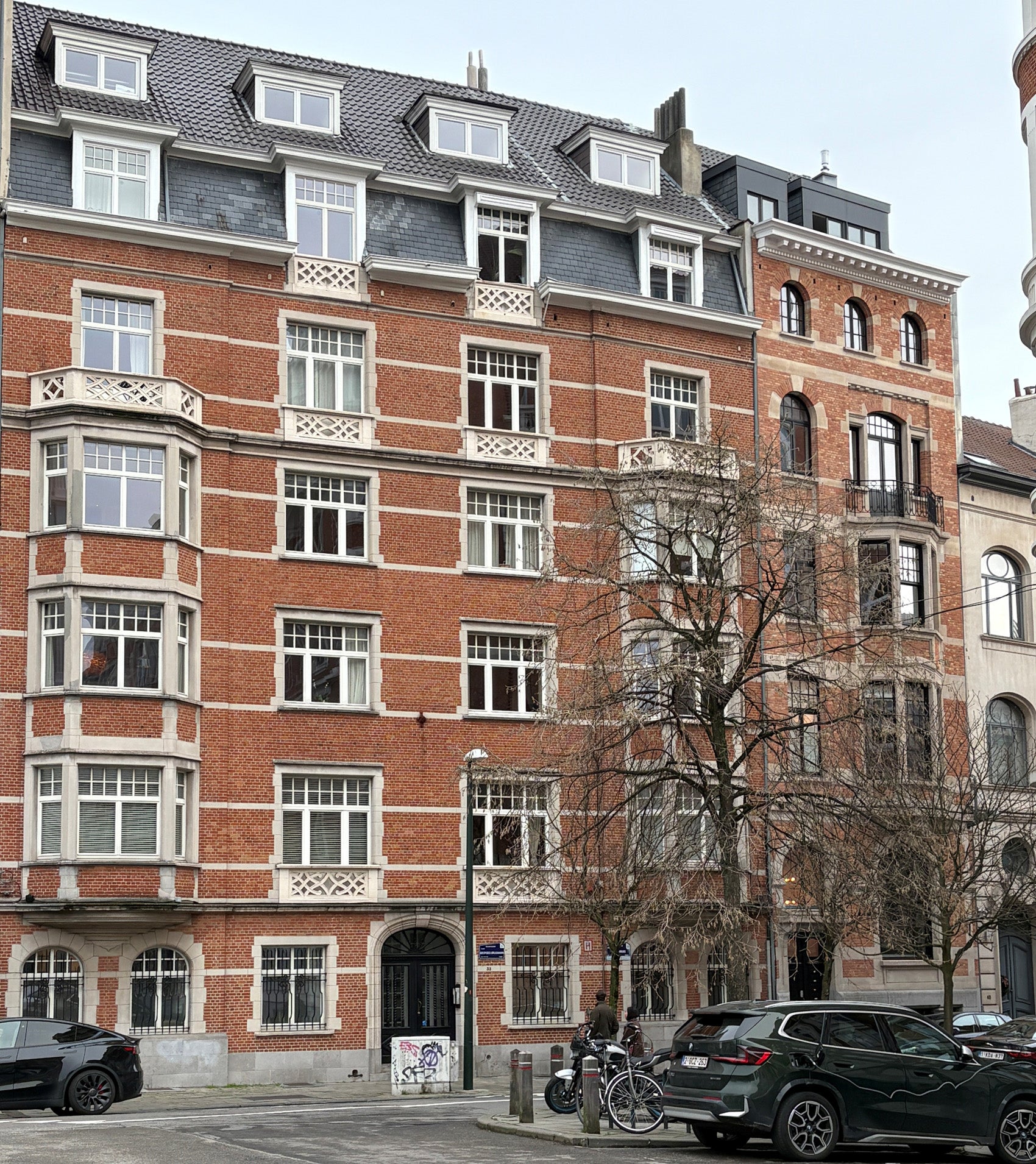
Fiction writers often set their stories in cities and towns they know well. Alice Austen ’88 went one step further and set her new novel in a building she’d lived in for six years.
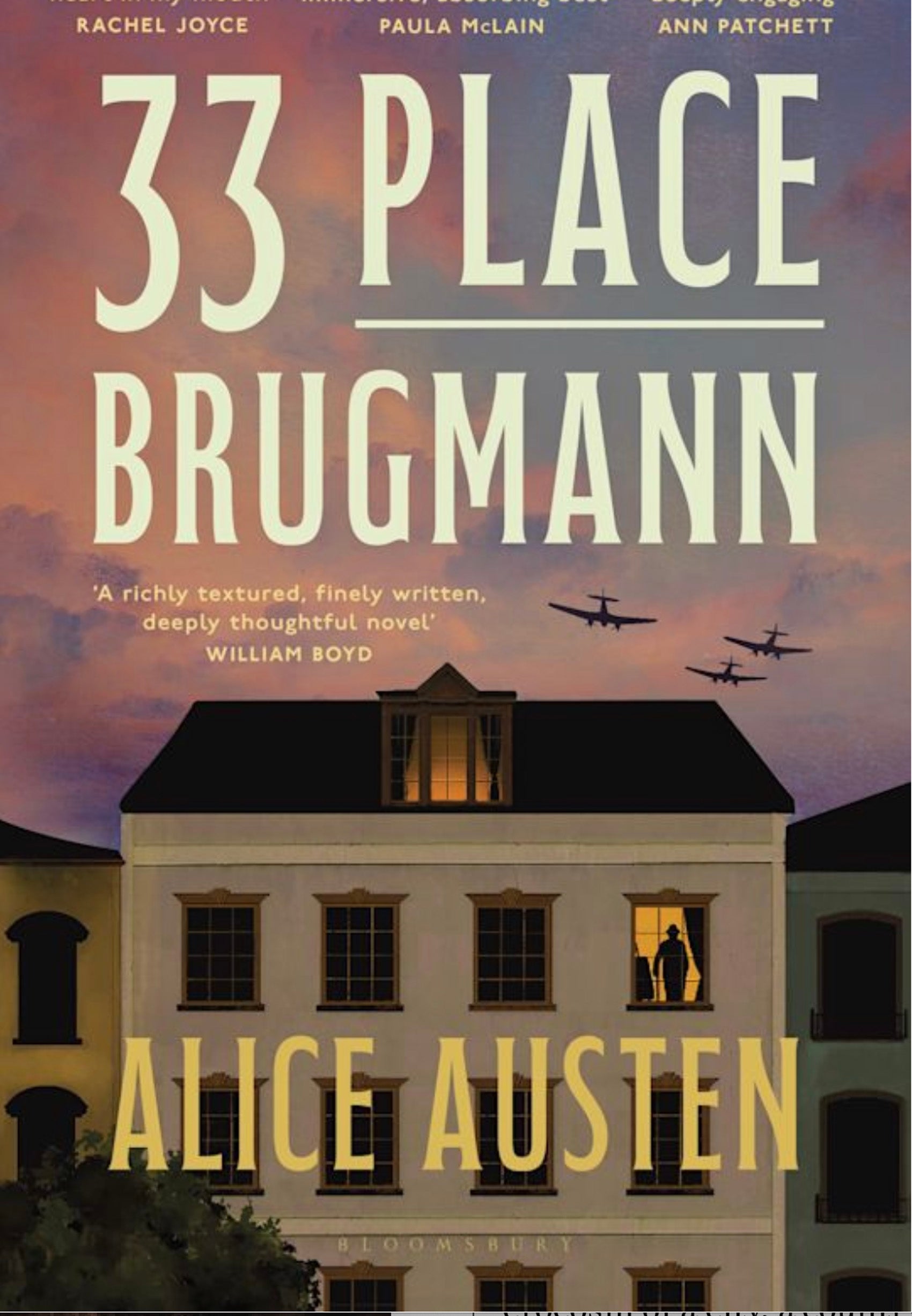
She even named the novel after the address: “33 Place Brugmann.”
Located in Brussels, the building allows Austen to tell her story through the experiences of residents living in its eight apartments during World War II, starting in 939 before the Nazis invaded the city, and ending in 1943 during the occupation. Each chapter is written in a different character’s voice, such as Charlotte Sauvin, 4L, and Dirk DeBaerre, 2R.
For Austen, framing the narrative this way helped highlight a rising secrecy and mistrust among the neighbors — something she learned was common during the occupation after talking with two elderly women who lived in her building when she made it her home in the early 1990s.
“Given what I had learned about Number 33 while living there, I understood that the building was a microcosm of a city, a country, and a continent during one of the darkest times in modern history,” she says. “Through the characters living there, I could tell a story about human possibility — for good and not. As I immersed myself in the writing and inhabited each character, what struck me is that, while we think we know how we would behave under similar circumstances, we don’t. We often surprise ourselves as much as those around us.”
When she lived in the building, Austen was commuting from Brussels to Prague, where she worked as a senior attorney for Czech President Vaclav Havel and the republic’s fledgling democracy.
“I heard a lot of stories about what had happened when the Soviets took over Czechoslovakia,” she says. “And Havel had this idea that everyone was culpable. Anyone who didn’t speak out at the time … was culpable. That was a powerful idea to me and so relevant to what I learned had happened in Brussels and the stories I was told.”
As Austen researched the city’s underground resistance movement, moral questions about truth and lies found their way into the novel, she says.
“If you hold the view that, well, it’s wrong to tell a lie, then sometimes you may give up your neighbor. Your moralistic understanding of the world shifts,” she explains. “All of this was very connected to the reasons I went to law school in the first place — this idea of justice and fairness. And I wish so much that these questions were not at the forefront of our society now, but unfortunately they are.”
Although this is Austen’s debut novel, she has been a playwright for many years and has been writing since she was a child. When she was 13, living in Oregon with her family, she even took a creative writing class taught by author Ken Kesey after her English teacher, a “wild dropout from the East Coast,” gave him one of her stories. Kesey gave her a spot in the class and something even more valuable: advice she’s never forgotten. “I think one of the most important roles for the mentor is you name someone and give them permission to go forward and do something,” she says.
“Through the characters … I could tell a story about human possibility.”
“Ken said to me: ‘You’re a writer; you need to write.’ And that stayed with me. That was something I held close to my heart.”
At Harvard Law, Austen wrote for the Harvard Human Rights Journal, which she co-founded, and then took creative writing classes at Harvard College with poet Seamus Heaney, who went on to receive the Nobel Prize in Literature in 1995.
“It was a real solace for me,” she says. “I didn’t love the study of law, but I got the hang of it finally. There’s a specific way your brain has to work. And that’s useful as a writer. You’re arguing on behalf of clients. You also do that as a writer on behalf of your characters. There’s this beautiful symmetry there.”
Law school also helped with work habits.
“I have a certain discipline after saving gone through that experience,” she says. “There’s a process of being in the box, so to speak. You get up and you do your work. And I do that with my writing. I recently was talking to a young writer and I said: ‘Don’t just write when you feel like it. You write when you don’t feel like it. And if you don’t feel like writing, edit. If you don’t feel like editing, research.’”
Now living in Wisconsin, Austen is currently doing all three, including making final revisions to a screenplay about 18th-century physicist and mathematician Émilie du Châtelet and writing her next two novels, both set in places she has lived and worked: one in California’s Central Valley in the 1970s and the other, a contemporary literary thriller, in New York City, Paris, and Prague. Place, she says, continues to be central in everything she writes.
“When I write a character, I walk in their shoes, and to do that, I must understand the terrain,” she says.
“It’s that idea of Churchill’s that we shape our buildings and then they shape us.”