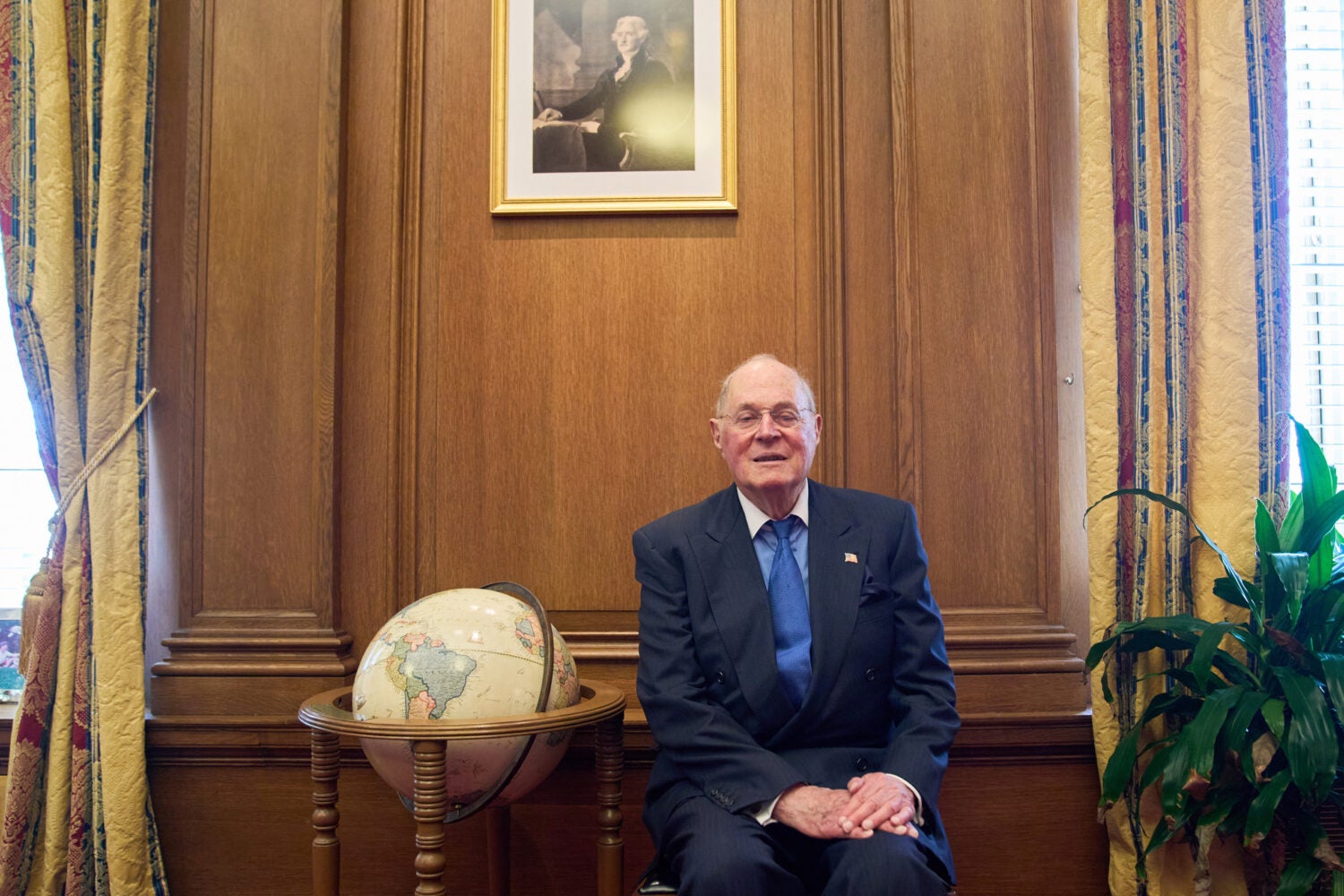
When Anthony Kennedy ’61 was a Harvard Law student, Dean Erwin Griswold ’28 S.J.D. ’29 asked him what course he’d teach if he became a law professor. “Almost any subject but constitutional law,” he replied, believing that would not be relevant in his future legal practice. Little did he know he’d become not only a constitutional law professor but an associate justice on the U.S. Supreme Court whose opinions would become some of the most scrutinized in modern times.
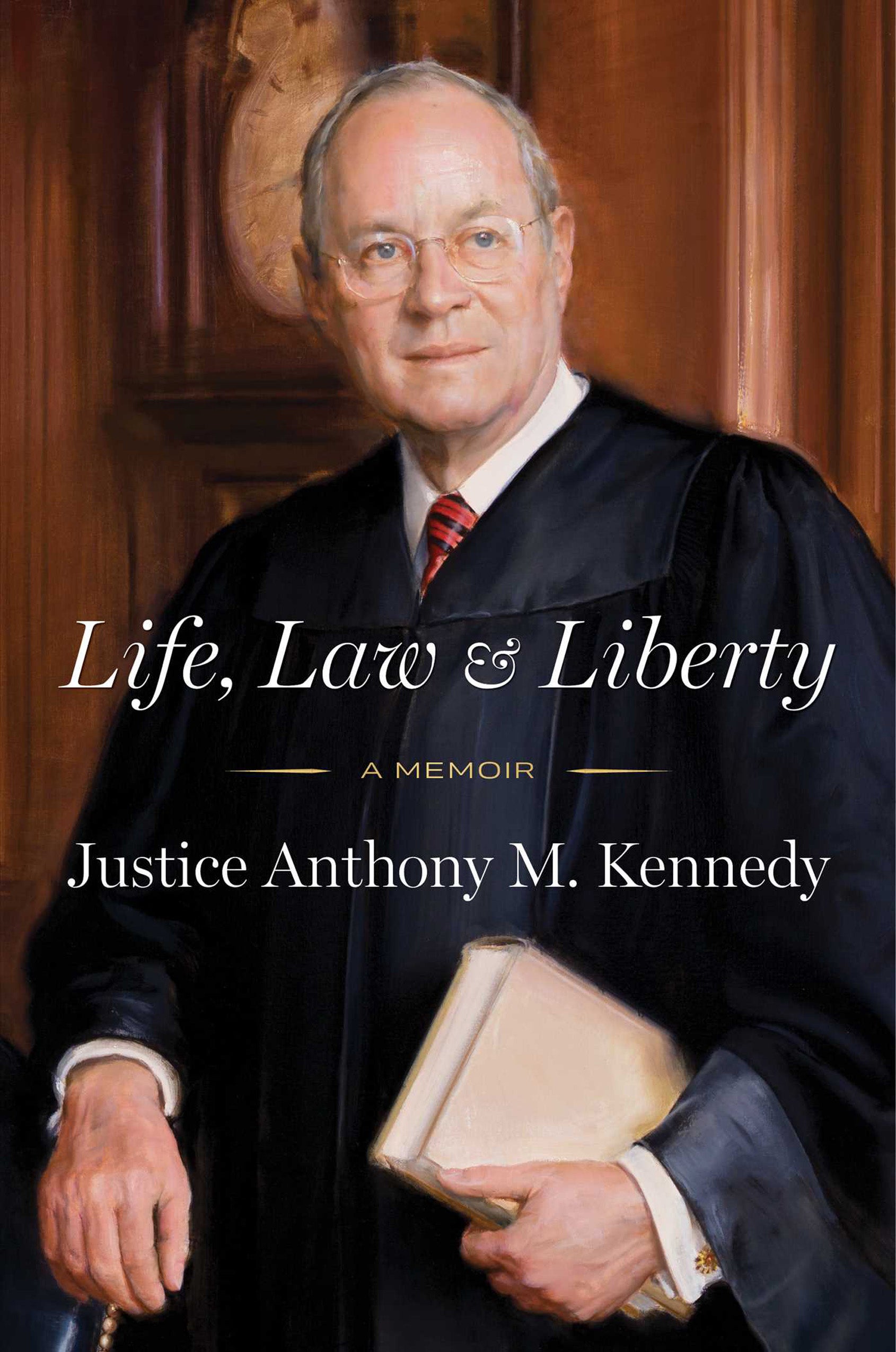
In his new memoir, “Life, Law & Liberty,” Kennedy takes readers inside his decision-making process in several groundbreaking cases and outlines his life beyond his 30 years on the Court.
Describing himself as greatly influenced by the culture of the American West and the value it places on liberty, Kennedy first established himself as a lawyer in his home city of Sacramento, California, taking over his father’s legal practice after his sudden death. In his book, Kennedy emphasizes the ethical standards he lived by throughout his career. For example, in a custody case, he refused a client’s request to claim that his wife was an unfit parent in the face of evidence to the contrary. “Law does not always come far enough to meet justice,” he writes. “We must strive for it to do so.”
As he was setting up his new practice and awaiting the birth of his first child, he was unexpectedly asked to fill a vacancy and teach a night class on constitutional law at a local law school. After some hesitation, he said yes, and that exposed him to “the relevance of constitutional law to our day-to-day lives.” Practicing and teaching in the state capital, he came to know California Gov. Ronald Reagan, who in 1974 recommended Kennedy to President Gerald Ford for a seat on the U.S. Court of Appeals for the 9th Circuit. During Reagan’s presidency, he nominated Kennedy to the Supreme Court.
“Law does not always come far enough to meet justice. We must strive for it to do so.”
Describing the “judge’s mindset,” Kennedy writes that he subscribed to neither an originalist nor a pragmatic judicial philosophy and that “each case can teach us about the constant principles of justice.” He chafes at the view that he was the “swing” vote on close cases: “That term always bothered me. The cases swung, not me.”
In the book, he shares his perspective on some of his most widely discussed decisions, including these:
▶ Regarding the Court’s controversial decision in Citizens United v. FEC, which found a statute limiting political spending by corporations and unions unconstitutional, he contends that the Constitution’s strong commitment to free speech rights outweighs even serious concerns over the role of money in politics.
▶ Discussing Obergefell v. Hodges, he argues that the same “foundational precepts” of due process and equal protection that underwrote Loving v. Virginia’s 1967 ban on anti-miscegenation laws warranted the Court’s decision to require states to recognize same-sex marriages. He also points out that the nation at the time of Obergefell “had undergone a transformative change in its awareness and understanding of same-sex relationships.”
▶ In Planned Parenthood v. Casey, he voted not to overturn Roe v. Wade’s core holding, concluding that the Constitution prohibits government from imposing undue burdens on a woman’s right to terminate a pregnancy before viability. Because Kennedy personally opposes abortion, he considered leaving the Court rather than issue a decision that recognized a right to engage in such conduct. But doing so, he writes, would have violated his oath to uphold the Constitution.
In 2018, at age 82 and after 43 years as a judge, Kennedy left the Court to spend more time with Mary, his wife of more than 60 years, and with his family. Reflecting on the Court’s history, he acknowledges that justices are fallible, but, he writes: “The Constitution is not weak simply because we do not at once know the answer to a difficult problem. It is strong because we are always free to seek the right answer.”