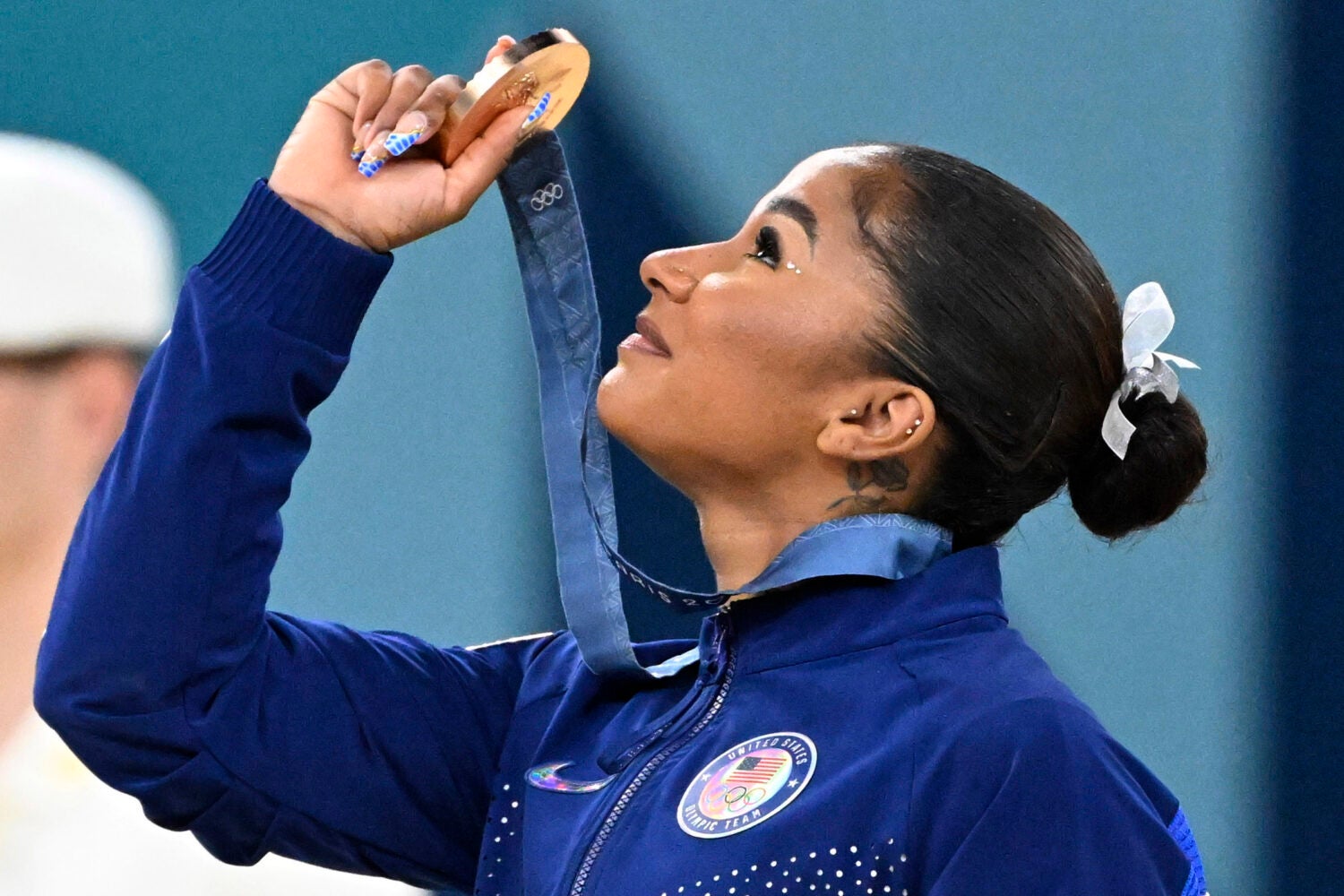
For U.S. gymnast Jordan Chiles, it all comes down to a fraction of a point, 60 seconds — and a surprise videotape.
That’s what the elite athlete believes stands between her and a bronze medal for her performance at the 2024 Summer Olympics in Paris. Two years ago, Chiles placed third in the final round of the women’s gymnastics floor exercise, but a decision by a sports arbitration panel several days later bumped her down to fifth place, where she currently stands.
But Chiles says she has a video recording proving that the arbitrators’ decision was wrong — and now, thanks in part to two Harvard Law School alumni, she also has the backing of Switzerland’s highest court. This rare supreme court victory by a professional athlete means that Chiles will have a chance to have her case reexamined — and she may be close to reclaiming her place at the Olympic podium.
“The ruling gives Jordan a real and meaningful opportunity to get her bronze medal back,” says Richard G. Allemann LL.M. ’22, one of Chiles’s lawyers.
Such a result is not only a triumph for Chiles, but it also marks a watershed moment for procedural fairness for elite-level athletes, argue Allemann and his colleague Stefanie Pfisterer LL.M. ’12, both attorneys at Homburger, a law firm in Switzerland.
“The compressed timeline in Chiles’s case raised novel issues of due process and procedural safeguards for athletes, highlighting how razor-thin margins — not only in competitions but also in ensuing legal proceedings — can have career-defining consequences for elite athletes,” says Allemann.
The competition
According to the rules set by the World Gymnastics, the international body responsible for governing gymnastics at the Olympics, there are limited opportunities to challenge the final score of a floor routine. While the judges will not review a gymnast’s execution, or performance score, they may adjust for errors in computing a competitor’s difficulty score. At the 2024 Summer Olympics, such a challenge had to be made before the next gymnast’s score was posted or, if made by the final gymnast, as in Chiles’s case, within one minute of the total score being posted.
At the Paris Games, Chiles participated in the women’s floor exercise final, originally scoring 13.666 points, which would have landed her in fifth place. But after Chiles’s score was posted, her coach quickly contested the routine’s difficulty score. The jury accepted the challenge, adding one-tenth of a point to Chiles’s total — and moving her into the bronze medal position.
However, a few days later, the two Romanian gymnasts who were now in fourth and fifth place argued that Chiles’s coach had not brought the challenge within the required 60 seconds. They opened a dispute with the Court of Arbitration for Sport, also known as CAS, which hears most of the issues that arise during the Olympic games, Allemann explains. Athletes generally have little choice but to agree to arbitration to compete at this level, he adds.
In the interest of keeping the games moving, CAS “operates an extremely tight, compressed schedule,” Allemann says. Ultimately, Chiles had just a few hours to prepare her case, including finding any evidence that might support her arguments.
Less than 24 hours after first being notified of the dispute, the panel ruled against Chiles. But the following day, Chiles made a startling — and, she believes, lifechanging — discovery that seemed to provide ironclad proof for her team’s version of the story.
“After the decision was made public, her coach was contacted by the director of a Netflix documentary on Simone Biles, another U.S. gymnastics athlete, who had been filming part of that floor final,” Pfisterer says. “That footage clearly captured audio and video showing Chiles’s coach’s timely inquiry on the floor.”
The evidence was clear, Chiles thought. But it had come too late, according to the arbitrators, who refused to reopen her case. Instead, Chiles would have to go a step further and apply for help directly from the Swiss Federal Supreme Court. And she would have fewer than 30 days to do it.
‘Quite troubling’
With another pressing deadline looming, Chiles brought on Allemann, Pfisterer, and their team, who quickly took stock of the situation.
“We entered the case when the clock was already running,” says Pfisterer. “And when we looked at how the proceedings had unfolded to that point, what we saw was quite troubling.”
For one thing, Chiles and her team had not been aware of the arbitration proceedings until they were “already at full speed,” and a case had been open for two days, Pfisterer says. Like any other legal matter, athletes have a right to be informed about a case they are involved in, as a matter of procedural fairness, Pfisterer argues. But while CAS had tried to inform Chiles and USA Gymnastics by email, Pfisterer and her team discovered that CAS had used incorrect email addresses for the gymnast and her team, and either ignored or did not notice the bounce back warnings.
By the time Chiles actually found out about the arbitration proceedings, she had just two and a half hours to file her own submission — and prepare for a four-hour hearing the next day, Allemann says.
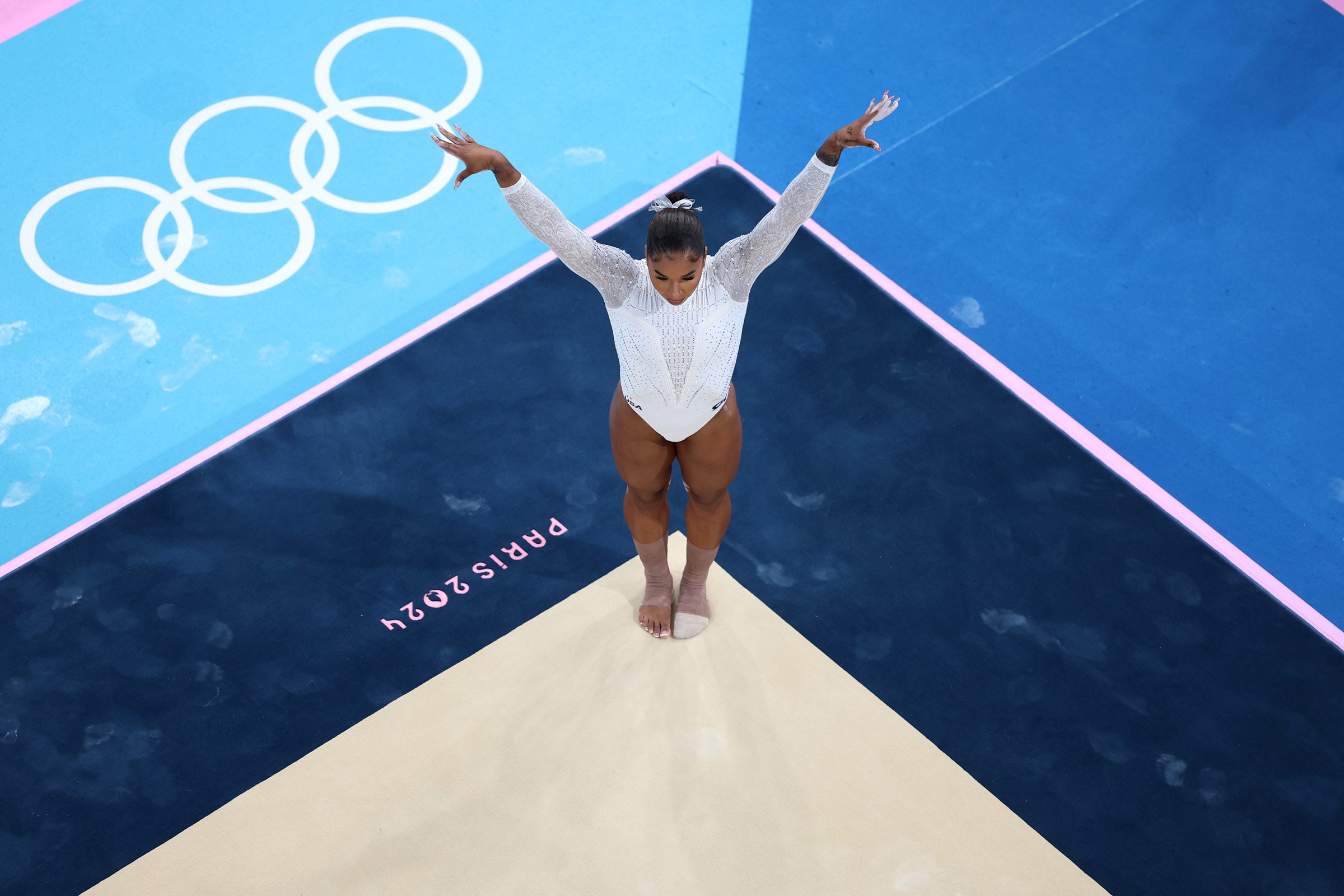
“If you put yourself in Jordan’s position, that meant that she had to retain effective counsel, read an entire case file that has developed over the past two days, including two full rounds of briefings, prepare a defense strategy, prepare a written submission, get ready for the hearing, and gather evidence — all in just a couple of hours,” Allemann explains. “You don’t need legal training to see that doing all that, and in particular, obtaining that kind of evidence within such a compressed timeline, is extremely tough.”
Pfisterer and Allemann acknowledge that speed is generally a virtue in these kinds of sports arbitration cases, particularly at the Olympic level, where a slow dispute resolution process could mar the functioning and spirit of the competition. But in Allemann’s view, in some situations, such as Chiles’, “the interests in accuracy, evidentiary completeness and fairness, in the end, outweigh the need for these ultra-fast decision-making processes.”
And then there was the unexpected — and ignored — video evidence. “Very luckily, multiple cameras and an audio recording indeed capture her coach’s verbal inquiry on the floor,” Pfisterer says. “This was good luck for Jordan, and it was highly significant legally.”
Although Chiles only obtained these materials after the CAS award was rendered, Pfisterer and Allemann considered this sufficient to justify reopening the case.
“Under Swiss arbitration law, you can revise a final award in some certain exceptional circumstances, such as the emergence of previously unknown, but still relevant, outcome-determinative evidence, and that can be a grounds for revision,” Pfisterer explains.
With less than a month to prepare their arguments with co-counsel at Gibson Dunn Los Angeles, Pfisterer and Allemann believed Chiles had a strong case — but they also knew her chances at the Swiss high court were not especially good. In general, Allemann says, the court prefers to defer to the arbitrators in sports cases.
“The success rate at the Swiss Federal Supreme Court is extremely small,” he says. “We were only able to identify a handful of cases for revision requests like this one that have been successful in the entire arbitration history.”
At the Swiss high court
Chiles proved to be a rare exception. In a landmark ruling in January, the Swiss supreme court highlighted the case’s significant procedural irregularities, and ordered the arbitrators to issue a new ruling — with particular consideration of the recordings Chiles had uncovered.
“From the beginning when we became involved in this case, we all felt that something had gone fundamentally wrong in this case, and the supreme court’s decision acknowledges that exceptional circumstances require correction,” Allemann says.
Allemann says that the decision means that CAS will have to reconsider the case, probably within the next few months. If it reviews the assets and confirms the timeliness of Chiles’ coach’s inquiry, Chiles could regain the fraction of a point she needs to reclaim her place at the Olympic podium.
But the case is meaningful for other reasons, too, Allemann and Pfisterer believe. Beyond the medal itself, they say the win is a boon for justice and procedural fairness, particularly when it comes to world-class athletes, they argue.
“Athletes are entitled simply to the same basic fairness and due process that anyone else expects when their dream and entire career is on the line, and when they have followed all the rules,” says Allemann. “Jordan’s persistence and her willingness to continue fighting for this medal and for fairness in the end has truly mattered.”
Want to stay up to date with Harvard Law Today? Sign up for our weekly newsletter.