
In fall 2024, an article in Forbes explored the best path to working as a professional sports lawyer. The trajectory, it concluded, was clear.
“The surest way to become General Counsel of a professional sports team,” wrote the author, “is to graduate from Harvard Law School.”
Currently, there are dozens of alumni working for professional sports teams, including in the NBA, NFL, NHL, and MLB and MLS, many as general counsel and several as general or assistant general manager. And that’s in addition to the many others at firms handling sports issues.
Promoting the Beautiful Game of Soccer
One Harvard Law graduate now devotes her energy to the business behind a sport she grew up following avidly.
Edna Falla-Quintanilla LL.M. ’05 first attended law school at the Universidad del Norte in Barranquilla, Colombia, where the national soccer team trains and plays. She was deep in her studies at the time, but she says that today the excitement of the 1994 World Cup qualifying matches remains etched in her mind.
“That was really, really unforgettable, to experience those games,” says Falla-Quintanilla, who received her J.D. in Colombia in 1999 and her LL.M. from Harvard in 2005. “It’s one of those countries where everything really stops when [its team] is playing. Nothing [else] happens.”
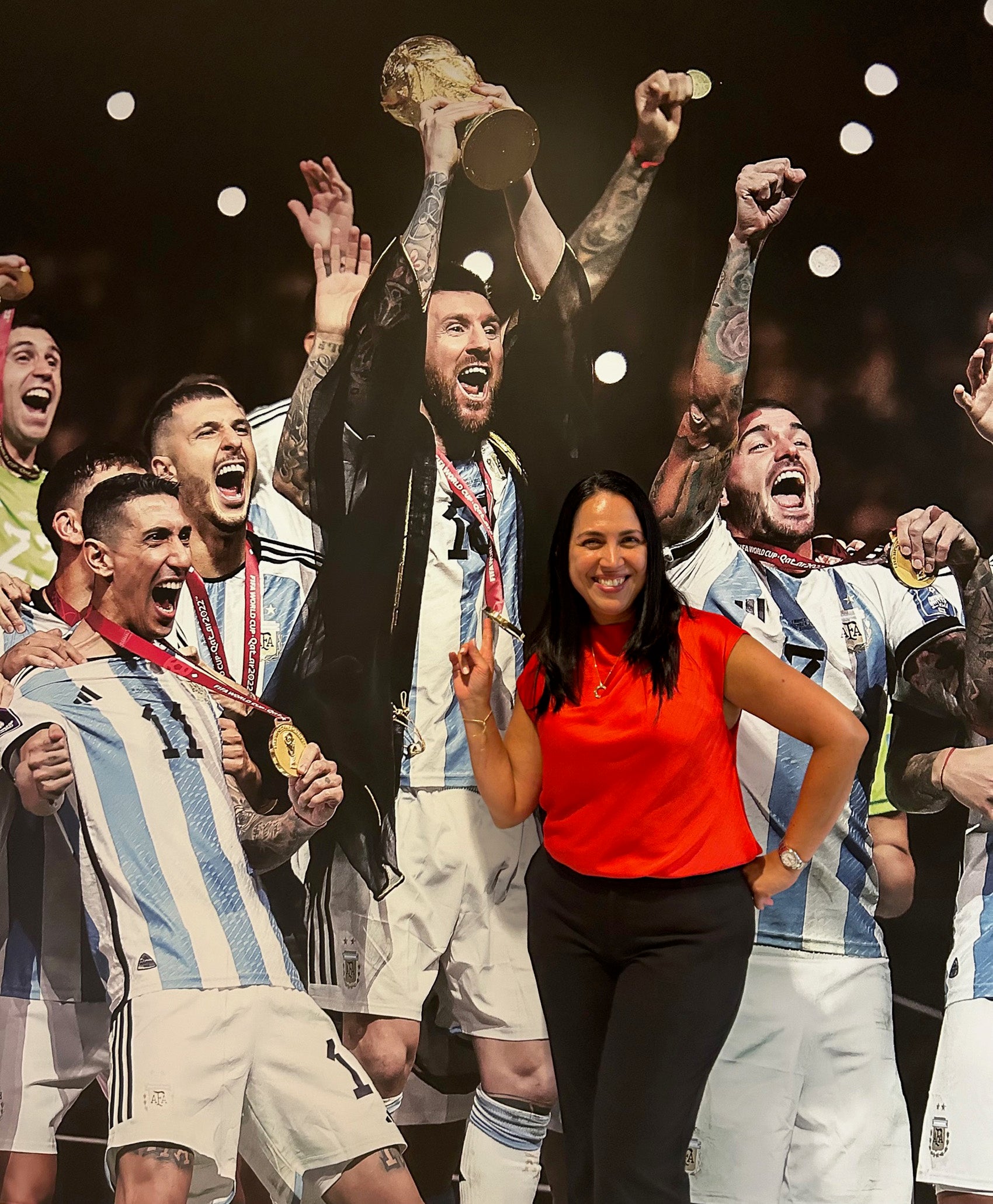
Little did she suspect that she’d eventually work at FIFA, the organization that governs soccer around the globe, as head of its worldwide corporate legal operations working on everything from soccer programs in underserved nations to the Brazilian entity overseeing the 2027 Women’s World Cup.
Falla-Quintanilla says she is not technically a sports lawyer but someone who works on “typical in-house legal matters.” But those matters can have international implications. Case in point: As part of their work with the Women’s World Cup, Falla-Quintanilla and her colleagues are working with the Brazilian government to implement some of the guarantees it included in its bid to host the tournament, such as providing a special tax regime, work permits, and visa procedures.
She credits Harvard Law with providing a grounding in common law and training for her 14 years as senior counsel, and then managing director, for FedEx’s Latin American and Caribbean region, where she handled employment matters, aviation law cases, corporate compliance, contracts, and customs issues.
On any given day in her Miami FIFA office, Falla-Quintanilla might deal with Swiss corporate legal topics, legal issues in Morocco, and contract negotiations with Brazil. When handling criminal, civil, or commercial disputes for FIFA — some of them related to how soccer agents operate and are compensated, or the transfer of players from one club to another — Falla-Quintanilla and her team coordinate with outside counsel in different countries. The work means she must be fluent in a range of jurisdictional regulations. FIFA is a Swiss organization, but even though Switzerland is not part of the European Union, FIFA often argues cases before the European Court of Justice and other international courts because of its nature as the governing body for association soccer worldwide.
“It takes a lot of work to understand,” she says, “but it’s also incredibly exciting.”
Since law school, Falla-Quintanilla’s love of “the beautiful game” has only grown. Today, she gets to work with people who “breathe football in and out every day,” and it’s “really contagious.” On “jersey Fridays” in her office, she wears her yellow Colombian team shirt with pride.
“There are few places that are more exciting to work right now than FIFA,” she says.
A Sports Law Program with Connections
Many Harvard Law graduates who go on to careers in sports and entertainment credit Peter Carfagna ’79 with their success. A lecturer on law and faculty supervisor of the school’s Sports Law Clinic, Carfagna played football at Harvard College and later studied under Paul C. Weiler LL.M. ’65, the Harvard Law professor who helped pioneer the field of sports law. Carfagna is now approaching his 20th year leading the Sports Law Clinic and teaches three related courses each year.
Carfagna was also the one who started pairing Harvard Law School students with those working in professional sports. It began almost two decades ago after a plea from an alum in need of help. “Mike Zarren ’04, then the only lawyer at the Celtics, who is now their vice president of basketball operations and team counsel, called me up and said: ‘I’m buried. Can you send me your best student, please?’ That’s how it all started,” Carfagna says.
With his many contacts in the professional sports world, today Carfagna helps to connect students eager to work in professional sports with internships and placements in the NBA, the NFL, MLB, MLS, and more. “The vast majority of HLS grads who are now working in the sports law area,” he adds, “took one of my courses and participated in one or more of the placement opportunities that have been created over the years.”
Running Point on Everything
Russell Yavner ’14 says Carfagna was instrumental in helping him get his start.
“I quickly enrolled in his courses because I wanted to learn from him, his experience, and his expertise in sports and the law. His first course that I took was called Advanced Contract Drafting, and I still remember one of the questions on the final involved drafting a mutual indemnity provision in a sports contract context,” says Yavner, senior vice president and deputy general counsel for business and basketball operations for the Brooklyn Nets and the Barclays Center. “Now that’s part of what I do every day.”
During his three years at Harvard Law, Yavner also wrote two papers on professional baseball with Carfagna, did two independent studies with him, and had three key internships facilitated by him.
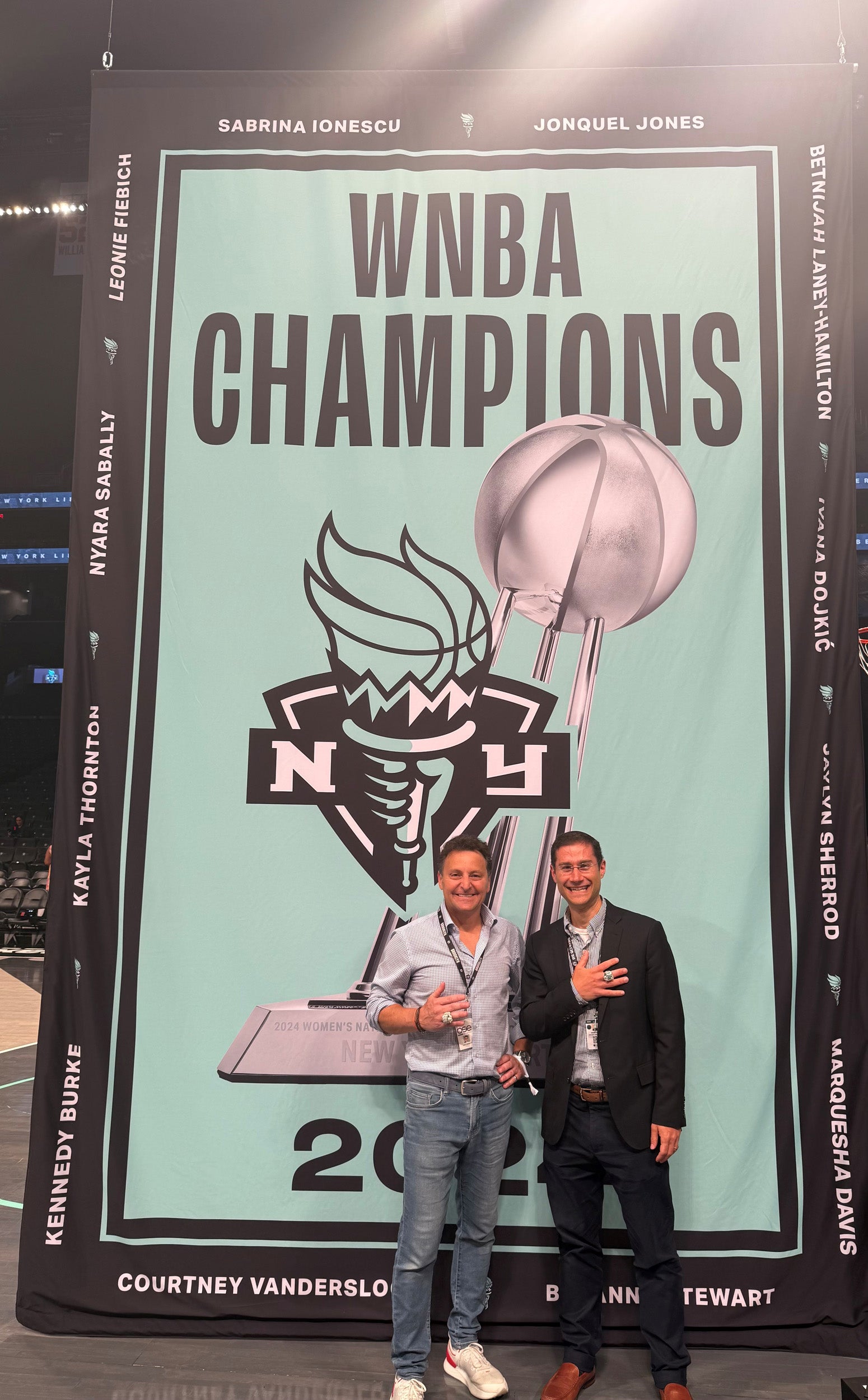
“Those internships were the key to getting my foot in the door,” says Yavner, who routinely hosts interns from Harvard Law. “Once I had that opportunity, things shifted in my mind. Growing up in Rhode Island, I didn’t know anyone in the professional sports space, so I didn’t think it was a real possibility. But with those internships I saw the path, and then when a job became available, I jumped at it.”
In his current role, Yavner is involved in sponsorships, ticketing, and hospitality agreements for the Barclays Center and is responsible for negotiating contracts for more than 100 events held there each year in addition to professional basketball games. “We host concerts, college basketball, boxing, graduations, and comedy shows … the list goes on and on, and each one requires its own contract,” he says.
Yavner also handles labor law issues with the arena’s unionized workforce, and drafts and negotiates employment agreements for the Nets coaches, management, and other front-office personnel. Managing the team’s intellectual property, he says, falls within his purview, as does ensuring each team operated by the ownership group — the Nets plus the New York Liberty and the Long Island Nets — complies with lengthy league rule books. Litigation might involve anything from a fan who slips and falls to sponsors reneging on a deal. For Yavner, no two days are the same, and that’s how he likes it.
“ Those internships were the key to getting my foot in the door.”
Russell Yavner
“It’s a wide range of responsibilities, and I enjoy that,” he says. “I like that there are constantly new issues and new areas of the law to deal with, which keeps me on my toes.”
Thinking of important moments from the past 10 years in his role, Yavner points to both the momentous and the more mundane. He’ll never forget the excitement of watching the Liberty capture the first WNBA championship in franchise history in 2024, or the fear he felt when his boss told him during his first days on the job that he was going to become the organization’s labor lawyer.
“It was terrifying at the time because I had a small sense of what I didn’t know, and it was quite a bit,” Yavner says. “And it just goes to show that you really can accomplish anything; it just takes time and the will.”
From Cleveland Fan to Minnesota Mainstay
Daniel Adler J.D./M.B.A. ’17 jokes that he “peaked as an athlete somewhere around the second grade,” yet the interest in the business side of sports he developed as a teen and a Cleveland sports fan never faded. An internship with the New England Patriots right out of high school gave Adler a behind-the-scenes look at how a professional sports team operated and a window into professional athletes’ psyches as he shuttled players from games to the airport.
“So many were just out of college and under an incredible amount of pressure to produce basically their life’s work in a few short years,” Adler says.
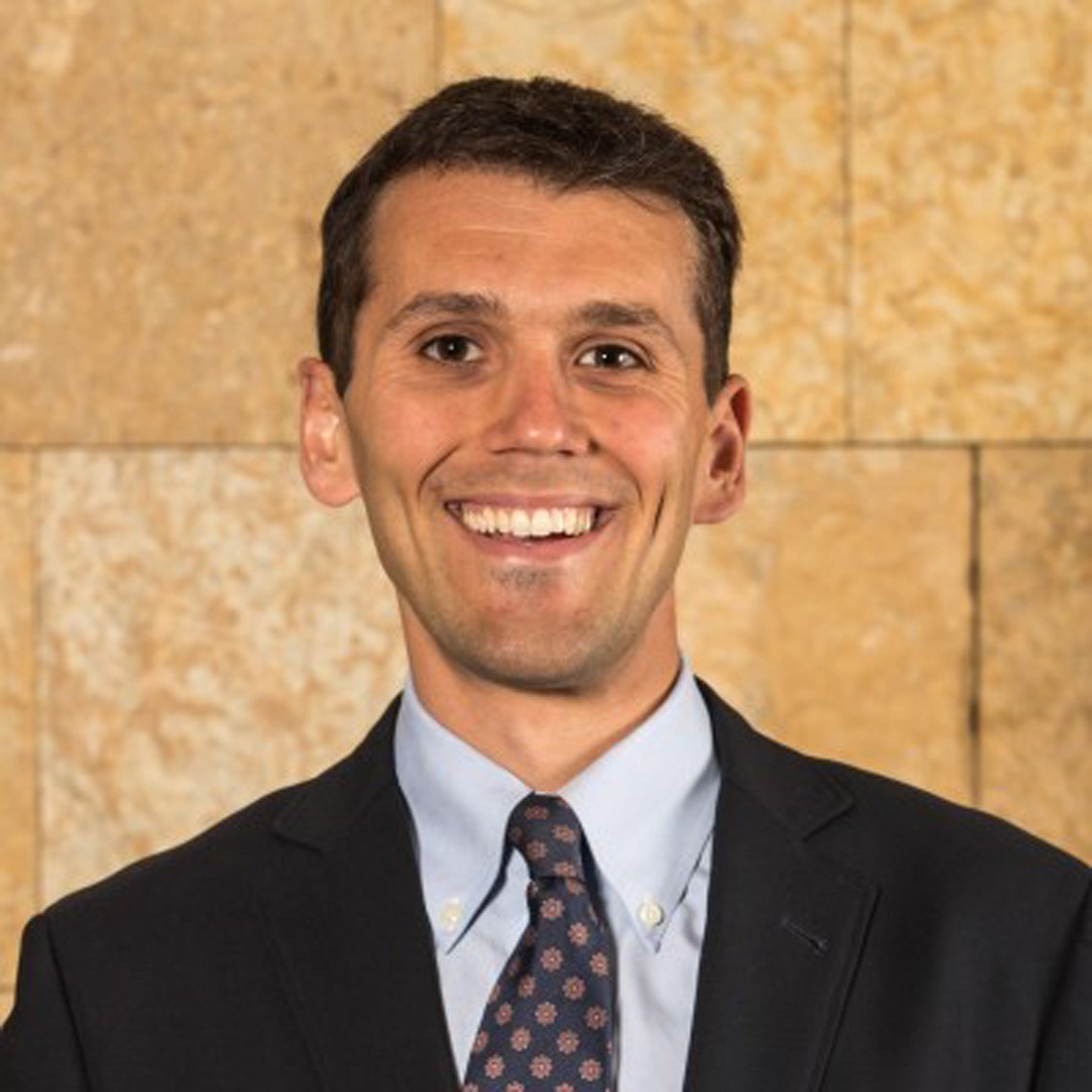
The internship helped him realize he was going to need a law degree. At the time, front offices of the NFL were much smaller, he says, and most people negotiating contracts and ensuring the team complied with the league’s collective bargaining agreement had legal backgrounds.
At Harvard College, Adler studied economics and psychology, had summer internships with MLB and the Cleveland Browns, and in his senior year sat in on a class at Harvard Law taught by Carfagna called Representing the Professional Athlete. A family friend from Cleveland, Carfagna had helped Adler prepare for that first Patriots internship, and Adler recalls his influence as instrumental.
“I was really lucky to have had that experience before even starting law school, and frankly, that was a big part of the appeal of HLS and its sports law program,” says Adler, adding, “I don’t think there’s a better place in the country for sports law.”
“I don’t think there’s a better place in the country for sports law.”
Daniel Adler
In 2017 Adler, who had opted to pursue a joint law and business degree at Harvard to maximize his career options, became director of baseball operations for the Minnesota Twins. Now, he’s executive vice president of baseball and business operations and assistant general manager. On his office shelf are a few law school books, among them some from Carfagna’s courses. Adler says he often thinks back to Carfagna’s class on the history of collective bargaining, calling it invaluable.
“In this current role, I’ve spent a little time at the Major League Baseball office assisting some of the lawyers who work on those negotiations,” he says. “And I am constantly thinking about, as one of 30 teams, what should we be pushing for and what questions should we be asking to make sure whatever changes happen will hopefully be good for the Twins, regarding league rules and regulations and collective bargaining.”
In recent years, his role has involved overseeing the team’s analytics department, some contracts and compliance work, and a little international scouting. He also uses his analytics knowledge to help managers make roster and draft decisions, and he recently began overseeing the organization’s HR, IT, and business strategy groups.
During home games, Adler keeps a close eye on the action at the stadium, often slipping out for an inning or two to get his children ready for bed, ensuring he is back in time to see the final pitch. Though he grew up a Cleveland sports fan, there’s no question where his loyalty lies today.
“Once you’re working for a team,” he says, “it’s pretty easy to leave that early fandom behind.”
Getting a Team Up and Running
Derrick A. Davis Jr. ’15 grew up loving sports — he played baseball and sports video games, and faithfully followed New York teams. He dreamed of one day being a lawyer because, as his mother says, he liked to “talk a lot.”
But he never imagined himself working in professional sports. Then a comment from a friend changed everything. After law school, Davis was working in mergers and acquisitions at Cleary Gottlieb Steen & Hamilton in New York helping to craft multibillion-dollar deals for companies including Google, 3M, and Stanley Black & Decker when a Cleary colleague told him she was headed to work in the NBA.
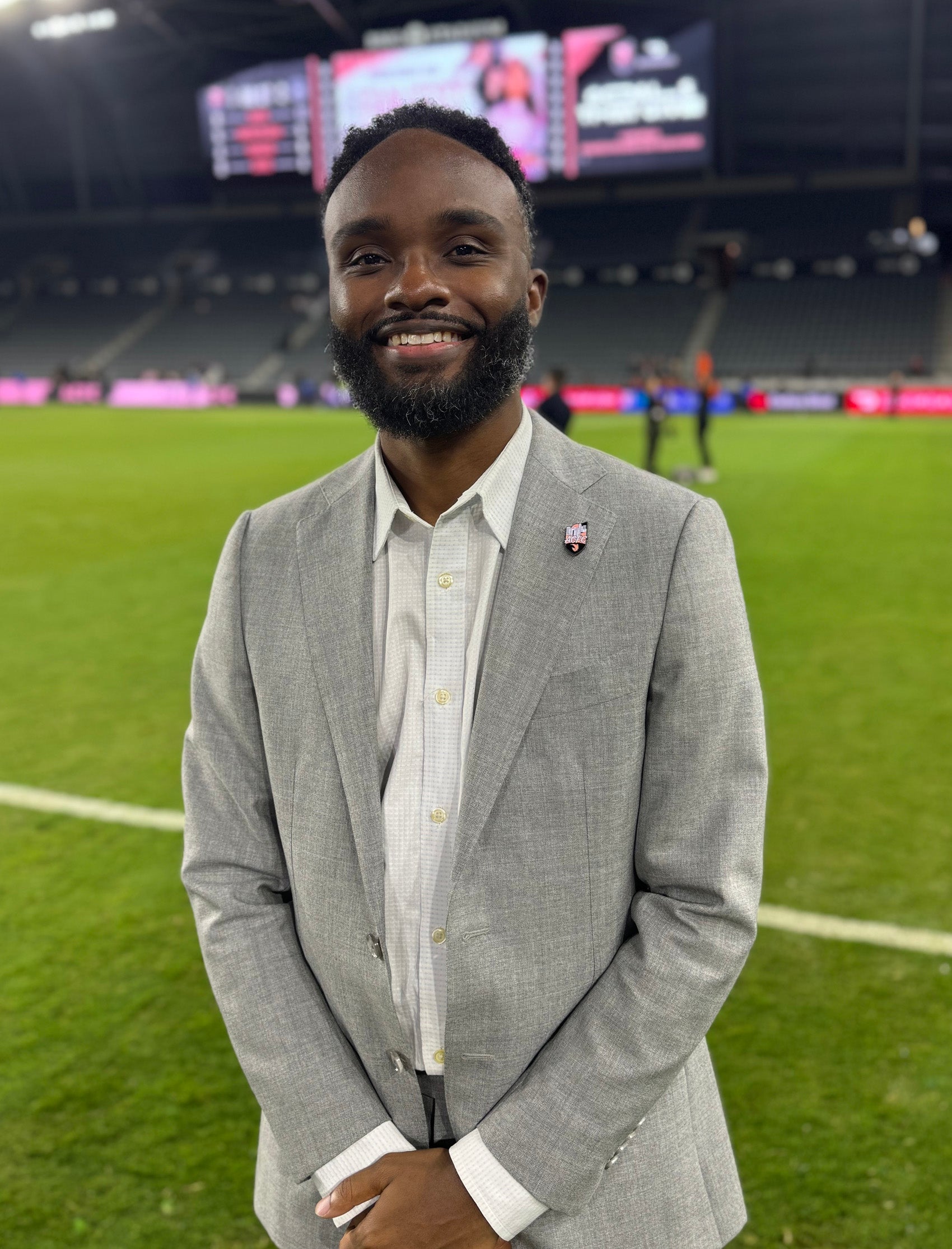
“I didn’t even know that was a thing, and I thought, I’ve got to do that,” recalls Davis. “From then on, I was set on working in sports as a lawyer.”
Davis didn’t take sports law classes at Harvard, but his corporate law background — including hammering out purchase agreements and examining a company’s contracts, its executives, any pending litigation, and its real estate holdings and other assets — meant he was well positioned to jump to MLS in 2018 as one of the soccer league’s main business and legal affairs lawyers. He calls the experience “the foundation to my career in sports.”
At the time, a team of five or six lawyers represented the entire league, and because MLS is a single-entity organization, Davis was in on the ground floor with myriad issues, from negotiating sponsorships and broadcast deals to working on expansion efforts and the enforcement of league rules. His responsibilities also included helping the Mexican National Team secure sponsorships and stadium deals for their games in the United States, and arranging sponsorship deals for the United States Soccer Federation.
Davis also worked for TikTok and Relevent Sports — as well as OneTeam Partners, a joint venture founded in 2019 by the NFL Players Association, MLB Players Association, and RedBird Capital Partners.
During his OneTeam tenure, he represented the National Women’s Soccer League Players Association in its first commercial rights agreement with the league and advised on certain aspects of collective bargaining agreement negotiations.
In his current role as general counsel at Angel City Football Club, a professional soccer team based in Los Angeles that competes in the NWSL, Davis is relying on his experience to bolster the team’s success.
“I’m actually the first-ever lawyer that Angel City has had, which is exciting, because it brings us opportunities and challenges,” Davis says. “I’m building a lot of infrastructure internally, making sure that we have our best processes and practices in place, so we are as efficient as possible, and I do anything and everything.”
His work has included developing sponsorship deals for the team, negotiating local broadcast agreements with distributors, helping manage a multimillion-dollar renovation of the L.A. Rams previous practice facility into a training ground for the team, and negotiating the release of the team’s new coach from his former club in Germany.
It’s not always easy, says Davis, but the challenge is part of the fun.
“Anyone who has worked at a startup before can relate,” he says. “When you’re trying to build something new, it’s exciting — the possibilities feel endless. And, of course, it can be tiring when resources are not unlimited. But growing something and being a part of a movement is also my favorite part of the job.”