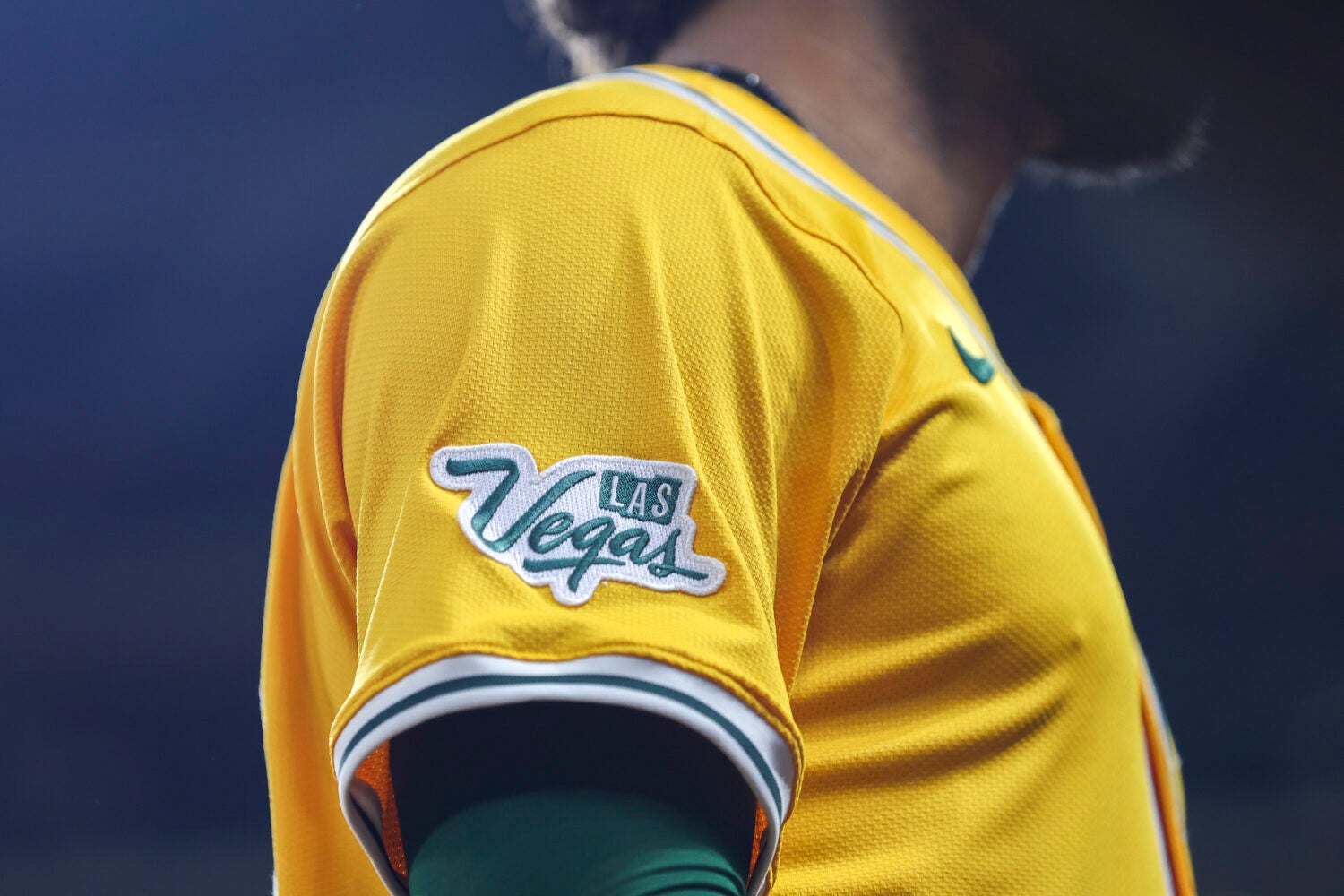
When it comes to trademark protection, the Las Vegas Athletics have had a rough inning, but the game’s not over yet, says Louis Tompros, the Hieken Lecturer in Patent Law at Harvard Law School and Intellectual Property Litigation Partner at WilmerHale.
In late December, the Major League Baseball team previously known as the Oakland Athletics received a blow to its planned relocation to Sin City in 2028. In a preliminary ruling, the United States Patent and Trademark Office declined to issue registered trademarks for the names “Las Vegas Athletics” and “Vegas Athletics,” arguing that they are too generic and “geographically descriptive.” Registration, Tompros says, can make it much easier for companies to legally defend their brands inside and outside of court.
But Tompros says the Athletics organization has several avenues to challenge the decision, including appealing it from the Trademark Office to court. And he warns that while the team names may not have comprehensive protection yet, they still enjoy important safeguards under the common law.
In other words, you should probably think twice before selling knock-off Las Vegas Athletics merchandise, he says. “You’d definitely get sued, and you’d probably lose.”
In an interview with Harvard Law Today, Tompros explains why the Athletics lost their initial trademark bids, how the team might eventually prevail — and why pirate merch sellers probably shouldn’t celebrate the decision just yet.

Harvard Law Today: What were the Las Vegas Athletics trying to accomplish with their petitions to the United States Patent and Trademark Office?
Louis Tompros: What the Athletics were trying to do is get a registration for their trademark in what’s called the Principal Register of the United States. Most companies want to do that because if your trademark is registered, you get some additional protections — it’s very hard for anybody else to challenge it later, you get some additional damages if someone’s infringing, and you can use that “registered trademark” R symbol. It’s a federal crime to use that symbol if you don’t have registration. Of course, this is not the only way to get protection, but registration really does help, and most companies like to make sure they’re trademark registered.
HLT: Why did the agency decline to issue registered trademarks for the names “Las Vegas Athletics” and “Vegas Athletics”?
Tompros: To get a trademark, you have to meet a whole variety of different criteria. The two that matter most for this case are, number one, you have to show that your mark is not generic. And number two, if it contains a geographical name, you are not allowed to register a mark that is geographically descriptive.
What does that mean? On the generic side, trademarks are supposed to identify the source of a product, rather than the nature of a product. A classic example is that you can’t get a trademark on “cereal,” for cereal. You can get a trademark on Cheerios, because that’s not describing cereal. So, unlike some other baseball team names — like the Red Sox — the word Athletics has a meaning, and it means people who are athletes, people who are playing a sport. Generally speaking, you can’t receive protection for the word athletics for a sports team, because that is just a generic description of a team.
Then there’s the geographic part, and that’s been the part that’s gotten the most attention, because you also can’t protect something that is “primarily geographically descriptive.” You cannot protect something that is just describing a region. I couldn’t, for example, get a trademark registration for “Boston cookies” in Boston, because it describes where I’m making them. That’s primarily geographically descriptive, and it is generic as to the thing.
What happened here was we had the Oakland Athletics moving to Las Vegas, and they tried to get a registration for either Las Vegas Athletics or Vegas Athletics. Las Vegas is geographically descriptive, and Athletics is generic. With respect to “Vegas Athletics,” Vegas was also found to refer to the city of Las Vegas, so it was also primarily geographically descriptive.
HLT: How, then, did the team have trademarks for its previous name, the Oakland Athletics?
Tompros: The reason the Oakland Athletics was allowed to register that name is by establishing what’s called “secondary meaning.” Secondary meaning allows you to claim a geographic registration if you establish that consumers view the term as primarily referring to your product — your source — rather primarily referring to the location. So because the Oakland Athletics were well known as a baseball team and established themselves at that location, and because consumers didn’t associate Oakland Athletics as just any team coming from Oakland, but had a specific recognition of that particular Major League Baseball team, then they could claim a registration for that under a key exception to the registration statute, called acquired distinctiveness. The problem with Vegas Athletics and Las Vegas Athletics is they’re not there yet. They haven’t been playing or operating in Las Vegas yet.

HLT: How long will the Las Vegas Athletics have to operate in Nevada to qualify for acquired distinctiveness there?
Tompros: There’s no set length of time — you just have to be using it for long enough that customers associate it primarily with your source and not primarily with the location. There’s a classic, very Boston-centric case about this: Boston Athletic Association v. Sullivan, from 1989. There was this guy who wanted to sell merchandise that said “Boston Marathon” on it, and the Boston Athletic Association said, “You can’t do that. That’s our trademark.” Sullivan argued that “Boston Marathon” is just a marathon that happens in Boston and shouldn’t count under the trademark rules. But the First Circuit ruled that the name had a long and exclusive association at that point — more than 100 years — with the particular marathon that was run by the Boston Athletic Association. In other words, people primarily associate “Boston Marathon” with that particular Boston Marathon, not with just any marathon happening in Boston. And when they primarily associate it that way, then it overcomes the geographic prohibition, and it has acquired the secondary meaning, such that it is now protectable.
I think the Las Vegas Athletics will eventually achieve that, and they’ll be able to register the name after they’ve used it for a bit and can show that customers primarily associate Las Vegas Athletics with their team.
HLT: What do you think the team will do next? Do they have to change their name?
Tompros: They could, but that would be a pretty big move. This is just a preliminary rejection by the Trademark Office — they can challenge that decision. They could submit evidence if they want to argue that they’ve already been using the name in Las Vegas. They could try to submit a consumer survey that showed that consumers associate Las Vegas Athletics with their particular team. They could then take it up to the Trademark Trial and Appeal Board if they wanted, and then theoretically appeal all the way to the Federal Circuit Court of Appeals if they wanted to try to fight the sufficiency of what they’ve shown. It’s definitely not over yet.
HLT: Does the team still have some protections for the name “Las Vegas Athletics” or “Vegas Athletics” in the absence of a registered trademark?
Tompros: Even if you don’t have a registered mark — if you have an unregistered mark — you still have a lot of protections under the common law against people trying to do things that are confusing. I worry that someone out there is going to see this decision from the Trademark Office and decide to go start selling bootleg Las Vegas Athletics gear. They’re definitely going to get sued, and they’ll probably lose.
Common law trademark protections are very likely to be enough for the Las Vegas Athletics to enforce what they need to enforce. Then, over time, the evidence is going to be very different, and the Trademark Office may very well allow registration then. I think this is probably more of a speed bump and a hassle for the Las Vegas Athletics than anything long term and significant.
Want to stay up to date with Harvard Law Today? Sign up for our weekly newsletter.