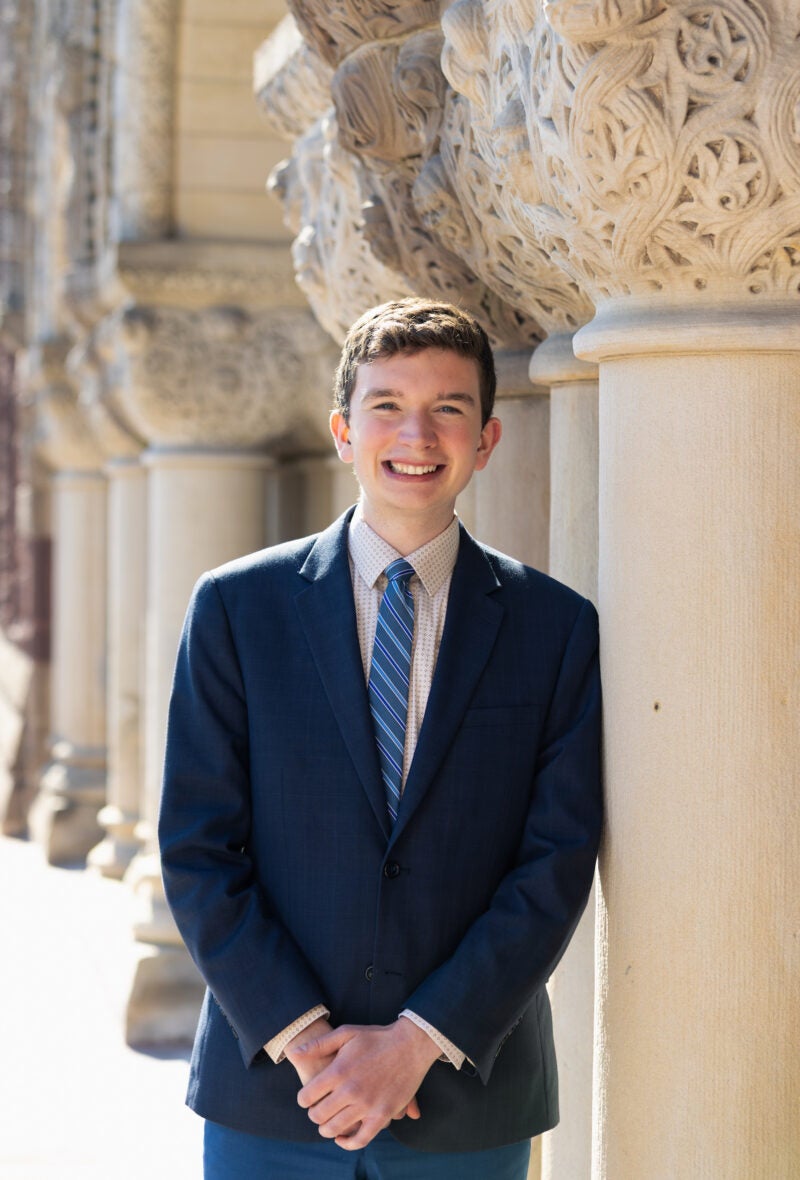
While at Harvard Law School, Patrick Healy ’26 has been an admissions fellow, a student government representative, a journal editor, a student practice organization board member, a social planner for his law school section, a college teaching fellow, and a pre-law mentor.
For those and other roles, he is the graduation recipient of the inaugural Dean’s Community Impact Award, which celebrates a student who has fostered connection or has meaningfully improved relationships within the student body.
Yet Healy demurs when asked to describe his impact on his law school classmates and community. He is more comfortable expressing how they and his experiences on campus have impacted him.
“I’m less sure of myself than I was,” he said.
And he means that in the best possible way.
“I’m less arrogant,” he said. “I’ve realized, it’s pretty easy to complain and criticize. It’s much harder to change yourself and compromise with others. I’ve tried to do that.”
Healy’s willingness to change — his mind and his plans — has paid off over the years. As a high school student in Buffalo, New York, he wasn’t even sure he wanted to go to college. He did well academically but at the expense of participating in other activities and felt isolated from his classmates as a result.
A scholarship to Canisius University convinced him to give higher education a try, and the experience was transformative.
“I did the opposite of what I did in high school,” he said. “I prioritized clubs and being part of a community.”
Healy studied political science, history, philosophy, and urban studies. He was managing editor of the student newspaper, was president of Model U.N. and his Phi Alpha Delta fraternity, led a spiritual retreat and various student trips, and won two university-wide awards for his efforts.
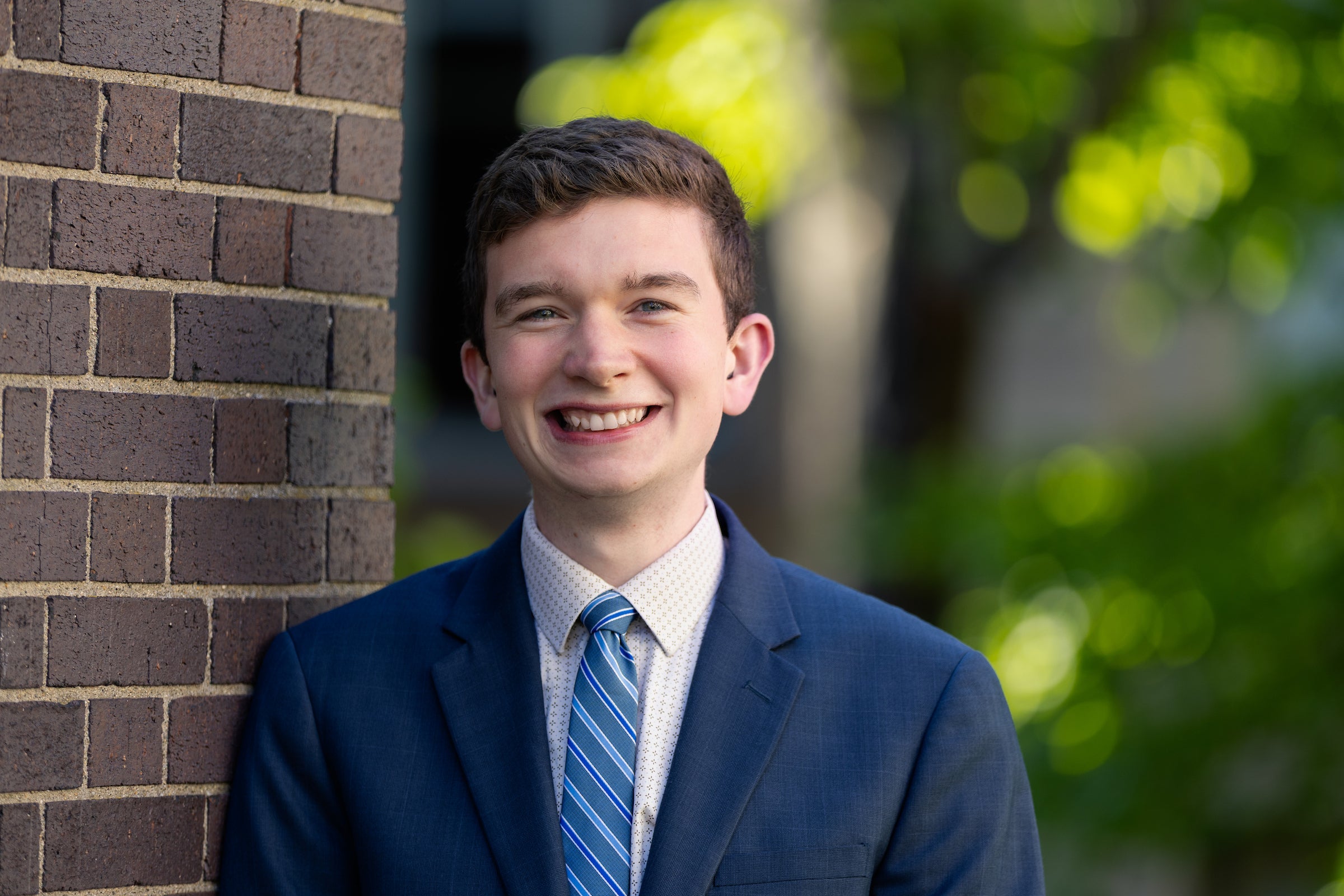
“I don’t want to live in a world where only certain people can have an impact. I don’t believe that’s the kind of democracy we have.”
At Harvard, Healy took the same approach, choosing classes in different areas that interested him, serving as a 1L representative and later director of student organizations, leading campus tours for prospective students, and playing flag football and basketball with his section peers.
“I challenged myself to see if the same skills that had helped me do well in college could work at Harvard.”
Some of his most difficult law school experiences came during his time in student government as he and his classmates debated controversial resolutions in the wake of the Israel-Hamas war.
“People felt very passionately about the issues on every side,” he said, adding that the experience made him realize “how difficult representation can be.”
Ultimately, “you have to make a decision, own it, and be accountable,” he said. “I’m proud of how I tried to hear everyone out and represent everyone to the best of my ability.”
In the classroom, Healy said, one of his favorite courses has been Lawyering at the Pentagon, taught by former general counsels of the U.S. Army, Navy, and Air Force. Healy did not have military experience, unlike many of his classmates. But neither they nor the instructors made him feel like his perspective wasn’t valuable. He recalls being called upon in the first week of class to debate the U.S. capture of Venezuelan President Nicolás Maduro.
He said lecturer Peter Beshar ’89, former general counsel of the Air Force, helped him tackle the assignment.
“He showed me I have something to say and helped me say it,” Healy recalled. “He challenged me — got to know me well enough to know how and why I should do better.”
Healy counts his time as a student attorney in the Harvard Immigration and Refugee Clinic, Harvard Prison Legal Assistance Project, and the Estate Planning Project of the Veterans Law and Disability Benefits Clinic as among his most enjoyable and formative experiences.
“Every single one of the [clinical instructors I had] is the kind of lawyer I want to be,” he said.
After graduation, Healy will work in direct client services as recipient of a prestigious Equal Justice Works fellowship. He will spend two years working for Legal Aid of North Carolina in Morganton, where he volunteered during spring break last year assisting people who had been upended by Hurricane Helene and its aftermath. In addition to representing survivors of domestic violence, people facing eviction or debt collection issues, and other civil legal aid matters, he will help the organization expand its offerings through technology, including artificial intelligence.
Healy sees client work as an immediate, tangible way to make an impact.
“People talk about the public interest — I’m less certain about what that is,” he said. “That’s part of why I want to do direct services. I can be more certain of whether I’m making an impact because I will have a client who can tell me if I am.”
Healy’s law school experiences — including in student government — have shaped his views about not just his profession but also civic engagement and democracy. After he served two years as a representative, he lost his campaign for student body co-president. But he didn’t withdraw from campus life. Instead, he doubled down.
“Impact can’t be conditional on having a certain title or position,” he said. “I had these grand plans, and my classmates didn’t agree with those plans. I had to adapt and change how I had an impact. I’m just as proud of that as anything. I don’t want to live in a world where only certain people can have an impact. I don’t believe that’s the kind of democracy we have.”
Want to stay up to date with Harvard Law Today? Sign up for our weekly newsletter.