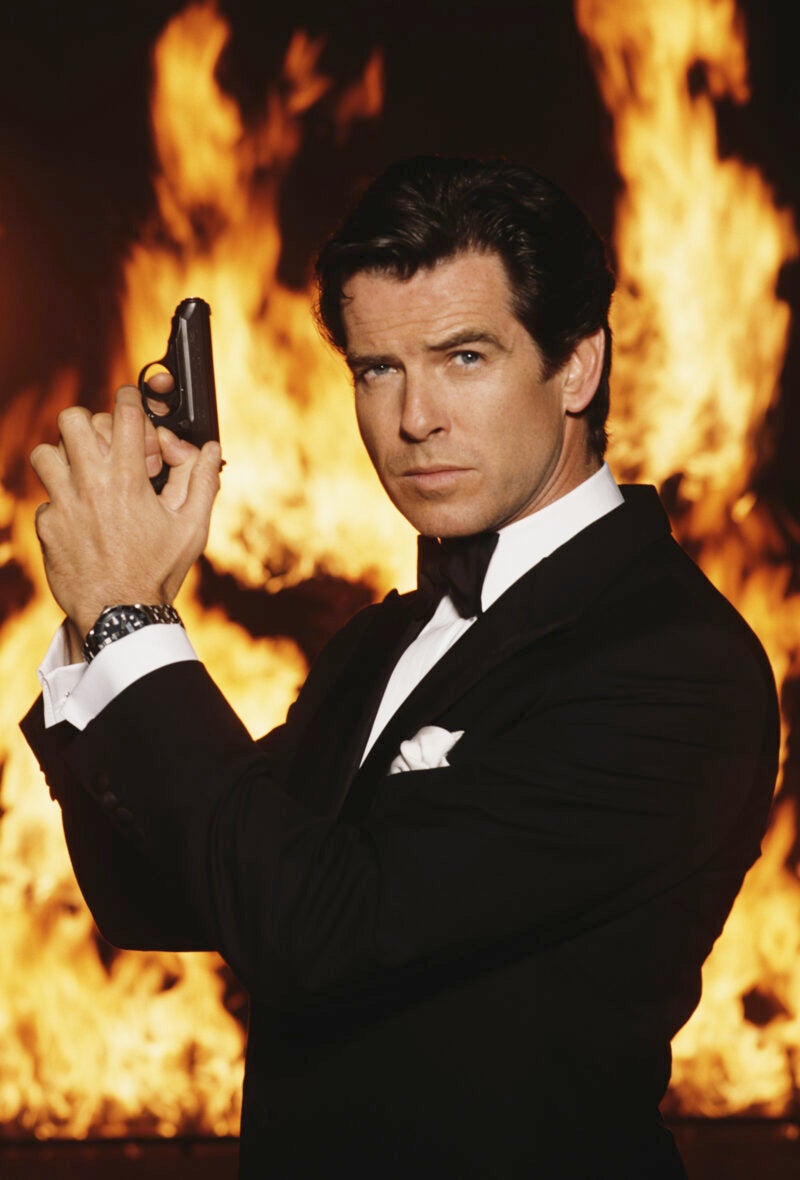
News that 40-year-old English actor Robert Pattinson was selected to play James Bond in the latest film centered on the iconic MI6 spy has left cinema buffs stirred — if not shaken.
In its announcement, Amazon MGM Studios praised Pattinson, who will serve as the seventh 007 in the official franchise, for his range and “quiet intensity,” while fans speculated about what the actor might bring to the classic Bond character. In Ian Fleming’s original books, the secret agent is depicted as clever, moody, and ruthless, while the Bond of the silver screen has variously been depicted as suave, dapper, hedonistic, campy, or brooding — yet always recognizable.
Which version of Bond is protected by copyright law? How does that protection evolve as new actors put their own touch on the character? And with at least one of Fleming’s original books entering the public domain in the coming years — what happens when that protection ends?
In a conversation with Harvard Law Today, Professor Rebecca Tushnet, the Frank Stanton Professor of the First Amendment, explains copyright protection and raises the “Spectre” of trademark law stepping in when copyright ends. But not to worry — Tushnet also offers a “Quantum of Solace” to writers, artists, and actors hoping to create new works inspired by the classic spy.

Harvard Law Today: What does it mean to “own” the rights to James Bond, given that he’s a character in a book, movies, video games, and so much more?
Rebecca Tushnet: Courts have decided that you can protect a character and own the rights to a character by sufficiently delineating the character. Basically, once James Bond is established well enough that you can recognize him, then he does have a copyright existence that goes beyond any individual movie or book.
HLT: What does copyright protection for a character like James Bond mean?
Tushnet: A lot of times, it’s the props, the things around the character that make them recognizable. With James Bond, it’s the screechy music, the Bond girl, the grotesque Bond villain. If you put a suave guy in a tuxedo and have him do a cooking show, even if in your head you’re writing him like James Bond, most of the time people aren’t going to recognize that because James Bond is so incompatible with cooking shows — with the thing we expect from him — that he would just be a generic British guy.
It’s a combination of the license to kill and the typical Bond scenarios — the death-defying escapes, the blatant sexual interest, the beats of a James Bond story that define the character.
HLT: Robert Pattinson will be the seventh person to play Bond in an official movie. Will his version of the Bond character get its own copyright protection, or does the copyrighted Bond character just evolve over time?
Tushnet: That is a tough question, and courts haven’t actually totally figured it out. What we can say is that with each new version, there’s a copyright in the new work as a whole that’s separate, and it will last a certain amount of time. Some works in the James Bond series will go into the public domain, and everybody will be free to draw on them, but not the ones that are more recent. Basically, you have to make sure you’re drawing from the right James Bond.
HLT: So, you’re saying that each of the Bond works — every single book, movie, or video game — is covered under its own copyright, which is separate from protection for the character of Bond himself. What happens when one of those pieces of media moves into the public domain, as Fleming’s books will begin to do in 2035 in the UK? What can someone do with the character?
Tushnet: You would want to make sure that the things that you were taking were based in the books or media that were in the public domain. This actually happened with Sherlock Holmes, where a claimant to the rights kept suing people until the very last story entered the public domain, and they would always assert that somehow the person was using parts of the story that weren’t yet in the public domain. This wasn’t very plausible, but it did deter people from making Sherlock Holmes stories.
HLT: What does fair use — a doctrine of American copyright law — allow people to do with the Bond character, even while it’s still protected?
Tushnet: Fair use is a case-by-case inquiry, but parodies are an easy example. Think about Austin Powers — those films are parodying many of the standard James Bond tropes. But it’s also much different, so that it’s very clearly parodying and not just simply copying the James Bond character.
HLT: Even after copyrights for the relevant Bond works or character expire, could rightsholders use trademark law to challenge works that contain the Bond character?
Tushnet: Courts have generally tried to say, ‘Look, once something is in the public domain, you can make whatever you want, you just can’t misrepresent that there’s an affiliation with the original.’ But the line can be hard to draw.
At the absolute baseline, once something is in the public domain, anybody can make a straight up copy of it. If they’re working in expressive media telling stories, then as long as they’re basing it on stuff in the public domain, courts are probably not going to be willing to find a trademark infringement. That said, if you use a James Bond style character in an ad, courts might be more willing to find trademark infringement because that’s a kind of classic use of a trademark.
This interview was edited for length and clarity.
Want to stay up to date with Harvard Law Today? Sign up for our weekly newsletter.