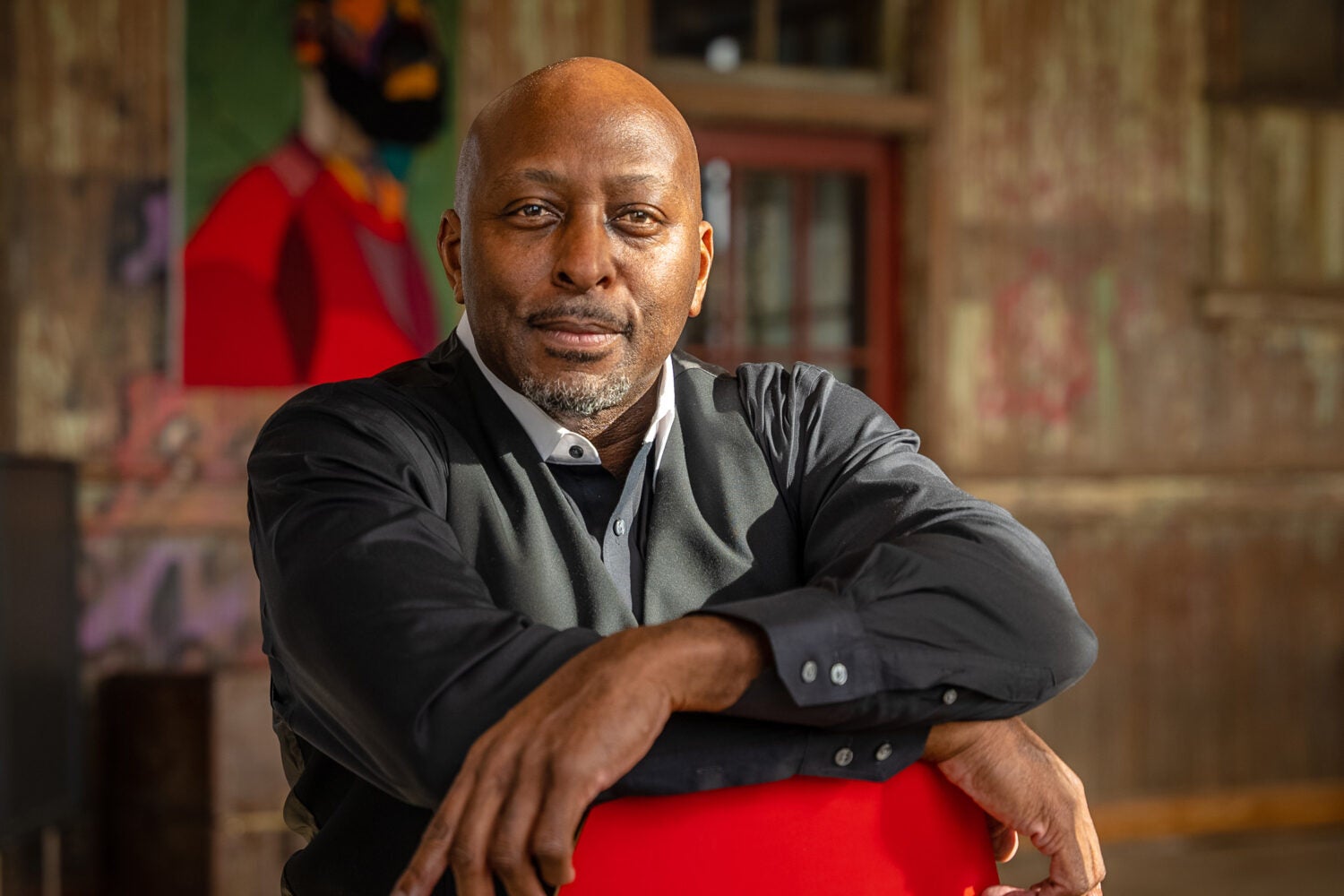
Earl Martin Phalen ’93 was less than a year into law school when he told a family friend and mentor he had no interest in interning at a firm that summer. He was surprised when the mentor didn’t push back and instead encouraged him to spend his summer doing something that felt meaningful and interesting.
That advice led him to Kingston, Jamaica, and a nonprofit called the Jamaica Council for Human Rights, which focused on death-row cases and documenting police brutality. Phalen loved the work, but he also missed his 21 nieces and nephews and wanted to work with children. That led to volunteering at an orphanage, Maxfield Park, the country’s oldest children’s home.
“And that is where I found my purpose in life,” Phalen says. “I was trying to teach this little 5-year-old how to add, and I couldn’t do it without telling her the answer. One of the older scholars said, ‘No, take one pencil, take one crayon, now count.’ The little girl said, ‘One plus one—one, two.’ Her eyes lit up and something went off in my soul. At that moment, I knew that I was called to this earth to be involved in education and help many more children like her understand how smart they are.”
Ironically, that moment almost halted his own schooling.
“When I came back to Cambridge, I actually thought about dropping out of law school,” he says. “I said, ‘I’m going to devote every minute to trying to educate children and strengthen communities.’”
That’s when his parents intervened.
“They said, ‘You finished the first year of law school, the hardest year, and once you have a Harvard degree, that will carry you to great places in the world,’” Phalen says. “I was like, ‘Mom and Dad, it’s your fault, because you told me tomorrow’s not promised and if you find out what you’re here to do, go do it.’”
Their counterargument—that he didn’t know anything yet about starting a nonprofit or running a business—was enough to convince Phalen to stay in school. Back at Harvard, he shared his interest in working with kids and communities with Bayley Mason, a senior officer in the Harvard Law development office, and with professors like Robert Peterkin at the Harvard Graduate School of Education and Harvard Law’s Charles Ogletree ’78. “They said, ‘Why don’t you use your time here at Harvard to build your plan and your vision?’” Phalen says.
So that’s what he did—starting outside on the basketball court, where he shot hoops most afternoons with other civic-minded law students, including classmate Barack Obama ’91.
“We had great discussions, great debates on political issues, social issues, and obviously the law, but a lot of us felt very selfish,” Phalen says. “Here we were enjoying this great platform, this incredible experience, this incredible intellectual environment, and wonderful friendships, but we weren’t really contributing.”
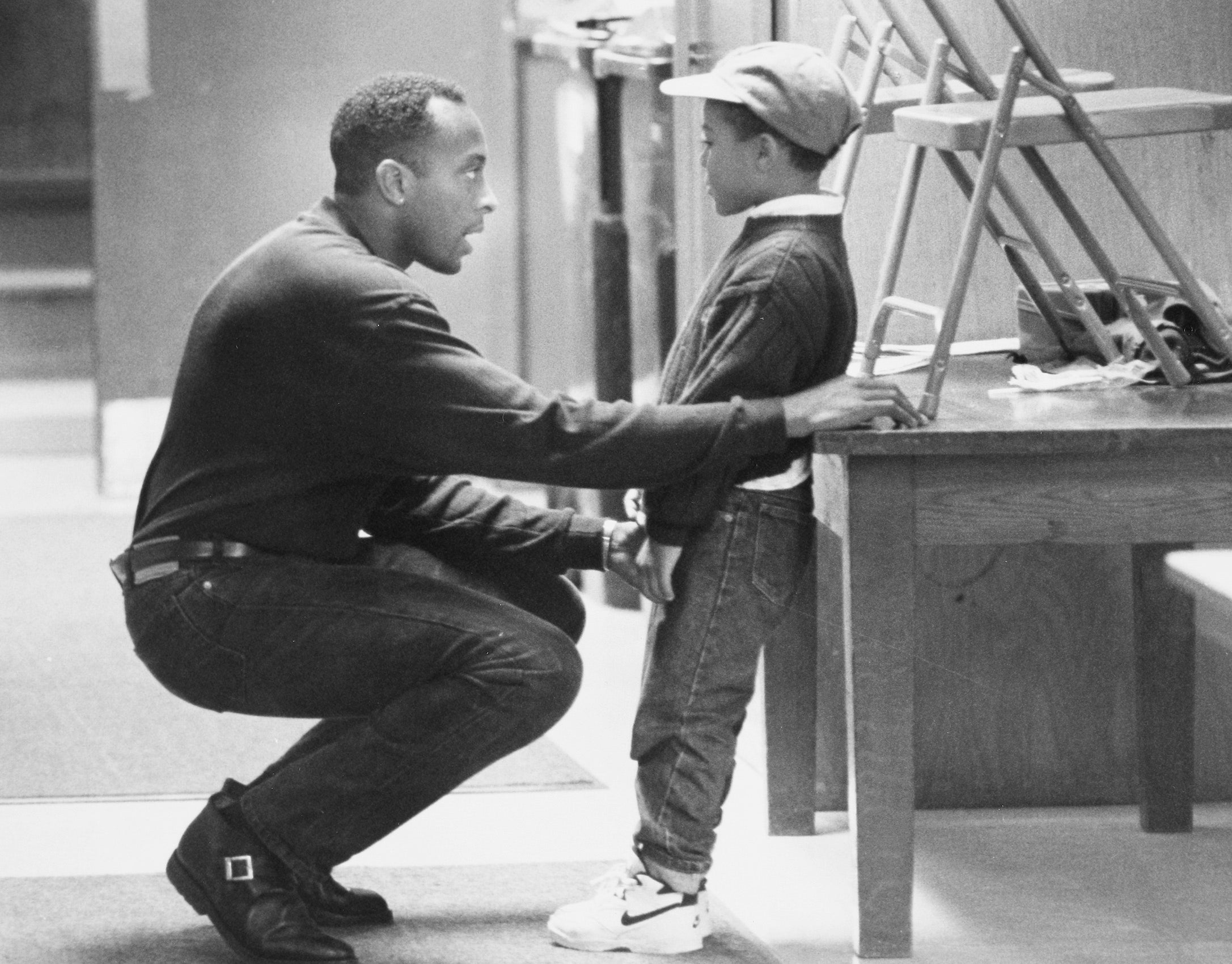
From those discussions, Building Educated Leaders for Life, or BELL, an after-school and summer education program, was born. Mason gave him a book on how to fundraise, and a few professors started offering guidance. These included Ogletree—who ran a program Phalen attended called Saturday School, designed to support Black students and examine critical issues in the study of the law—and Derrick Bell, whom he approached after hearing him speak a few times on civil and human rights issues. BELL, named after his mentor, eventually grew from a small project with 10 volunteers serving a few dozen students in Boston and Cambridge to a national nonprofit with more than 800 employees serving 15,000 scholars annually in several U.S. cities.
The instinct to help others runs in Phalen’s family. Born into foster care, Phalen, who is Black, was adopted into a large, white, Roman Catholic family. His grandfather had spoken out against the “No Irish need apply” bigotry of turn-of-the-century Boston. His mother had dreamed of riding buses south as a Freedom Rider in the mid-1960s—but with seven children at home, she put that dream aside. What she couldn’t act on herself, she passed on: a conviction that her kids owed something to those with less.
“My mom would talk constantly about the Good Samaritan—that it’s your obligation, if somebody else is down and out, to help,” Phalen says. “And not that you’re better than them, but sometimes you’re feeling strong, and somebody else is feeling weak, and if you see them in trouble, you help.”
“At that moment, I knew that I was called to this earth to be involved in education.”
Since those early BELL days, Phalen has molded his career around education and job training. In 2009, he founded Summer Advantage USA, another enrichment program, and in 2012, Phalen Leadership Academies (named for his parents), a national network of 22 high-performing public charter schools. A few years ago, he also became CEO of Great Jobs KC, which supports low- and modest-income students in the greater Kansas City area through college scholarships and career training in high-demand sectors.
Two years ago, another project he started brought him back to Harvard: Skilled US, an Indiana-based nonprofit with locations in seven other states. An extension of his charter schools, the organization provides job training to under- and unemployed adults, along with mentorship and life skills workshops, including sessions on opening a bank account and dressing for success. More than 90% of participants are still employed a year after landing their first job through Skilled US—and making $24,500 more a year, on average, than they were when they started the program.
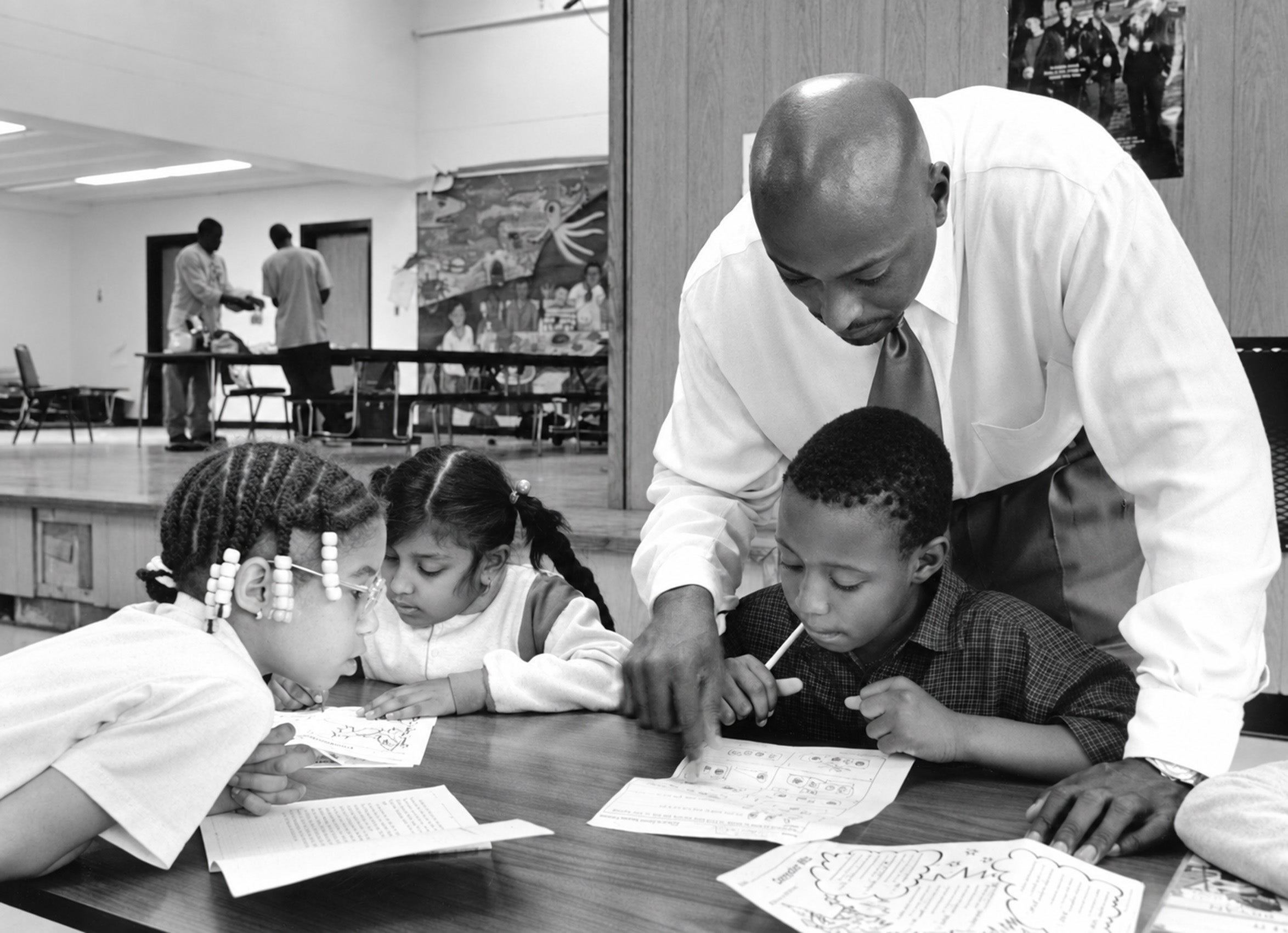
In 2024, Skilled US expanded into Massachusetts with a two-year grant from the Harvard & the Legacy of Slavery Initiative, created by Harvard to take accountability for the university’s ties to slavery. The initiative’s Reparative Grant Program offers seed money to Boston and Greater Cambridge organizations that address systemic inequities affecting local communities. Phalen says the collaboration was a full-circle moment for him.
“Boston is home for me, and Harvard was a critical home for me,” he says, noting that his time in law school challenged him academically and offered a strong and diverse Black community where he found important friendships. Law school also gave him lasting skills that he uses every day in his nonprofit work.
“Law school trains you in public speaking, which I’ve had to use to get people excited about our mission,” he says. “It trains you in effective writing and making your case, which I’ve used to fundraise for my organization. It trains you in taking in an extraordinary amount of information and organizing it, which I do every day as a nonprofit leader trying to advance my organization.”
Looking back, Phalen credits this training and his family’s helping mindset with allowing him to pursue what he knew early on he was here to do: open doors so that people don’t have to live paycheck-to-paycheck.
“We’re all trying to attack this thing called poverty.”
“We’ve learned over time how intractable poverty is, and how difficult it is for children to escape. Even the smartest, the kindest, the best kids. Poverty has a very strong gravitational pull,” he says. “We’re trying to do a comprehensive community uplift through good schools, summer learning, college scholarships and support, and workforce development opportunities for families to get out of poverty. That’s how it all ties together. In the end, we’re all trying to attack this thing called poverty.”
Read more alumni profiles from Harvard Law Bulletin and Harvard Law Today