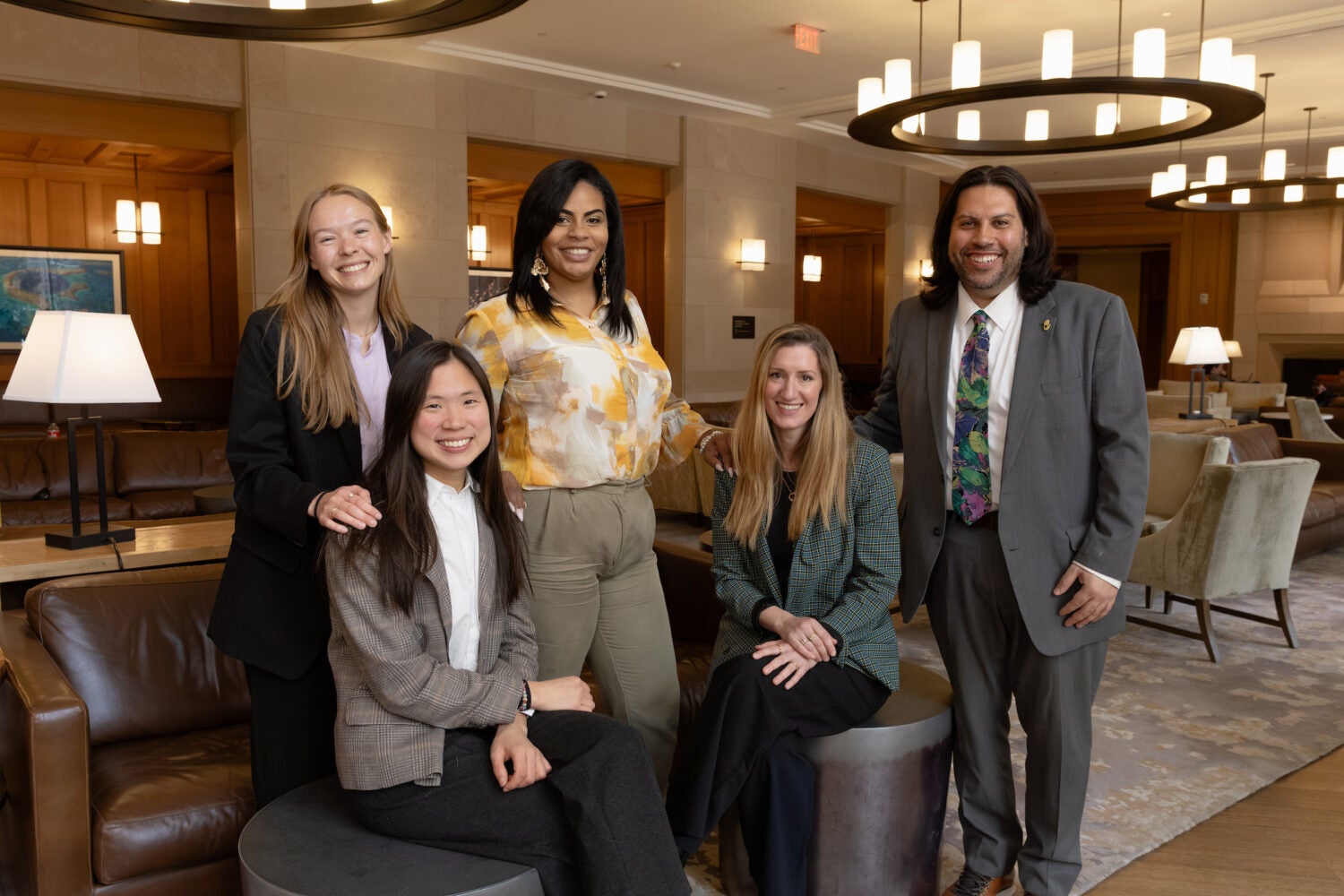
When Tatiana Rodriguez reported domestic violence to the police, she expected help.
Instead, she says, a Department of Children and Families investigator arrived at her door and inspected her home. “I didn’t understand how me reporting domestic violence had anything to do with what I have in my fridge and my cabinets and my son’s room,” Rodriguez recalled. In addition, she did not know she had rights during that investigation and could refuse entry without a court order and decline to answer certain questions.
By the time she learned these rights existed, her case had been hurt in ways that might have been prevented.
Rodriguez’s experiences navigating DCF, as both a parent and as a youth who spent significant time in the foster system, led her to found Family Matters 1st of Boston in 2021. FM1st is one of the few parent-led organizations in the country focused on families affected by child welfare investigations.
Now, through an innovative partnership with the Harvard Legal Aid Bureau, a student-run civil legal aid organization that provides free representation to low-income and marginalized communities in Greater Boston, Rodriguez is helping law students master a different model of advocacy: one in which lawyers follow the lead of affected communities rather than directing them.
“When I was caught up in the system as an adult, after aging out of the foster system as a child, I realized that DCF did not operate in a trauma-informed way,” Rodriguez said. “They made victims feel like they were always wrong and rather than helping, took measures to punish victims and cause further trauma and harm.”
After meeting other parents and former foster children who shared similar stories, Rodriguez began organizing weekly support groups. “I realized that it was a bigger issue that was not unique to me,” she said.
The revelation made her think about her own family and the parallel challenges that generations before her faced. “When I look back at my mom’s and grandmother’s story of coming here from Puerto Rico and being punished for being poor, the system weaponized family separation as a tool to control us.”
Family Matters 1st, she says, operates on a model that Rodriguez described as “by us, for us” — positioned as an alternative involving parental participation, which Rodriguez believes can script families’ perspectives into narratives. “FM1st is an open space for people to bring their own issues and ideas and be transparent without the fear of being judged or being reported,” Rodriguez said.
Third-year law student Cindy Wang ’26, who co-led the Harvard Legal Aid Bureau’s family practice over the past year, said Family Matters 1st holds regular meetings where parents share experiences and strategize together. “Parents join the biweekly Zoom meetings, share about what they are going through in their own cases, and provide mutual support for one another. … It is an inspiring model because other parents often jump in and provide advice based on their own experiences, which is such a valuable source of insight and collective knowledge sharing.”
Wang recalled one meeting where a parent mentioned an upcoming court date. Another parent asked which court, discovered they would be at the same location, and immediately volunteered to accompany them.
Following the family’s lead
The partnership between the two organizations emerged when Rodriguez became a client of the clinic while dealing with her own DCF case. “From the moment that I started working with HLAB, I felt what it was like to have attorneys that actually cared, where your voice and your experience mattered,” Rodriguez said. “I had dealt with so many [other] attorneys who did not make me feel that way.”
Harvard Legal Aid Bureau, the oldest student-run legal services organization in the country, has for decades served not just as a learning ground for innovative models in social justice lawyering, but also as a major source of legal services representation in Massachusetts. Students spend two years in the clinic working in one of several practice areas: housing, wage, or family defense.
Clinical instructors and assistant directors of the family practice Jacob Chin and Elizabeth Tuttle Newman ’16 describe the collaboration as an exercise in “movement lawyering” — using legal expertise to support grassroots organizing rather than leading it. “We really believe movement and community lawyering must be led by impacted experts and people with lived experience,” Chin said. “Co-creating movement spaces with impacted parents takes a lot of intentionality and mutual trust. We fostered a relationship with Tatiana and impacted parents for years before building out our clinical partnership.”
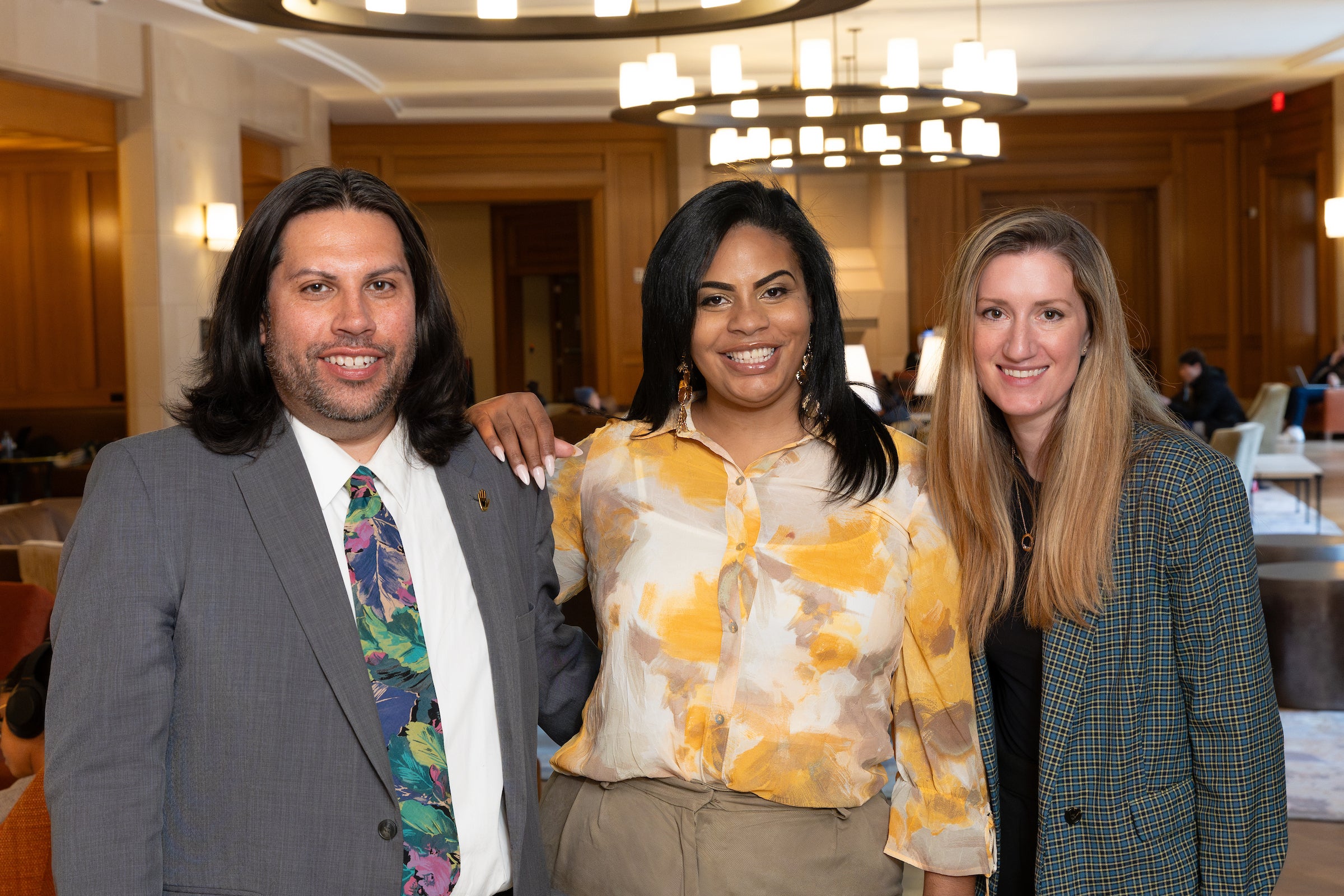
For law students, this approach to lawyering means showing up to weekly support groups not as legal experts dispensing advice, but as community members building relationships and acting in solidarity. Jane Merrick ’26, a student who co-led the family practice with Wang, reflected on learning “what it means to show up for people authentically and being a full person in these spaces.”
“This space is not one that centers lawyers,” she said. “It is a space for people who are impacted by the family policing system. We show up to these meetings in solidarity, not just as lawyer selves but as our whole selves as people. I am Jane Merrick, not just a student attorney. I would not have realized that if I had not met Tatiana and worked in this partnership at HLAB.”
Instructors say this approach represents a departure from traditional legal education and an expansive view of the lawyer’s role. “Lawyering does not just mean you are arguing in front of a judge,” Chin said. There are many transferable skills that lawyers can use to advocate for people outside of the courtroom. For example, we teach HLAB students to use litigation skills like an opening statement to frame a DCF investigation, or to cross-examine a DCF worker when they are surveilling a home, even when it is in an informal setting like the client’s living room.”
The Family Miranda legislative push
One of the partnership’s primary advocacy initiatives has been advancing the Family Miranda Bill, Massachusetts legislation requiring DCF investigators to inform parents of their rights at the start of any investigation. Rodriguez spearheaded the effort after learning through the bureau’s Know Your Rights trainings that she could have refused certain demands during her own investigation.
“There is a correlation between the criminal penal system and the family policing system because they both operate in similarly coercive ways,” Rodriguez said. “A DCF worker wields so much power over people’s families, so investigations start with a serious power imbalance.”
The bill does not create rights but enshrines them more explicitly and adds consequences for failing to implement them. In Massachusetts, parents already have the right to privacy, to refuse home entry without a court order, to decline drug tests, and to limit what questions they answer.
“The problem is that a lot of people do not know these rights because DCF does not affirmatively tell parents at the start of an investigation,” said Merrick. “There is also a fear that if a parent were to exercise their rights, it could adversely impact their case..”
Tuttle Newman emphasized the importance of this legislation and the broader advocacy push to inform parents of their rights and give them concrete tools to assert them. “In the criminal legal system, we as a society understand that individuals facing police investigations can refuse to answer certain questions, can decline to sit for an interview, and can invoke their right to speak to an attorney,” Tuttle Newman said.
“In the family policing context, these rights are both not as well understood on a societal level and not as freely granted. This should not be the case because family policing investigations can carry significant and serious consequences, including the loss of the right to parent one’s own children.”
When the bill was scheduled for a legislative hearing at the State House, bureau students took on a crucial role that illustrates their movement-lawyering approach. Rodriguez and other Family Matters 1st members wanted to testify about their own experiences and the importance of this bill, but felt uncertain about the process. Students held one-on-one sessions where parents told their stories while students transcribed and shaped the narratives into written and oral testimony.
“Parents know their story best and know how and why this bill is so important,” Merrick said. “One way that lawyers can help in these movements is by following the lead of parents, listening to their stories, and helping parents to create testimony using the skills we have learned at HLAB. The bill was reported favorably out of committee, and I truly believe that is because of the powerful written and oral testimony that parents gave during the legislative hearing.”
The oral testimony was emotional as parents shared their stories. “It was incredibly moving testimony,” Tuttle Newman said. “Legislators were crying, hearing parents’ stories. The State House audience was packed with parents and children who had been policed, separated, and reunited. This was an excellent example of students using concrete legal skills to amplify impacted parents’ voices in a profound way.”
“It was beautiful to see people using their stories,” Rodriguez said, “turning their pain to purpose, and seeing them feel empowered with sharing their stories and seeing the responses of the legislators.”
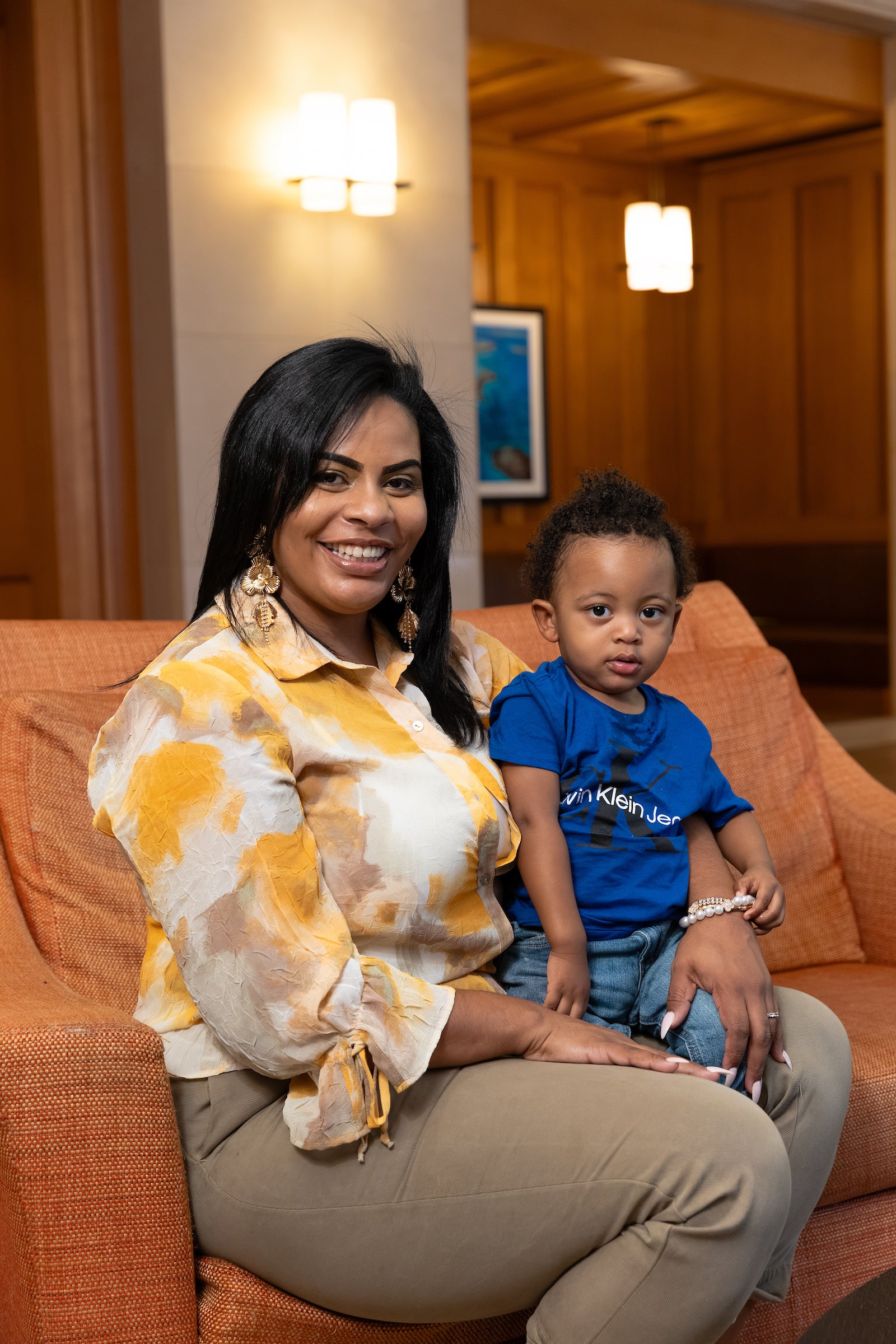
Providing direct representation to families
Beyond legislative advocacy, the bureau partnership provides a referral pipeline for legal services. Many parents who first attend support groups lack legal representation in their own ongoing DCF cases. After building trust through regular attendance at meetings, students can offer direct representation when families need it.
The bureau represents parents in “early defense” cases at the investigative stage when DCF first gets involved in a family’s life. Students also represent parents with ongoing out-of-court DCF issues and in appeals of supported neglect and abuse findings. Because students dedicate 20 hours per week and two full years to clinical work, they can take on a significant docket of high stakes, complex, and time-sensitive cases.
“Many people who come to Family Matters 1st meetings do not have an advocate in their ongoing DCF case,” Merrick said. “There might be an opportunity to connect with them after a meeting, conduct an intake, and take their individual case on as attorneys.”
Chin noted that these referrals create a reciprocal and complementary relationship. “We refer our own clients to Family Matters 1st because we know it is a place of support and a community that we as lawyers cannot provide. Then, if there are legal needs that we can help people with, whether it is direct representation or broader community work, we try to do that.”
Wang, who taught English as a second language in New York City before law school, came to the bureau to learn more holistically about family systems as they affect children. “I think being student-centered is also being family-centered because ultimately children’s support systems are their own families,” she said. As a former educator, she has developed partnerships with local schools, conducting mandated reporter training and providing Know Your Rights information to parents.
“We try to develop partnerships that build beyond a single, one-off training or event,” Chin said. “When attorneys show up week after week at the same school or parent support group, that builds not just real relationships but real trust.”
These trusting relationships make all the difference in acting quickly to connect parents with advocates, according to Tuttle Newman. “By seeking to be known and trusted in this space, when a FM1st member receives a knock on their door from DCF, they can reach out directly to a lawyer that they know and trust.”
Lessons beyond the classroom
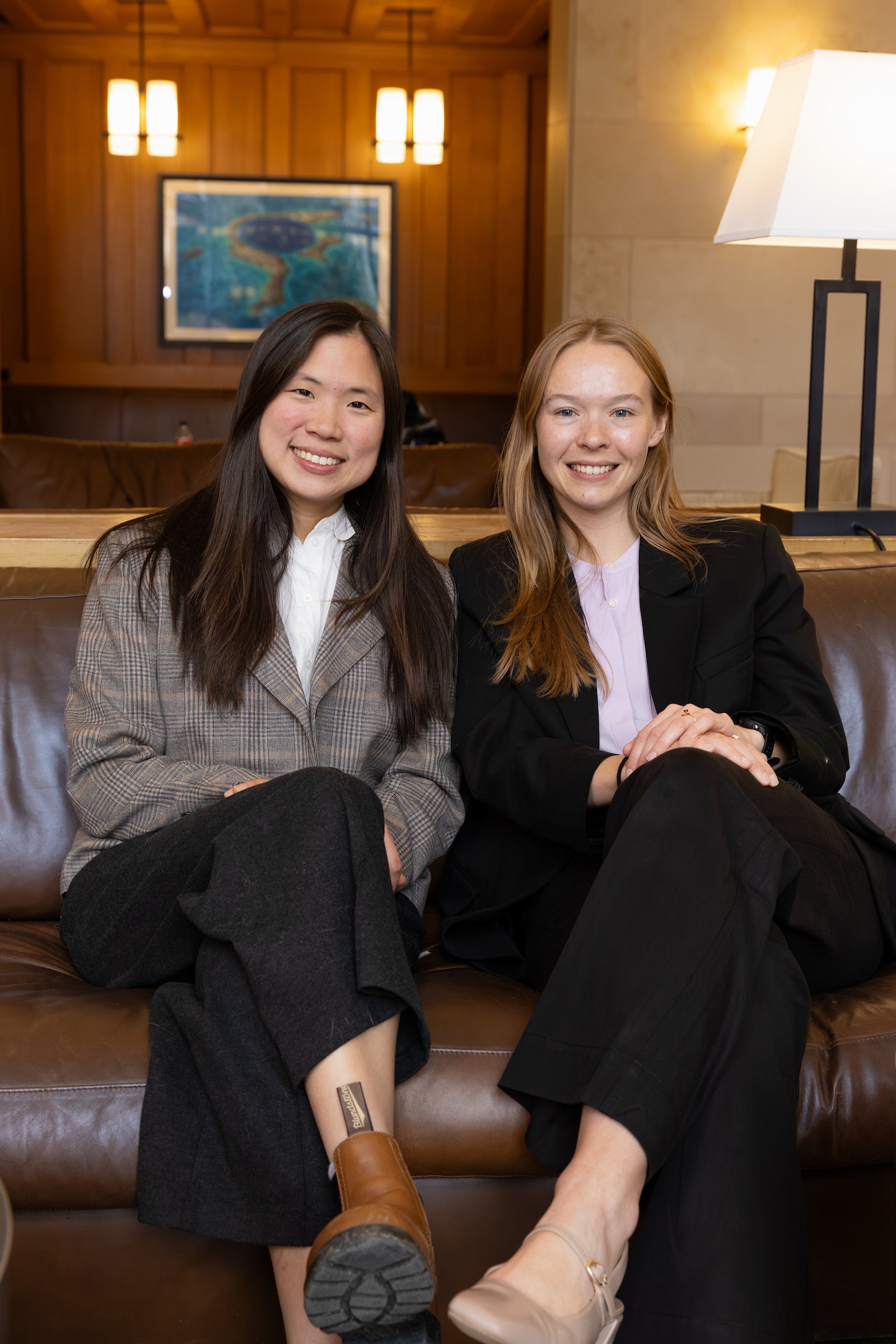
For students, the experience provides training they would not receive in the classroom. Merrick, who will work as a public defender in Massachusetts after graduation, said: “Working within a movement makes you a better advocate for your individual clients. From my clinical instructors at HLAB, I have learned what client-centered representation means and how to litigate cases in a way that affirms my clients’ experiences and stories. Tatiana’s leadership has taught me a lot, especially what it means to be a lawyer in solidarity with a broader movement.”
Wang believes the perspective she has gained at the bureau will shape her future practice. “My experience in HLAB’s family practice has helped me figure out what holistic family support could look like. My HLAB clinical instructors have taught me that this means learning who my clients are as whole people, not as individual legal cases, and providing support around the systems they are enmeshed in.”
Tuttle Newman said, “Cindy and Jane have done tremendous work during their two years at HLAB and in their year leading the Family Practice as practice area heads.”
Rodriguez emphasized the importance of having lawyers who use their professional privilege in service of the movement. “At the end of the day, we can only do so much as impacted parents. We need you to use your title as a lawyer,” she said. “It feels good to know that there are good lawyers that really want to change the system, that are not just OK with doing what is comfortable.”
As the partnership continues, both organizations are focused on expanding their reach. Rodriguez envisions influencing other family preservation projects across Massachusetts and seeing more parents empowered to assert their rights. “I am really excited to see that change,” she said, “because it has been way too many years of siloing and isolation and silencing.”
Rodriguez, who began this work as a volunteer while holding another full-time job, has since built Family Matters 1st into a funded organization with growing influence. She sees the work as both deeply personal and part of a larger movement. “I was able to turn my painful experience into something so major and to be able to connect with other parents,” she says. “I am proud of the genuine trust we have built as a community.”
Want to stay up to date with Harvard Law Today? Sign up for our weekly newsletter.