
The numbers are staggering.
The United States has one of the highest incarceration rates in the world. According to the World Prison Brief, this nation has about 1.8 million people in state and federal prisons and local jails. That figure represents about 20 percent of the world’s prison population despite this country having only about 5 percent of the population.
At Harvard, experts are looking for answers and action over the issue.
Across the university, scholars are working to loosen America’s hold near the top of that grim list. Chief among them are the students, faculty, and lawyers working with the Institute to End Mass Incarceration, a five-year-old research and advocacy center housed at Harvard Law School and led by Professor Andrew Manuel Crespo ’08 that is pairing law school students with campaigns in various states trying to halt new prison construction and divert related funding to invest in solutions proven to better reduce crime: public health, education, housing support, and mental health care.
For the past several months, student-attorneys working with the institute have been collaborating with No New Prisons Illinois, a grassroots advocacy coalition, to stop proposed funding for two state correctional centers that would cost $900 million. And while the details may not sound flashy or glamorous, their work breaking down the finer points of the state budgeting and appropriations process for organizers pressing local officials for change is a key tool for those on the front lines.
As these organizers work to get money that has been earmarked reallocated, they “are also trying to figure out if the money has already been raised, if it has been spent, and what the rules are around redirecting it,” said Crespo, the law school’s Morris Wasserstein Public Interest Professor of Law. “It leads to questions about the appropriation, rescission, and reallocation of public funds, and it gets complicated because a lot of these funds are also raised through debt financing, meaning public bond sales, which leads to questions around how much of the public debt has already been sold, if it is eligible to be retired, canceled, or diverted to other investments.”
“Understanding those details is essential to the organizing campaign,” he added, “because you need to be able to, as the organizers, explain to the legislators you’re trying to move, or explain to the communities you’re trying to activate that … just the mere fact that there was a bill signed that [allocates] $900 million for this prison does not mean the $900 million is already out the door.”
Enter Harvard students Tyler Armstrong ’27 and Kayleigh Hasson ’27. Last spring the pair dug into the minutiae of Illinois’ property, appropriations, and state constitutional law. They studied the fiscal and budgeting authority of the governor compared with that of the state legislature; they examined the Illinois Budget Act and the state’s public debt frameworks; they even pored over quarterly state comptroller reports to match state funding streams with corresponding bond sales. Then they distilled their findings into crisp, clear prose and presentations for their partners on the ground.
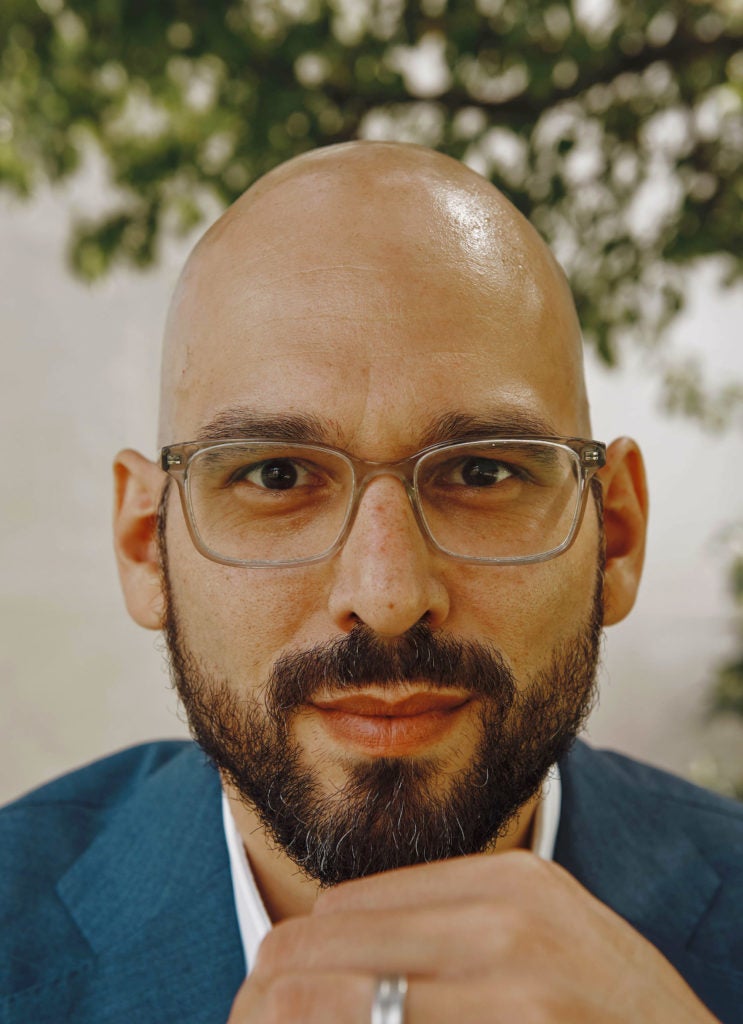
“This is some of the most exciting lawyering, precisely because you go where the work takes you, and you have to figure out how to develop the type of expertise that your partners doing the work on the ground need in the context of the struggle they’re engaged in.”
Andrew Crespo ’08, IEMI director and professor of law
It’s the kind of detailed work, noted Crespo, that highlights the myriad paths available to up-and-coming lawyers eager to help end mass incarceration. Many law students interested in addressing the nation’s prison problem “typically think of criminal law, criminal procedure and work directly related to the Eighth Amendment that limits the government’s ability to impose penalties on criminal defendants,” said Crespo, who also leads an intensive training program on community organizing and teaches a seminar on law and grassroots social movements in connection with the institute’s in-house clinic. But the opportunities to make change, he points out, are much more wide-ranging.
“This is some of the most exciting lawyering, precisely because you go where the work takes you, and you have to figure out how to develop the type of expertise that your partners doing the work on the ground need in the context of the struggle they’re engaged in.”
Looking to make a difference
Armstrong didn’t arrive on campus with a typical law school background. He majored in Russian studies in college and spent years working in the esports gaming industry before opting for law school. But the self-described “mock-trial nerd” was involved in activism during his time at UCLA, where he also took a number of criminal justice classes. Those early experiences, combined with a feeling he “could be doing more,” made the law a good fit.
“Next thing you know I’m here at HLS, and then just looking for any and every way I can get involved in the public interest community here,” said Armstrong, “because that had really been what I came to law school to do.”
He just never imagined that accomplishing that goal would mean diving into the Illinois state appropriations process, and the particulars of bond financing. But his work with IEMI both fulfilled that initial desire, said Armstrong, and expanded his understanding of how his law school training can help others push change forward.
“You’re creating these resources which are meant to be built on in the future. They are meant to not just inform people but also give them the ability to take what we built and continue with themselves.”
Tyler Armstrong ’27
During his time with IEMI, Armstrong spent hours studying details of the Illinois budget process, the timeline, the agencies involved, the laws affecting it, and the ways organizers could engage. It was “simple enough at the front end” he said, because much of the information is “spelled out in the Illinois state constitution and statutes that are relatively comprehensible.”
Not so for the world of bonds. To get himself up to speed on the finer details of the complicated financing method, Armstrong studied obscure YouTube videos to learn the terminology and called the Illinois comptroller’s office “more times than I can count.” He also scoured reports issued by state agencies and relevant news articles.
“I was very much out of my depth at the very beginning but built up a wealth of expertise as I went through it … learning about what agencies are involved in issuing bonds, what types of bonds there are, how they go out, who buys them, when they buy them, and, once they buy them, how that money gets shifted around through the state.”
His work resulted in a number of white papers and presentations on the budget process and bond financing, which he and Hasson delivered to members of the No New Prisons coalition organizing committee. For Armstrong, seeing his work have an immediate effect on the campaign and realizing its long-term impact was “one of the greatest parts” of the experience.
“You’re creating these resources which are meant to be built on in the future. They are meant to not just inform people but also give them the ability to take what we built and continue with themselves. … Building that capacity … was really gratifying.”
“It’s just a form of lawyering that I never knew existed.”
Armstrong calls his time with IEMI “the best experience I’ve had at Harvard Law School” and said he hopes to continue to engage with the institute “in some capacity into the next year.” He also plans to pursue similar opportunities after he graduates. “One thing that IEMI impressed upon us … is that the bulk of radical social change, change that really gets at the roots of society, comes through organizing.”
A different type of lawyer
Hasson’s interest in Crespo’s clinic was driven in part by personal ties.
“My family has been impacted by incarceration, and so that was something that growing up was always on my mind,” said Hasson, who was a student advocate at the University of Maryland, where she studied criminology, criminal justice, and economics. She said she had always planned to do anti-carceral work in law school, possibly with a prisoners’ rights organization or a public defender’s office. But when she connected with IEMI she found “this secret third option [offering up] a lot of different ways of lawyering.”
During her time with the institute’s clinic, Hasson worked with Armstrong, digging into the Illinois appropriations process, examining where and when public input is solicited, and identifying opportunities for members of the campaign to participate in capital development board meetings or legislative hearings.
“We had a lot of discussions about modes of lawyering in relation to organizing, thinking a lot about our positionality as law students or future lawyers, and how we can be useful to campaigns without overpowering or centering ourselves in campaigns.”
Kayleigh Hasson ’27
She also attended the coalition’s weekly Zoom meetings, listening and bringing what she learned to bear on her clinical work. Through those sessions, she was able to get “a better idea of what other things this team is working on and how our work fits in,” said Hasson, and how to ensure “the work that we’re doing is the most relevant and useful for them.”
As part of her work with the Illinois campaign, Hasson also researched the American Institute of Architects’ ethical rules, which generally prohibit architects from designing buildings that will be used for solitary confinement, to determine if organizers could potentially use those ethics rules to pressure architects to decline or back out of prison construction projects. And she engaged in regular clinic conversations about the best ways to help campaigns without overwhelming them.
“We had a lot of discussions about modes of lawyering in relation to organizing, thinking a lot about our positionality as law students or future lawyers, and how we can be useful to campaigns without overpowering or centering ourselves in campaigns.”
Like Armstrong, Hasson hopes to work in a similar capacity after she leaves Harvard. “I think that my IEMI experience expanded what I can envision as work that I might do in the future.
“I could still be part of a campaign like this, and I could still be useful even if it’s not my full-time job [because I now know] law students and lawyers still can be really helpful to these campaigns. … That’s something that I’ll definitely carry with me.”
Seeing the work unfold on the ground
Institute lawyer Joan Steffen ’22 lauded the work the students did diving into complicated legal issues and making the information they gathered understandable to the coalition’s organizers and leaders.
“It’s very, very technical, very in-the-weeds legal research that they did, which is already a challenge,” said Steffen, who has worked for the institute for the past four years. “But then they had to take that and translate it into a format that is readily understandable by a wide array of folks who are involved in the campaign, many of whom do not have a legal background or a background in budget law or anything like that, and they did just an excellent, excellent job.”
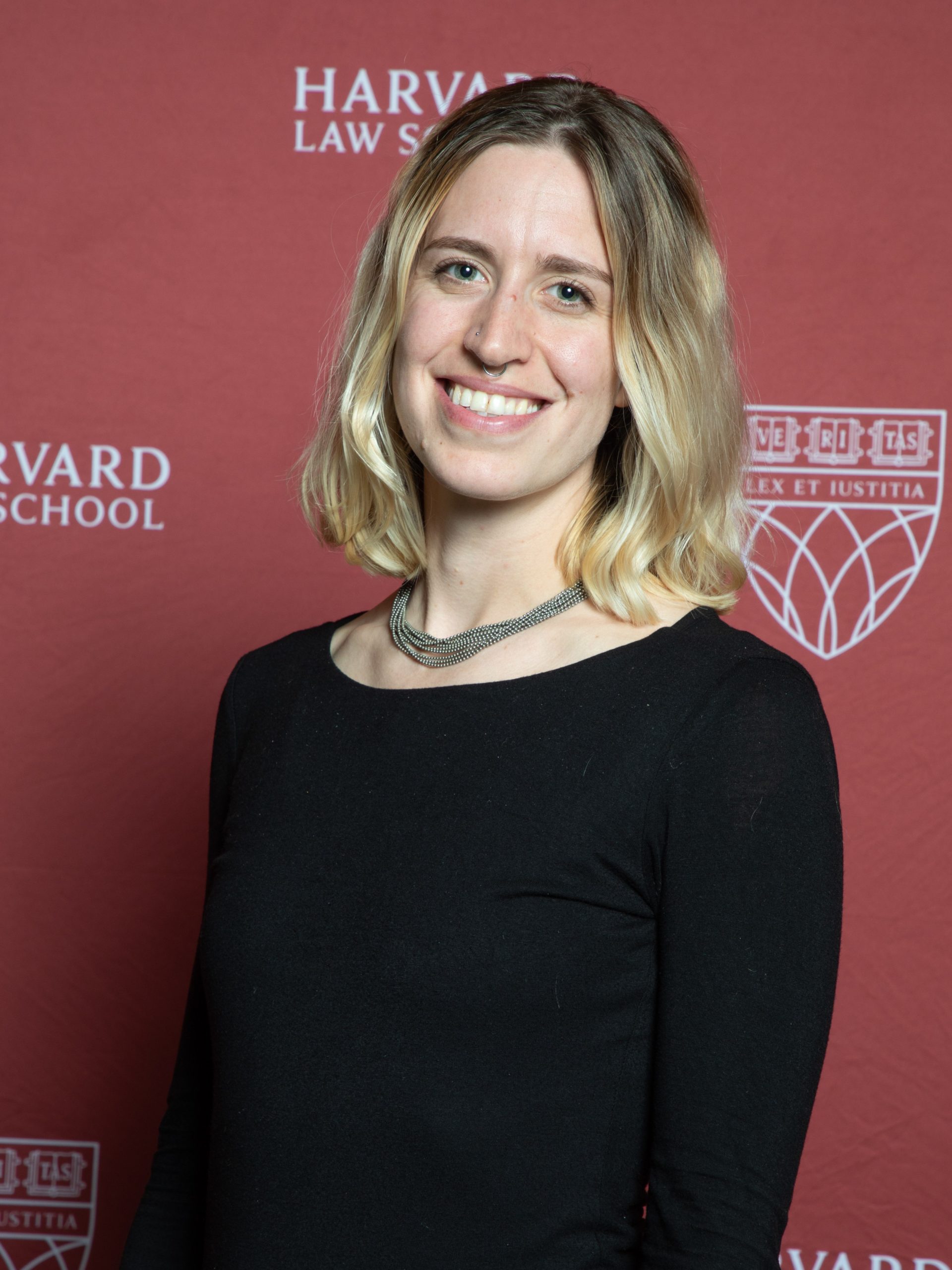
“We place a high emphasis on being able to educate our campaign partners to really actively participate in decision making around legal strategy and be able to take whatever legal information we’re able to provide and turn that into organizing strategy.”
IEMI lawyer Joan Steffen ’22
Steffen also called the student contributions vital to the IEMI model.
“We place a high emphasis on being able to educate our campaign partners to really actively participate in decision making around legal strategy and be able to take whatever legal information we’re able to provide and turn that into organizing strategy.”
Their work helped the coalition to secure a speaking slot at a legislative budget hearing with the Illinois State House panel that determines funding for capital infrastructure projects, including new prison construction. Steffen was one of the representatives chosen by the coalition to speak at the hearing, explaining why “removing the funding from the budget was the proper legal pathway to do this based on our research.” She relied heavily on the students’ notes and their help in prepping her for any questions she might get from legislators in response to her testimony. “I had a ton of support from them.”
Alex Boutros, a member of the Coalition to Decarcerate Illinois, part of the broader coalition to end new prison construction, called the student help invaluable, comparing it to the work of high-paid lobbyists or legislative experts.
“For the legislative work, it’s crucial that we take the time to understand how we strike $900 million for rebuilds from this budget, because most of these lawmakers don’t understand. So we can’t go in there having a blind conversation with them. We need to be able to go in there to educate them.”
“And so we need to be educated first on it. And that’s where our student researchers are so valuable.”
Want to stay up to date with Harvard Law Today? Sign up for our weekly newsletter.