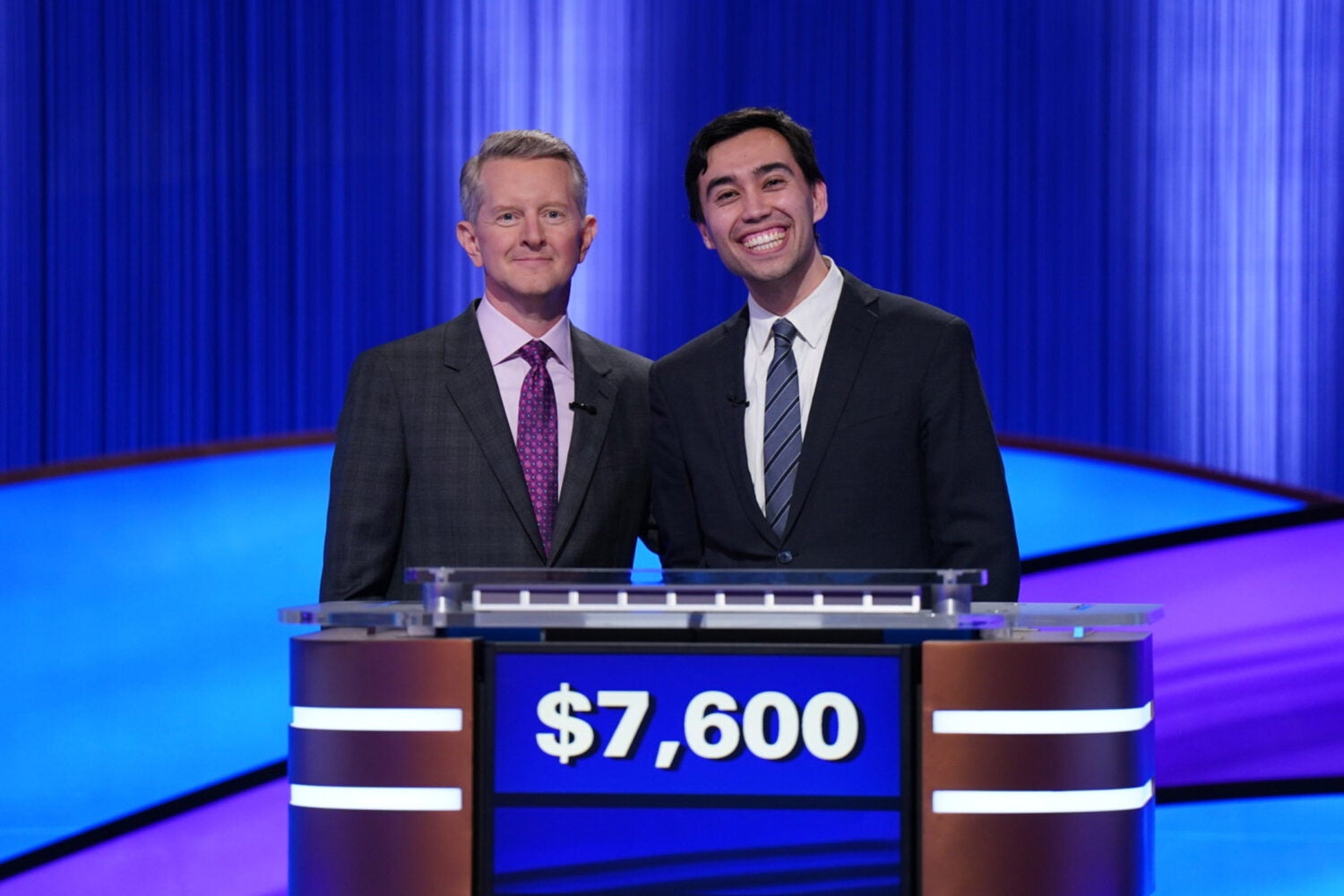
Some “Jeopardy!” contestants prepare for the legendary TV quiz show with military precision, practicing buzzer drills, learning game board and wagering tactics, and studying thousands of past games for repeat topics and trends.
For five years, Caleb Groen J.D./M.P.P. ’27, took a different approach: “A lot of flashcards, old episodes, and paying attention to billboards, the news, and the things people around me were saying.”
His idiosyncratic method paid off: Groen concluded his 12-game winning streak on July 20 after racking up $349,968 — the 17th highest regular play total in the show’s history.
Yet, despite qualifying for the Tournament of Champions later this year, the law and public policy student says that his initial goals were modest.
“I just wanted to be sure I didn’t embarrass myself on a question about the Fourth Amendment, or something like that,” he laughs.
Groen grew up watching “Jeopardy!” and “Wheel of Fortune” with his grandmother, and his interest in trivia blossomed as an undergraduate at the University of California, Berkeley, where he participated in the Quiz Bowl Club. After college, he found himself missing the thrill of competition, which brought him back to “Jeopardy!”
“Eventually, it became my dream to make it onto the show,” he says.
After five years of fortifying his trivia knowledge, Groen applied for the show, now in its 42nd season. In April, he was headed out the door to watch a friend run the Boston Marathon when he got the call — he had been selected.
It was good timing in more than one way, he says. “I was just grateful that I wasn’t chosen to participate during finals.”
On his way to Los Angeles, Groen kept reviewing trivia flashcards and watched episodes of popular sitcoms from the last several decades — a topic that often comes up on the show, he says. But, he adds, there’s no reliable way to predict which knowledge will matter most.
“I had watched a cooking show with my girlfriend, where a particular Southern condiment called chow-chow was mentioned, and that came up as one of the clues,” he says. “At the end of the day, it is really just if you get lucky and the answers line up with what you know.”
For Groen, that includes food (he loves to cook) and quirky niche categories like “Esperanto Film Festival,” which appeared in a game from 2022.
“I learned Esperanto at one point in my life, so I would have loved that one to pop up,” he says.
As he waited with the other contestants in the show’s green room before his first game, Groen was a bundle of nerves, yet the mood was congenial, he says.
“We were all feeling the tension,” he recalls. “But we became friends. After all, when else are you going to be in a room full of people where every single one can name the capital of Moldova?” (It’s Chișinău.)
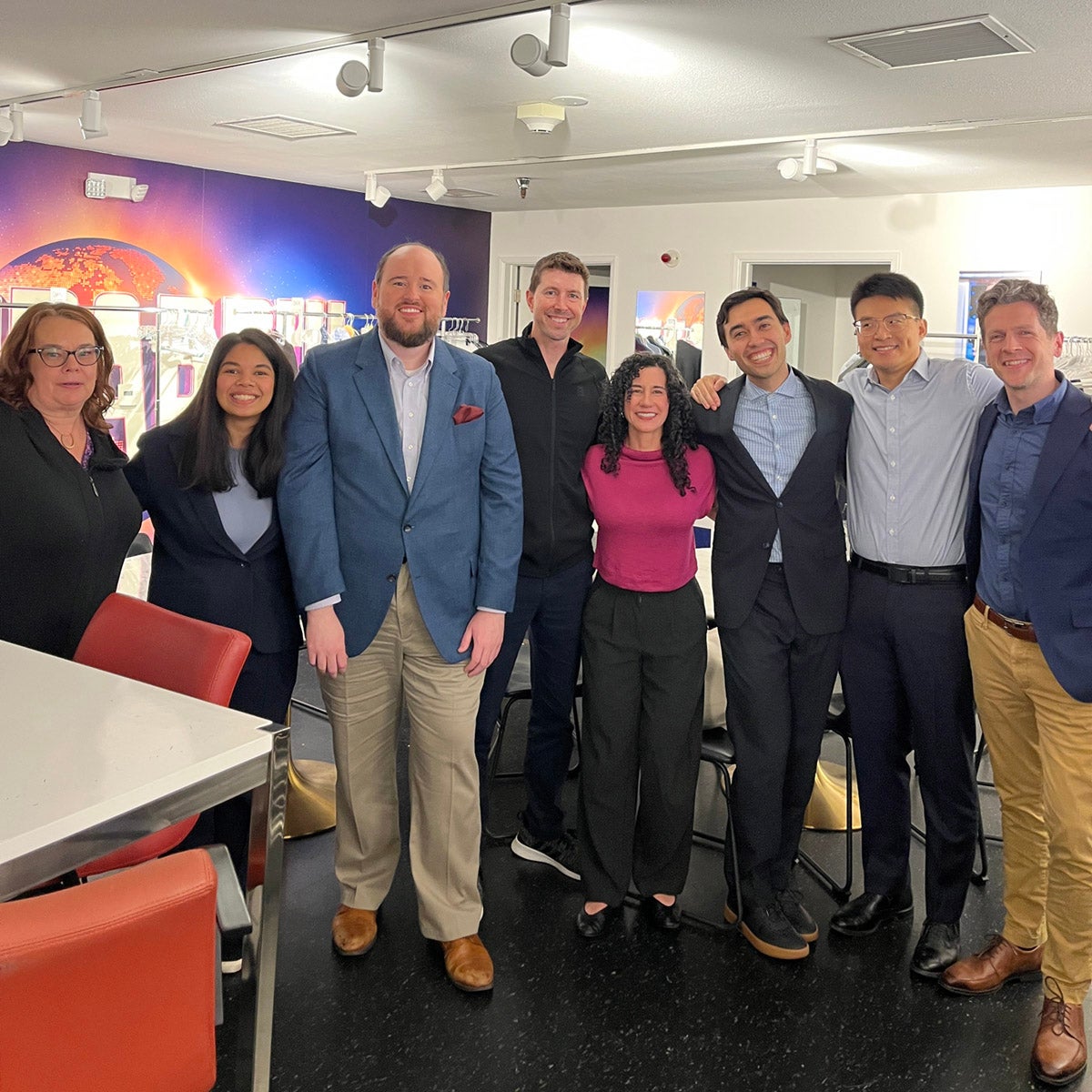
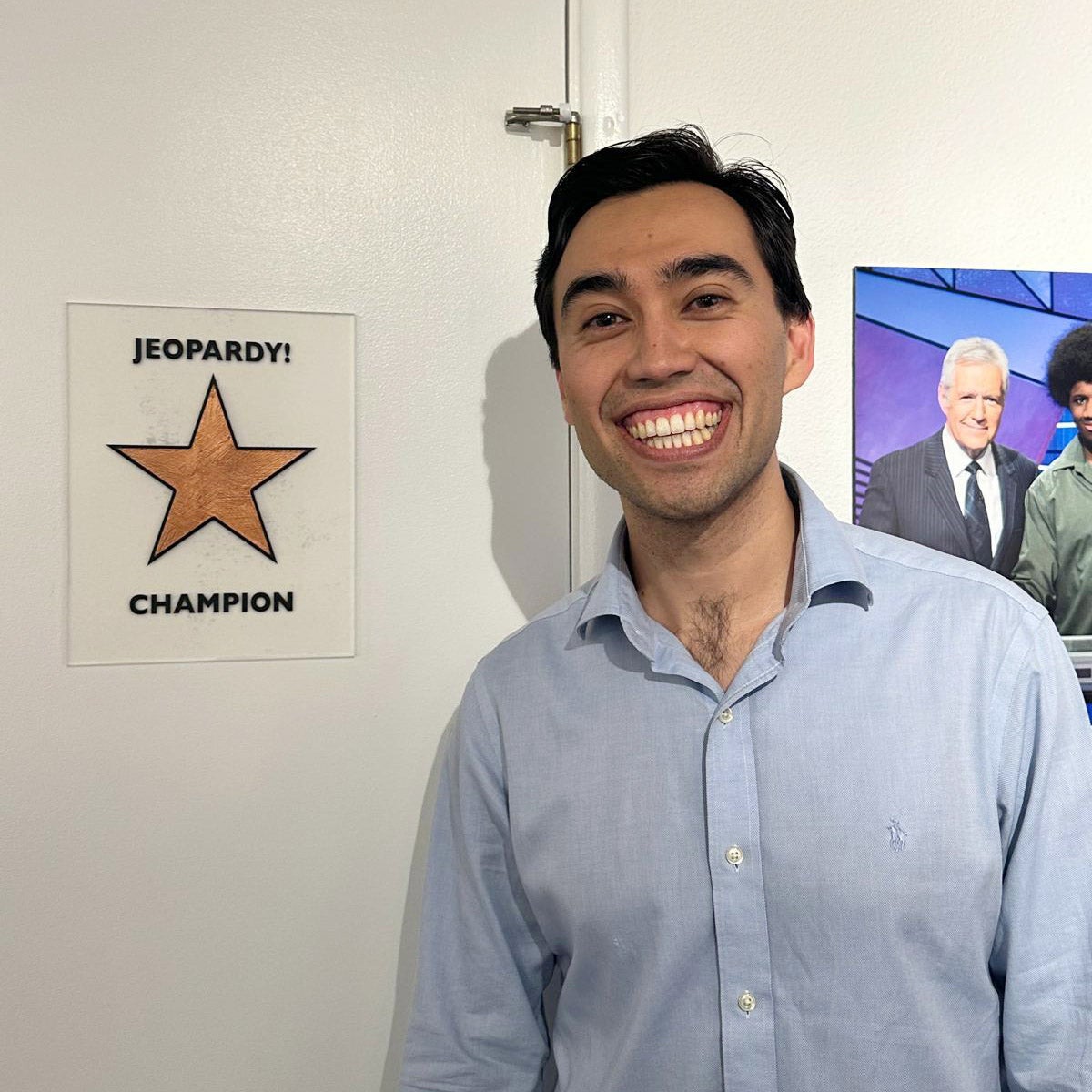
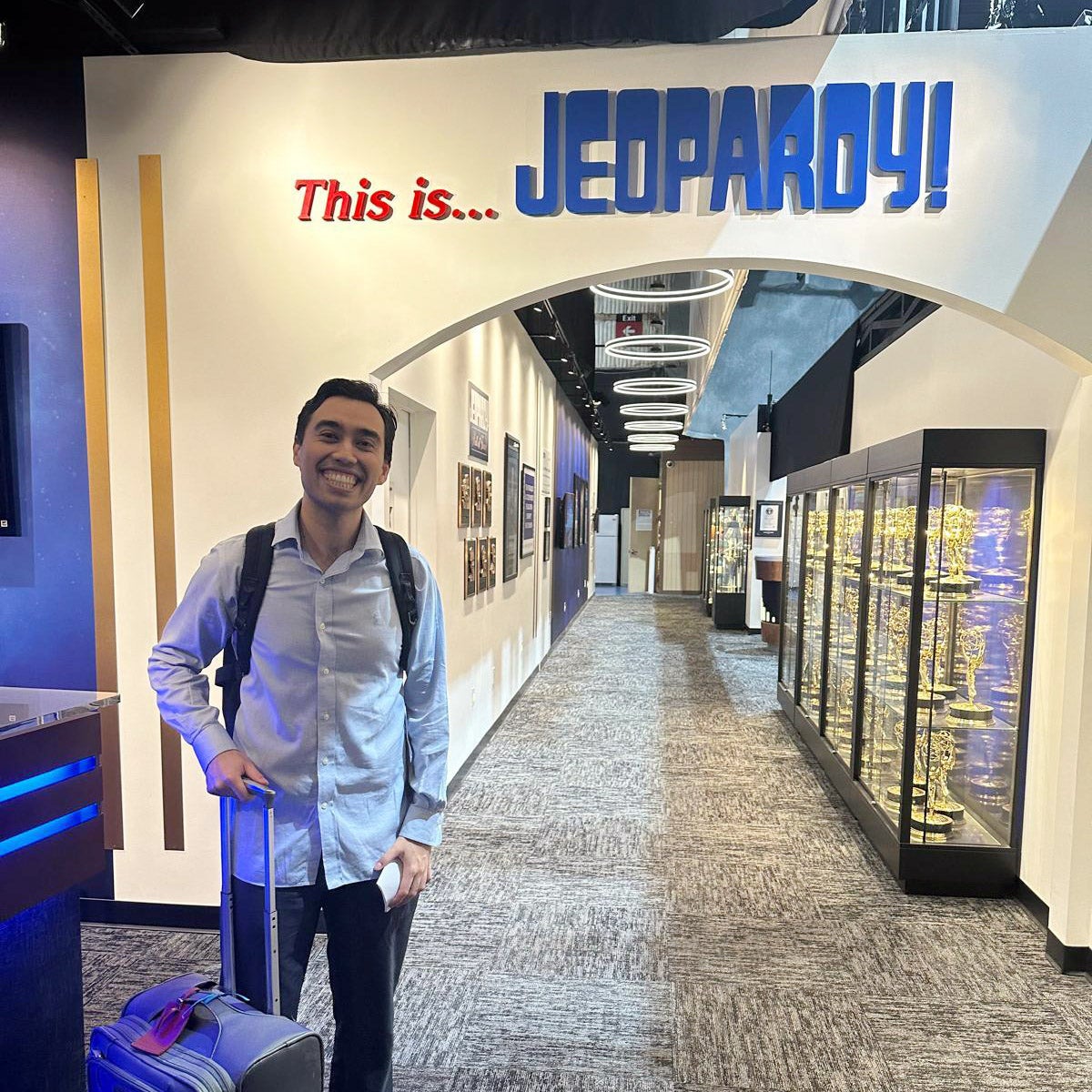
On the show, Groen’s quiz bowl experience paid off — he was quick on the buzzer and with his responses during a thirteen-game run.
“I won my first game, and I felt like I had accomplished what I had set out to do,” he says. “It became more surreal, in a good way, the longer it went on.”
His victories earned him a top spot in the Tournament of Champions later this year and the rare title of “super-champion,” someone who wins at least ten “Jeopardy!” games in a row.
Groen says that being on the show was an “amazing experience,” one he’s glad to have shared with family and friends over the last few weeks. As for those winnings? Groen plans to invest some of the money, donate to charity — and maybe even buy a new bike to ride around on campus. “My bike’s been broken for a while,” he says.
A ‘Jeopardy!’ champ at Harvard
While TV viewers have come to know Groen as a trivia champion, his classmates know him through his work at Harvard Law School and Harvard Kennedy School (see related profile). He came to Harvard interested in working with the U.S. Foreign Service or in international relations, and says a dual degree offered him an opportunity to study law and public policy with some of the world’s top scholars.
In Cambridge, Groen has been active in the Harvard Law School Christian Fellowship (he is its current president) and with the Harvard Prison Legal Assistance Project, a student practice organization where, under the supervision of practicing attorneys, students represent incarcerated people in Massachusetts.
“Being able to work directly with clients and hear their stories has been amazing,” he says. “I’ve also learned so much about how the carceral system works.”
Today, Groen has narrowed his focus to a career in global clean energy finance — an area he became interested in while at law school. He’s currently a summer associate with Milbank in New York City and is preparing for his final year at Harvard.
He says that being a contestant on a show like “Jeopardy!” channels the practice of law in some ways — responding to rapid-fire questions on stage is not entirely unlike answering a judge’s inquiries in a courtroom, after all.
But while “Jeopardy!” rewards a little knowledge about a lot of subjects, studying and practicing law require a deeper understanding of issues, Groen says.
“Yet, in both law and on ‘Jeopardy!,’ curiosity goes a long way,” he continues. “Because so much of the show is chance, sometimes the best way to prepare is to just pay attention to what people around you are saying. To look things up, if you aren’t familiar with them.”
Exploring unexpected topics, disappearing down rabbit holes — that’s how Groen says he plans to study for his Tournament of Champions run this fall. That, and taking good notes in class, he adds.
“Just in case we talk about some sort of evidentiary rule that comes up on the show,” he says. “I don’t want to end up stumped on something I should have known.”
Want to stay up to date with Harvard Law Today? Sign up for our weekly newsletter.