
How does China wield antitrust law differently than other nations? What impact, based on an extensive statistical study of years of Japanese decisions, does the gender composition of judicial panels have on the disposition of criminal cases?
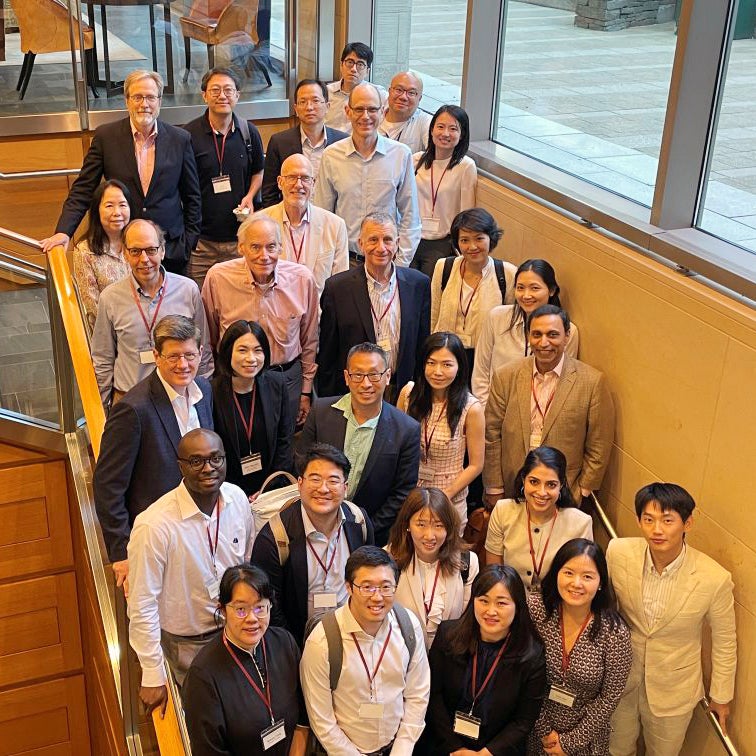
Last July, ten emerging scholars of Asian law gathered at Harvard Law School to present their research on these questions and more to senior faculty members from across the country.
The multi-day convening, organized by Professors William P. Alford ’77 and Mark Wu, and East Asian Legal Studies Associate Director Alice Izumo, was designed not only to help participants prepare for entering the academic job market, but also to strengthen a growing network of scholars studying Asia’s varied legal systems.

“We were delighted to bring together such a talented group of junior scholars, selected from a much larger group of applicants by panels of senior faculty, on the basis of their papers and research agendas,” says Alford, the Jerome A. and Joan L. Cohen Professor of East Asian Legal Studies at Harvard. “We were so pleased to put on such a convening and so grateful to the more than 15 senior faculty from other universities, who generously gave of their time and covered their own travel costs to join the workshop.”
To Alford and Wu, Harvard Law is a natural place to foster this community; after all, as they say, Harvard is home to one of the oldest and most comprehensive programs in East Asian law outside Asia. Rather than focus principally on Harvard Law’s own students, however, they drew on the institution’s strengths to bolster the field more broadly. That noted, four Harvard-trained junior scholars were chosen by panels of faculty from other schools to present at the workshop. Joining Alford and Wu, and adding very valuably to the discussion, were Mark Ramseyer ’82, Mitsubishi Professor of Japanese Law Emeritus, and Idriss Fofana, Assistant Professor of Law.
At this summer’s convening, the recent law graduates and current advanced degree students gathered for a two-day long workshop, during which they presented their scholarship and received critical feedback from faculty members on how to strengthen their work as they prepare for academic careers.
Participants also enjoyed a career advice roundtable, networking opportunities, a professional tour of Langdell Library by Harvard Law School’s nationally-recognized East Asian law librarian, Dr. Nongji Zhang — and the chance to build relationships with other emerging academics.
The goal, Wu says, was to continue to support an intergenerational community of Asian Law scholars at Harvard and beyond.
“Because only a handful of scholars focus on Asia at any given law school, we thought it was critical to expose doctoral students and post-docs to a wider network of senior scholars who had traversed the same journey previously,” says Wu, the Henry L. Stimson Professor of Law. “Beyond expanding students’ exposure to other viewpoints, the conference also provided them with opportunities to build mentor relationships with those outside of their own institutions.”
Benjamin L. Liebman ‘98, a professor at Columbia Law School, was one senior scholar who offered support and advice to workshop participants. He says he benefited from guidance early in his career from Alford himself. “I see participation in this type of event as a way of trying to continue this tradition of mentorship within our field.”
More broadly, Liebman believes that law students benefit from a pedagogical approach that includes different systems of law — making it especially important to support up-and-coming scholars like those at the gathering.
“Creating opportunities for the next generation of legal scholars focused on Asia is essential to ensuring that students continue to have opportunities to learn about legal systems other than our own,” he says. “This is particularly important in an era of global instability and growing conflict.”
As part of the two-day long workshop, participants were invited to explore the Harvard Law School Library, which has the largest research collection of East Asian law materials outside Asia.
The Harvard Law School Library is the only academic law library in the United States with two full-time and two part-time librarians dedicated to collecting, acquiring, cataloging, and providing reference services for legal materials from China, Taiwan, Japan, and Korea — and all of these materials are available to scholars from around the world, Zhang says.
“Because of the depth and breadth of our holdings and expertise, Harvard Law School Library is often regarded as one of the last resorts” for hard-to-find materials on East Asian law in North America, she adds.
The next generation of Asian law scholars
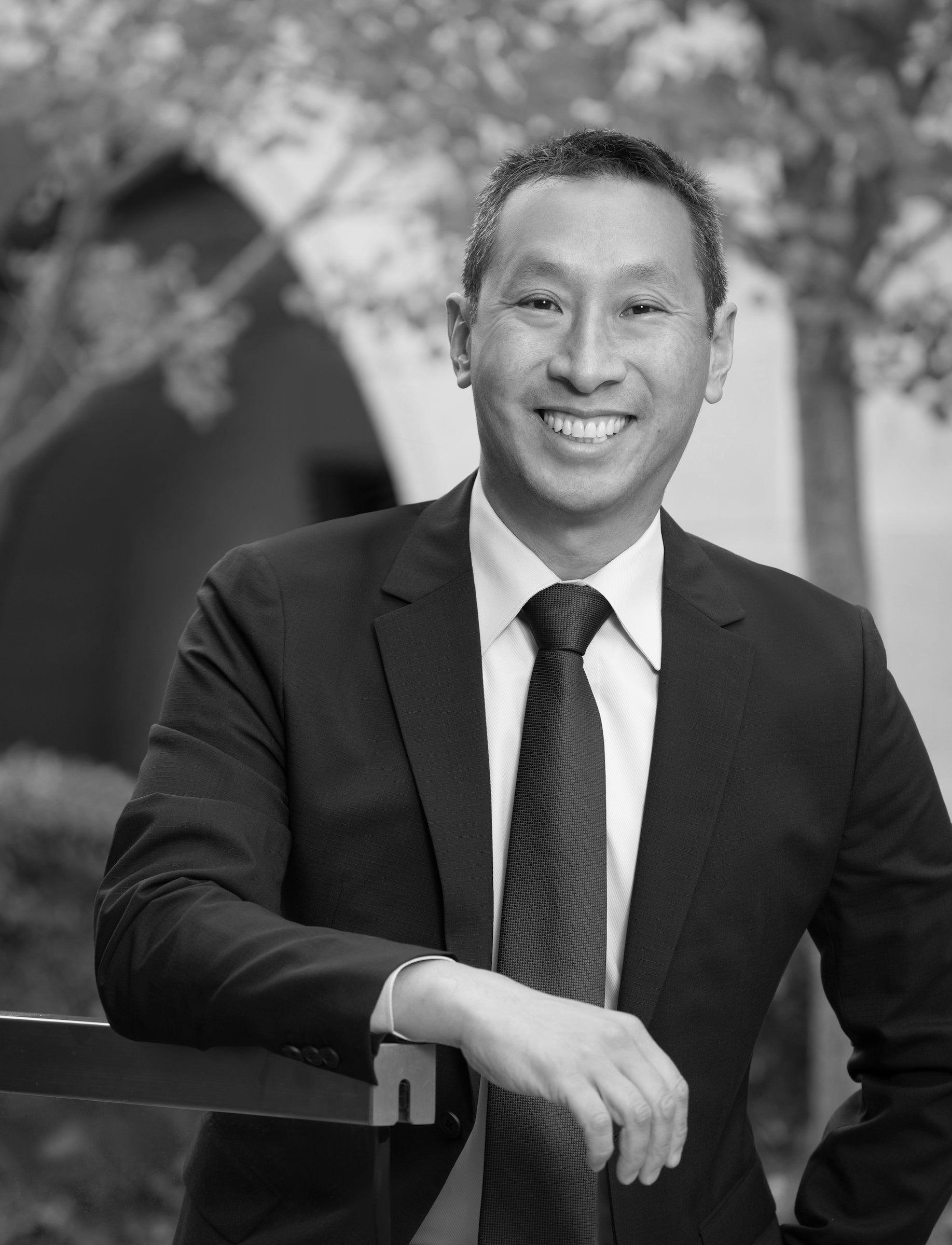
After practicing at a large law firm for a few years, Jingtian Chen ’19 decided to pursue a doctorate in political science at MIT. For Chen, this summer’s convening presented an opportunity to return to Harvard Law and legal academia, in which he hopes to pursue a career.
“Having been outside the law school environment for a few years, I was particularly excited to hear feedback and guidance from legal scholars and professors who are foundational in the field,” he says.
Chen’s research focuses on Chinese antitrust law from a comparative perspective.
“While we commonly understand antitrust as a deeply democratic economic institution, I argue that antitrust enforcement has become an important tool for the Chinese state in response to alternative sources of economic power domestically — even though enforcement against foreign firms tends to attract a lot of attention in the news,” he says.
Chen says he was grateful for the “generous and helpful” feedback he received from senior faculty members, which he adds will help him develop the paper further. “I received deep conceptual questions about the state and the market that really motivated me to think about my research in a new light.”
Marie Wako, an S.J.D. student at Stanford University and another workshop participant, says she was similarly struck by how open senior faculty members were with their time, expertise, and advice.
“I could see how much knowledge they have accumulated over the years about how to make their scholarship interesting to all, and I really felt that they wanted that community knowledge to be passed on to the next generation of scholars,” she says.
Wako says the workshop presented a rare opportunity to share her research with experts outside of her own law school, especially in a more specialized field like Asian law. “It’s not common that you would have all these distinguished faculty members reading and commenting on your work and trying to situate Asia as a broader interest in the legal world.”
Wako’s work focuses on the Japanese legal system — in particular, how the gender composition of judicial panels affects how judges decide cases. As a civil law system, Japan follows a career-judiciary model, she says, meaning that its judges earn their positions through a merit-based process rather than being appointed or elected through more political processes.
She argues that the nonpartisan nature of Japan’s appointment process allows her to more clearly isolate the impact a judge’s gender has on, for example, sentencing decisions, “compared to what we see in the gender and judging literature from the U.S.”
Wako says that it can be difficult for scholars of Asian law to frame their research in a way that demonstrates its importance and relevance to legal pedagogy outside Asia. Several workshop participants benefitted from the advice of senior faculty on this point, she notes.
But Wako’s challenge was the opposite: “I was too scared to put Japan in the front,” she says.
Feedback from the event helped Wako better understand how to place Japan at the center of her work while explaining why its legal system makes a useful foil for studying American law.
But perhaps the most valuable aspect of the convening came from the network of thinkers and scholars it sought to foster, she suggests. “It’s great to have a community beyond your school. I feel like I have a second home that I can contact at every level who are committed to this field.”
And from Wako’s perspective, Harvard Law was the perfect place to forge these connections. “It’s no wonder that they hosted a workshop for junior scholars on Asian law, because they’re invested in it, and you can see that from the institution, not just from the professors themselves.”
Want to stay up to date with Harvard Law Today? Sign up for our weekly newsletter.