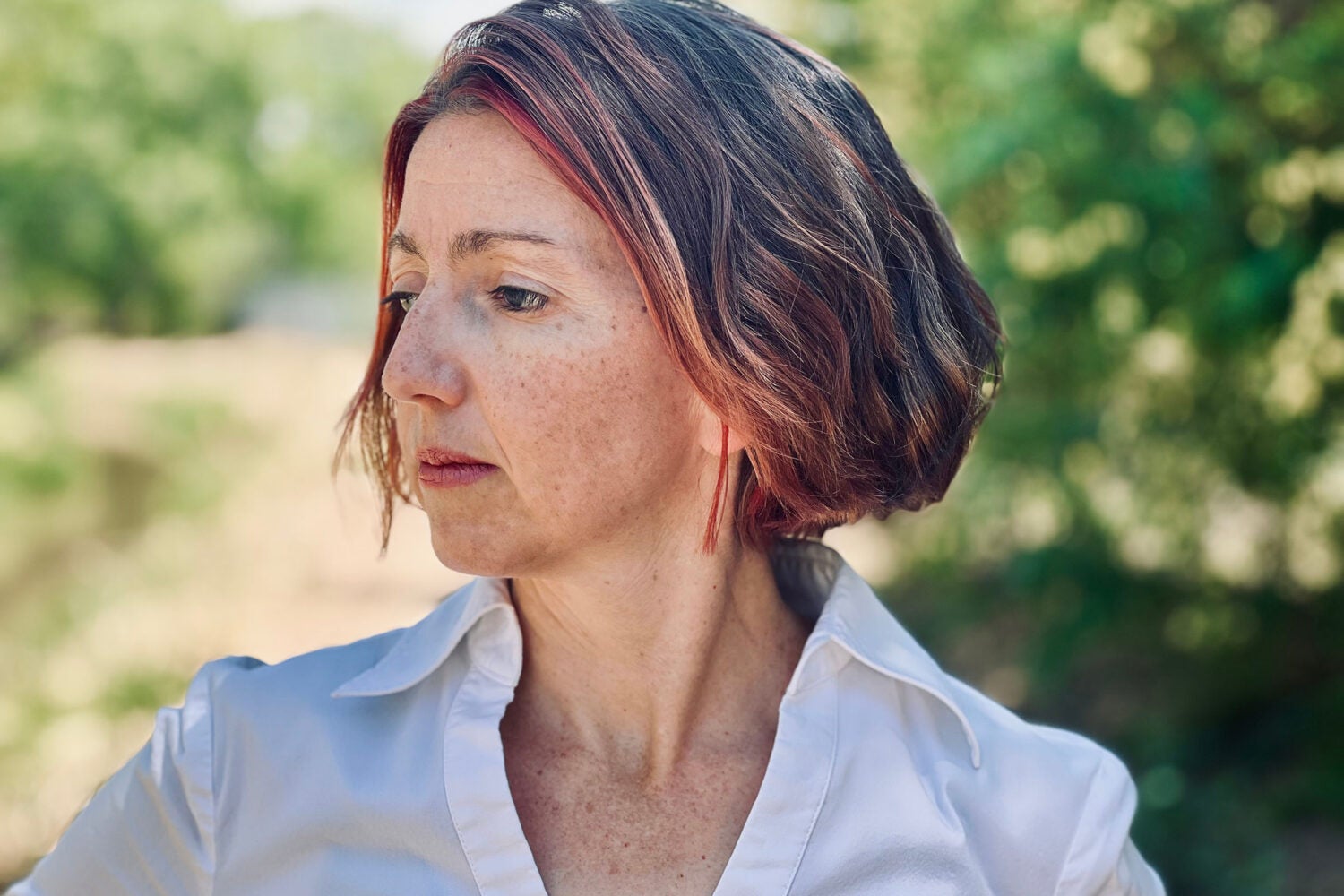
Grace Spulak ’08 has made a career out of giving voice to some of society’s least powerful members.
As an attorney, the Harvard Law School alumna has represented homeless children, young parents, youth in foster care and juveniles involved with the justice system. She has worked to change courts across the country to give poor and marginalized people better access to the legal system — and to prevent them from becoming entangled in the first place.
And now, through her new collection of short fiction, “Magdalena Is Brighter Than You Think,” which will be released on April 21, Spulak is illuminating the beautiful, complex, and sometimes painful stories of people like her clients who are often shunted to the sidelines of society.
“I wanted to explore how we tell stories, what stories we tell, and what these stories might look like if people didn’t feel compelled to tell them in a certain way to get a specific outcome in court, for example,” she says.
It’s both a personal and political project for Spulak, who grew up in a semi-rural town in New Mexico as one of five children of a single mother. She says not having a lot of money taught her early on how society can treat those in poverty — but also how resilient and supportive communities can be when they come together.
“I think I owe a lot of my success to that, and to those people who showed up for my family and helped us through some hard times,” she says.
Her short stories pay homage to these people, she says — those who face barriers every day and who nonetheless find ways to endure and even thrive. It’s also another way for her to demonstrate how institutions sometimes let people down.
Spulak has long been interested in writing, but she was initially drawn to a career in law, even as her first experiences with the legal system were generally negative.
“My family was involved to a degree with the court system,” she says, “and even as a child, I felt the courts didn’t take me or my siblings seriously.”
Spulak decided she wanted to go to law school to represent children — and to find ways to convince the court system to respect kids’ perspectives. She says she chose Harvard Law School because she was drawn to its Child Advocacy Clinic, but also because of its academic reputation.
“I wanted to go somewhere where I would be intellectually challenged, and where I could get the deep theoretical knowledge I would need as a practicing attorney representing children and children’s interests.”
In addition to working with the Child Advocacy Clinic, Spulak participated in Harvard Law’s International Human Rights Clinic, which she says introduced her to a more global perspective on children’s rights.
“You see that there are other ways to address problems, ones that differ from U.S. approaches,” she says. “It got me thinking more about how we can use the law in a way that that is not only reflective of our own traditions but also draws on some of these other ways of thinking about rights and justice.”
Practical courses also helped shape her thinking about her role as an advocate and attorney, Spulak says. “My civil procedure course with Jack Goldsmith made me understand that the rules are not simply just rules — they have an impact on people’s lives and their ability to get justice. If we don’t understand them, it really can have a devastating impact on our clients.”
After graduating in 2008, Spulak won a Skadden Fellowship to return to Albuquerque to work at a nonprofit law firm. There, she represented young parents in family law cases and homeless children in abuse and neglect situations. She also supported new state legislation on children’s rights and created outreach materials and resources for at-risk youth.
From the beginning, Spulak tried to center the voices of her clients in their cases.
“One of the most important things that I learned to do very early on was to see my clients as the experts in their own lives, and to take that as a starting point for my work,” she says.
In fact, Spulak says, she came to see her role as akin to that of an editor — helping her clients tell their stories in ways that felt both authentic to them and which also helped advance their interests in the legal system.
“One of the most important things that I learned to do very early on was to see my clients as the experts in their own lives, and to take that as a starting point for my work.”
Sometimes, this meant asking courts to consider perspectives that they rarely had before, such as that of a young mother who had lost her child to state protective services and hoped to regain custody.
“When I first started practicing, I think it was unusual for a court to have, say, a 16-year-old parent show up and make some of these petitions that I was making,” she says. “But ultimately, that was my goal — to help the decisionmaker understand my client’s needs and desires and take them seriously, regardless of their age.”
After eight years, Spulak was proud of the work she had done for individual clients, but she says she wanted to move into a job that could drive systemic change for children and poor people navigating the legal system.
She became the director of a New Mexico nonprofit advocating for better educational outcomes for young people in foster care and the juvenile justice system. Later, she led the Access to Justice Commission at the New Mexico Judiciary, where she supported self-represented litigants in navigating the state court system and created legal resources for people in the community.
Today, Spulak continues to work on access to justice issues at the National Center for State Courts, where she helps simplify and streamline legal processes in systems across the United States.
“Think about where people often get pulled into the legal system, like eviction or consumer debt cases. There often isn’t a good avenue for them to interact with the system once the case gets to that point,” she says. “I want to think about how we can build some touchpoints and resources for people before the cases get to that point.”
Another kind of storytelling
But Spulak, who majored in English as an undergraduate, has never stopped writing her own stories, even as she has helped others tell theirs.
“It was something I was always doing in the background, as an attorney,” she says.
In 2022, Spulak began a master’s program in creative writing, hoping to sharpen her fiction as both an artistic outlet and as an instrument for impact.
“The MFA gave me permission to write a little more expansively and experimentally about some of the subjects I was already thinking about in my legal work,” she says. “I realized that an important part of my work is telling stories, and I wanted to learn how to use fiction to address some of the things that I didn’t feel I could address as an attorney.”
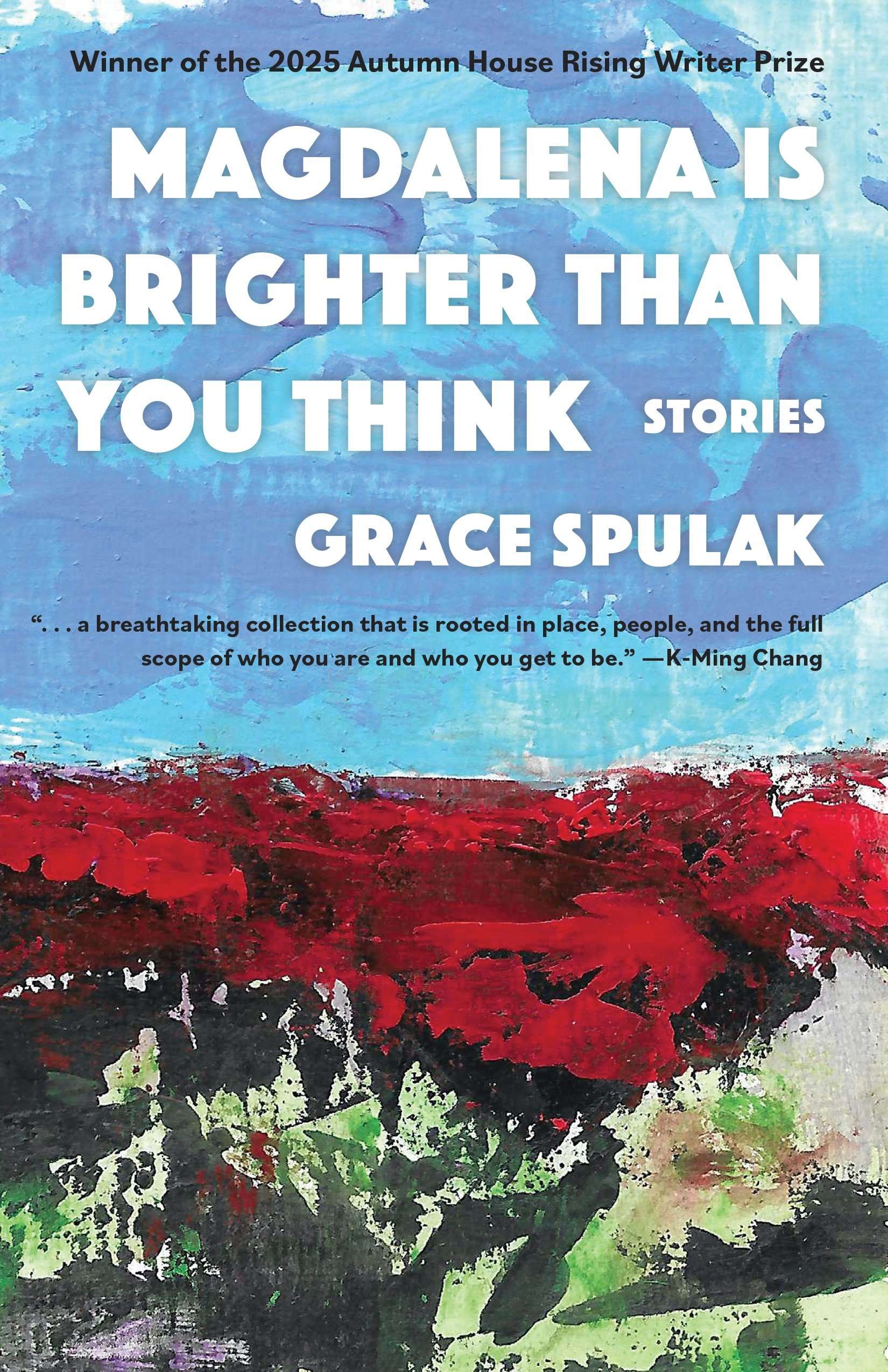
Spulak’s new book is set in her home state of New Mexico, and was selected for the 2025 Autumn House Press Rising Writer Prize. The collection centers around the lives of poor and otherwise marginalized people as they make connections and find ways to maintain hope, often amid isolation and even violence, Spulak says. In the titular story, for instance, the narrator and her sister live with an indifferent, exploitative grandmother in a small, hot single-wide trailer, navigating poverty and dysfunction while caring for a foster child named Wilson, with whom the protagonist shares a growing bond.
The stories touch on themes familiar to Spulak and to many of the clients she has served. “The book addresses some of the experiences I’ve had around gender, around trauma, growing up in a family that was poor,” she says. “It looks at the way that systems often fail, and how people go on in spite of that, even in the face of trauma and marginalization.”
Spulak says that she is grateful that her legal career and her writing reflect one another — two methods of advocacy for the people and issues she cares about.
But she says that for her, writing can also feel like a separate world from the law — a space where she can freely process experiences from her life or job without the constraints of the legal system. In other words, it’s a means of envisioning what a more equitable society could look like.
“Our systems are far from perfect,” she says. “One of my hopes is to use the medium of fiction to shed light on and address some of the imperfections and injustices I’ve seen.”
Want to stay up to date with Harvard Law Today? Sign up for our weekly newsletter.