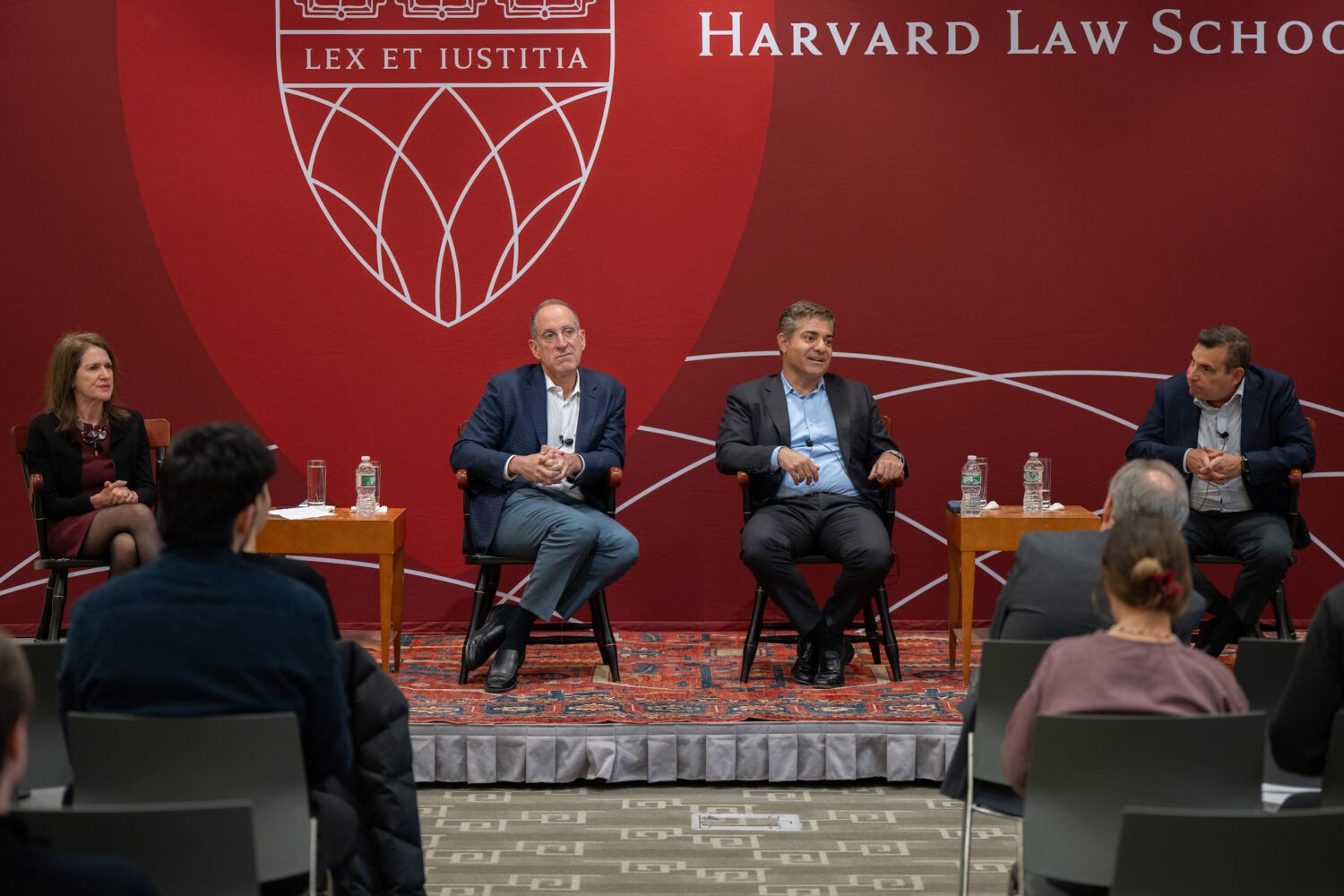
During the 1993 school year, three future financial giants lived together under the same roof on Craigie Street in Cambridge.
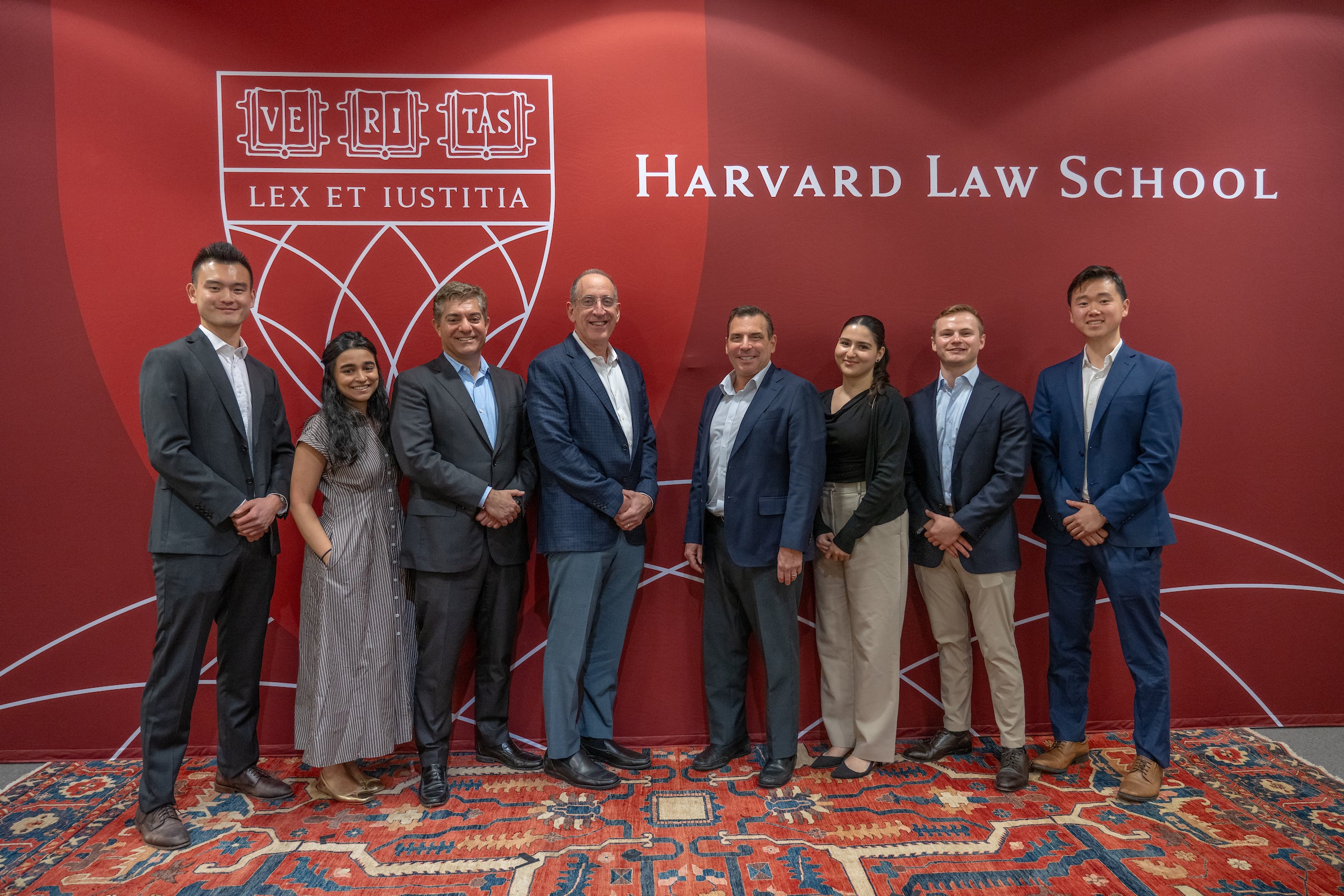
All graduates of Harvard Law School’s Class of 1993, Moelis & Company CEO and co-founder Navid Mahmoodzadegan, Morgan Stanley co-president Andy Saperstein, and Apollo partner Howard Widra reunited on campus recently, sharing insights and memories at an event sponsored by the Harvard Association for Law and Business.
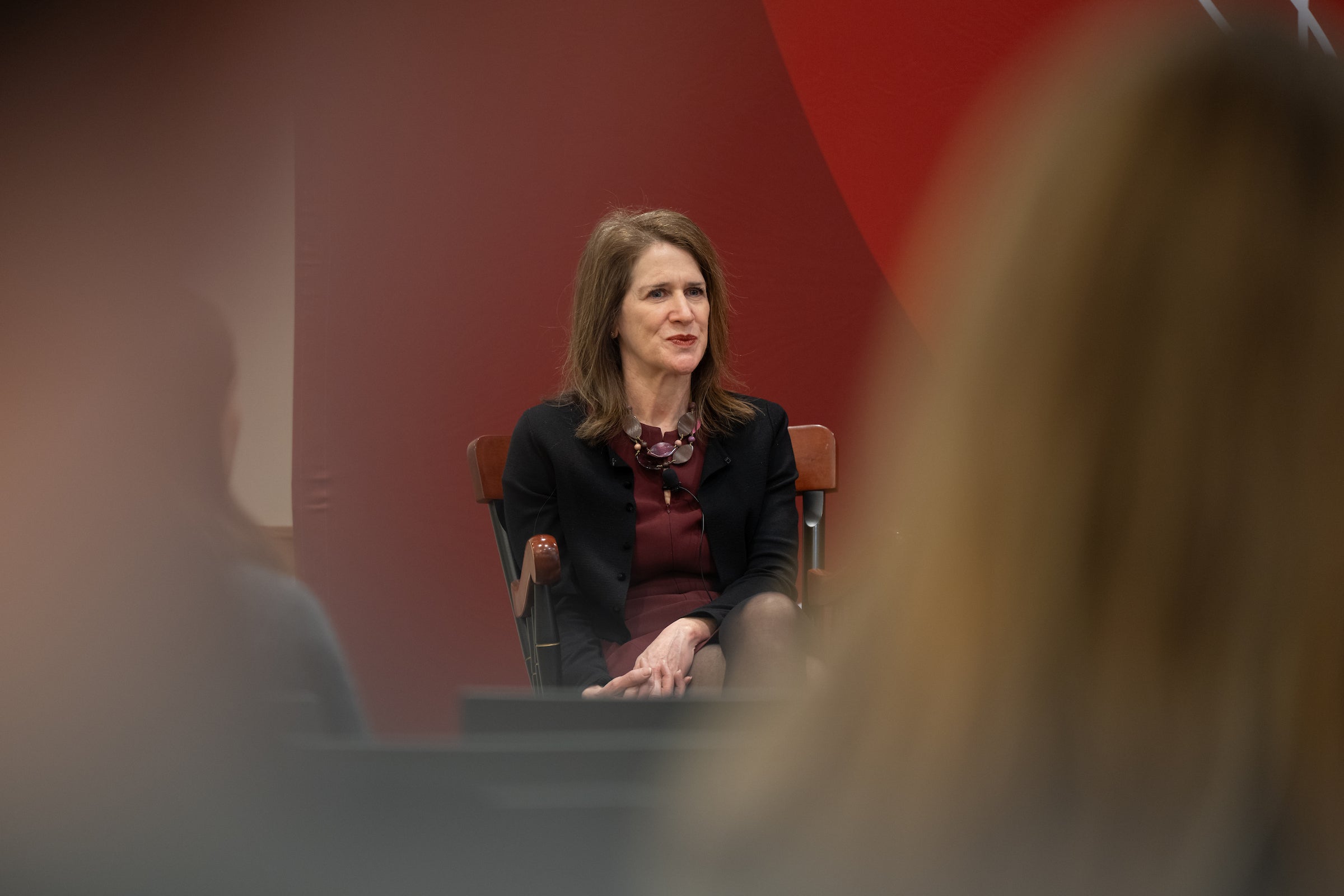
As moderator and fellow classmate Lori Lesser ’93, now a partner at Simpson Thacher & Bartlett, noted at the panel’s outset, “If there’s one takeaway you should have from this session, it’s stay in touch with your friends and classmates from either Harvard College or Harvard Law School. Good things will come from that.” Yet the experience of all three panelists was somewhat atypical, as the former roommates all realized soon after graduation that their interest was in business rather than law.
Widra began his career working for three years as a tax lawyer at Steptoe & Johnson, recalling “I focused on tax because there was more transactional work with substance early in a career than corporate might have been. I had a good experience there.” He then worked his way up from a small finance company and ultimately started his own private equity business (with Moelis’s PE business as one of the investors), which was absorbed by Apollo.
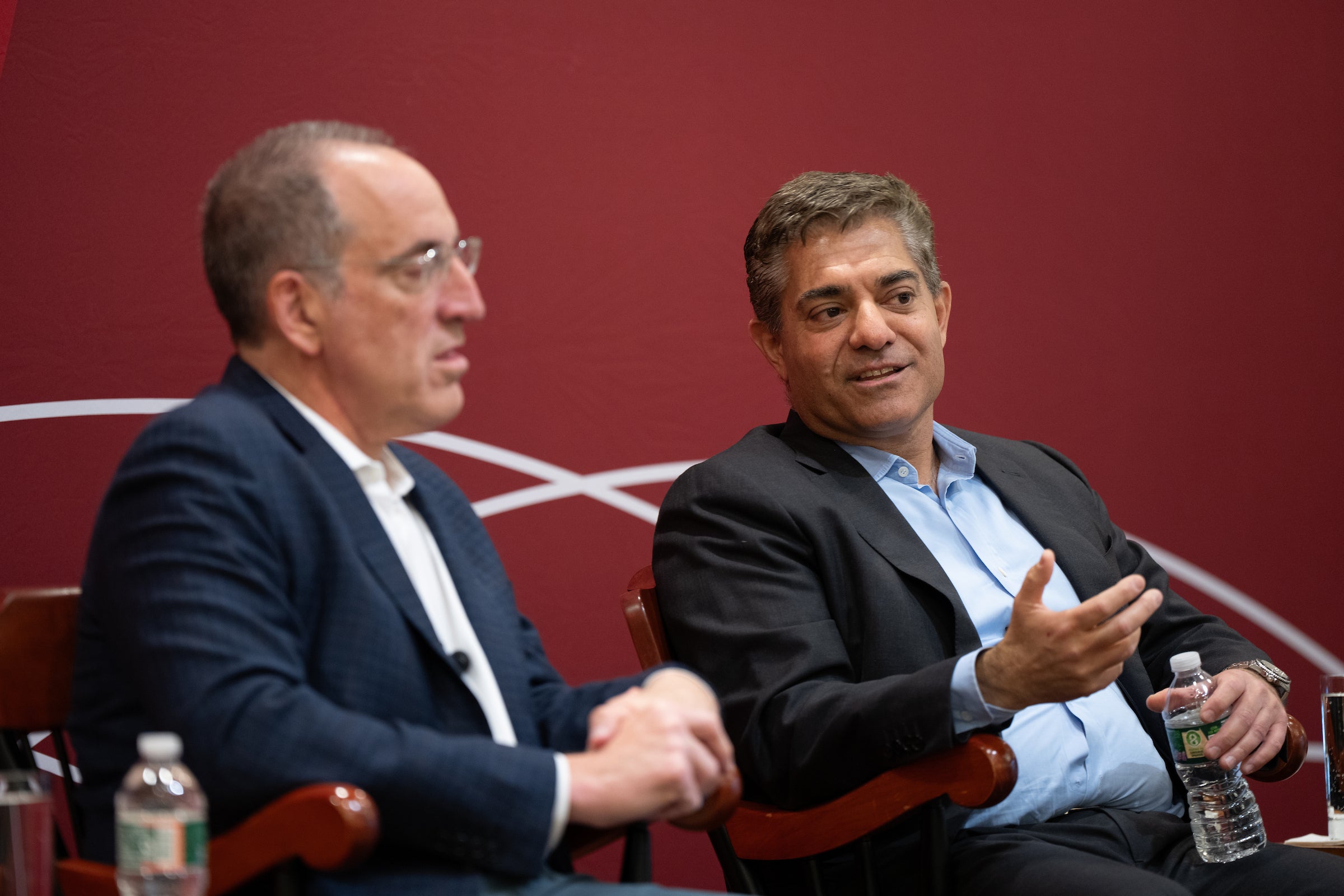
Mahmoodzadegan said he also found his career path with his first business transaction. “I was working on a deal with a bunch of investment bankers … I was documenting and doing diligence, and I didn’t really know why the deal was happening. But the bankers were driving the analysis, and the reason these companies were coming together. … Luckily, I ended up working with a bunch of people who, 30-plus years later, we’re still working together.”
Saperstein likewise found his calling serendipitously. He went to a McKinsey & Company presentation “because I heard that they were serving shrimp cocktail.” Yet he wound up leaving his law firm for McKinsey because “the idea of solving problems and managing business strategy really appealed to me.” He stayed there for eight years, developing a specialty in wealth management. “Back then, nobody really knew what that was,” said Saperstein, who joined Morgan Stanley in 2006.
Lesser asked about Harvard Law experiences that were especially influential. Widra named the late Professor Philip Heymann’s Political Violence and Terrorism class and corporate law classes with the late Professor David Charny. Mahmoodzadegan said he was inspired by the experience of seeing “five or six hundred superstars from all different walks of life” on campus at the same time, and Saperstein said that studying negotiations proved especially useful, teaching him to “break it down into little tricks that could help move a conversation from a disagreement to an agreement.”
In a lighter moment, they also recalled their favorite extracurricular pastimes, which included weekend trips to the newly opened Foxwoods Casino and to the now-closed Lanes & Games bowling spot in Cambridge. “As good as Navid was as a student, Andy is at bowling,” Widra recalled.
Saperstein advised students in the audience not to expect “a linear path” in their first post-grad years because such paths seldom exist. “I know that’s weird, because the process you’ve taken your whole lives was pretty linear: Keep going to school, keep getting good grades, keep getting better things offered to you. Then all of a sudden, it becomes nonlinear and there are no more grades. People are going to start giving you feedback, and it will be the first time you’ve ever gotten negative feedback. Somebody’s going to tell you you’re not perfect. That’s the best possible thing someone can do for you.”
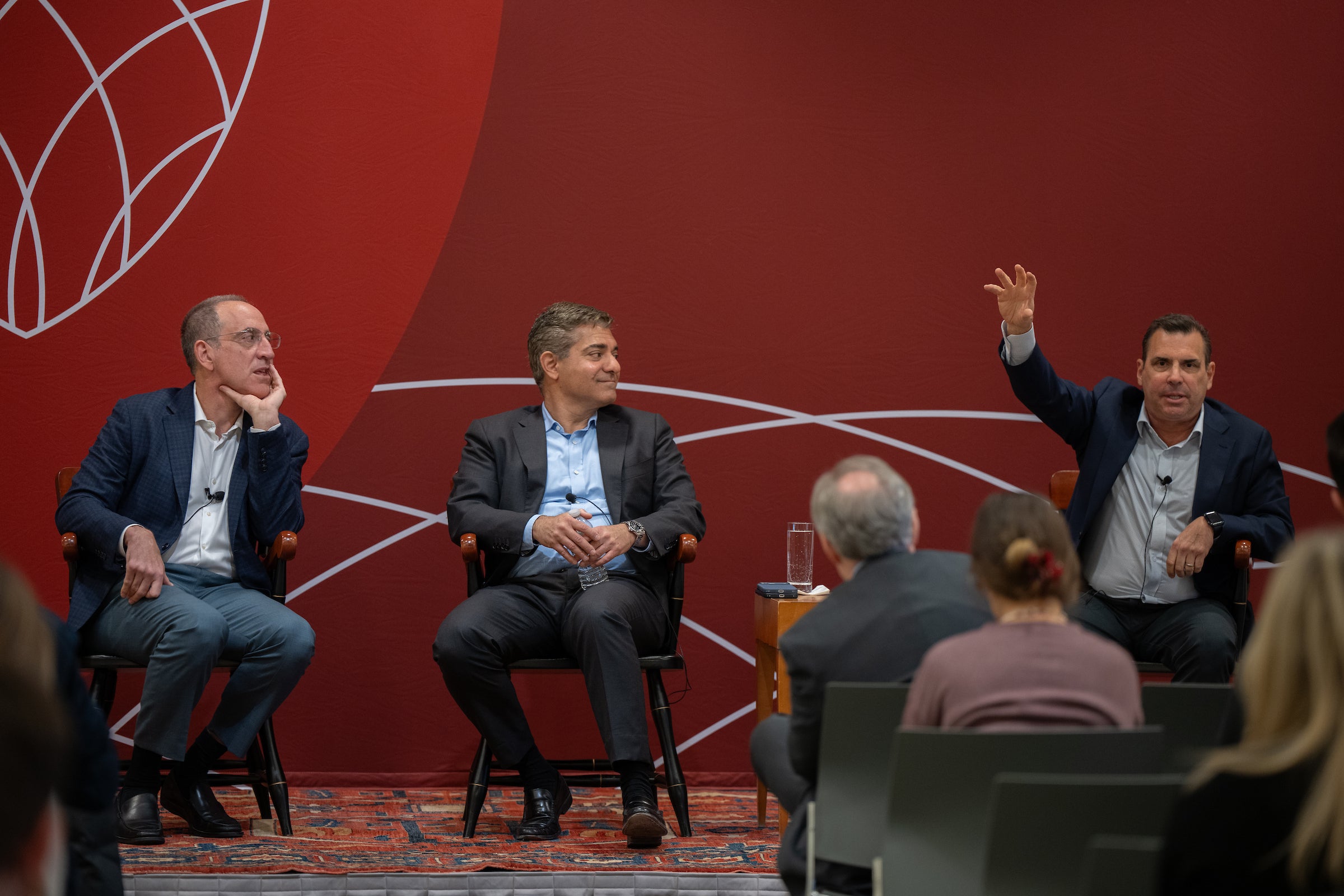
The panelists agreed that networking is as essential as ever, and Mahmoodzadegan said he’s not particularly a fan of LinkedIn or Zoom. “Constantly putting yourself out there, trying to spend time with people in different contexts — absolutely critical.”
Added Widra, “You need to like people. If you like spending time with them and you build good relationships, it matters for work and it matters for life.” Still, he admitted to being more of an introvert than his two co-panelists. “These guys are charming and charismatic and always have been, so they get good feedback.”
When Lesser, who is head of the Intellectual Property Practice and co-chair of the Privacy and Cybersecurity Practice at Simpson Thacher & Bartlett, broached the topic of AI, Saperstein advised students to get comfortable with it and not worry about losing jobs.
“People won’t be replaced by AI. People who don’t embrace AI will be replaced by humans that do,” he said. “AI technology can always make you better by having you think … What I think AI is going to do — for law, for business, for everything — is take care of a lot of the work that is less value-add or less interesting, and allow you to focus on those types of issues, [to] make reasoned-through decisions, help to set a course, [and] collaborate with other people.”
Added Mahmoodzadegan, “I think we’re going to continue to hire a lot of people out of schools. I’m not a believer that it’s going to be a couple of senior bankers and a bunch of AI agents.”
Mahmoodzadegan advised those in positions of responsibility to keep calm, even in times of financial shakeup or global crisis. “That’s what clients want. They want a calm, seasoned, experienced hand to help them through it. Once you’ve lived through these things, you can see your way through the other side and know it will all work out OK. As someone once said, the world can only end once — so just assume it’s not going to happen.”
Want to stay up to date with Harvard Law Today? Sign up for our weekly newsletter.