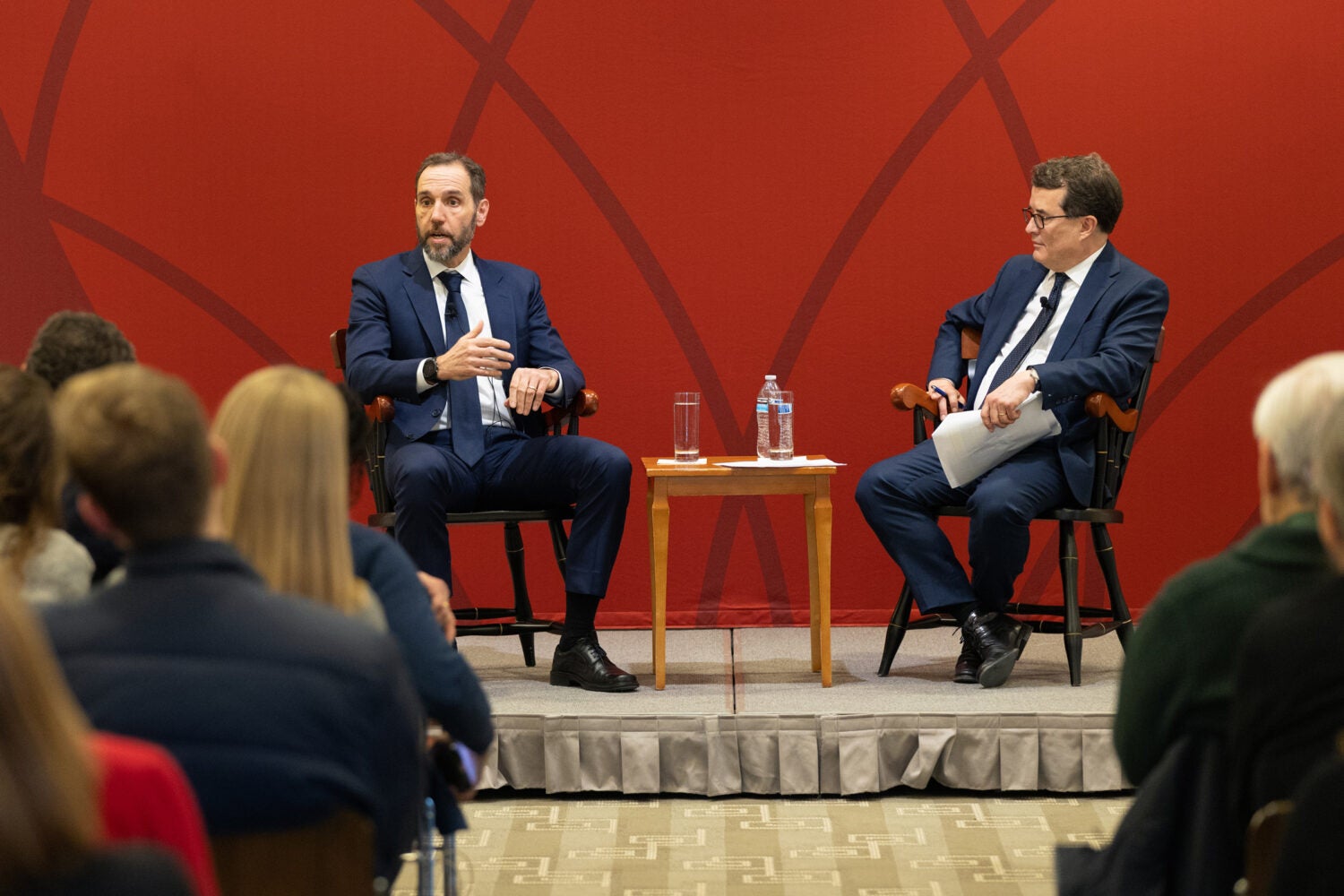
With his first question, Professor of Practice Alex Whiting set the tone for an afternoon discussion with Jack Smith ’94 last month at Harvard Law School.
“A little more than a year ago, you left the special counsel’s office in the Department of Justice. A few things have changed in that year. Do any of them concern you?” Whiting asked Smith, who most recently served as special counsel for the U.S. Department of Justice.
Smith didn’t hold back.
“What we are seeing today is not normal,” said Smith, noting what he sees as the erosion of decades of customs and practices at the Justice Department goes way beyond, in his view, shifts in priorities that typically accompany a new administration.
“I see traditions of the department being set aside because particular outcomes are wanted,” he said. “I see people being targeted because of their opposition to the president or because he perceives them as an enemy. And I also see cases not being investigated, not looked at, because of a fear where an investigation would take them.”
Smith has come under fire for his investigations into the alleged mishandling of classified documents by President Donald Trump and the Capitol riot on Jan. 6, 2021. Smith, who resigned in January 2025 after submitting his final investigative report outlining the indictments he pursued, has testified before Congress in recent months defending his work.
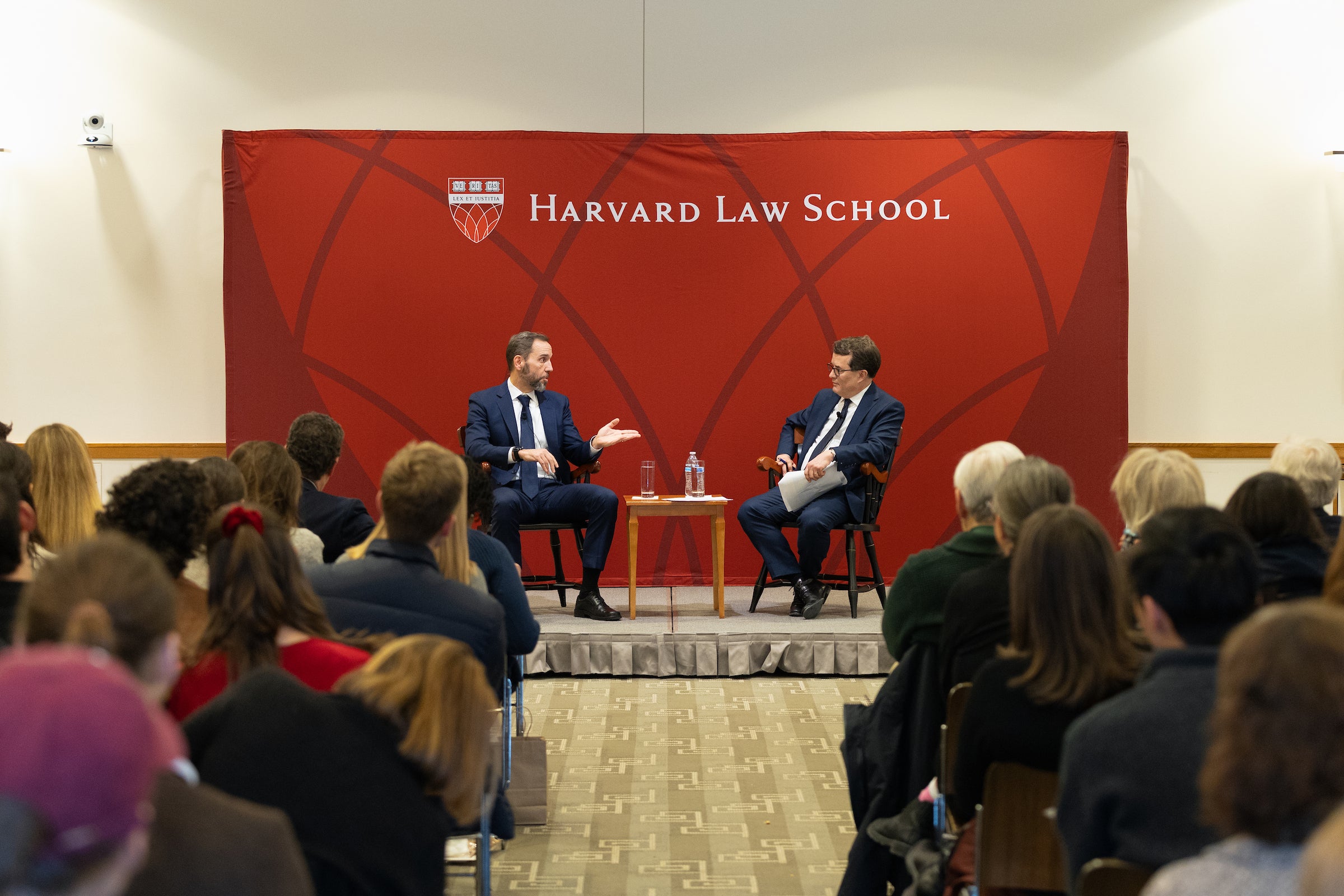
For an hour and a half, Smith discussed his professional life and his values during a lunchtime conversation organized by Harvard’s Center on the Legal Profession. He was interviewed by Whiting, a former assistant special counsel at the Justice Department who once headed investigations at the Kosovo Specialist Prosecutor’s Office in The Hague. Whiting and Smith have worked together on multiple occasions, including at the Kosovo Special Prosecutor’s Office, the International Criminal Court, and the Justice Department.
The center’s faculty director and Lester Kissel Professor of Law David B. Wilkins ’80 introduced the talk, part of its regular speaker series which brings experts from a diverse range of backgrounds with varying viewpoints to campus. Past guests have included Bryan Stevenson ’85, founder and executive director of the Equal Justice Initiative, President and CEO of New America Anne-Marie Slaughter ’85, and Viet Dinh ’93, former chief legal and policy officer at the Fox Corporation.
“Our goal is really to try to give you an opportunity to both see and engage with leading practitioners,” said Wilkins, “many of whom have gone to this very law school.”
The exchange touched on myriad topics ranging from Smith’s experience as a student at Harvard Law to his work helping victims of domestic violence in the Manhattan district attorney’s office, to his role as chief prosecutor in The Hague investigating war crimes, to his time in the Justice Department.
One of Smith’s biggest concerns is what he called “the vilification of public servants.” He argued that ongoing personnel changes in the Justice Department reflect what he believes is a dangerous shift, with officials who have served in the administrations of both parties for decades and adhered to ideals “about why they became a prosecutor” being replaced by those who “don’t believe in those ideals at all.”
“There is an advisor to the current attorney general who, on Jan. 6, 2021, was at the Capitol telling fellow rioters to kill police officers. … I think that says a lot about where we are,” said Smith, that “public servants who served for decades are being vilified and people like that are being elevated.”
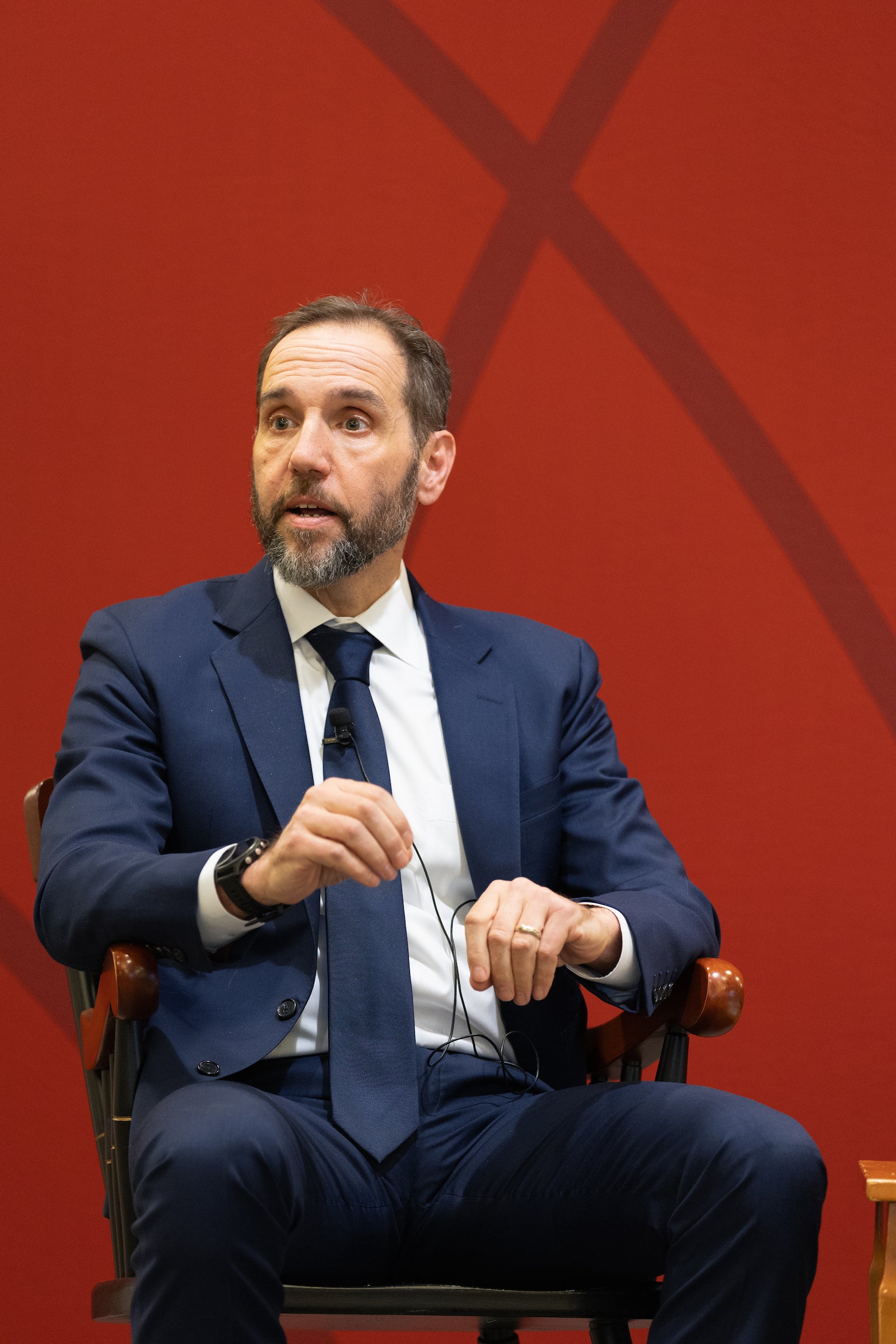
Smith is also troubled by what he sees as the department’s new emphasis on outcome versus process. He fears that the Trump administration officials are more focused on attacking perceived enemies than in following department policies “developed by people who have spent decades learning their craft, learning what works, learning what’s fair.”
Among other examples, Smith pointed to a 2025 social media post that the president accidently made public last fall pressuring the U.S. Attorney General Pam Bondi to bring charges against his perceived rivals. The message “said, ‘you have to go after these people,’ and then immediately after they went after those people,” said Smith, “even though the career prosecutors said there was no case. That’s not process; that is ‘I want this particular outcome.’”
For those in the audience considering a career as a prosecutor, Smith offered up two simple words: “Facts matter.” “A good prosecutor goes where the facts take them,” he said, adding that he sees situations in the current administration where there’s “a reticence to follow the facts because it will involve prosecuting or investigating somebody they know the president doesn’t want them to prosecute or investigate.”
“If you shut the door to facts, you shut the door to the rule of law.”
Here, he pointed to the confrontations over immigration in Minnesota, where federal officials have blocked local authorities from investigating the shooting death of protestor Alex Pretti by federal agents.
“To be clear, I don’t profess to know how an investigation would turn out,” said Smith. “Part of what a good prosecutor does is not comment on how things might turn out until they do the investigation. … But if you shut the door to facts, you shut the door to the rule of law. You shut the door to getting outcomes in the public interest.”
For Smith, the rule of law means treating everyone equally under the law. “Your politics, your race, your gender, all those things shouldn’t matter. It should be the same for everybody.

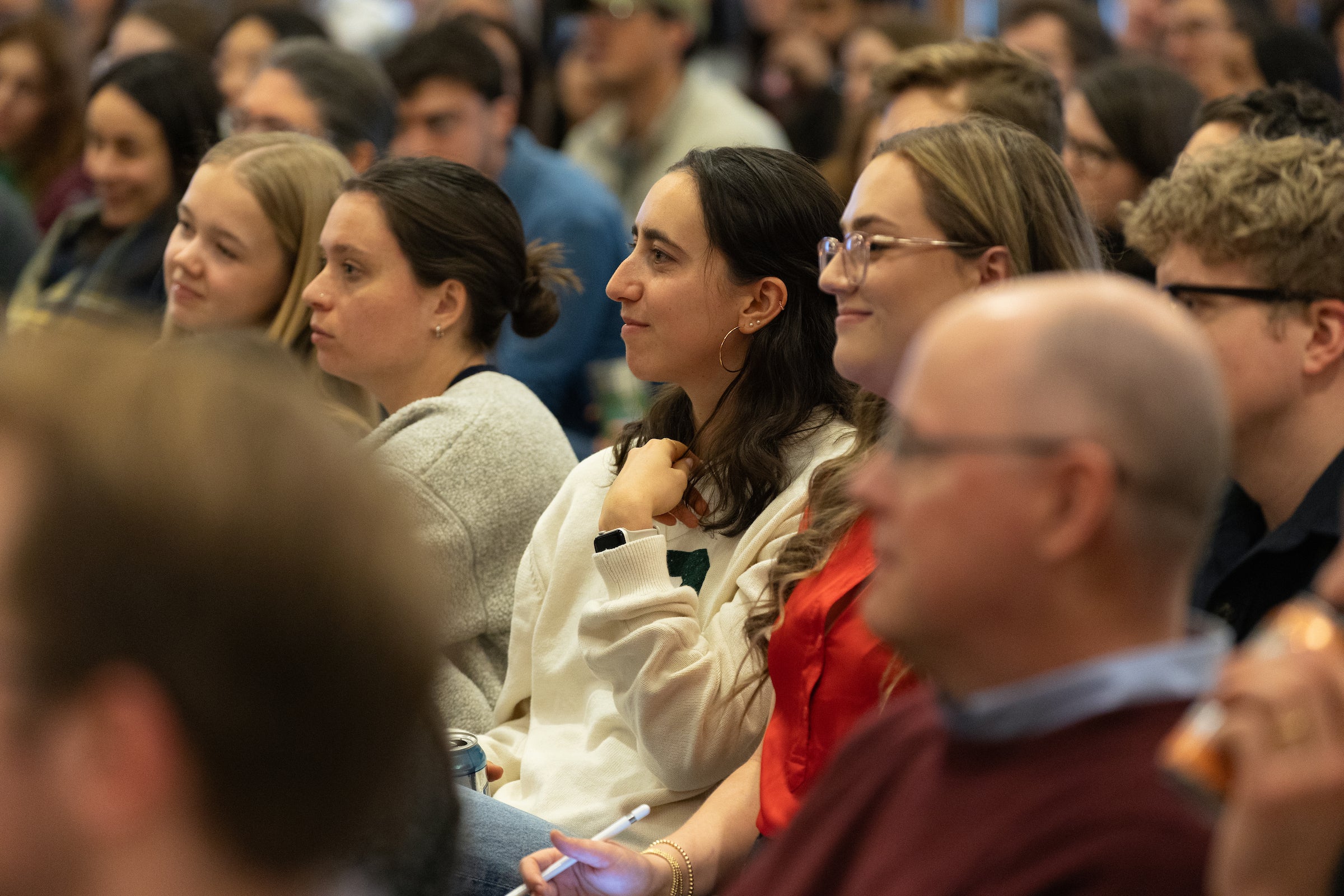
“I’m not saying that the department, throughout its history, has always done a great job of that. But what I will say is that during my career, what I saw is that people were always trying,” said Smith. “I think the rule of law is under attack today because I’m not sure the leaders of the department have that same orientation.”
Going forward, Smith said it’s critical to support people who are willing to speak up. “Fear is contagious,” he said, “but so is courage.” He also urged his audience to act for themselves. One way to make change, said Smith, is by opening a dialogue with people you disagree with. It’s not easy, but if you treat people with respect, and listen, you might “find common ground.”
“My view is if we’re going to come out of this better, which I personally believe we will, we need to be purposeful about finding ways to communicate with people who do not share our views.”
“My view is if we’re going to come out of this better … we need to be purposeful about finding ways to communicate with people who do not share our views.”
The discussion also touched on some of Smith’s personal life.
When asked if he has a hero, Smith didn’t hesitate. His father, he said, was a factory worker who never held a supervisory job, but who would often talk to his young son about the bosses he’d had, distinguishing those who were effective from those who weren’t, and about the ways in which those he admired treated their employees. Smith said those conversations helped him develop his own leadership style and “informed a lot of who I want to be.”
Turning to his time at Harvard, Smith said it almost didn’t happen at all.
It was 1991, and he had just stopped off at a friend’s house in New Jersey on his way to attend another law school. After a brief phone conversation, he turned his oil-leaking Dodge Daytona around and headed north.
Smith had gotten a late call from an admissions officer saying a spot had opened on Harvard Law School’s waitlist and asking if he was still interested. Smith, the first in his family to go to college, was indeed still interested. So, he quickly “hammered out” his financial aid package and hit the road to Cambridge, Mass.
“I was the last guy who got in,” he joked.
To make the most of his experience, he recalled, Smith engaged with as many experts and scholars as possible, both those visiting campus and those on site full time, including the late Charles Ogletree Jr., whom Smith admired for his groundbreaking work as a public defender and the kindness he showed his students, and Carol Steiker ’86, the Henry J. Friendly Professor of Law, and an expert on criminal justice who was his advisor for his third-year paper.
He also took advantage of a range of law school clinics and public service opportunities supported by the school, including an internship at the U.S. Assistant Attorney’s office in Massachusetts that inspired his becoming a prosecutor and his lifelong drive to help others.
Harvard Law, said Smith, is a great place “to try the different paths you’re considering and see people who’ve walked where you want to walk.”
Want to stay up to date with Harvard Law Today? Sign up for our weekly newsletter.