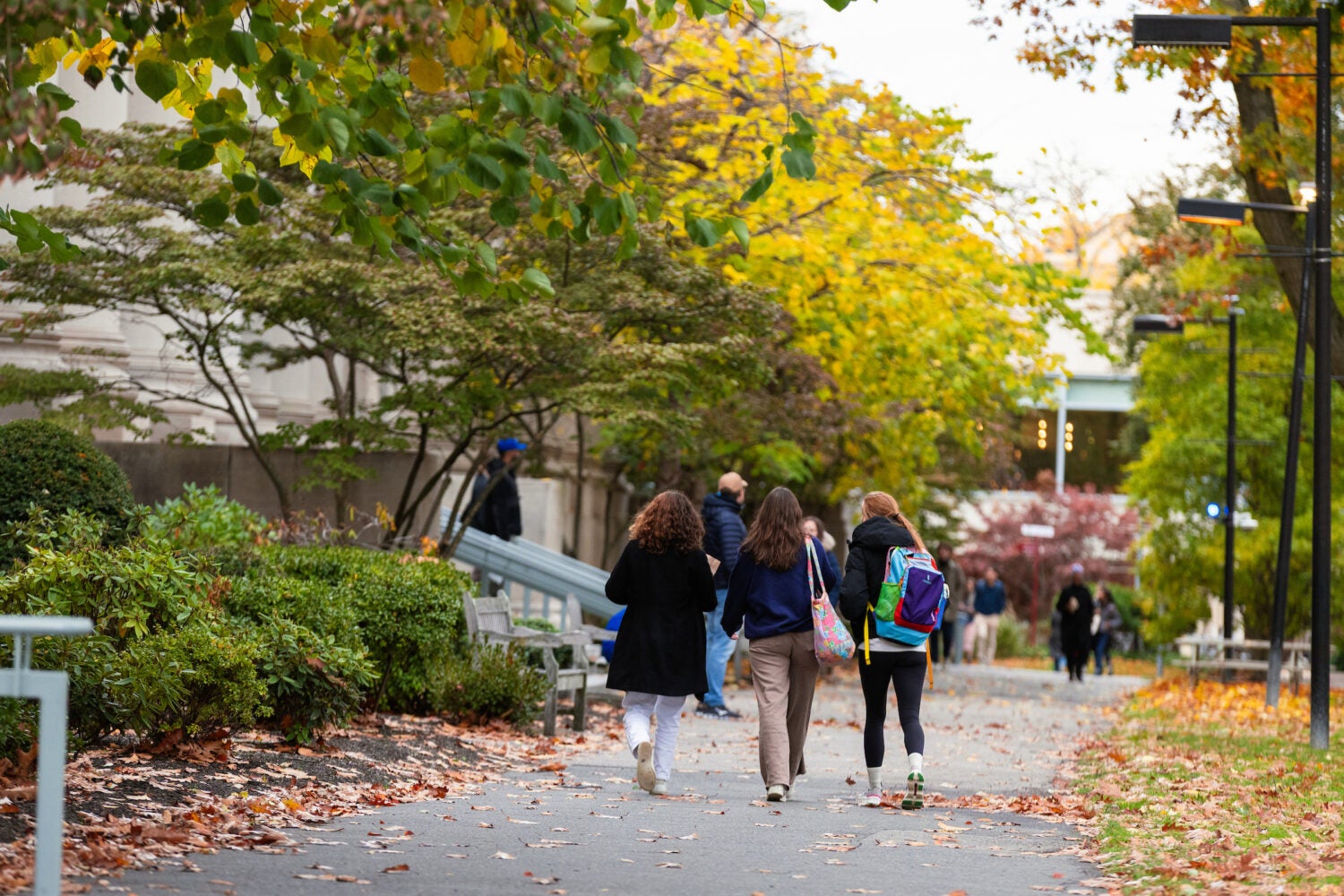
Emma Westhoff ’26, Omar Tariq ’26, and Shanee Markovitz Kay ’26 all hail from different religious backgrounds and have, in their time at Harvard Law School, worked separately and together to build community and foster connections.
So, when each of the three had the idea to invite people from a variety of faith traditions for an evening of dinner and dialogue, they knew they wanted to collaborate to make it happen.
Their biggest challenge? Food — and ensuring that guests would arrive and engage with one another with curiosity and an open heart.
Westhoff sums up the trio’s approach to the latter with a playful double entendre: “We were just hoping people would come in good faith.”
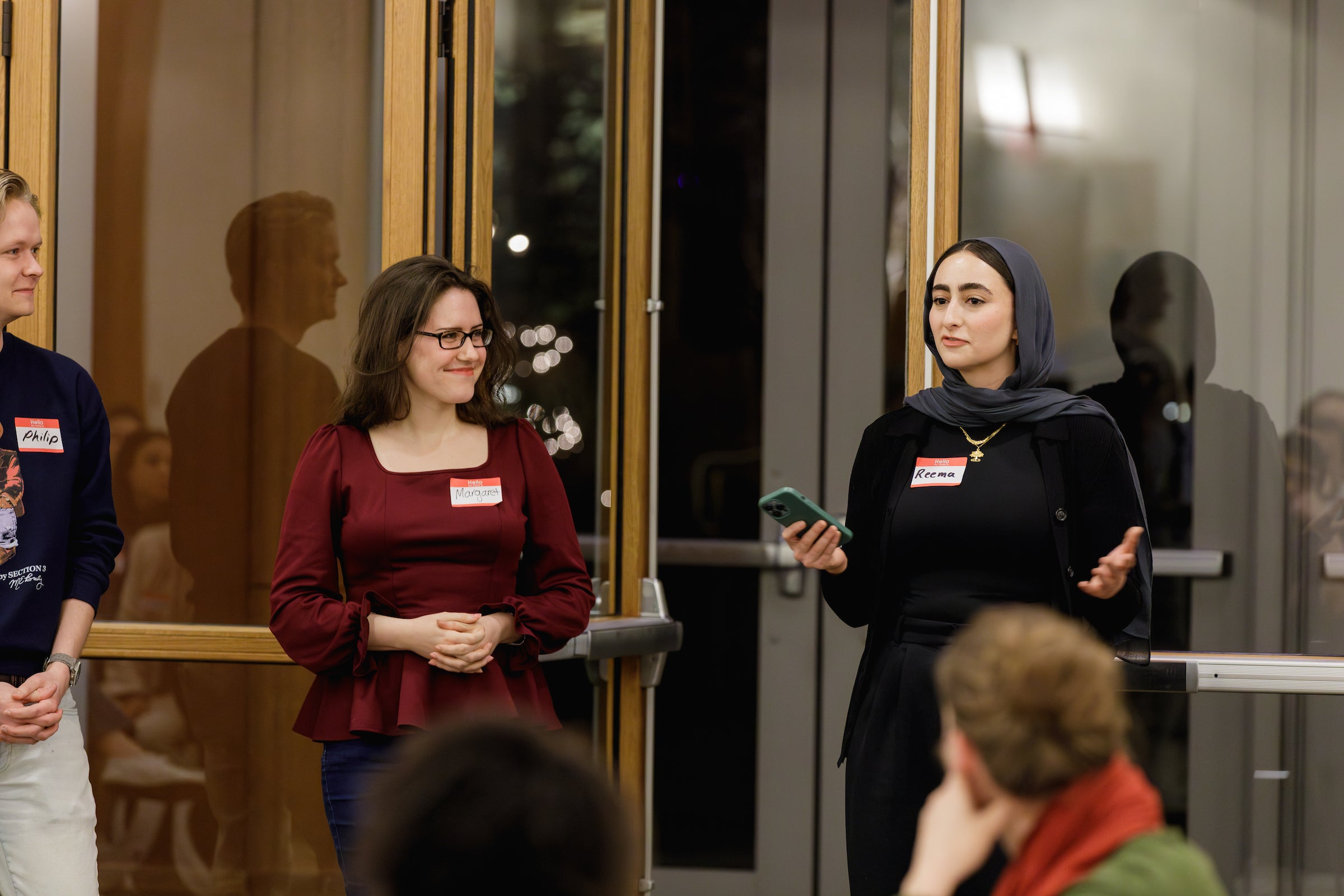
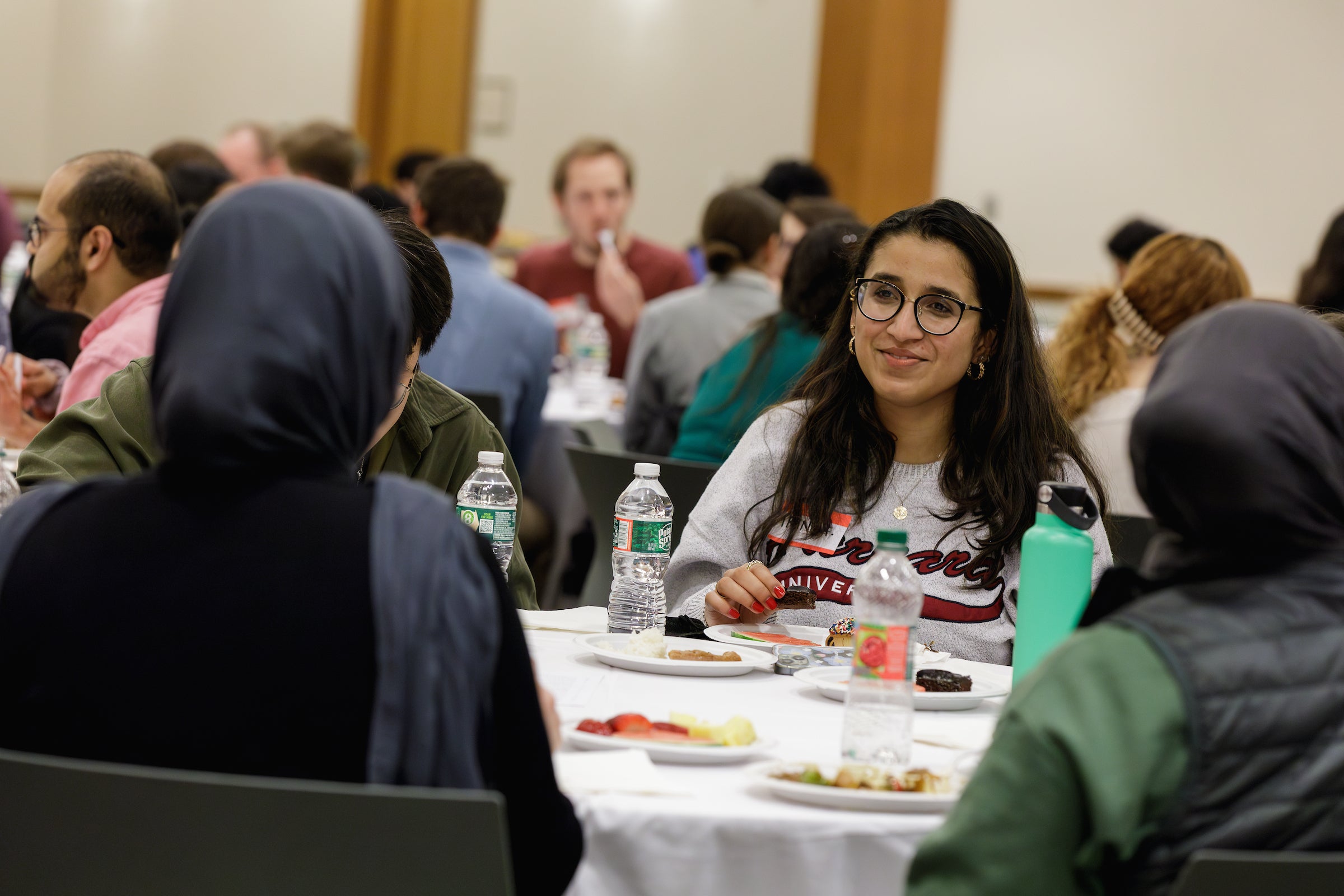
On April 14, their vision became reality during the third annual Harvard Law School Interfaith Dinner, which brought together nearly 150 students, faculty, and their families to eat, converse, learn more about one another, and make new friends.
The dinner was made possible through funding from Harvard Law School Dean John Goldberg’s Community Connections Grant, which supports small group discussion across differences, as well as a grant from the Harvard University Presidential Initiative on Interfaith Engagement. This year, the Community Connections Grant also supported an event cohosted by the Federalist Society and American Constitution Society; biweekly dialogue sessions for students from all political alignments; and a forum on law and democracy.
Goldberg, who attended the dinner, told fellow participants that, “while these days it sometimes seems that constructive dispositions of this kind are in dangerously short supply, what we are seeing here tonight, and what I see at HLS all the time, gives me confidence that we will — that all of you will — find a path forward that delivers on the promise of a nation that is truly united even amidst its divisions and differences,” he said.
Tariq, who is Muslim, argues that events like the interfaith dinner foster dialogue and cultivate relationships, goals that are all the more important in a world riven with disputes rooted in religion and identity.
“There has been conflict, particularly in Muslim and Jewish spaces, following October 7,” he says. “I see this as a small effort to try to better understand one another and better empathize with the different struggles that different groups are facing.”
It’s a point echoed by Markovitz Kay, who is Jewish. “I believe that respect and dialogue is critical, especially during times of tension, when it is so much easier to hide and judge from afar. Building bridges is harder, but far more fulfilling,” she says.
The organizers began dreaming up the evening event last fall.
“Planning something like this was, itself, an interfaith experience,” says Westhoff, a member of the Church of Jesus Christ of Latter-day Saints. “It makes you think about cultural dynamics you previously were oblivious to.”
“I see this as a small effort to try to better understand one another and better empathize with the different struggles that different groups are facing.”
Omar Tariq
Food — a source of community across cultures — was an especially tough thing to get right, she says, adding that they had to account for various dietary needs such as kosher, halal, and vegetarian options.
But it was crucial to ensure that everyone felt included, Tariq adds. “We wanted to be sure to invite and welcome people from faith-based backgrounds that aren’t traditionally recognized in interfaith spaces, both at HLS and at Harvard,” he said, including non-Abrahamic religions.
The next challenge was making certain that guests — who were encouraged to sit with people they didn’t know or those from different faiths — felt comfortable opening up to one another.
Westhoff says that she, Tariq, and Markovitz Kay spent a lot of time talking about which prompts to include on conversation starter cards placed on the tables. She says the goal was to give participants space to share their own experiences — and ask questions they might otherwise feel awkward bringing up.
“Sometimes, you are curious about things, but you don’t want to feel like you’re making it someone else’s burden to teach you when they’re just trying to live their life,” Westhoff says. “But these kinds of events create spaces where those questions are welcomed and even encouraged.”
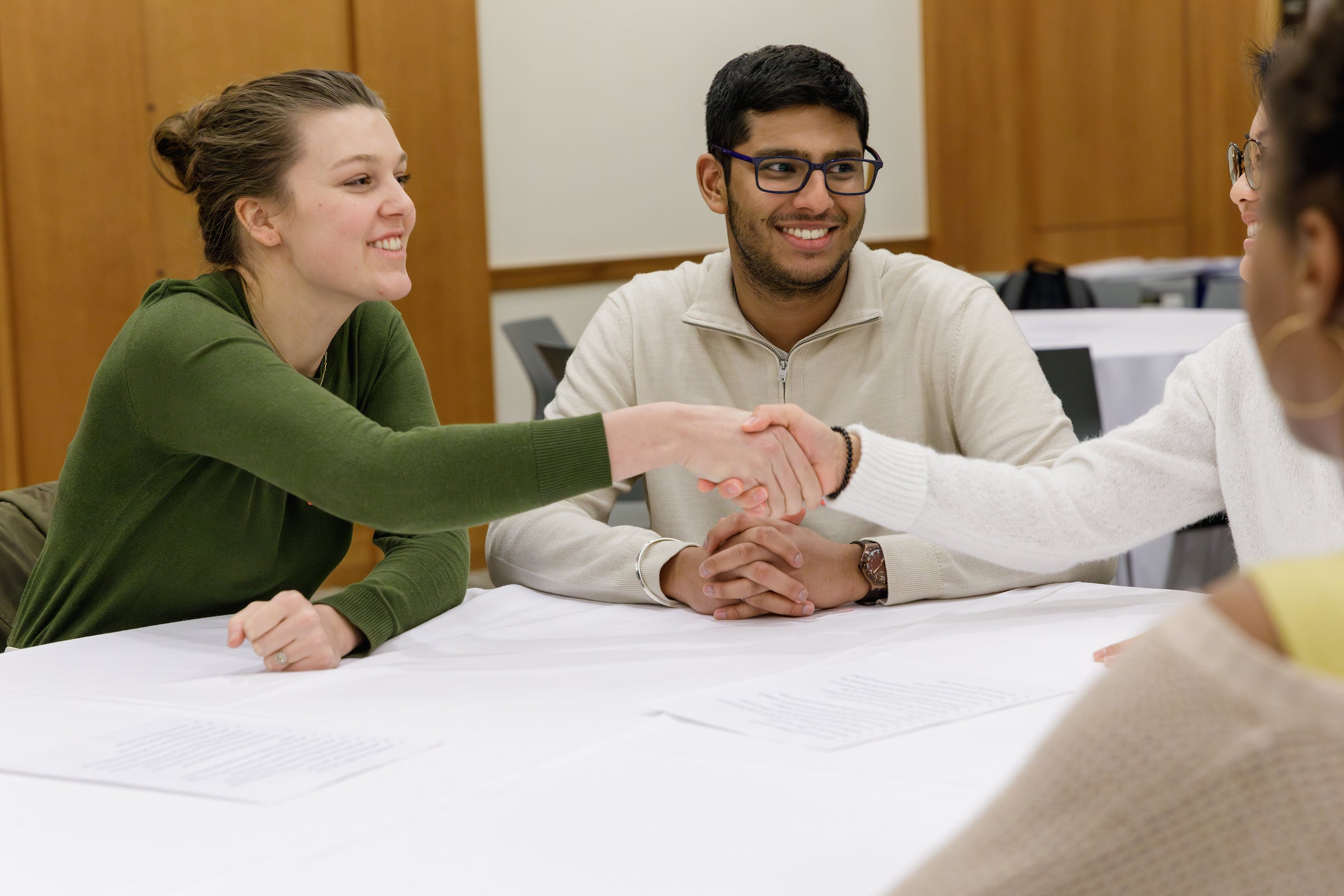
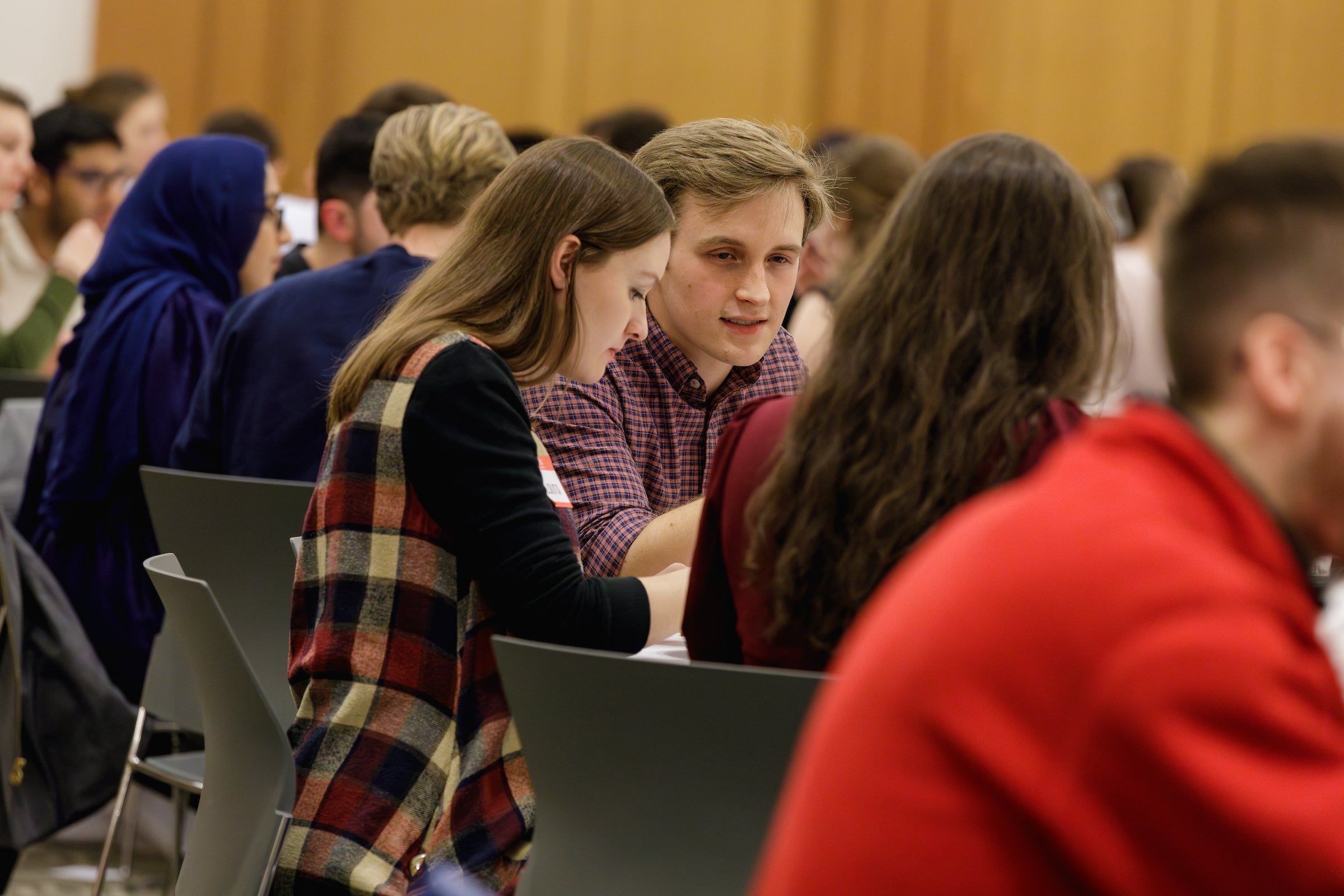
Harvard Law students brought their families to the event, which Markovitz Kay says helped loosen up the atmosphere as well.
“My husband and children were present at the dinner, and I was touched to see that several others brought their kids and loved ones along,” she says. “It brings me hope to see our community members bringing their whole selves to give this project a go, and to hopefully show the next generation the range of possibilities.”
Markovitz Kay says events like the interfaith dinner are one of the reasons she decided to come to Harvard Law in the first place — to learn from and engage with peers from different backgrounds. “Faith and religion inform a person’s identity so meaningfully, so it is really special to be able to tap into that part of someone else and get to know them on a deeper level,” she says.
Westhoff says it may surprise religious law students how much they have in common, despite coming from different traditions. She says the dinner is one example of how to “find unexpected kindred spirits with people who probably have very similar life experiences.”
Ultimately, the trio says they are thrilled with how the event was received, and Tariq says he looks forward to sharing his planning documents with first-year students who have shown interest in continuing the tradition next year.
That’s because learning to have productive, open conversations with those who may not share one’s cultural background is a critical skill in law — and life, he argues.
“As law students, we often deal with contentious, tough issues, which require unpacking different points of view. And we obviously do that in our classroom and our academic work, but we also need to do that in our social lives, too,” he says. “Even if it’s within a backdrop of conflict and disagreement, we think it’s important to have these opportunities to converse with one another in this way.”
Want to stay up to date with Harvard Law Today? Sign up for our weekly newsletter.