
I first came to know Charlie as magister during my freshman spring at Harvard College in 1994, when I enrolled in his course on the legal and constitutional history of medieval England. Charlie had been living “One Harvard” decades before President Faust coined the phrase: Though primarily a law school course, his class was cross-listed in Medieval Studies, easing enrollment for undergraduates and GSAS students.
As a freshman, I was perhaps too naive about the course catalog to have recognized I might be getting in over my head. A good thing. From our earliest class discussions of such texts as Paul’s epistle to the Romans — what a conflicted vision of law! — and Æthelberht’s Code from the year 603 CE, I knew I had found my scholarly passion in premodern law. The texts were difficult, enigmatic, sometimes bordering on impenetrable, yet Professor Donahue seemed to think my classmates and I might have something useful to say about them. In weekly response papers I took my first tentative steps toward parsing primary source materials. The rest, as far as my choice of concentration and eventual career path goes, is (literally and figuratively) history.
“Sometimes his lectures reached abstruse levels beyond our ken, … this reflected his profound respect for his students.”
In the classroom, magister Charlie, sporting a well-loved cardigan worn through at the elbows and his signature sandalia cum tibialia (ahem, Birkenstocks with socks), lectured to a captivated audience. In perhaps the second week of the course, he shook us out of our note-taking slumber by breaking into the Germanic verse of the Anglo-Saxon chronicler, recording the fateful events of the year 937 CE: “Her Æþelstan cyning, eorla dryhten, beorna beahgifa, ond his broþor eac, Eadmund aeþeling, ealdorlangne tir geslogon æt sæcce sweorda ecgum ymbe Brunanburh.” Law students and undergrads alike sat silently, mouths agape and pens hovering above notebook page, wondering what to make and what notes to take of this mysterious utterance. Charlie laughed, “This is English, people!” He then proceeded to deconstruct the passage word by word. I still have my handwritten notes. “Her” was just our word “here,” and “cyning” simply “king,” thus, “Here King Æthelstan … ” By the time he reached the final phrases, we could all recognize the “sword’s edge” of “sweorda ecgum.” It was English, and one sensed the collapsing of time and space between the early-10th-century chronicler and our late-20th-century classroom.
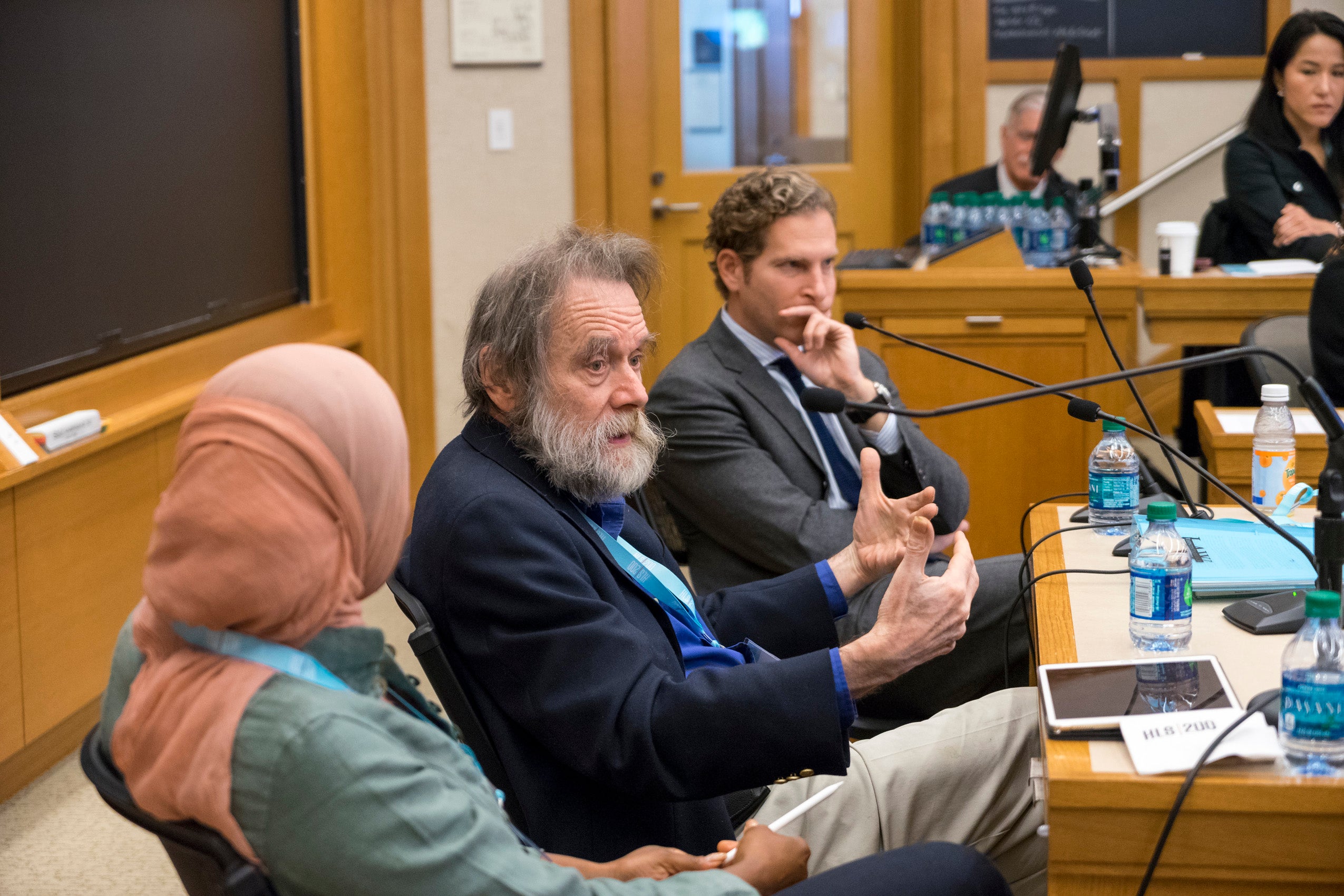
Charlie’s dalliance with languages began in his childhood, when he boarded at Portsmouth Priory in Rhode Island, gaining his first exposure to Latin and Greek. He continued to learn languages well into his career, working on his Italian in advance of book-related travel upon publication of his magnum opus on the history of marriage law, and even learning some Hebrew decades into his teaching career to facilitate engagement with Talmudic law.
Though the voluminous course packs for his legal history classes were in translation, making them accessible to all, students swiftly learned the interpretive nuance that could follow from referencing the original language version of a primary source text. I suspect I am far from the only student spurred to enroll in further language study after taking a class with Charlie.
Charlie always had high standards for his students. At times his reading assignments were more than a mere mortal could reasonably manage, and sometimes his lectures reached abstruse levels beyond our ken, but all this reflected his profound respect for his students and their potential.
To take one example, during my junior year, he mentioned to me that the Harvard Law Library had in its collections a set of 14th-century manorial court rolls — records of a court for tenants of a lord’s estate — that had not yet been studied in any depth. While the rolls were too scant to support a master’s thesis or doctoral dissertation, Charlie suggested that they just might do for an undergraduate thesis. Furthermore, he observed, the rolls straddled the periods before and after the Black Death, thereby offering the possibility of studying the impact of cataclysm on the operation of a rural court. With his support, I secured funding to spend the summer in Houghton Library transcribing these terse Latin manuscripts.
At that time, the manor rolls were still just that — rolled up in scroll format — and I was given free rein to unfurl the pliant parchment as I deciphered the texts. I remember visiting Charlie’s office with my penciled transcription attempts during those first weeks. He reviewed and corrected my work, encouraging me to charge on with what felt like an insurmountable task. Thanks to his patient mentorship, I learned how to read a 14th-century scribal hand and decipher Latin abbreviations, which opened new avenues not only for my senior thesis but also my future doctoral research with 13th- and 14th-century plea rolls.
Most of Charlie’s classes — and I have taken most of them, from first-year Property in fall 2004 to the Roman Law class I audited in fall 2023 as I prepared to teach my own course on the topic — required a paper of modest length, typically five to seven pages. Students were encouraged to choose a primary source text as their focal point. A short paper for a Donahue class required research, rumination, writing, and revision in such temporal quantities to rival efforts devoted to a term paper several times its length. First drafts were handed over to Charlie, who returned them with several pages of single-spaced comments in Courier font. One might imagine him hunched over a typewriter preparing his memoranda, but then we all knew Charlie was coding before coding was cool, his choice of Courier simply hearkening to a bygone era. The notes themselves were at once corrective and collaborative, conveying his eagerness to engage with our chosen primary text and with the arguments we had crafted.
I know my colleagues care deeply about their teaching. Nonetheless, I think it’s fair to say no one here rivals Charlie in providing written comments. This is true of his short-paper memoranda, and of his feedback on law school final exams. My Property classmates may recall that our final exam included an issue spotter featuring Kublai Khan and property rights in Inner Mongolian caves. They may or may not remember that a few weeks after the exam, Charlie circulated a 13-page memorandum (yes, single-spaced, in Courier font) relaying his own attempt at writing an exam answer.
“His work explores the liminal space between the law of torts and the laws of contract, crime, and property.”
Given his devotion to his students, it is difficult to imagine how he made time for his own pathbreaking research, steeped in archives in England, Belgium, France, and beyond. Charlie has contributed immeasurably to the study of classical Roman law, Anglo-Saxon law codes, the medieval English common law, medieval canon law, the glossators and commentators of the ius commune tradition, the lex mercatoria, the fundamentals of property law, Magna Carta, and so much else. His work explores the liminal space between the law of torts and the laws of contract, crime, and property — a healthy reminder that the categories we convey to our first-year students have always been contested. His writings have illuminated the history of the legal profession, including the training of common lawyers and the ethical dilemmas faced by advocates and proctors in the medieval English ecclesiastical courts.
In trying to capture the essence of Charlie’s scholarship, one marvels at his breadth and his fine-tuned attention to detail: the parsing of a phrase, the intervention into a longstanding argument over interpolation, the revisiting of research questions that he first encountered decades earlier, whether during his law studies at Yale or his time on the Michigan Law faculty before his permanent move to HLS in 1980.
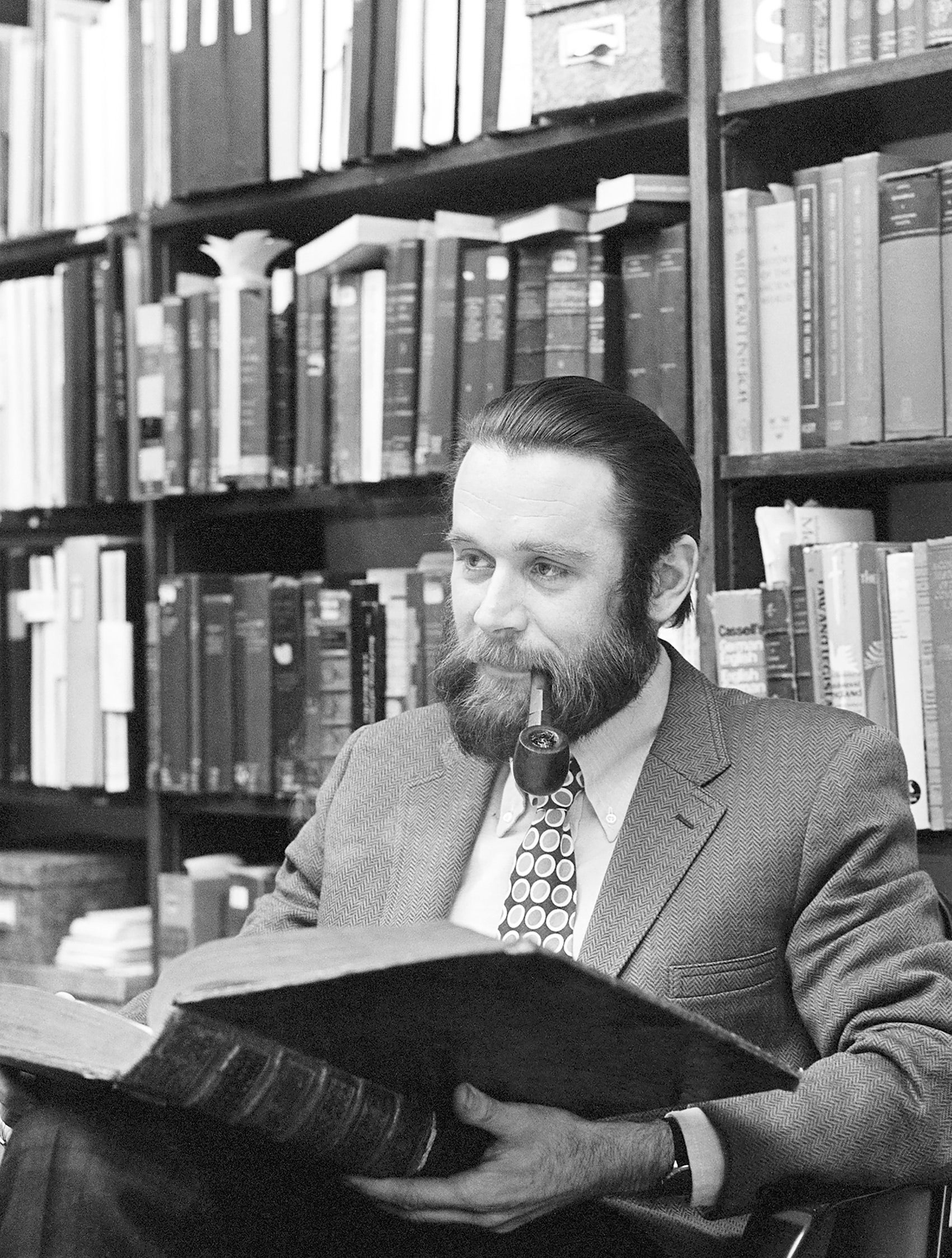
One thread — the history of the law of marriage — began with his undergraduate studies at Harvard College, where he wrote a senior thesis on “Romeo and Juliet,” and runs through decades of articles
on such topics as witness proof, the experience of women plaintiffs in church courts, and the history of marital property. In a 2007 book, “Law, Marriage, and Society in the Later Middle Ages: Arguments about Marriage in Five Courts,” Charlie combined analysis of what he calls the “interesting case” (i.e., a close reading of individual case narratives) with sampling and other quantitative methods to shed comparative light on the intersection of law and society in five different locales — York, Ely, Paris, Brussels, and Cambrai — all subject to the marriage rules promulgated by Pope Alexander III (1159-1181).
According to the Alexandrine rules, absent any impediment to marriage, an exchange of consent between man and woman produced an indissoluble marriage, even without parental involvement or ritual formalities. Such an indissoluble marriage could be created by an exchange of words of consent in the present tense or by an exchange in the future tense followed by consummation. Evidence from ecclesiastical trial records suggests that litigants knew the rules and crafted their legal strategies accordingly, particularly when a dispute arose over whether a couple had in fact contracted marriage. This holds true in both the English and Franco-Belgian contexts, although Charlie’s data-driven analysis also reveals regional differences in the kinds of claims brought and remedies provided. Such differences may be explained in part by varying local culture and customs regarding marital property and inheritance, such as reliance on male primogeniture versus partible inheritance.
The book is a monument to the achievements possible when a scholar devotes his career to solving one set of mysteries, while also pointing out to future scholars remaining questions worth further archival investigation.
Though I have known about Charlie’s now-imminent retirement for a few years at this point, I remain in denial. There must be another Donahue class I could take, another opportunity to listen in awe at the magister’s accumulated wisdom on a pocket of premodern law. Thankfully, I know I will still work with Charlie through, inter alia, the Ames Foundation, where he has served as editor or co-editor for manifold volumes of primary source materials so essential to the work of legal historians. Thanks to his coding prowess and tireless efforts as webmaster, such volumes are typically available online as well as in print.
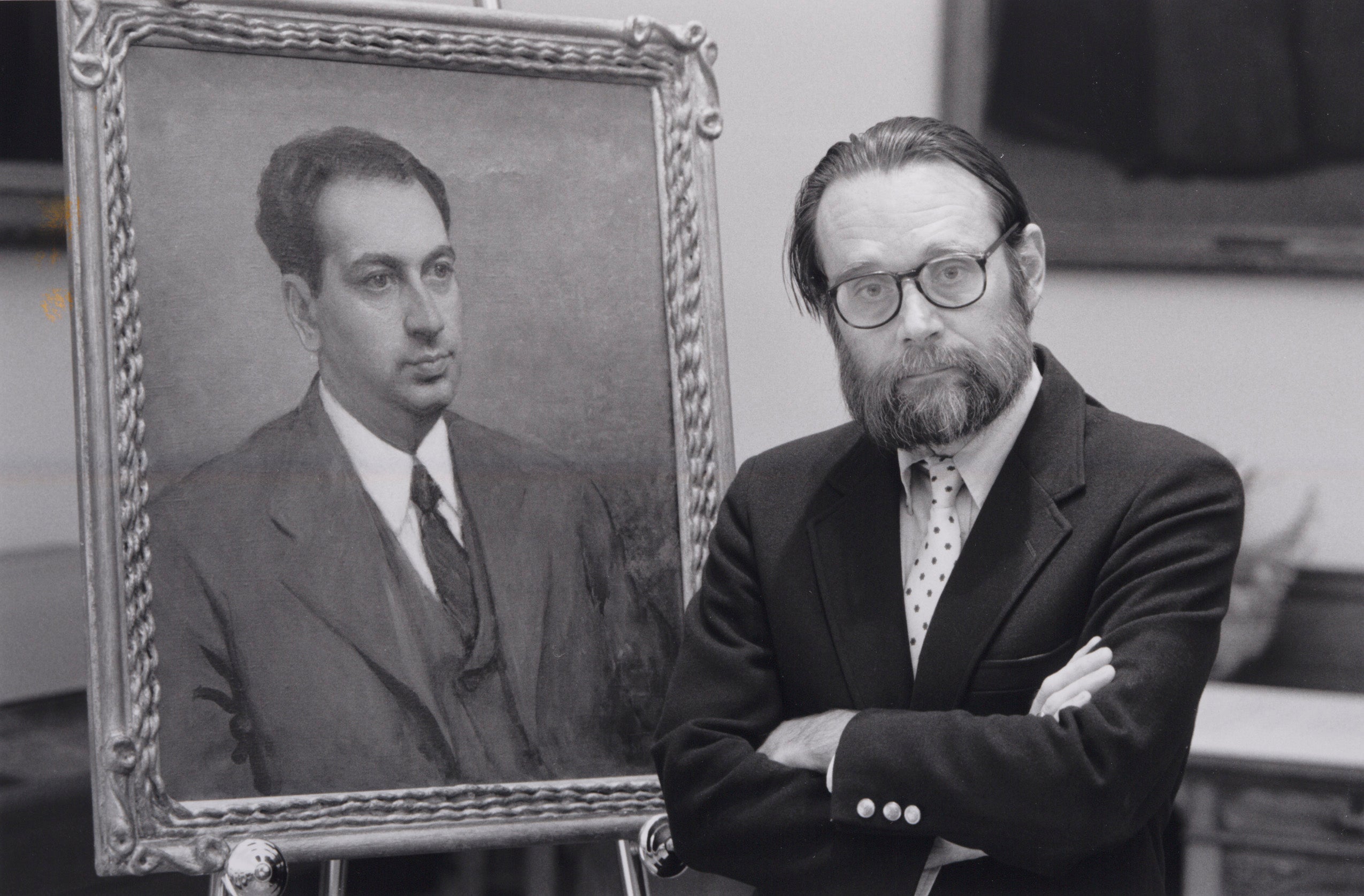
In the coming years, his various “side projects” will keep him busy — that little matter of the 14th-century volume of the “Oxford History of the Laws of England” and the detailed cataloging of the contents of Harvard Law Library’s medieval manuscripts (Charlie is a one-man metadata machine), to give only two examples.
While I have focused on his superhuman qualities as teacher and scholar, I close on the image of Charlie the man. He and Sheila recently entered their seventh decade of married life, their devotion to one another, their daughter Sarah, and their two grandsons a testament to the profound potential of the institution Charlie has long studied as a scholar. How fortunate HLS and its students have been to have him in the classroom for nearly a half century. How fortunate we will continue to be as he labors on in the medieval archives and in managing the modern platforms that, not unlike Charlie reading aloud from the Anglo-Saxon Chronicle, collapse time and space by making accessible the scribblings of medieval scribes in furtherance of the work of future legal historians.
Author Elizabeth Papp Kamali ’07 is the Austin Wakeman Scott Professor of Law at Harvard.