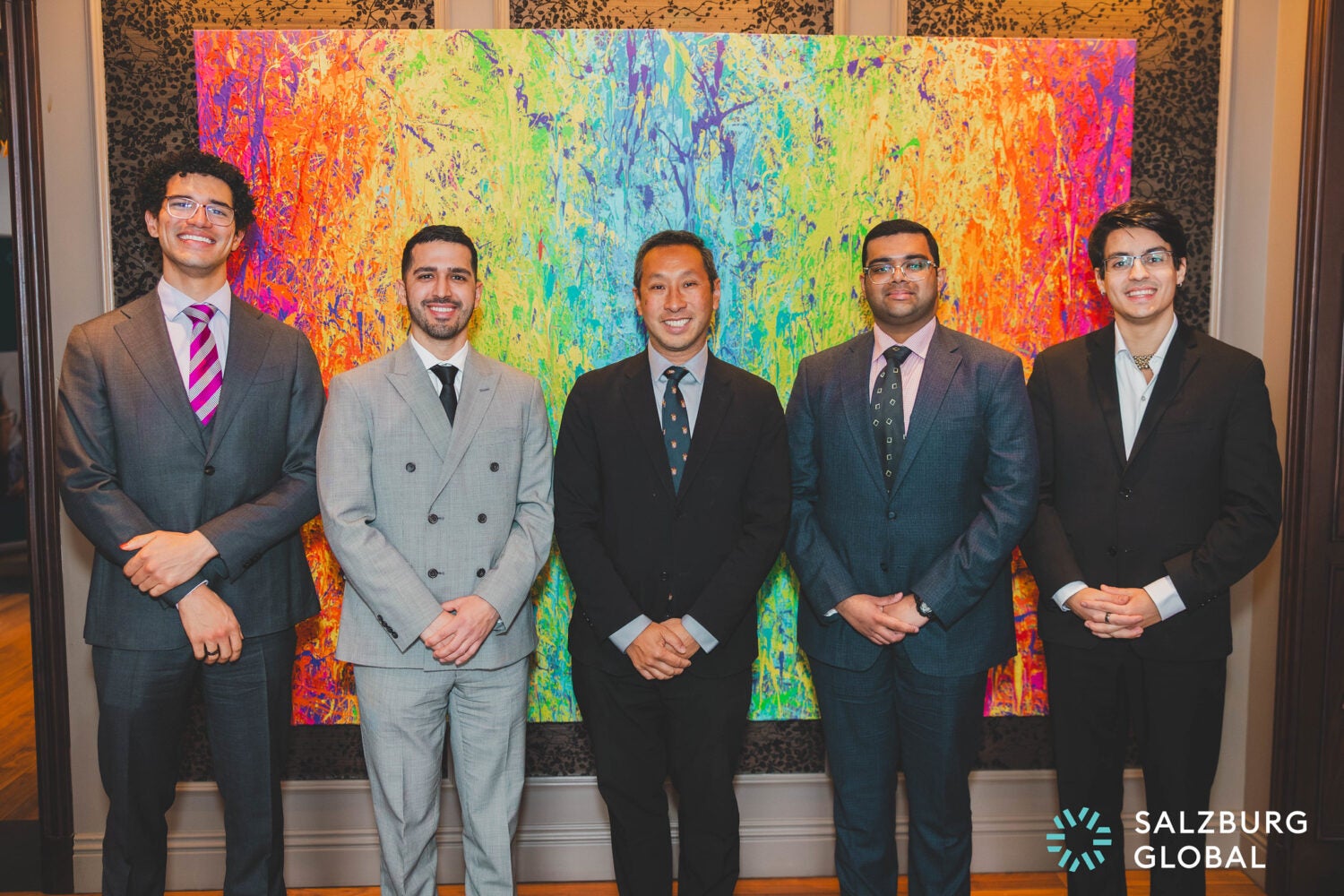
Four Harvard Law School students recently traveled to Washington, D.C., to present their international law research on complex issues as part of the Salzburg Global Seminar’s annual Salzburg Cutler Fellows Program.
The leadership nonprofit’s fellowship convenes faculty and 60 students from top law schools around the country for two days to discuss their ongoing research into private and public international law topics as well as career opportunities in the field. Harvard Law School Professor Mark Wu, the Henry L. Stimson Professor of Law, co-chairs the fellowship.
The theme of this year’s program was “Disruption and Renewal: Charting the Future of the International Rule of Law, Democracy, and Pluralism,” a nod to the challenges that international law faces in a time of democratic backsliding in the United States and around the world. Two of the featured speakers were John B. Bellinger III ’86, partner and co-chair of Arnold & Porter’s global law and public policy group and a former legal adviser for the U.S. Department of State and National Security Council, and Natalie L. Reid ’03, partner and co-chair of the public international law group at Debevoise & Plimpton.
The four students — Saxon Bryant ’27, Felipe Lobo Koerich ’26, Iñaki Navarrete ’26 LL.M., and Vaishnav Rajkumar ’27 — presented their papers in small groups, heard from leading practitioners in the field, and participated in networking and mentorship opportunities.
Bryant also participated in the Salzburg Debate, in which he and several other fellows faced off over the proposition that a “post-American world offers the best opportunity for the renewal of international law and institutions.”
Here is a closer look at the Harvard Law participants, their backgrounds, and their experiences in the program:
Saxon Bryant ’27
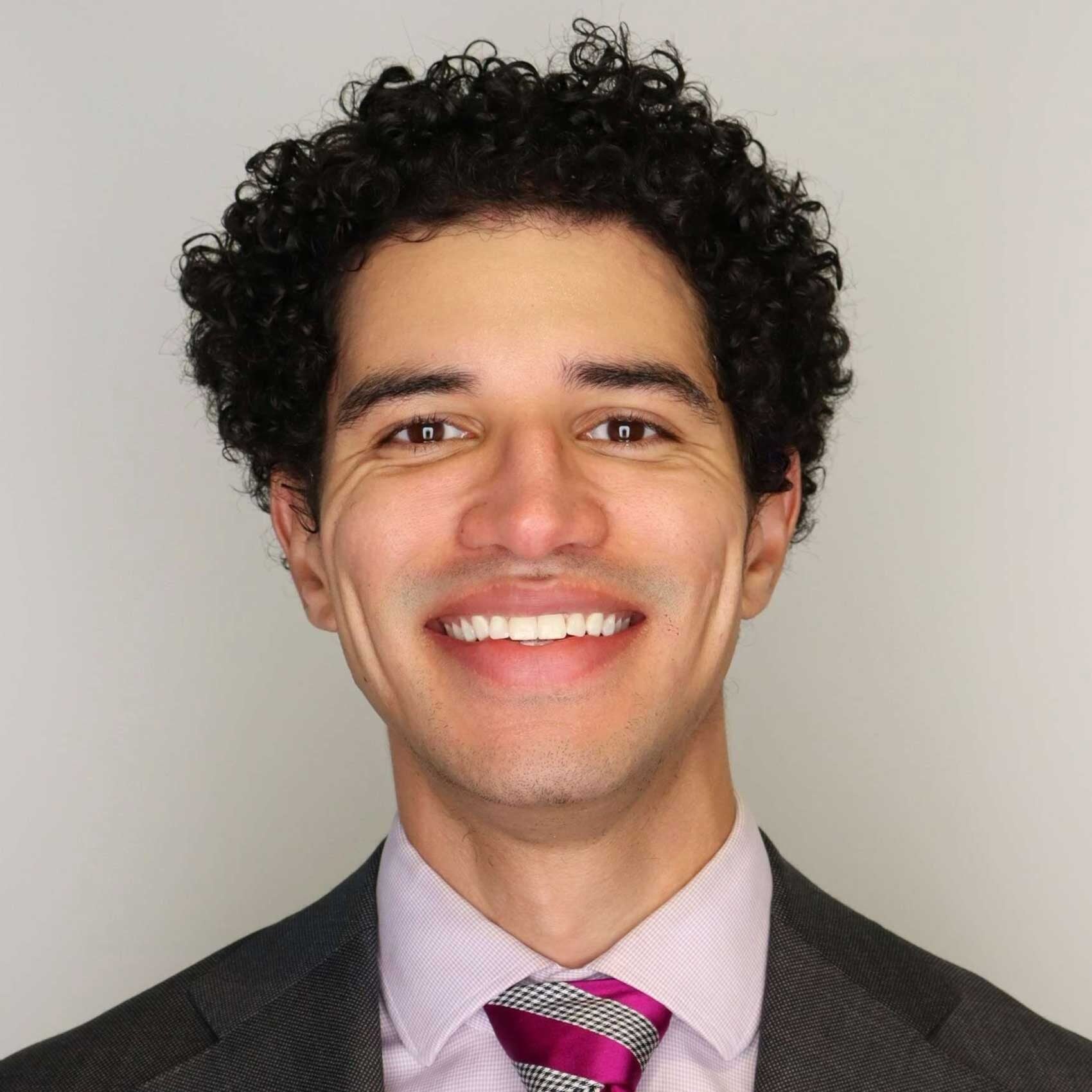
Bryant, who coached debate in Taiwan as a Fulbright Scholar after graduating from the University of Pennsylvania with degrees in economics and political science, was one of eight fellows who participated in the Oxford-style debate.
“There is nothing like public rhetoric to test ideas in a fun and engaging way,” he said. “The debate was exactly that.”
Bryant previously worked at McKinsey & Company where, among other projects, he developed a business accelerator for Black-owned firms. At Harvard Law, he is the lead executive editor of the Harvard International Law Journal and social chair of the Harvard Asia Law Society.
For the Salzburg Cutler Fellowship, he has been working on a paper that examines the history and ramifications of the U.S. Foreign Direct Product Rule, which allows the country to assert export control jurisdiction over any products that can be traced to U.S. technology or knowledge. Bryant said he finds the concept fascinating.
“What do you mean the U.S. has the authority to tell [Taiwanese semiconductor company TSMC] who they can and cannot sell to?” he recalled thinking. “What is this thing, how does it work, and what is it doing in the world?”
In recent years, as the U.S. and China have ratcheted up their trade war against each other and other countries, the rule — and a similar export control China announced last year on products using Chinese-origin rare earth materials — has become even more relevant.
“My paper explores the history, modern usage, constitutional and international law justification for the FDPR, and implications for export control regimes globally,” Bryant said, adding that he appreciated the chance to receive detailed feedback from faculty on his paper.
“As a student writing a paper, it is rare to ever get the level of [friendly] criticism which academics give each other,” he said. “Gaining insight into that process has given me not just better appreciation for the field but also rigor in my own approach.”
Vaishnav Rajkumar ’27
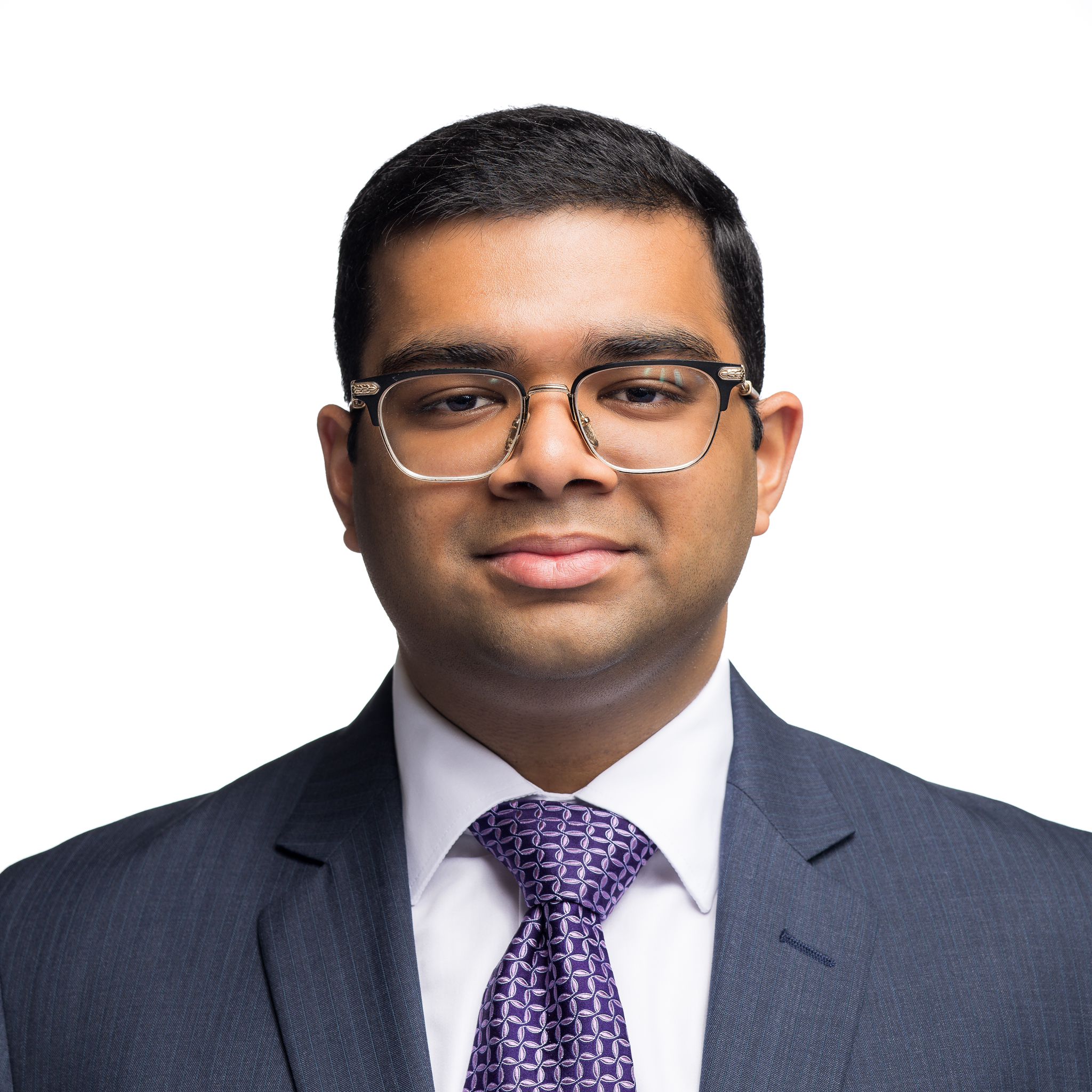
Rajkumar, who worked as a features editor at an open-access website covering international law, relations, and politics before enrolling at Harvard Law, has always been interested in global affairs. Born and raised in the United Arab Emirates, he studied European politics at King’s College London before earning a master of philosophy in politics and international studies from the University of Cambridge.
At Harvard Law, he has participated in the International Human Rights Clinic and the Program on International Law and Armed Conflict. He also interned last summer at TRIAL International, a nonprofit that supports victims of international crimes.
As part of the Salzburg Cutler Fellowship, Rajkumar presented a summary of a paper he is working on that examines the role of the public in international humanitarian law. Scholarship in the field has long suggested that the public can help hold states accountable for their actions during times of conflict, but who makes up “the public?” How much do people really know and understand about international humanitarian law? For Rajkumar, these questions are essential, especially in a time in which the relevance and influence of international law is being called into question.
“How do we communicate principles of international humanitarian law to the public?” Rajkumar asked. “I genuinely believe that if people had a better understanding of international humanitarian law, we would have more effective conflict resolution.”
Rajkumar said he was excited to participate in the fellowship because of the opportunity to receive feedback from legal scholars.
“I really enjoyed getting feedback on a paper I haven’t yet written completely,” he said. “It gives me the flexibility to approach it right from the get-go with all these points of feedback in mind.”
As the incoming editor-in-chief of the Harvard International Law Journal, Rajkumar also said he appreciated meeting with student editors from similar publications. He and another editor have even discussed potential collaborations.
Iñaki Navarrete ’26 LL.M.
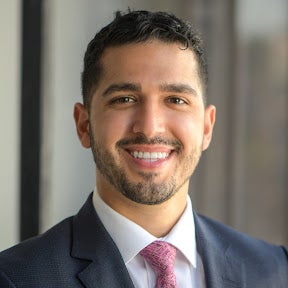
Focusing his practice on public international law, Navarrete clerked at the Inter-American Court of Human Rights and the Supreme Court of Israel before moving to The Hague, where he spent five years as an associate legal officer at the International Court of Justice (ICJ), working on complex disputes, including Ukraine’s case against Russia, South Africa’s case against Israel, and the recent advisory opinion on climate change. Long before he worked at the ICJ, Navarrete learned about the stakes of international law at home: his parents had fled Chile as refugees after his father was imprisoned for documenting the dictatorship’s abuses.
Navarrete, who is considering a career that combines practice and academia, is also working on a book about the implications of the relatively insular world of people shaping, practicing, and implementing international law — including the overlap between members of the international law society Institut de Droit International and judges at the ICJ.
“What does this say about international law, which we think of as being global, as belonging to everybody, that it is actually produced by a handful of people?” he asked.
As a Salzburg Cutler fellow, he presented part of that work to peers and faculty.
“I thought it would be great to connect with other students and scholars from across the United States,” he said.
With international law under stress in many parts of the world, Navarrete said the fellowship was a “helpful reminder to take a long view on things.”
“In recent weeks and years, it’s fair to say that international law has been challenged in many ways,” he said, but “international law is not a linear project. It has its ups and downs. It was nice to be in a community of people who you know will fight or try to uphold that project.”
Felipe Lobo Koerich ’26
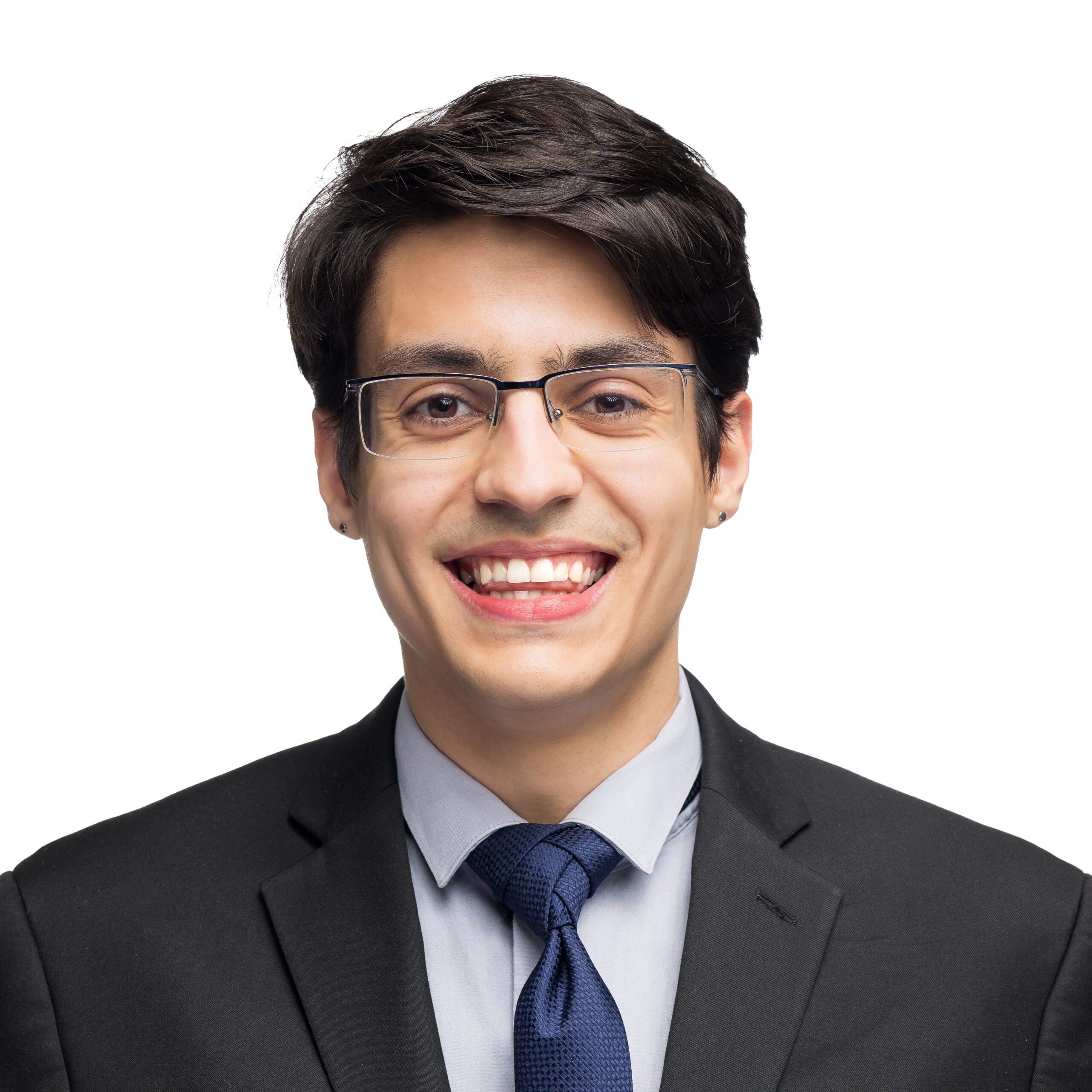
Before enrolling at Harvard Law School, Lobo Koerich earned undergraduate and master’s degrees in foreign service, international politics, and Latin American studies at Georgetown University and worked as a program officer for the American Bar Association’s Rule of Law Initiative in Mexico, Central America, and South America. One project involved supporting the selection process for Honduras’ Supreme Court justices and attorney general.
“It was an incredibly rewarding experience — learning about how these systems work and the best way to go about them and having direct impact on real-world decisions,” he said.
At Harvard Law, Lobo Koerich has continued to pursue international topics and law through his classes and as an editor-in-chief of the Harvard International Law Journal.
The Salzburg Cutler Fellows Program, he said, was a way to meet like-minded students and scholars and to workshop a paper he is working on about the rights of people incarcerated in privately operated prisons in several countries, including the United States. He began working on the paper as part of a writing group led by Professor Vicki C. Jackson, the Laurence H. Tribe Professor of Constitutional Law.
The fellowship, he said, was fantastic.
“I got excellent feedback,” he said, not just from faculty but from other students. “That was a big strength of the program to me.”
Like Rajkumar, he also connected with other international law journal editors on best practices at their publications.
Lobo Koerich, who will join the London office of Skadden, Arps, Slate, Meagher & Flom after graduation, said the fellowship was especially meaningful given the current geopolitical climate.
“Everyone was very cognizant of the challenges international law is facing,” he said. “At the same time, everyone was there, meeting each other, connecting, learning from each other. Everyone in that room is thinking through these issues, trying to come up with solutions. The fact that this was happening gave me a lot of hope for the future of international law.”
Want to stay up to date with Harvard Law Today? Sign up for our weekly newsletter.