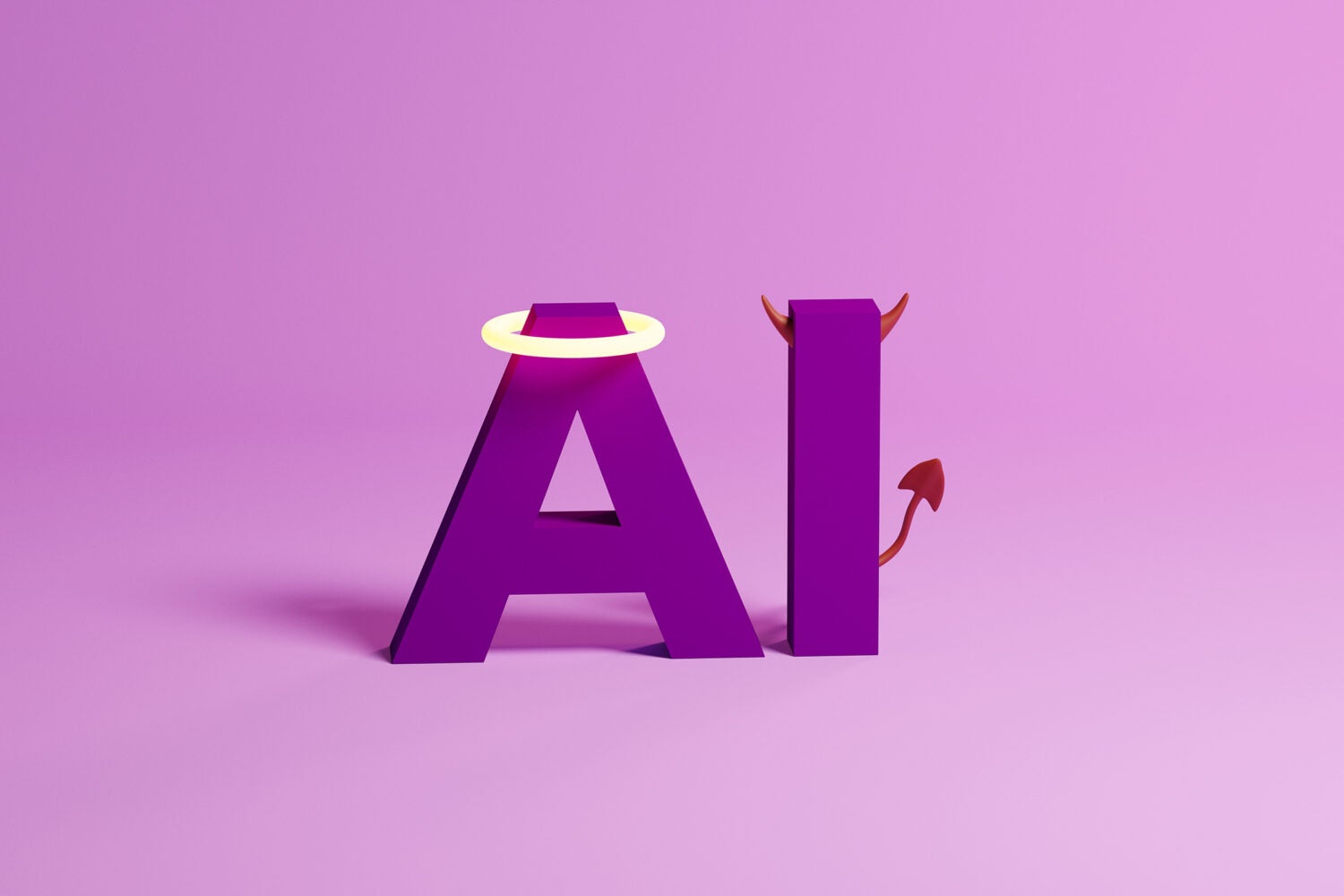
Is there really a one-in-ten chance that artificial intelligence could “kill us all” within the next decade, as one expert at the tech company Anthropic recently warned?
In early September, Evan Hubinger, a prominent AI safety researcher at frontier lab Anthropic, shared his existential worries about the rapid pace of AI development in a post on X: “[W]e really do earnestly believe AI could kill all humans! I personally think it is >10% within the next decade. I believe Anthropic is trying its best, but we do not yet have a plan to solve alignment for superintelligence and are not clearly on track to.”
Hubinger’s concerns went viral, adding to a growing chorus of warnings from tech CEOs, employees, and outside observers worried about the potential risks of increasingly powerful AI.
But although voices like Hubinger’s may feel particularly prominent in this moment, there are plenty of experts who believe that the technology holds the potential to solve problems that have plagued humans for millennia, and making AI smarter, sooner is the way to go. There’s also a third group: those who think that our histrionics (or awe) about the future of AI are preventing us from addressing the very real problems the technology is already creating, says Harvard Law School’s Jonathan Zittrain ’95.
Which of these voices prevail could have a profound impact on the way we work, play, and live in the coming years, argues Zittrain, the George Bemis Professor of International Law and a professor of computer science.
“We’re at an inflection point in AI development where these questions about acceleration, safety, and societal impact are going to shape governance frameworks, corporate practices, and the lives of our children for decades,” says Zittrain, who is also the faculty director of the Berkman Klein Center for Internet & Society. “This is one of the most consequential debates of our time.”
The AI Triad: Idealists, Alarmists, and Skeptics
Zittrain has mapped these three competing views on a triangle, and his framework forms the basis of a law school class he will co-teach for the second time this spring, Debates on Frontier Artificial Intelligence Governance: The AI Triad. The course, taught with Lecturers on Law Jordi Weinstock and Joshua Joseph, will examine how AI and other rapidly evolving technologies are poised to alter our institutions and ways of life — and how the law can or should respond.
According to Zittrain, disagreements among experts about AI and how it should be treated are not just theoretical. “This is all upstream of policy and law, because before figuring out what the legal doctrine should be, for example, you first have to have a sense of, What is the good life? Where are we trying to go with this? What should happen? What is the technology capable of, and how can it be shaped and by whom?”
Zittrain says the AI Triad framework emerged from conversations he has had around the tech hub of the San Francisco Bay area in the last decade. Over time, he categorized those working in and around AI into three schools of thought, though he admits the lines between them are sometimes blurry and often shift — and that the landscape of the triad can be quite varied.
First, there are the idealists, who believe AI could bring about something like utopia — a world with material and temporal abundance in which personalized medicine helps people live longer, healthier lives. There are the alarmists, who fear that AI could wreak havoc on institutions and our lives, potentially in irreversible or even existential ways. Then there are the skeptics — those who believe that by worrying about imagined futures — utopian or otherwise — people are ignoring the very real, though perhaps more mundane, threats the technology poses today.
“Sometimes these positions are reconcilable; sometimes, they’re not,” Zittrain says. “The smartest people in the world — the people closest to designing these models — they don’t agree with each other. It’s hard to get to the ground truth.”
These camps aren’t always talking, Zittrain says. “These different groups have very different views about AI, and different cultures and different vocabularies to talk about it. Despite how close they are, they tend not to interact as much as they should.”
How Harvard Law’s AI Governance Course Explores Competing Perspectives
Weinstock, a senior adviser, and Joseph, chief AI scientist, both at the Berkman Klein Center, bring additional legal and technical expertise to the AI Triad course. They say that it is important to them and to Zittrain that students learn about these competing visions directly from the experts themselves, which is why they invite leading AI researchers and innovators to engage with their class throughout the semester.
Hearing directly from those working in the field also helps make perspectives that some might find baffling more understandable, Joseph says.
“Here’s a person who has a lot of lived experience, and when you listen to them talk about it, it makes more sense. It shows there is a lot more nuance to their arguments. It no longer seems like the caricature you might have had of that position before the class,” says Joseph.
In one session last year, Amelia Miller, a researcher at the Berkman Klein Center focused on how tech shapes human relationships, spoke with the founder of Friend, an AI companion necklace that listens and speaks to its wearer.
“Seeing the two of them talk to one another and flesh out their views was a much more arresting way to learn about this than to read about it,” says Zittrain.
Although this year’s syllabus has yet to be finalized, last year’s course covered topics such as the backlash against data centers, cybersecurity and privacy attacks, and concerns that AI might cause mass unemployment. The instructors say they also reserve time during each class to discuss the latest AI and tech-related news.
“We are learning at the same time the students are learning. It’s a very dynamic way of teaching a course,” says Weinstock.
Joseph adds that some of his favorite conversations from last year’s course were about the AI Triad framework itself. “The tool is approximate and limited in its own way, and students would disagree with how many categories of thought actually exist, or what the true safetyist position really is, for example.”
Joseph says he and his co-teachers hope their students emerge from the course with a better understanding of the competing values, incentives, and worldviews driving the development of AI technology.
“There’s an extra weight behind all this, because we know that there will probably be a student or two or three that are going to wind up making these kinds of decisions at one of these labs or in government,” Joseph says.
Weinstock adds that he doesn’t expect students to become technical experts — lawyers are trained in the law, not necessarily in the more tech-facing areas in which he, Joseph, and Zittrain work. But future lawyers need to know whose expertise to trust, he argues.
“We’re saying, ‘You are hearing very loud voices from each of these directions, so how do you weigh them? How do you credit them? And that doesn’t mean you need to fall into one of these categories,’” he says. “But we want them to understand the landscape they’re entering into.”
That landscape contains a lot of unknowns, Zittrain adds. That’s why the course is organized around what he calls “the three laws of digital governance”: “The first is we don’t know and can’t agree on what we want. The second is we don’t trust anybody to give it to us, and the third is: We need it now.”
Helping students solidify their view on just one of these pressing priorities — what we want, whom we can trust, and how we can get it — would prepare them to grapple with the problems AI creates, Zittrain argues. “We want them to be able to maintain one’s compass and pick a direction and explain why that’s where we should go.”
True to its subject, the course itself remains unsettled, five months before the spring semester begins — the trio has yet to commit to a list of topics. After all, Weinstock says, the culture and technology of AI are moving too quickly to predict what will be old news by then, and what new questions will demand the students’ attention.
“We’re not working on our syllabus anytime soon,” Weinstock says. “It’s pointless.”
Want to stay up to date with Harvard Law Today? Sign up for our weekly newsletter.