What is the best way for Americans to stand up to what many critics view as an overbearing federal government? Are the courts the best bulwark? Is public activism more vital? Should the response involve a little bit — or even a lot — of both?
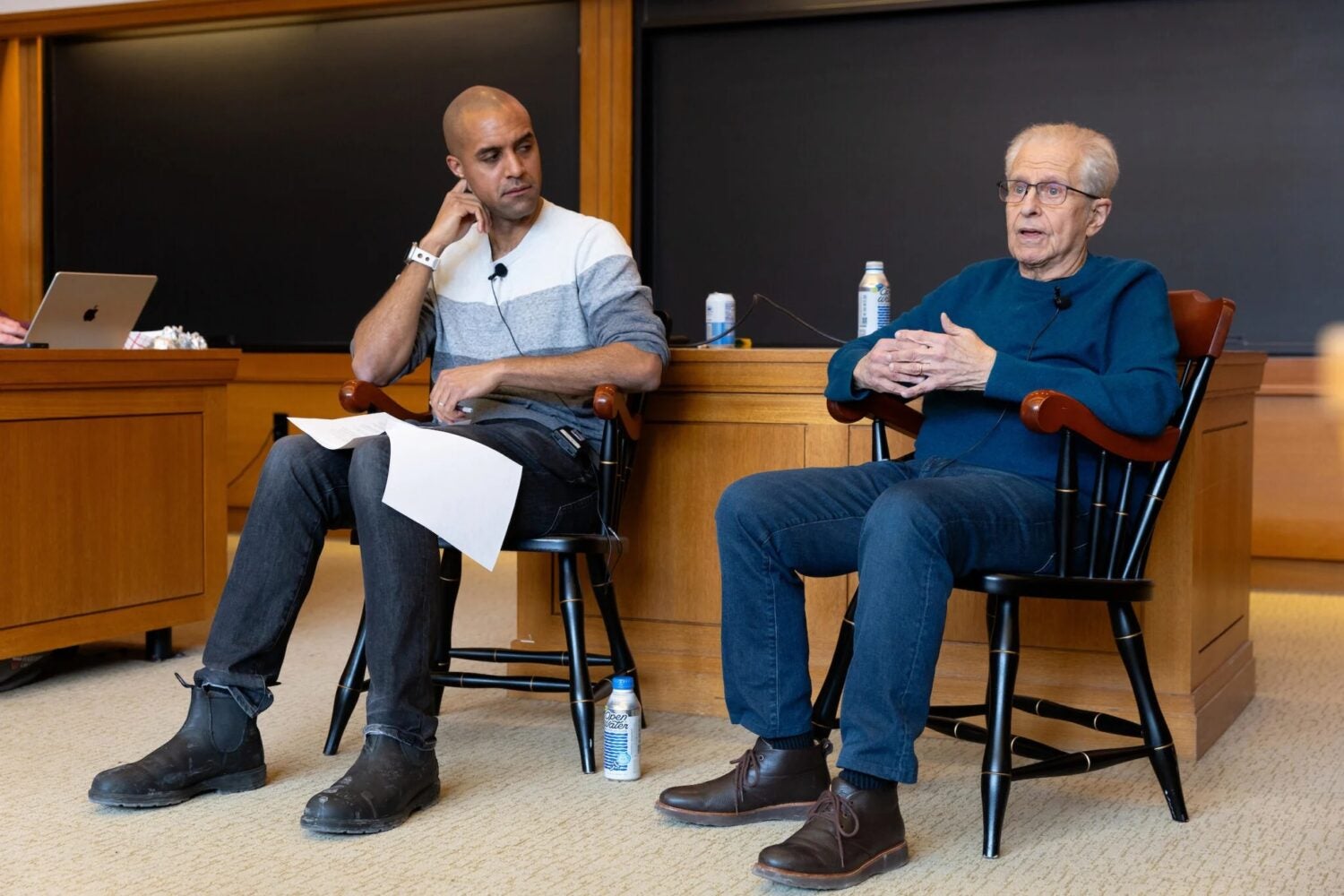
In a large Harvard Law classroom packed with attendees, two constitutional law luminaries discussed strategies for protecting people’s civil liberties amid the Trump administration’s controversial federal immigration enforcement efforts in communities across the nation.
Since “Operation Metro Surge” began last December, more than 3,000 federal immigration officers have been deployed to the Minneapolis-Saint Paul metropolitan area where, according to the Department of Homeland Security, they have arrested more than 4,000 people. Two U.S. citizens, Renee Good and Alex Pretti, were killed by federal agents last month, sparking public outcry in Minnesota and across the country.
In a talk titled “ICE, Federalism, and the Rule of Law,” Professors Nikolas Bowie ’14 and Laurence Tribe ’66 both voiced deep concern about the scope and magnitude of recent immigration enforcement actions, but also praised public responses to the alleged infringement of constitutional rights by federal officers.
“We’ve seen an enormous rush of public support for Minnesota’s immigrant community, in the form of people going up and down the streets following federal agents with whistles or cellphones, mutual aid, and countless acts of cooperation and community building in the face of federal enforcement,” said Bowie, the Louis D. Brandeis Professor of Law.
“I’m much older, but I’m still capable of being shocked and confounded and driven to grief when I saw what amounted to state terror,” said Tribe, Carl M. Loeb University Professor, emeritus. “This is a moment for solidarity, and solidarity on the streets in Minnesota is incredibly encouraging.”
Tribe gave a frank overview of the constitutional rights he believes have been infringed on by ICE and other federal immigration enforcement agencies. He specifically listed amendments he believes have been violated.
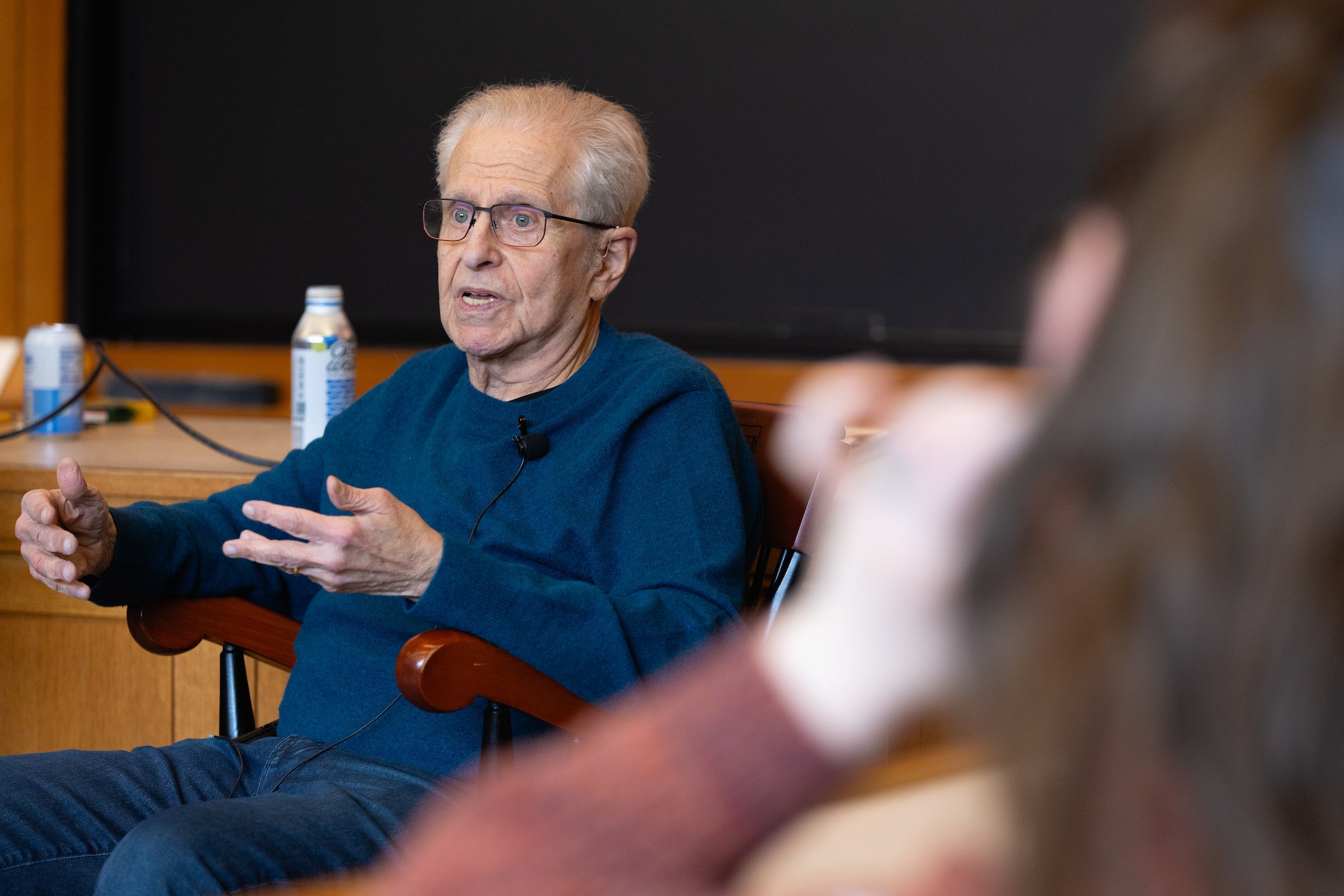
“Certainly, the First [Amendment], they’re shutting down speech,” he said. “Certainly, the Second [Amendment], which is interesting … [They are] violating the Fourth [Amendment] all over the place by going to homes without warrants, equating it with administrative searches. No question, violating the Sixth Amendment right to due process by taking life without a hearing … and the Tenth Amendment, taking over the state of Minnesota’s government in violation of state sovereignty.”
“Of course, then the followup question is: then what?” Bowie asked, before providing examples of recent lawsuits challenging the constitutionality of federal actions.
“Minnesota” he said, “has sued the federal government alleging it is violating, among other things, the anti-commandeering doctrine. The crux of the [Minnesota v. Noem] lawsuit is that Kristi Noem, the secretary of the Department of Homeland Security, has told Gov. [Tim] Walz of Minnesota that if you want us to leave, we expect you to change your laws in many ways, including eliminating your sanctuary laws, which are inhibiting the enforcement of federal law, as well as to provide us with access to your entire voter rolls.”
“There was also a district court in Texas that oversaw a habeas [corpus] petition and wrote a three-page order that cited the Bible saying this is just not how due process should be done in this country,” he added.
Citing a recent New York Times article, Tribe expressed optimism that federal district courts frequently decide cases filed against the Trump administration with apparent political neutrality. While he conceded that federal appellate court rulings, on the other hand, have a stronger correlation with the political affiliation of the president by whom the judges are appointed, he argued that even legal losses can provide unexpected value.
“The suggestion that I end with here is: Look for the silver lining. When I argued, and lost, in Bowers v. Hardwick, I was looking forward to the dissents that would then propel major political activism,” recalled Tribe, referring to the 1986 U.S. Supreme Court decision upholding Georgia’s anti-sodomy laws. Associate Justice Harry Blackmun’s impassioned dissent in the case is often seen as having laid the groundwork for the decision’s reversal 17 years later in Lawrence v. Texas.
“Dissents often become the law, and legal strategy doesn’t always have to look at the bottom line of who wins and loses,” Tribe said. “You can look at the power of the opinion itself. You can look at the message the opinion sends when it’s reversed on the basis of weak reasoning. You can look at good dissents — there’s a lot to build on.”
“Dissents often become the law, and legal strategy doesn’t always have to look at the bottom line of who wins and loses.”
Laurence Tribe
Although Bowie conceded that federal courts are currently “playing an important role,” he discounted the legal system’s capacity to safeguard civil rights against ongoing federal enforcement campaigns. Instead, he emphasized the value of protest, concerted community action, and civil disobedience.
“Federal courts are one part of a vast terrain within which, for me, the most inspiring people in the story are not lawyers at all — they’re the people with whistles and cellphones,” said Bowie. “Outside the judiciary is where I’m seeing ‘wins’ that really translate, for me, into a path forward for building a better country.”
Bowie recounted how public advocacy has directly driven effective legal changes to improve accountability and reestablish constitutional protections. For example, he cited a law recently passed by the Illinois state legislature (HB1312), allowing residents to recover damages from the federal government in state court for violating their constitutional rights.
“States are not sitting on their hands as the federal government terrorizes their residents. This past December, Illinois passed what it calls the Illinois Bivens Act,” said Bowie. “It’s a law that says: If you violate the Illinois Constitution or you violate the federal Constitution, you can be liable in Illinois courts. If you are conducting immigration enforcement in schools, places of worship, and courthouses, we are going to hold you accountable if the federal government does not.”
The Illinois Bivens Act derives its name from Bivens v. Six Unknown Named Agents (1971), a Supreme Court case that recognized an individual’s ability to sue federal agents in federal court for allegedly violating their constitutional rights. According to Bowie, state and local governments across the country have proposed similar Bivens policies to enhance accountability and limit federal overreach.
“If federalism means anything, it means that you should use the resources of the government you control to win, not just to get a good dissent,” he said.
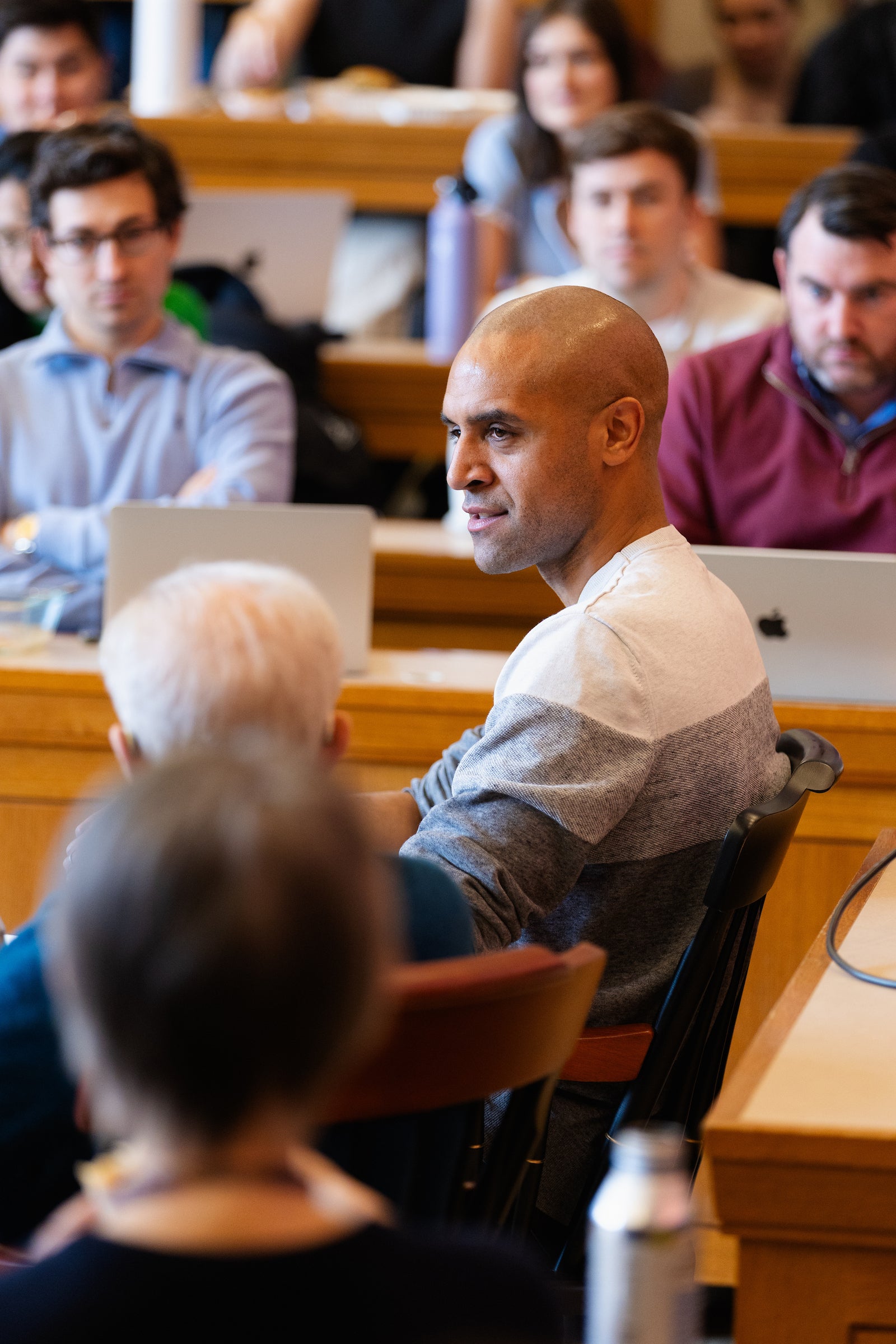
Tribe agreed that state courts and legislatures can serve as valuable forums for the defense of civil liberties. However, he also cast doubt on the authority of state legislatures to pass laws allowing civil claims against federal officials for violating the federal Constitution.
“The answer is complicated, but I’m excited that they’re trying to figure out how to do that,” he added.
Tribe also joined Bowie in praising the efforts of everyday citizens to oppose unconstitutional enforcement activities in their local communities.
“These warehouses, that are essentially concentration camps, are being built. But around the country, the ‘NIMBY’ or ‘not in my backyard’ slogan is really making a difference. They’re basically saying: ‘We don’t like the idea of putting people in these camps, especially little kids.’ And the very fact that this administration has no brakes, no internal guardrails, means that the external response … becomes all the more important,” he said.
The session closed with both experts reminding students in attendance that attorneys have the responsibility of helping to resolve these important questions regarding federalism and federal law enforcement actions. Tribe encouraged students to pursue legal work focused on public defense and upholding civil rights.
“By rejecting the path of joining some fancy Wall Street law firm … by not going to the firms that pay, by not picking the career path that will increase your net worth the most, and by instead going into public defense, going into civil rights work, civil liberties work, that very choice is something precious, and I would urge you all to exercise it with the moral compass that you were born with,” said Tribe.
Bowie also emphasized the moral responsibilities that come along with being an attorney.
“To enforce the law means understanding which principles you care most about and how to vindicate them.”
Nikolas Bowie
“Part of what it means to be a lawyer in this moment includes being able to provide advice, like ‘If you want to keep kids in school, here are the options available for you,’ or ‘Here’s how we need to change state law to allow remote learning to take place,’ or ‘Here is what mutual aid is.’ It means being able to advise community organizations.”.
“For me, the Bill of Rights right now is being most enforced by these blockades of people drumming in the streets,” he added. “That, to me, is constitutional enforcement. To enforce the law means understanding which principles you care most about and how to vindicate them.”
“ICE, Federalism, and the Rule of Law” was hosted by the Law and Democracy Forum, a student-led project launched by the Dean’s Community Connections Grant program.
Want to stay up to date with Harvard Law Today? Sign up for our weekly newsletter.