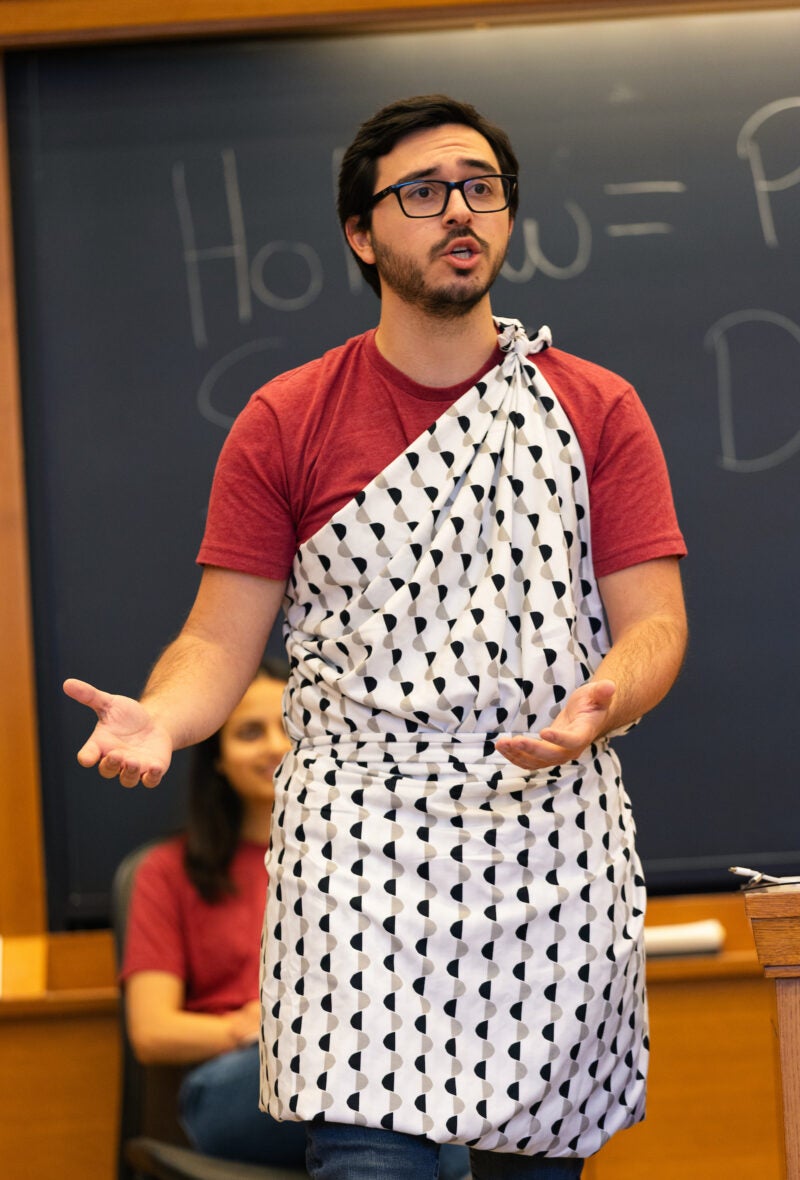
The animated back and forth known as the Socratic method is at the heart of many law school classes. Professors pose questions to get lawyers-in-training to defend, reexamine, and refine their arguments. It’s named after the great but polarizing ancient Greek philosopher Socrates, famous for using his own probing questions to lead others to scrutinize their views on heady topics such as virtue, justice, and knowledge.
But in 399 B.C., Socrates’ penchant for wordplay, his apparent rejection of Athenian gods, and the antidemocratic views of his students landed him in hot water. He was charged with impiety and corrupting the youth and was tried in the city’s agora where a group of 501 jurors convicted him and sentenced him to death. Over the past 20 years that trial has played out regularly in the classroom of Adriaan Lanni, a criminal law expert focused on ancient law, who asks students to craft compelling arguments for or against Socrates and ultimately decide his fate.

Throughout the course, Lanni has her students read a selection of court speeches from classical Athens. Participants in the trials will then refer to those texts, said Lanni, when drafting their dialogue. “The students tend to incorporate the rhetorical moves and arguments litigants would tend to make in Athenian courts into their own speeches in defense of or against the famed philosopher.” said Lanni. “They make up what they think the prosecutors or defense might have or should have said in an Athenian context.”
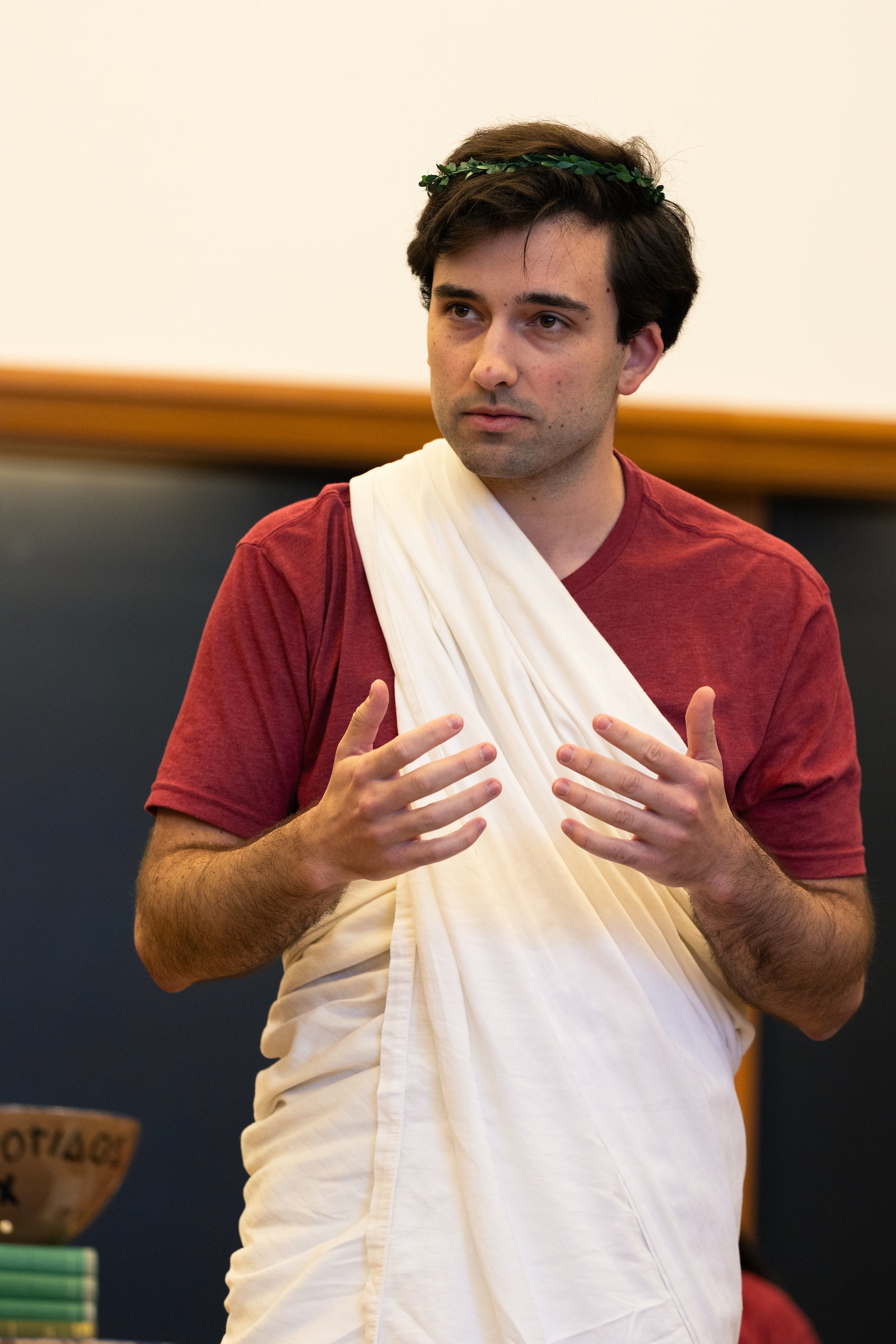
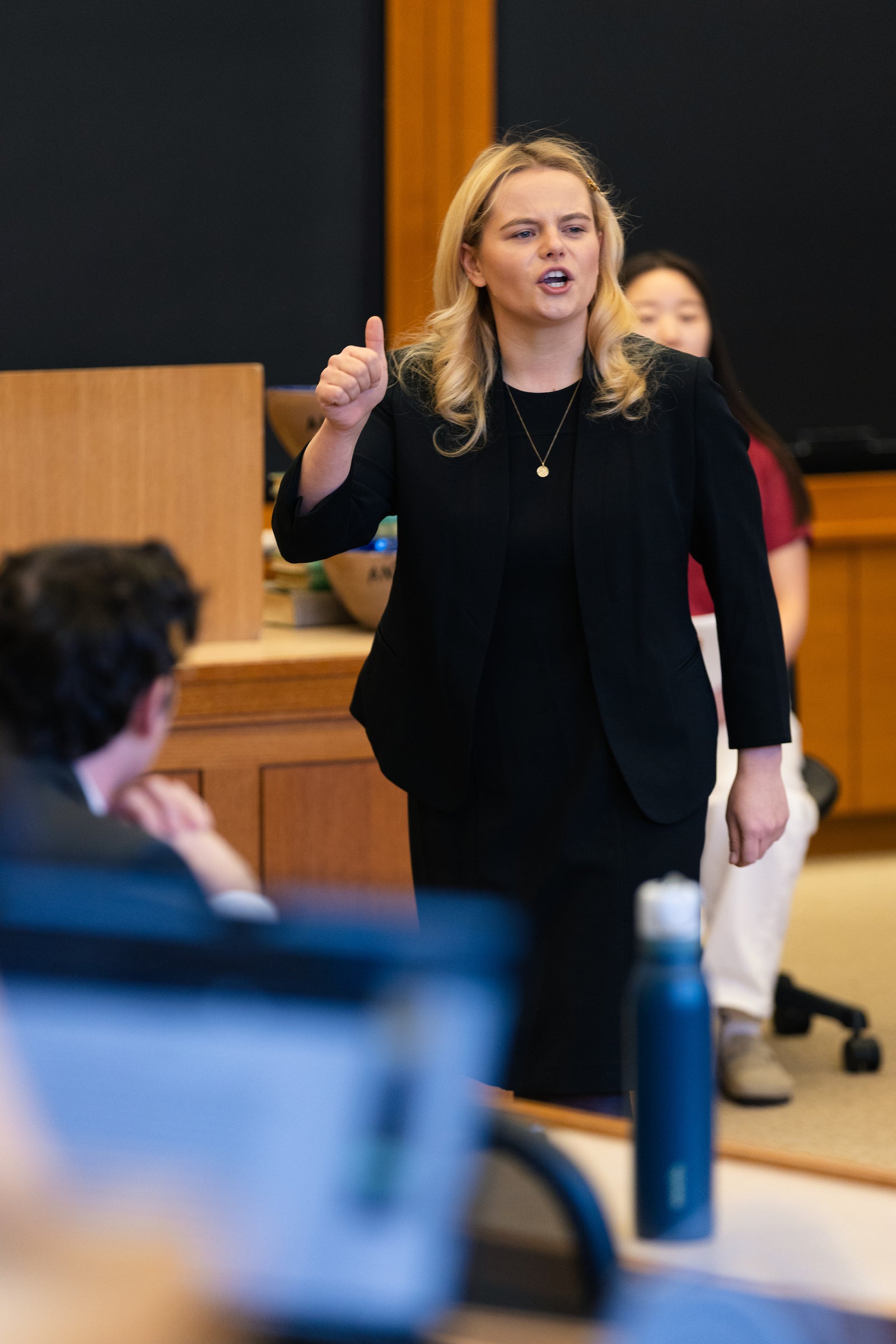
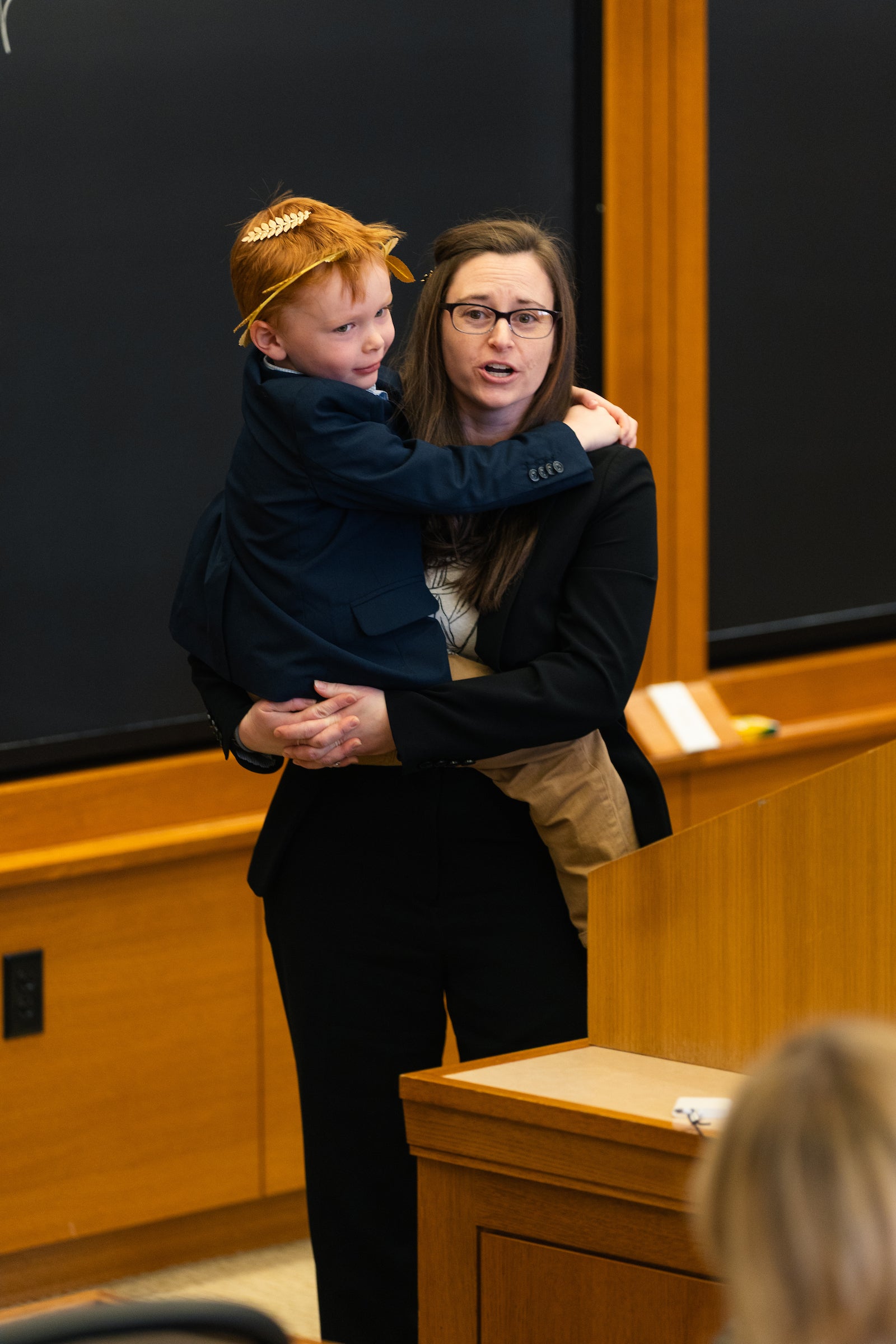
This year, she said, “The students really got into it.” Some arrived with their speeches memorized. Others dressed in togas and wore laurel wreaths. The student playing Socrates sported an impressive fake beard, and one member of the prosecution team even brought her young child to class, a strategy Athenian defendants and accusers often employed to influence the jury or beg for mercy. Since one of the charges against the philosopher was “corrupting the youth,” the boy was offered up by the litigant as both evidence and as a witness, said Lanni, and “really stole the show.”


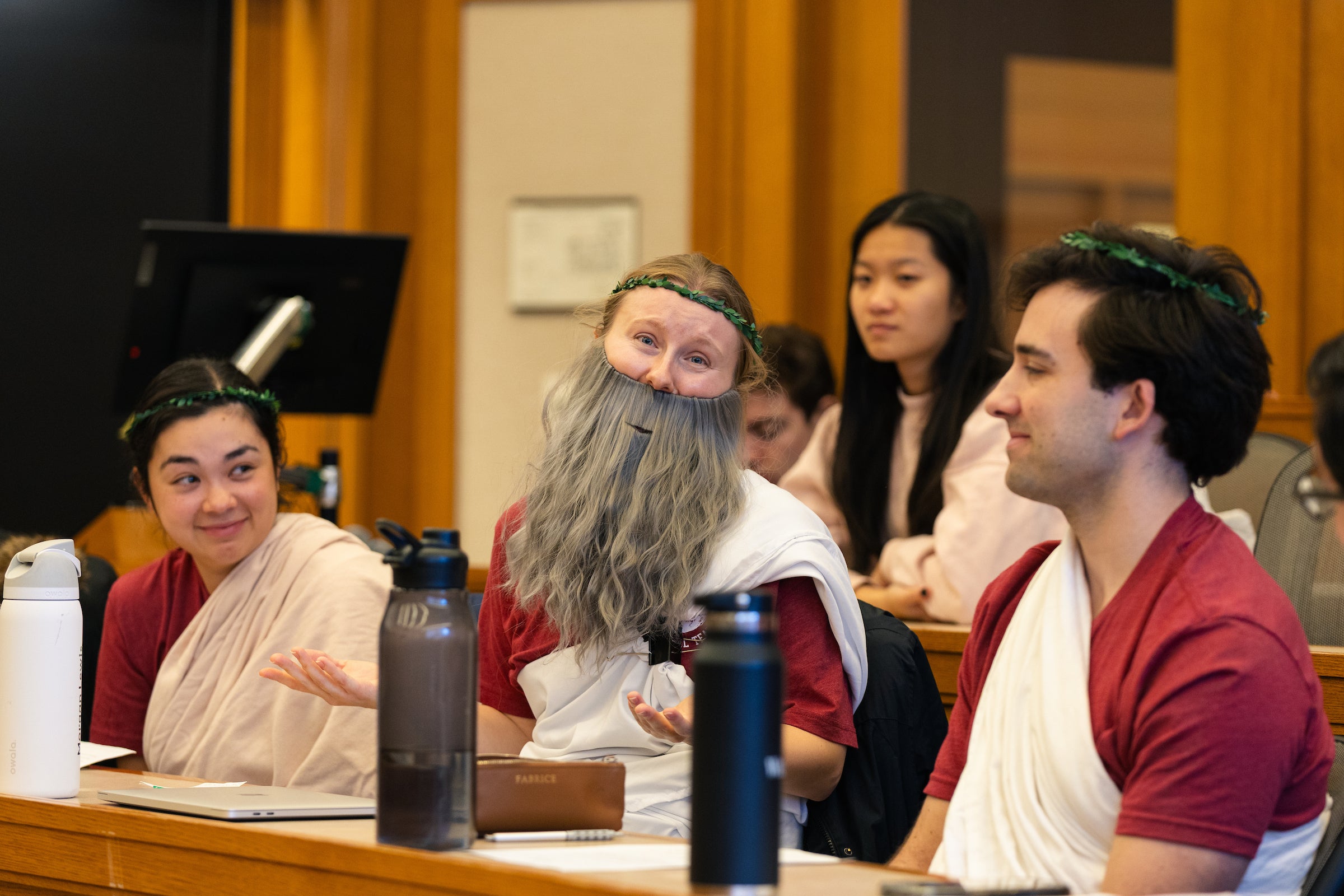
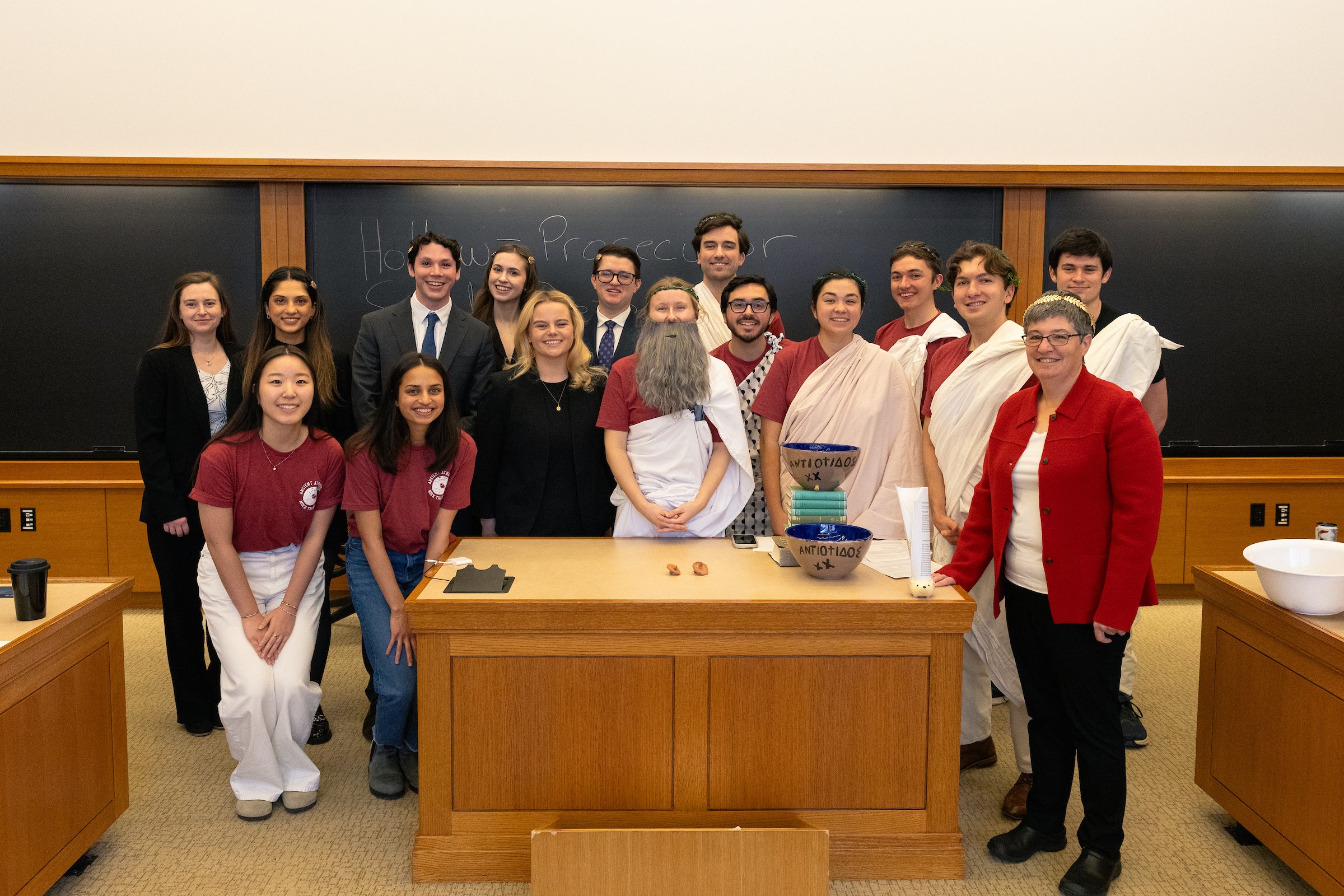
The classroom trial included archons, or magistrates, who swore in the rest of the law school class and students from Lanni’s college course, as members of the jury. There was a makeshift ancient water clock to keep time, and a system of secret ballots that involved casting hollow or solid discs into a pot for the voting urn to indicate guilt or innocence. This time, Socrates was acquitted, though it was a close call: 21-19.
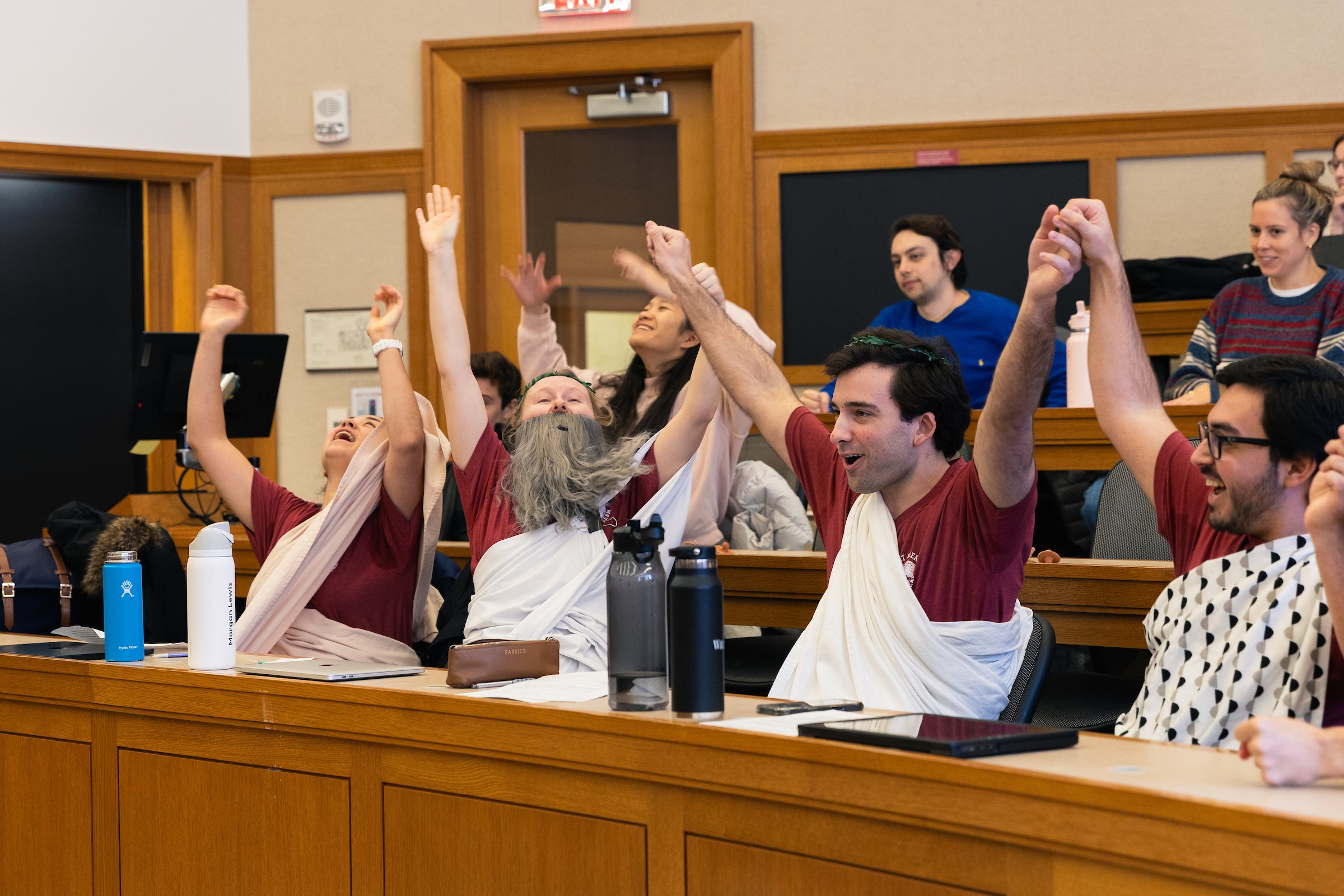
For Lanni, the course offers students used to poring over dense text a chance to engage in a little light-hearted learning. But it’s also an important teaching opportunity, challenging students to develop a “different skill set.” With no written evidence allowed at trial, in keeping with the Athenian model, powerful oration is key. “You really have to figure out how to put together a speech,” said Lanni, “where a jury will remember what you are saying.” Students also get an important window on the Athenian legal system, in which citizens, not the state, brought cases forward. Trials often included discussions about how a conviction, along with possible penalties such as a death sentence, might affect the broader community. “It’s not as much about the strict application of the law, but a focus on equity and thinking about justice in a broader sense,” said Lanni. “I’m not saying that that’s necessarily a better way to approach court procedures than our approach today, but I think it’s interesting for the students to see that this is a different model of how to think about doing justice.”
Want to stay up to date with Harvard Law Today? Sign up for our weekly newsletter.