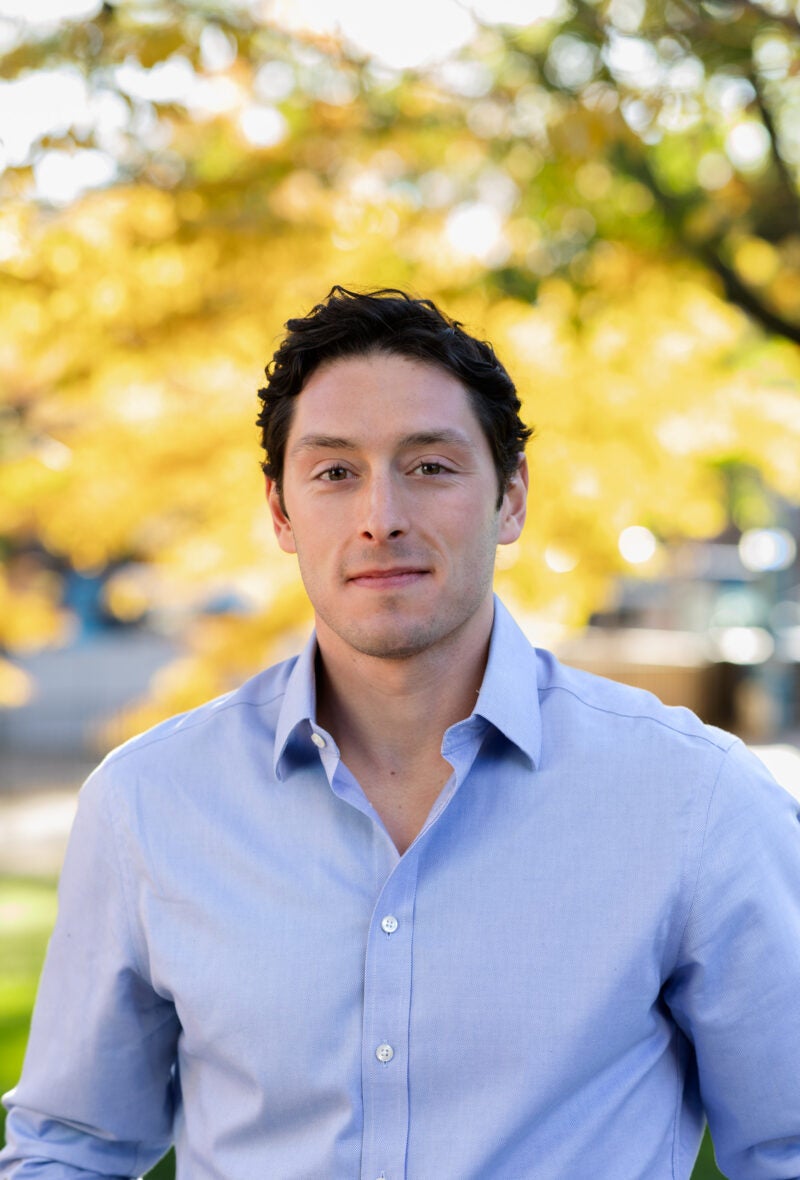
Born and raised in lower Manhattan, Michael S. Bogdanos ’29 is a true New Yorker. An early memory as a 3-year-old is of seeing a billowing cloud of smoke two blocks away through his window after terrorists attacked the Twin Towers on 9/11. He recalls escaping down the stairwell with his mom, little sister, and the family dogs.
As a city kid, Bogdanos played baseball and boxed. But he had never camped in the woods, let alone fired a rifle, before he joined the U.S. Marines in 2020. Yet he thrived there, ranking first in his class of 297 in officer training based on military skills — which includes physical fitness, tactics, weapons, and marksmanship — as well as on academics and leadership.
“The mindset I would try to have is, yes, you can come up with excuses of, ‘I’m at a material disadvantage because I don’t have hands-on experience,’” Bogdanos said. “But I tried to put that mindset completely out of play. I guess my focus is: Whatever disadvantages you think are operating are irrelevant. Everything you need to do well is given to you, and it’s really just up to you to take the tools, take the information, and execute.
“After that point where everyone has met the basic threshold [of physical fitness], there really is no accounting for the mental grit that really, really does play a huge role,” he said. “Especially in the Infantry Officer Course, which is notoriously very physically demanding, I’ve watched incredibly physically fit former college football players drop out, whereas peers of mine who are 5’7” and 150 pounds keep going.”
Testing his limits
While he thought he had the requisite mental toughness before he joined, “you can never know until it’s tested,” and testing himself was a huge reason he became a Marine. While he wasn’t too worried about the academic part of officer training — he graduated summa cum laude from the University of Pennsylvania — military tactical skills, weaponry, and field-based survival were new to him.
“But that was part of the challenge, and the challenge is obviously a big part of why I joined. In many ways, [Marine training] is set up for you to fail, in that you are going to be pushed to your limits. But in another sense, it’s set up for you to succeed, in that you will be given all the tools you need to succeed — and then it’s really up to you how to use them.”
“There’s a line I really love, which is, the best way to leave your mark on the world is to devote your life to something bigger than yourself,” said Bogdanos, who was a Marine officer for five years before matriculating in fall 2025 in a joint J.D./M.P.P. program with the Harvard Kennedy School. (This year, he received the Jack Lemmon Award for Most Persuasive Negotiator, as first among 85 students in the 2026 Advanced Negotiations Workshop.)
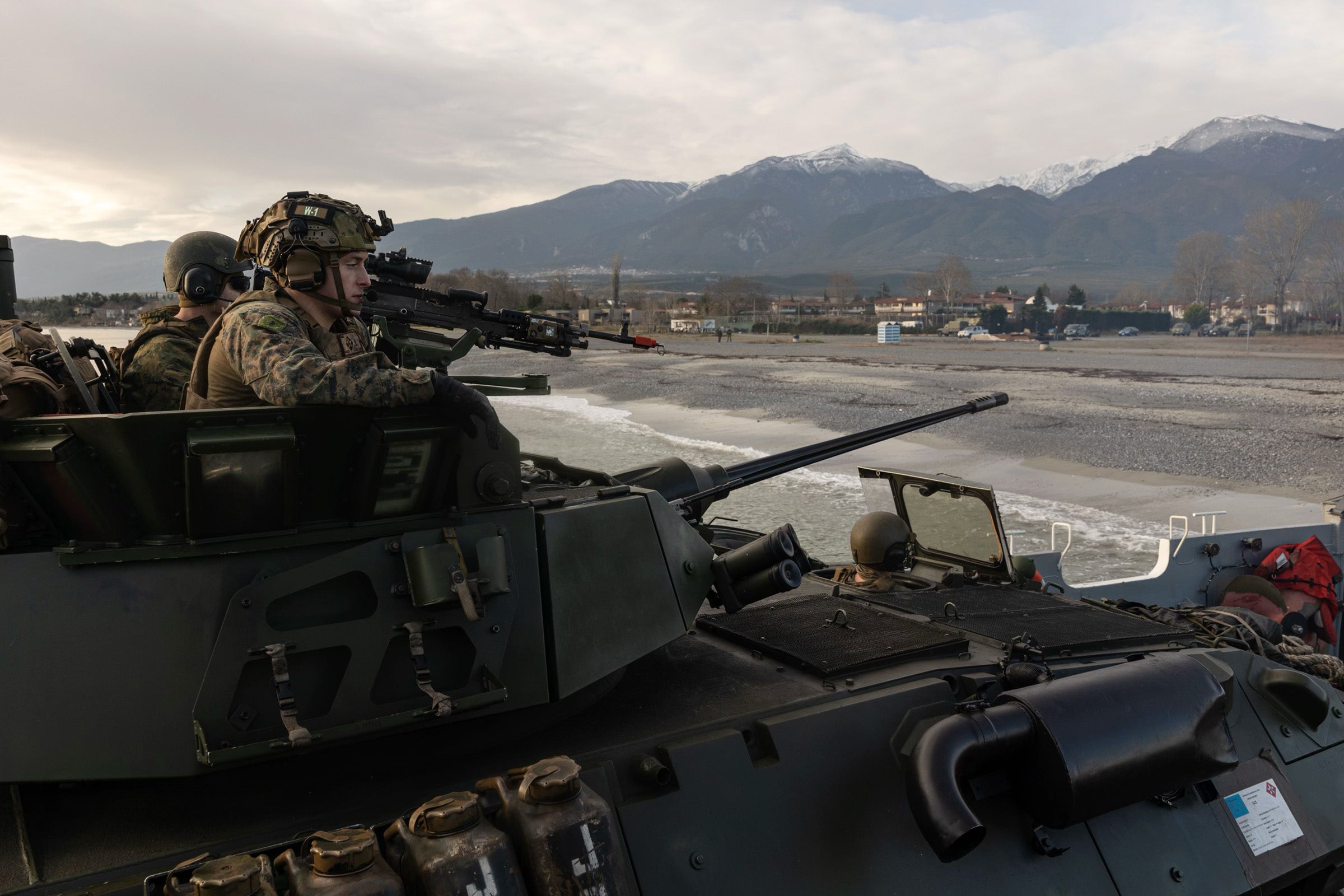
When Bogdanos first headed to college, he had a vague plan of someday joining the Marines. He was influenced by those memories of 9/11 and by his father’s military service. A homicide prosecutor in Manhattan and a Marine Reservist, his father Matthew was deployed after 9/11 to Iraq and Afghanistan. But Bogdanos said that he didn’t join the Corps to follow in his father’s footsteps. It was about challenging himself and serving his country.
After completing basic and officer training, Bogdanos was commissioned as a lieutenant and stationed for three years at Camp Lejeune in North Carolina. During an eight-month deployment in 2023 to the Persian Gulf, Red Sea, and Eastern Mediterranean, a period of high tensions with Iran, he commanded 28 Marines. He became second-in-command of the company and was awarded the Navy and Marine Corps Achievement Medal for meritorious service.
The human side of leadership
The best part of his military time was the relationships formed with the Marines he commanded. “That kind of interpersonal dynamic, where you really become a role model and a mentor in their lives, was far and away the most fulfilling aspect of my service,” said Bogdanos, who is now a 1L at the law school.
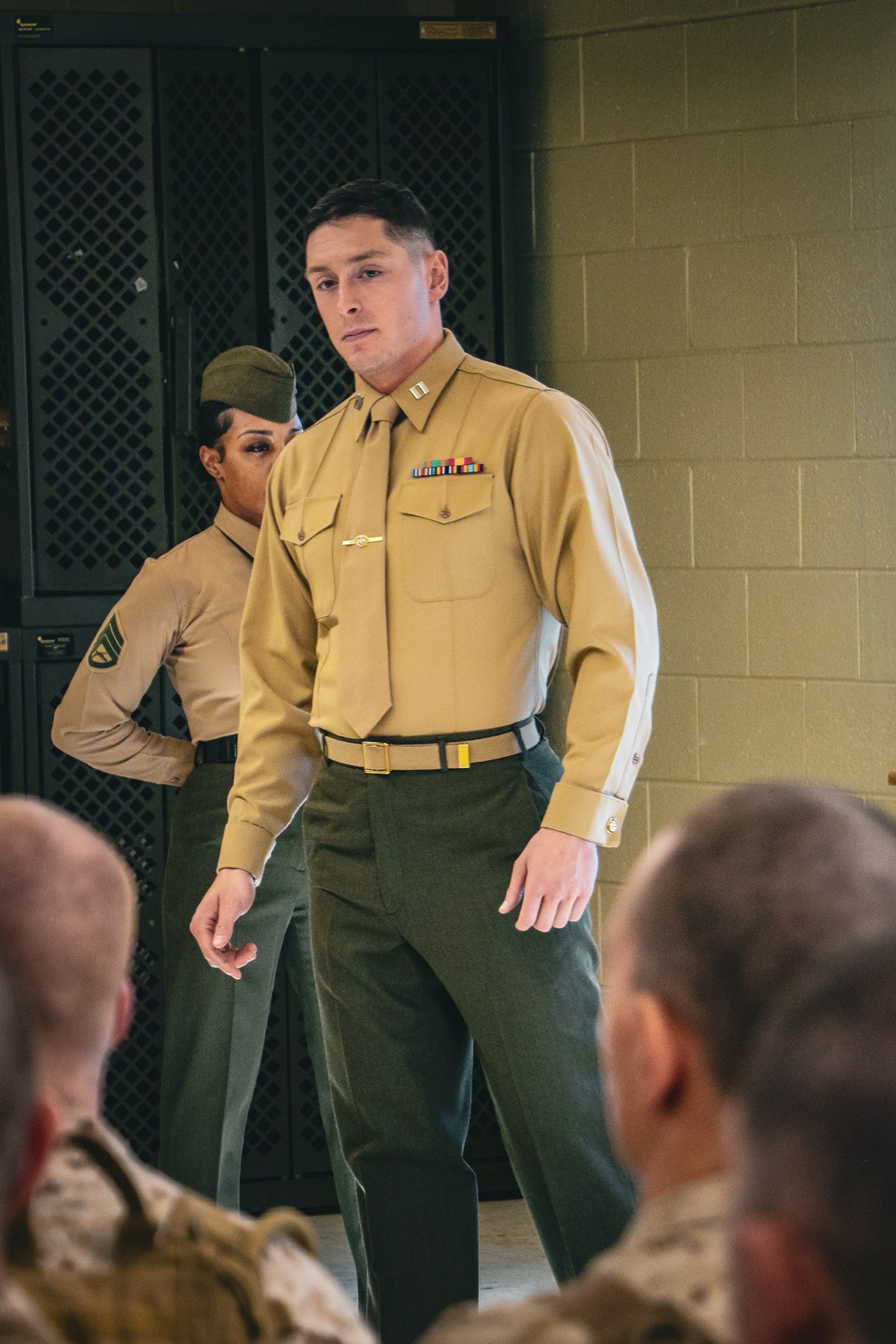
Bogdanos was promoted to captain and returned to Quantico as an officer instructor and platoon commander.
“I kind of came very much full circle, because that’s the first place you show up when you join, where you get your head shaved, and you live in the long hallways with 40 other people getting screamed at by the drill instructors. And then I went back to literally the exact same barracks where I had slept as a candidate, and now I’m on the other side of the wall as the captain of that platoon leading a team of drill instructors.”
The quality Bogdanos believes is most important as a Marine Corps leader might also be surprising. “I don’t think empathy would be one of the first things that leaps to mind when most people imagine a Marine, but I really think that that is one of the most fundamental traits that you need to possess to be an effective Marine Corps officer. So much of the leadership is really about that human connection, showing your Marines that I fundamentally care about you as a person.”
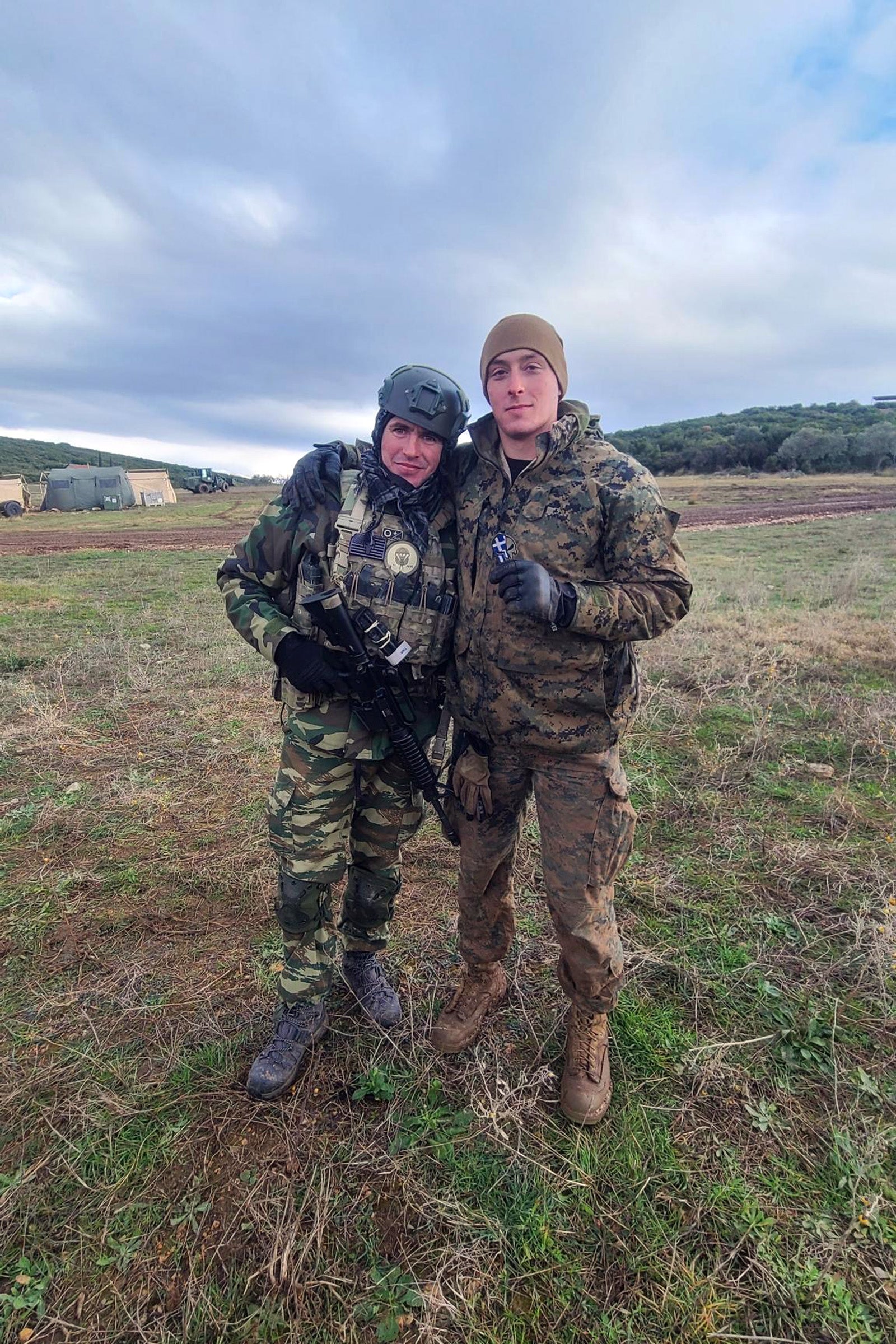
Though he never planned a long stint in the military, “there is a strong sense of intense loyalty and group identity that was hard to leave.” But law was always on his mind as a career, and with the GI Bill paying for up to four years of education, he decided to enter the joint program the Kennedy School. While uncertain of his career path, he plans on doing litigation and courtroom advocacy right after graduation with an eye to future policy work.
“At the end of the day, as much work as it is, you’re a student, and being a student is really fun. And staying up late to finish a reading or finish drafting a memo doesn’t seem as bad once you’ve stayed up all night manning a machine gun on post after you’ve been marching all day. There’s also the aspect of no matter what stress can come at you as a student, it’s all just about you. That’s a lot different than when you’re an officer, where you are responsible for the lives of your Marines. It’s an immense privilege, but that privilege comes with obligations.”
This summer, his younger brother graduated from basic training at Quantico and was commissioned as a Marine lieutenant. “I was at his graduation, and it was especially fun,” Bogdanos said, “because he’s getting trained by all the drill instructors who had just worked for me a little over a year ago.”
Want to stay up to date with Harvard Law Today? Sign up for our weekly newsletter.