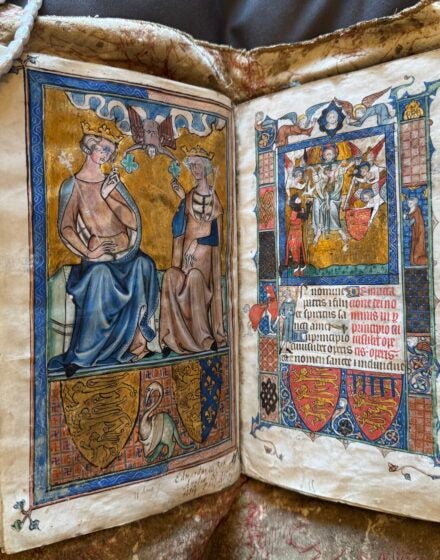
In July, during one of England’s many heatwaves this summer, I attended “Researching Medieval Manuscripts: From Cataloging to Cultural History” at Rare Book School at Oxford University. Founded in 1983, Rare Book School (RBS) has been based at the University of Virginia since 1992 and offers dozens of classes, held at various universities, which are geared toward librarians, archivists, curators, collectors, booksellers, conservators, students, professors and bibliophiles. This is only the second year RBS has held classes in Oxford University, and I jumped at the chance to attend.
In my work in the Historical & Special Collections department at the Harvard Law School Library, I have the privilege of working with medieval manuscripts and documents. My hope in taking the class was to learn how to better describe, understand, and teach with these special materials.
The class was taught by David Rundle, Senior Lecturer in Latin and Paleography in the Centre for Medieval and Early Modern Studies at the University of Kent. My classmates included librarians, archivists and book dealers from the United Kingdom, Europe and North America. The homebase for the class was the Weston Library, the Bodleian Libraries’ special collections library. The Bodleian (aka “The Bod”) now consists of 22 libraries across Oxford and holds the largest collection of medieval manuscripts in Great Britain, as well as over 13 million printed items. The Bodleian opened in 1602, named after Sir Thomas Bodley, a fellow of Merton College whose large donation was used to rebuild and refurbish a library for students; however, the first library building at Oxford was built more than 300 years before that, in 1320. Located in the south of England about 58 miles northwest of London, Oxford is the oldest university in the English-speaking world having been established in the 11th century.
The focus of the class, as the title denotes, was a brief history of medieval manuscripts in general, and specifically those in the Bodleian’s remarkable collections, and how to describe and understand them. We learned about history of the Bodleian’s collections of medieval manuscripts and the history of various libraries they are housed in, as well as how they were previously stored, from chests to chained to a desk to rolled in cubby holes to bookshelves. The class also covered the manuscripts’ donors, their provenance and shelfmarks, as well as how students utilized the libraries and their contents over the centuries. We learned how to describe manuscripts, both in fragments and in complete forms, and we learned myriad fascinating facts and anecdotes. Below are some highlights of the manuscripts I saw and libraries I visited.
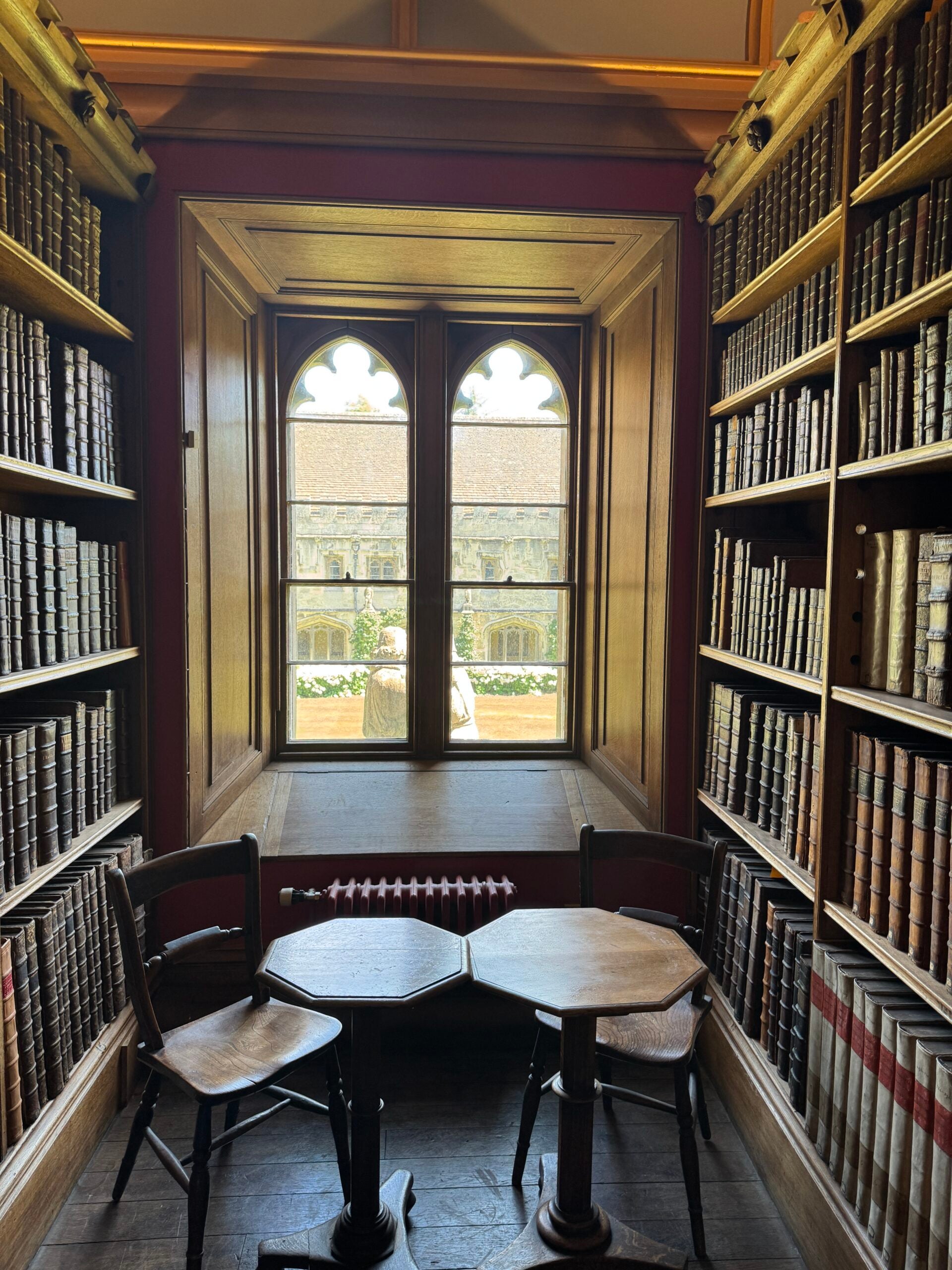
A visit to the Magdalen College Old Library. Built in the late 1400s, the collection includes incunables (early printed books, printed from the mid-15th century to 1500), medieval manuscripts, printed books from 1500-1800, and second-century papyrus fragments believed to be among the world’s oldest surviving extracts from the New Testament.
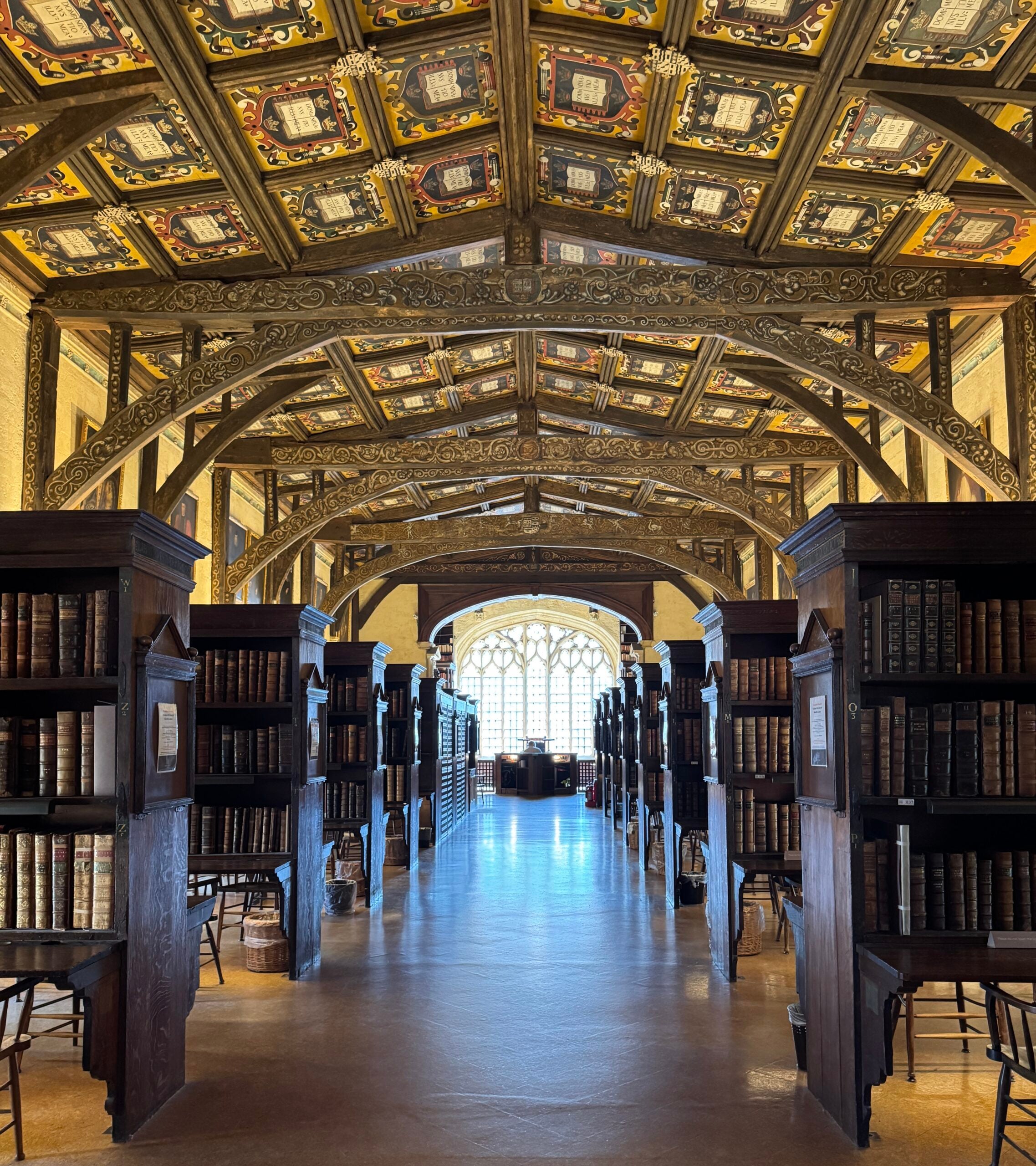
A visit to Duke Humfrey’s Library, established with Humfrey’s donation of a building and 280 Latin manuscripts in 1488.
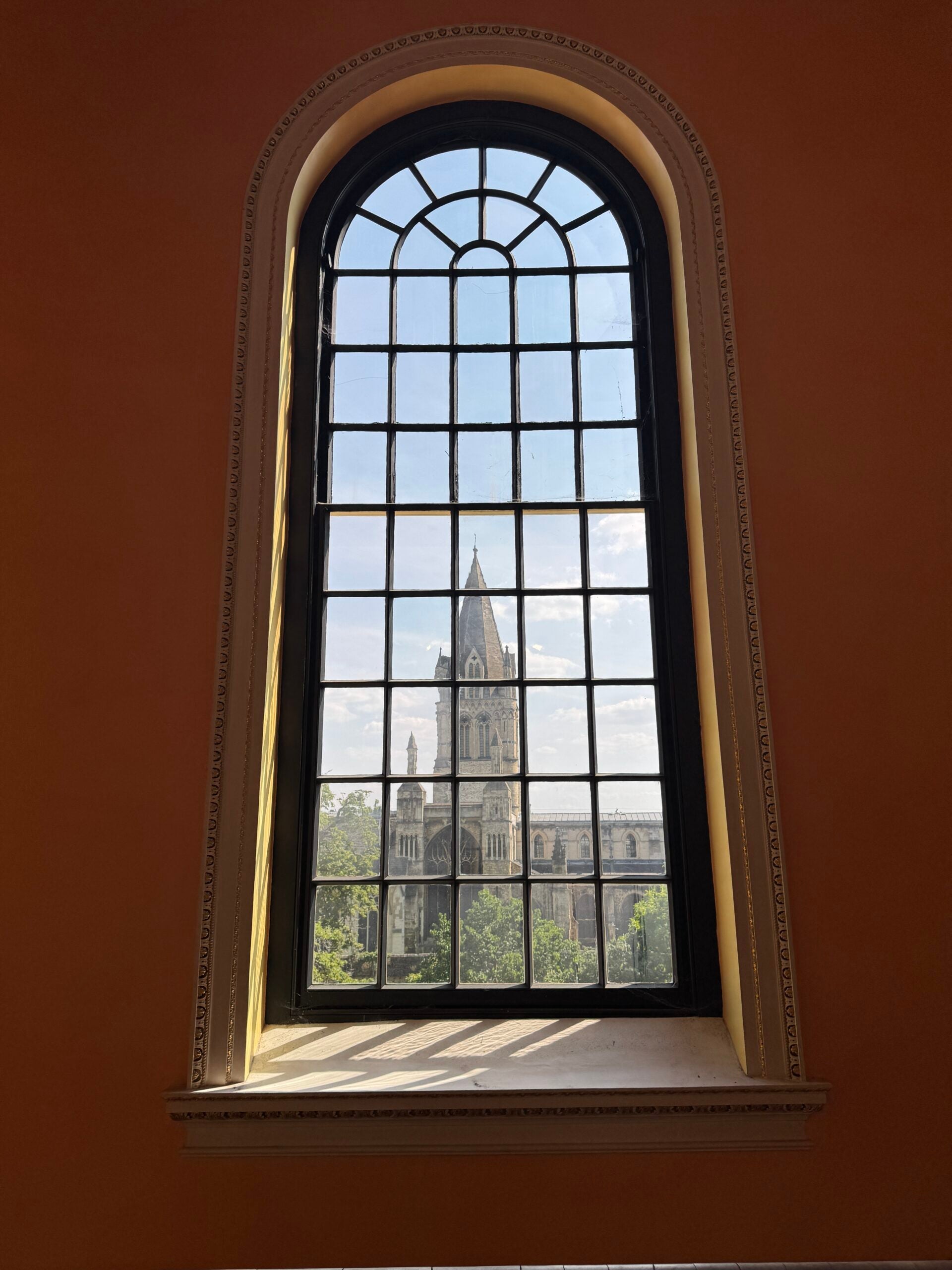
Christ Church Library. The “new” library was built in the 18th century and contains a large collection of early printed books. This includes 140 of the books from the original library built in the 16th century. They were originally chained to wooden lecterns, a common practice from the Middle Ages to the early modern period.
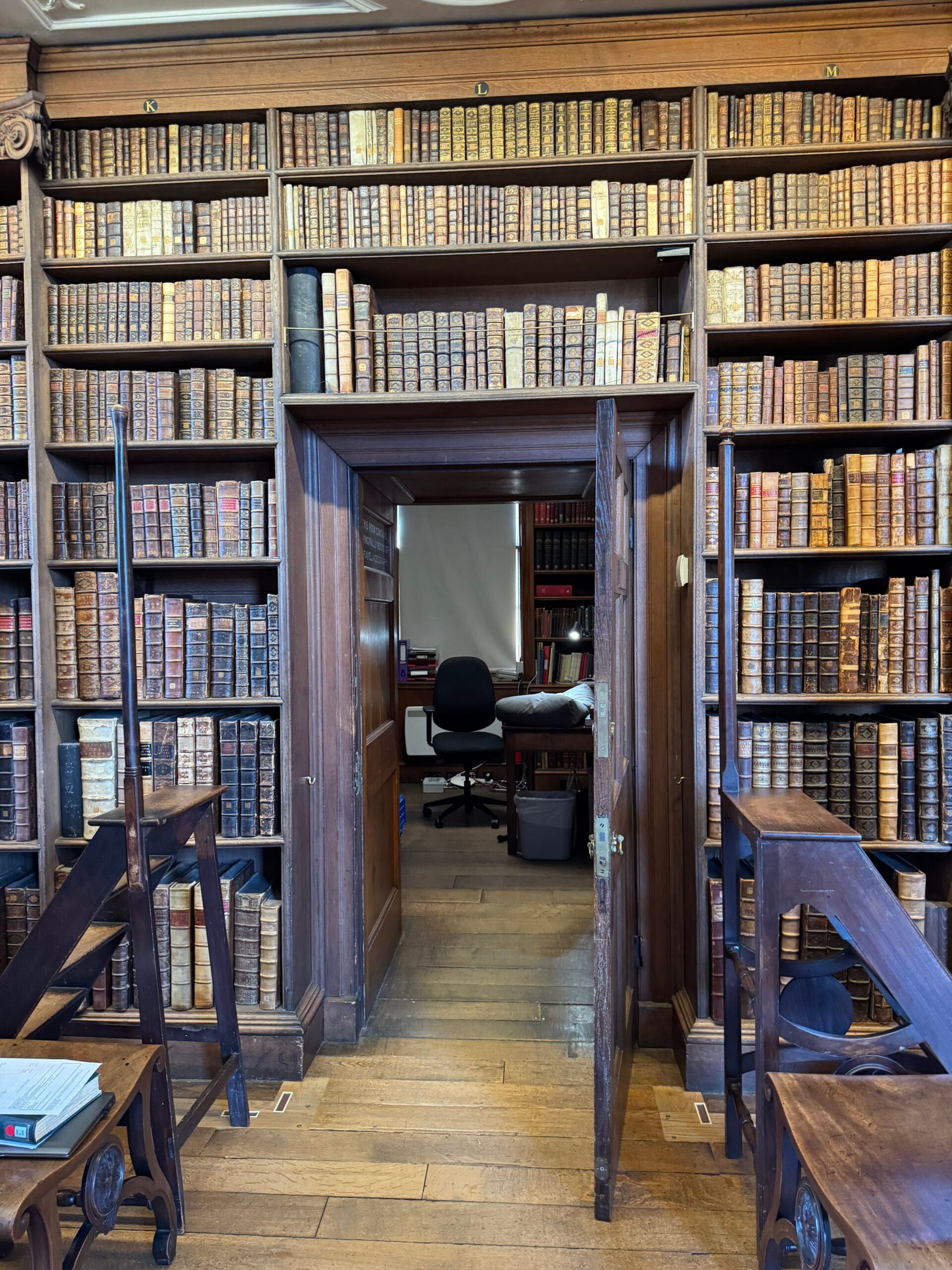
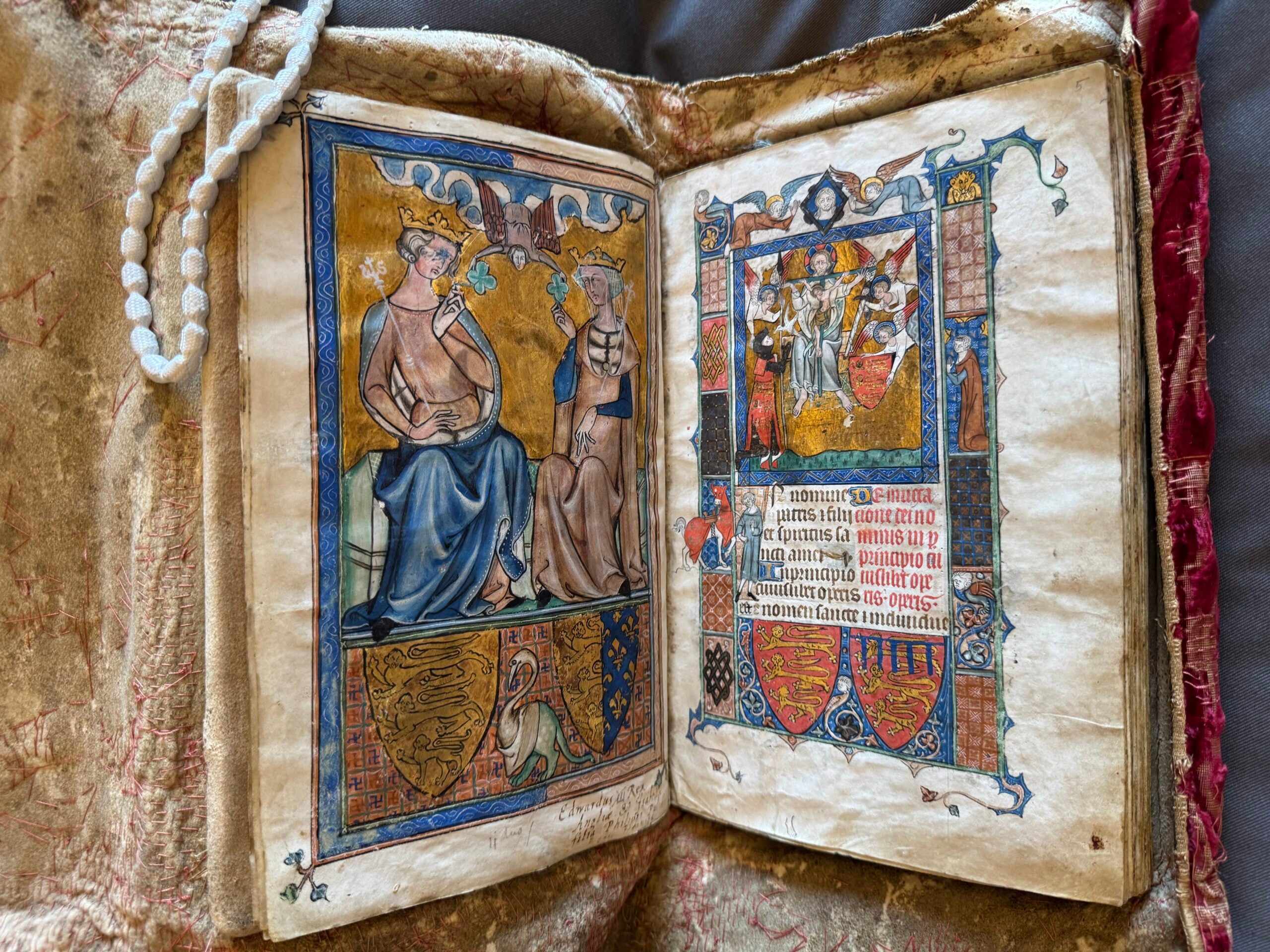
This extensively illuminated manuscript, Christ Church MS. 92, is covered in a 15th century velvet chemise binding. It is about the art of kingship.
A generous classmate brought me along to a tour she had arranged with a former colleague at the Law Library, which houses over 550,000 volumes and houses the Official Papers collection. None of the materials in the collection circulate.
The Rare Book School staff arranged for us to receive a tour of Bodleian’s Conservation Lab, where I got a peek at the work their conservators are performing on manuscripts from the Oxford Genizah Collection, along with some items from J.R.R. Tolkien estate.
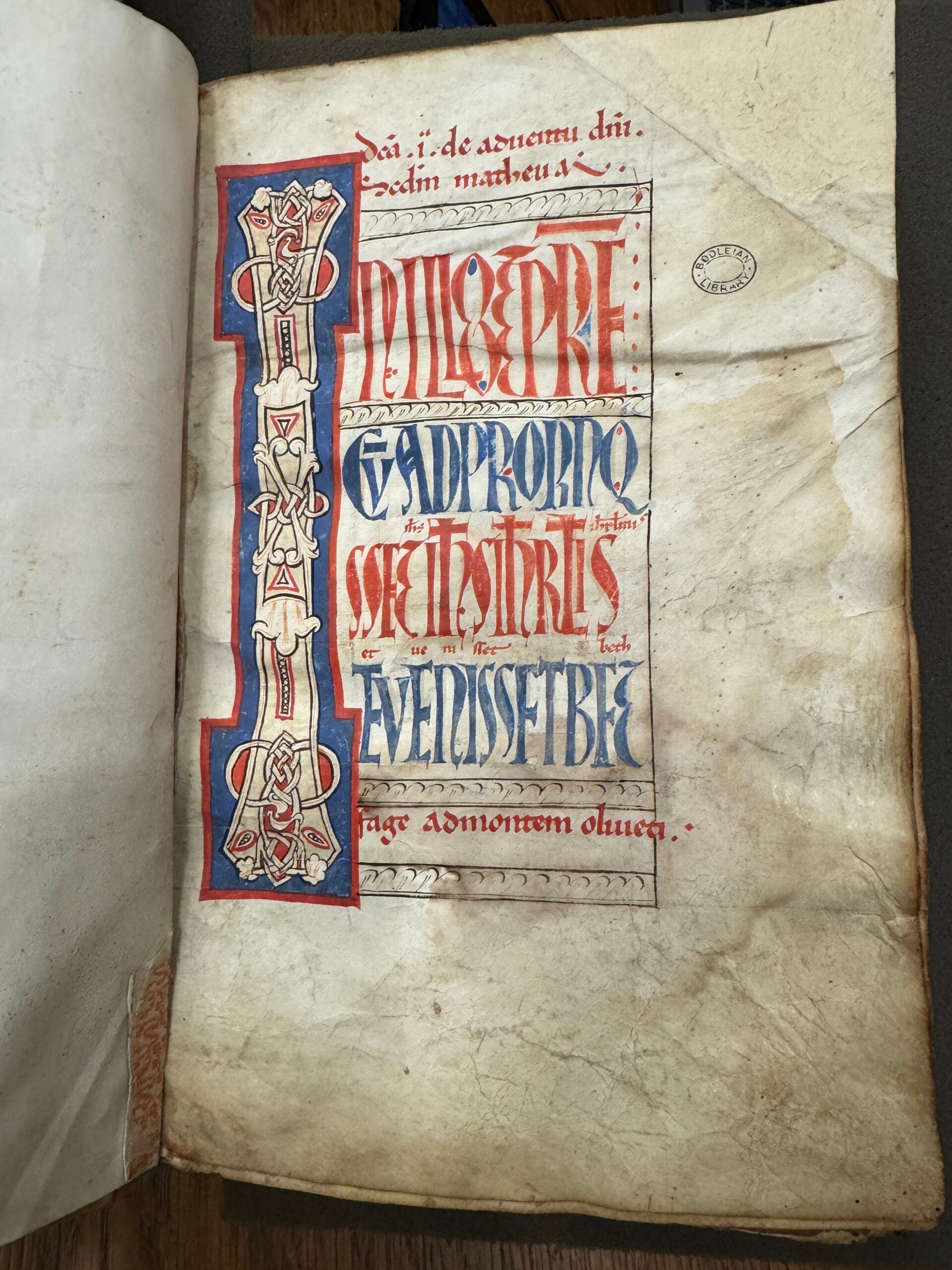
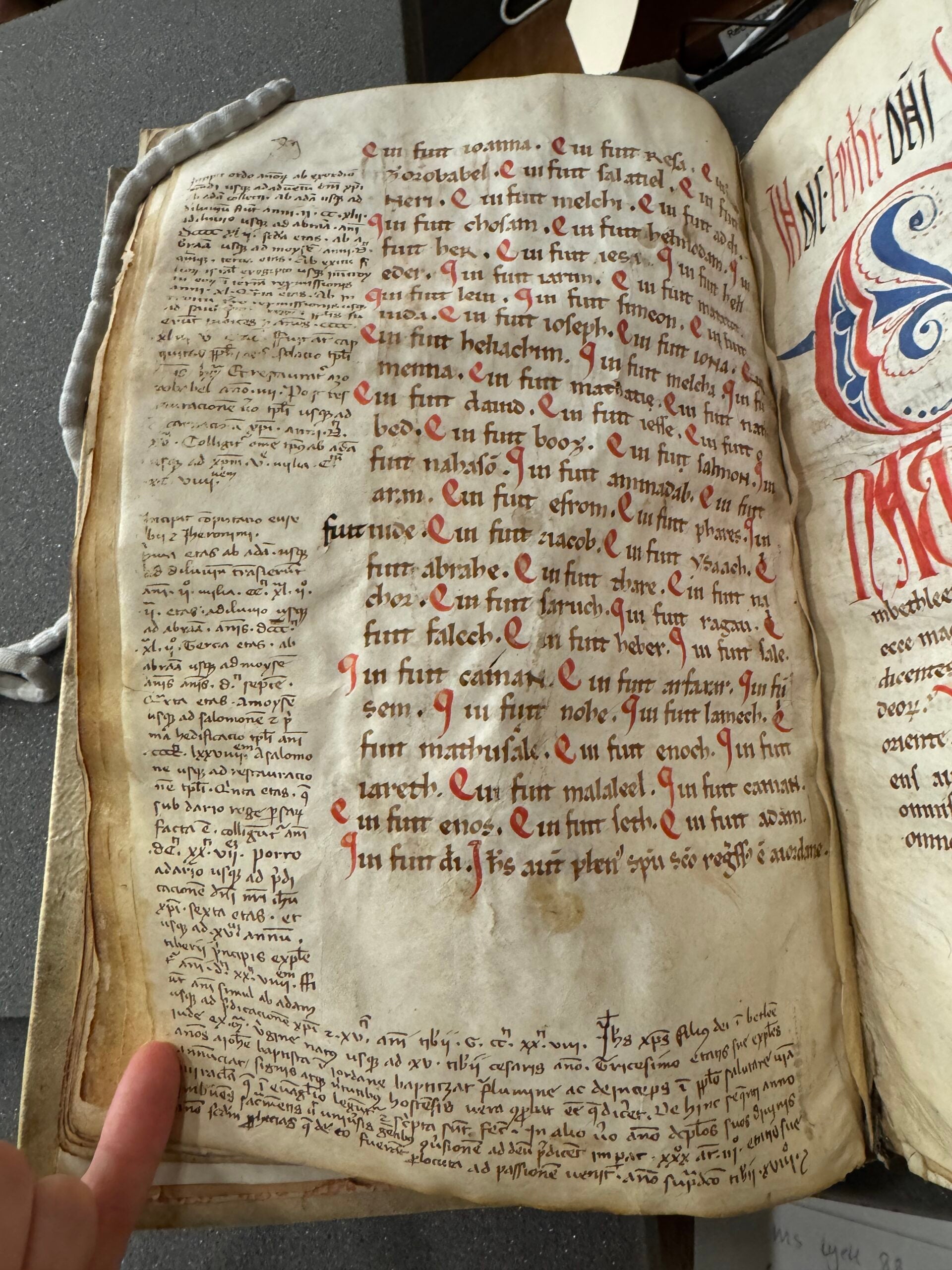
On the last day, each student was assigned a manuscript and tasked with creating a description based on what we learned during the week. We were encouraged to deduce as much as possible by examining the physical structure of the manuscript as well as the content, looking for indications of provenance, binding structure, parchment blemishes, annotations and other clues. I was assigned a manuscript later identified as MS. Lyell 88, a Gospel lectionary from Northern Spain, from the middle of the 12th century.
“Researching Medieval Manuscripts: From Cataloging to Cultural History” is the third RBS class I’ve been fortunate to attend. It is a rare treat to take time out from a busy schedule to sit with, study, appreciate and learn from remarkable, and in this case, entirely unique materials.
Filed in: In the Community
Contact Us
phone: 617-495-3455
email: asklib@law.harvard.edu
library website: hls.harvard.edu/library
Stay Connected
Library Innovation Lab (LIL) Blog
Instagram @hlslibrary
Facebook @hlslibrary
Et Seq blog (archived)