In 2025, the Chayes International Public Service Fellowship, founded in honor of Harvard Law School Professor Abram Chayes ’49, sent its 25th cohort of students abroad for the summer. This year, 18 Chayes Fellows worked in 12 countries exploring topics that included whistleblower protections, property rights, and accountability for war crimes, among others. These profiles describe the experiences of three of the Chayes Fellows.
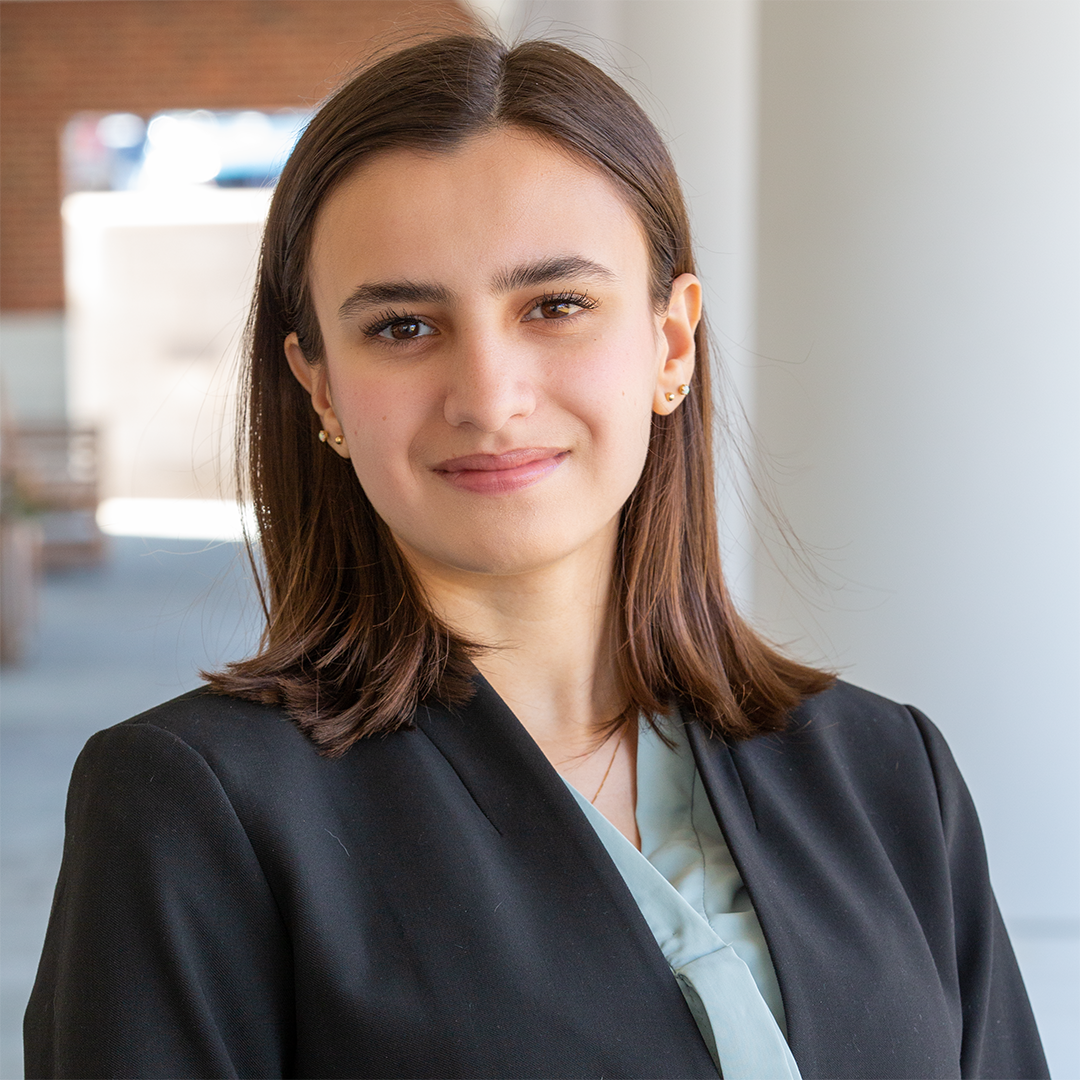
Luisina Kemanian Leites ’27 spent her 1L summer in Geneva, Switzerland working with the United Nations Office of the High Commissioner for Human Rights. She chose this placement in order to build on her pre-HLS experiences in Chile, Colombia, and Jordan, and was excited to use the knowledge from her 1L elective in Public International Law. At the OHCHR she provided support to two different teams: the Humanitarian Funds, which focus on anti-torture and anti-slavery issues, and the Human Rights Committee.
Tasked with drafting the annual UN General Assembly reports for the Fund, she evaluated civil society projects and reviewed cases of torture and contemporary forms of slavery. Although the work initially seemed daunting, Luisina was happy that she “gained extensive knowledge of how international human rights law is interpreted and enforced by international bodies … [and] witnessed firsthand the intersection of law and foreign policy.”
A significant portion of her work over the summer related to the Human Rights Committee’s fourth annual review of Viet Nam to assess compliance with the International Covenant on Civil and Political Rights. Luisina served as the intermediary between members of the committee and the Vietnamese delegation. She reviewed scores of reports from UN agencies and civil society organizations and conducted meetings to gather information on legal issues in Viet Nam. These included such diverse topics as cybersecurity, the death penalty, and the political participation of ethnic minorities. Her role also included preparing questions and reviewing the response to the list of issues by the Vietnamese state delegates.
After the sessions, Luisina wrote the concluding observations which delineated areas in which Viet Nam has improved as well as those in which it has failed to comply. The report also provided recommendations for steps to take before the fifth country review. Looking back on her internship, Luisina affirmed that she “had an incredibly positive experience” and would be interested in returning to work directly with one of the OHCHR committees in the future.

During a 12-week summer internship with the Office of the Legal Counsel of the International Energy Agency, David Niedzwicki ’27 had a dual focus on public international law and regulatory analysis. His first project enabled him to engage in legal research on the provisional application of treaties and the material breach of treaties. He examined treaties as a concept under international law and gave special consideration to the provisional accession clause of the Agreement on an International Energy Program. To do this, he reviewed the Vienna Convention on the Law of Treaties, hundreds of documents in the IEA archives, and official records, and determined that, surprisingly, provisional accession is not limited by time constraints or even meeting the IEP Agreement’s formal accession requirements.
Over the summer he was also able to leverage his background in environmental policy and clean energy for a project on “certified natural gas,” namely gas that is certified to have been produced with a lower emissions intensity. His work involved evaluating and comparing existing certification schemes, corporate reporting initiatives, and supply chain protocols that collectively make up the evolving landscape of natural gas certification. David was gratified to be listed as a contributor to the IEA report on the subject that was published in July 2025.
Another project involved examining the regulation of greenhouse gas emissions in the mining sector of Indonesia. David’s extensive research on the topic enabled him to draft one of the three chapters of a report on Indonesian environmental regulations. Following the completion of his stint at the IEA, the recommendations in the report were discussed at a workshop in Jakarta, Indonesia that was co-hosted by the IEA and Indonesia’s Ministry of Energy and Mineral Resources.
David was based in Paris, France which allowed him to improve his French language skills as well as to enjoy the city; a highlight was watching fireworks over the Eiffel Tower. He also appreciated the opportunity to engage with IEA colleagues from varied backgrounds and observed “This type of international working environment has been especially beneficial for my understanding of how legal traditions differ around the world, including in approaches to legal education.”
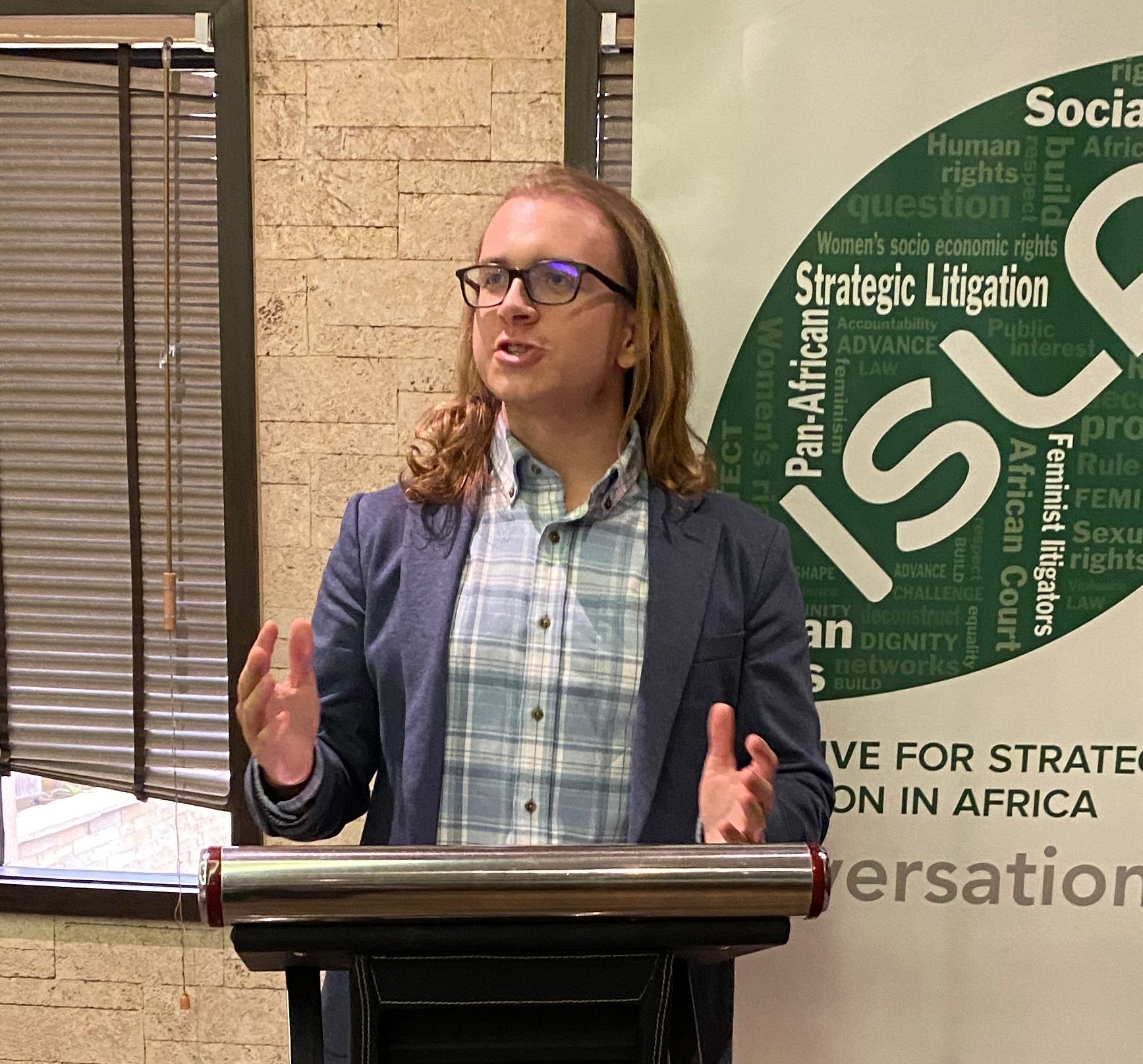
Prior to the summer, Eli Cooper ’27 sought out a placement that would enable him to draw on his experience with LGBTQ+ and human rights advocacy, as well as to gain exposure to litigation in a context outside of the United States. His placement in Johannesburg, South Africa working with the Initiative for Strategic Litigation in Africa (ISLA) allowed him to do just that.
Eli devoted the bulk of his internship to developing the organization’s strategy for addressing Sexual Orientation and Gender Identity (“SOGI”) discrimination on the African continent. He examined news articles, judicial precedents, and academic literature, and collected feedback from practitioners in order to produce a 200-page report. The report provided an overview of SOGI issues in Africa considered through a comparative legal lens, and incorporated lessons and recommendations from litigators in Africa and other human rights systems. Eli noted that one of the most significant issues is contending with political and religious actors who are well-resourced and have significant community support to mobilize anti-rights efforts.
His work will form the basis of a forthcoming ISLA publication on the lessons that can be drawn from SOGI litigation and the challenges related to a regional strategy. As well, Eli presented his findings at a meeting of SOGI advocates convened to discuss these issues and ideas for addressing them. He was pleased to have had a direct impact on the organization’s understanding of the topic and commented “My participation in the project has reaffirmed my interest in contributing to legal scholarship throughout my career and has convinced me that this is a path I could legitimately pursue.”
In addition to his work on the report, Eli assisted the Litigation Directorate with cases. His role during the initial intake stages allowed him to provide recommendations on whether the organization should pursue a case which, he said, “made me more confident, reaffirming my interest in litigation”. Looking back on his summer, he noted “I was able to engage with incredibly impactful legal and strategic questions on a set of issues that I was passionate about.”